
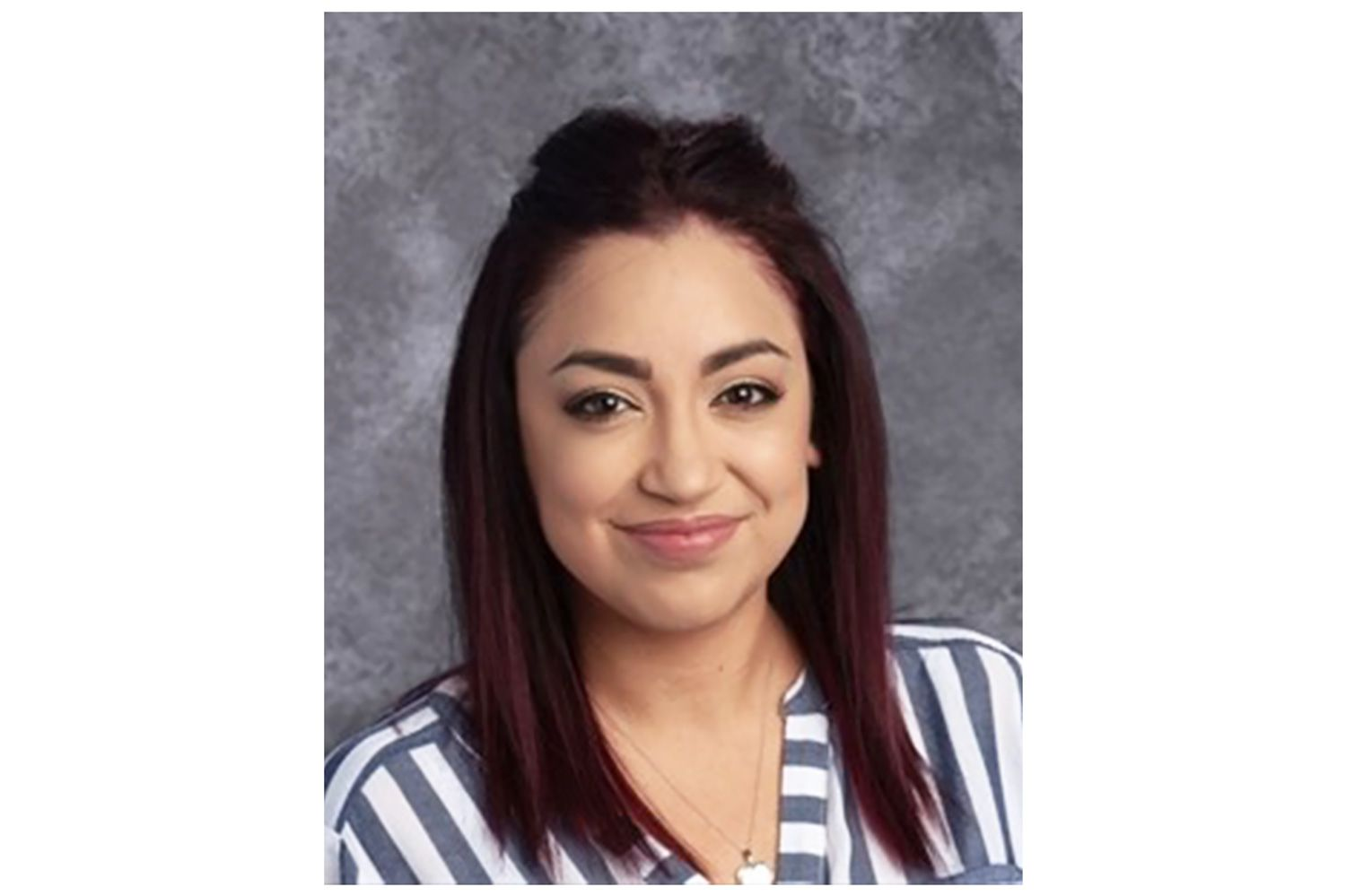
Dulce Flores, a 33-year-old educator who had been a fixture at Riverbank High School since 2016, was arrested in April 2023 following a tip that exposed her illicit relationship with a teenage boy under her supervision.
In a shocking development that has rocked the small community of Riverbank, California, a high school Spanish teacher has pleaded guilty to engaging in repeated sexual encounters with a 17-year-old student.
The case has sparked outrage among parents, students, and school officials, raising serious questions about oversight, trust, and the safety of students in educational environments. This blog post delves into the details of the disturbing case, the response from the Riverbank Unified School District, and the broader implications for schools nationwide.
The Disturbing Details of the Case
The allegations against Dulce Flores first came to light when a 17-year-old student bravely stepped forward to report the abuse he had endured.
According to the Stanislaus County Sheriff’s Office, Flores engaged in sexual activity with the minor approximately 30 times during 2023, a period when he was enrolled as a student at Riverbank High School.
The illicit relationship reportedly unfolded under the guise of Flores’ role as an educator, a position that inherently demands trust, professionalism, and a commitment to the well-being of students.
Dulce Flores, who had been teaching Spanish at the school for nine years, was arrested at her home on a Tuesday in April 2023 following an investigation triggered by a tip received by a school official. The investigation quickly confirmed the allegations, leading to her booking at the Stanislaus County Jail on charges of unlawful sex with a minor.
She was held on $20,000 bail, a figure that reflects the severity of the charges against her. The fact that the abuse occurred repeatedly—30 instances over an unspecified timeframe—underscores the predatory nature of Flores’ actions and the vulnerability of the student involved.
Read : ‘Teacher of the Year’ Jacqueline Ma Arrested For Sexually Abusing Two of Her Minor Students
The victim, a 17-year-old boy, was likely in Flores’ class or had some direct interaction with her through her role as a teacher. While specific details about how the relationship began remain undisclosed, the power imbalance between a teacher and student is glaringly evident.
Read : Panama is Preparing to Evacuate First Island Due to Rising Sea Levels
Educators are entrusted with shaping young minds, not exploiting them, and Flores’ actions represent a profound betrayal of that responsibility. Her guilty plea further solidifies the evidence against her, leaving little room for doubt about the veracity of the student’s claims.
This case is particularly unsettling given Dulce Flores’ long tenure at Riverbank High School. Having taught there since 2016, she had established herself as a familiar figure in the school community. For nearly a decade, she interacted with countless students, parents, and colleagues, all while harboring the capacity to engage in such egregious behavior.
The revelation that this abuse occurred in 2023, after years of seemingly unremarkable service, raises troubling questions about whether warning signs were missed or if Dulce Flores had engaged in similar misconduct prior to this incident.
The School District’s Response and Community Impact
The Riverbank Unified School District wasted no time in responding to the allegations against Flores. Upon her arrest, she was immediately placed on a leave of absence, a standard protocol to ensure that she had no further contact with students while the investigation unfolded.
The district issued a statement to the Modesto Bee, affirming its cooperation with law enforcement and emphasizing its commitment to minimizing disruptions for students enrolled in Flores’ classes. School officials have reached out to the families of those students, offering support and ensuring continuity in their education for the remainder of the academic year.
Superintendent Constantino Aguilar expressed his dismay over the situation, calling it “truly unfortunate” for the district. His statement reflects the broader sentiment of shock and disappointment that has permeated the Riverbank community.
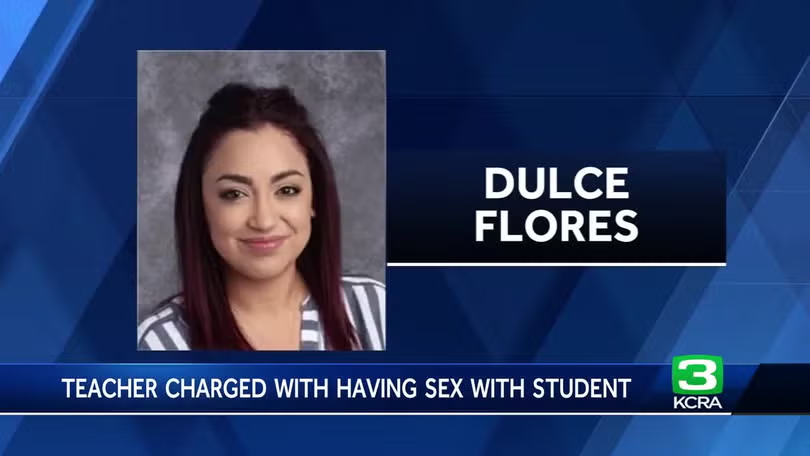
Schools are meant to be safe havens where students can learn and grow without fear of exploitation, and Dulce Flores’ actions have shattered that sense of security for many. Aguilar also hinted at the district’s intent to explore independent measures to address the matter, suggesting that internal reviews or policy changes may be on the horizon to prevent future incidents.
For the families of Riverbank High School students, the news has undoubtedly been a blow. Parents entrust their children to educators daily, relying on schools to provide a nurturing and protective environment. The discovery that a teacher preyed on a student—repeatedly and over an extended period—has likely eroded that trust.
The fact that the victim was 17, an age when students are nearing adulthood but still under the legal and ethical protection of the school, adds another layer of complexity to the community’s reaction. Questions about how such a relationship could go undetected for so long are likely swirling among parents and residents alike.
The impact on students, particularly those who had Dulce Flores as a teacher, cannot be understated. Beyond the logistical challenge of replacing her mid-year, there is an emotional toll to consider.
Students may feel betrayed, confused, or even unsafe in the wake of this scandal. The district’s efforts to communicate with families and maintain instructional stability are commendable, but repairing the psychological damage inflicted on the school community will take far longer.
Broader Implications for School Safety and Accountability
The case of Dulce Flores is not an isolated incident. Across the United States, reports of educators engaging in inappropriate relationships with students surface with alarming regularity.
While each case is unique, they collectively highlight systemic issues within educational institutions—issues that demand attention and reform. Flores’ actions, and the fact that they went unnoticed until a tip was received, underscore the need for stronger safeguards to protect students and hold teachers accountable.
One critical area of focus is oversight. How could a teacher engage in sexual activity with a student 30 times without raising suspicion? Were there missed red flags, such as unusual interactions between Flores and the victim, that could have been addressed earlier?
Schools must implement more robust monitoring mechanisms, including regular training for staff on recognizing signs of inappropriate behavior and clear protocols for reporting concerns. Anonymous reporting systems, like the one that ultimately exposed Flores, should be widely publicized and accessible to students and faculty alike.
Another pressing issue is the vetting and ongoing evaluation of educators. Flores taught at Riverbank High School for nine years before this incident came to light, suggesting that her background checks and performance reviews either failed to detect any issues or were insufficiently thorough.
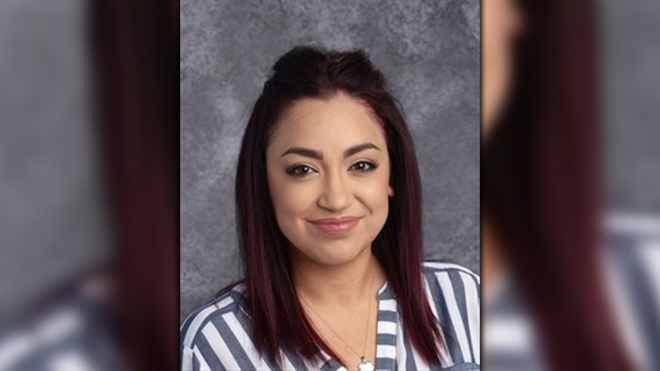
While it’s impossible to predict every instance of misconduct, schools must prioritize continuous assessment of teachers’ conduct, not just their academic qualifications. Professional development programs should also emphasize ethical boundaries, reinforcing the gravity of a teacher’s duty to protect rather than exploit students.
The legal consequences for Dulce Flores—her arrest, charges, and guilty plea—send a message that such behavior will not be tolerated. However, the relatively low bail of $20,000 has sparked debate about whether the punishment fits the crime.
Unlawful sex with a minor is a serious offense, particularly when committed by someone in a position of authority. As the case progresses, the courts will determine Flores’ ultimate sentence, but the broader conversation about justice for victims of educator abuse must extend beyond this single incident.
Finally, this case serves as a grim reminder of the vulnerability of students, even those on the cusp of adulthood. At 17, the victim was legally a minor, and Flores’ role as his teacher placed her in a position of power that she abused.
Schools must foster environments where students feel empowered to speak out about inappropriate behavior without fear of retaliation or disbelief. The courage of the student who reported Flores likely spared others from similar harm, and his actions should inspire schools to prioritize student voices in their safety policies.
The arrest and guilty plea of Dulce Flores have cast a dark shadow over Riverbank High School, a place where education and growth should take precedence over scandal and betrayal. The details of her repeated abuse of a 17-year-old student are harrowing, and the community’s response reflects the deep wound left by her actions.
As the Riverbank Unified School District works to rebuild trust and ensure student safety, the broader implications of this case resonate far beyond California.
It is a call to action for schools everywhere to strengthen their defenses against educator misconduct, protect their students, and hold those in positions of power to the highest standards of accountability. For now, the focus remains on justice for the victim and healing for a community shaken by an educator’s unthinkable breach of trust.