
A holiday tradition meant to spread seasonal cheer has instead ignited a legal and community dispute in a quiet Maryland neighborhood. The Salgado family of Germantown, located roughly 30 miles north of Washington, D.C., is challenging fines imposed by their homeowners association over what the HOA has described as a “nuisance” holiday yard display.
As fines reached at least $650 and continued to accumulate at a rate of $50 per day, the case has raised broader questions about homeowners association authority, selective enforcement, and the balance between community standards and personal expression during religious and cultural celebrations. For years, the Salgados have decorated their home for Christmas, viewing the display as an annual family tradition rather than a spectacle intended to draw controversy.
According to the family, this year’s decorations were intentionally scaled back in response to prior feedback and awareness of HOA sensitivities. Despite those efforts, the Middlebrook Manor South HOA determined that the display violated its nuisance provisions, prompting daily fines and eventually leading the family to seek legal representation. The dispute now sits at the intersection of contractual HOA rules, Maryland law, and the enduring debate over how much control associations should exert over homeowners’ seasonal expressions.
The case has attracted attention not only because of the fines themselves, but also because of what it represents to many observers: a clash between tradition and regulation, and between individual homeowners and governing bodies tasked with maintaining uniformity. With legal arguments forming on both sides, the Salgado family’s experience illustrates how holiday décor, often considered benign and celebratory, can become a source of prolonged conflict.
A Decorated Tradition Meets HOA Enforcement
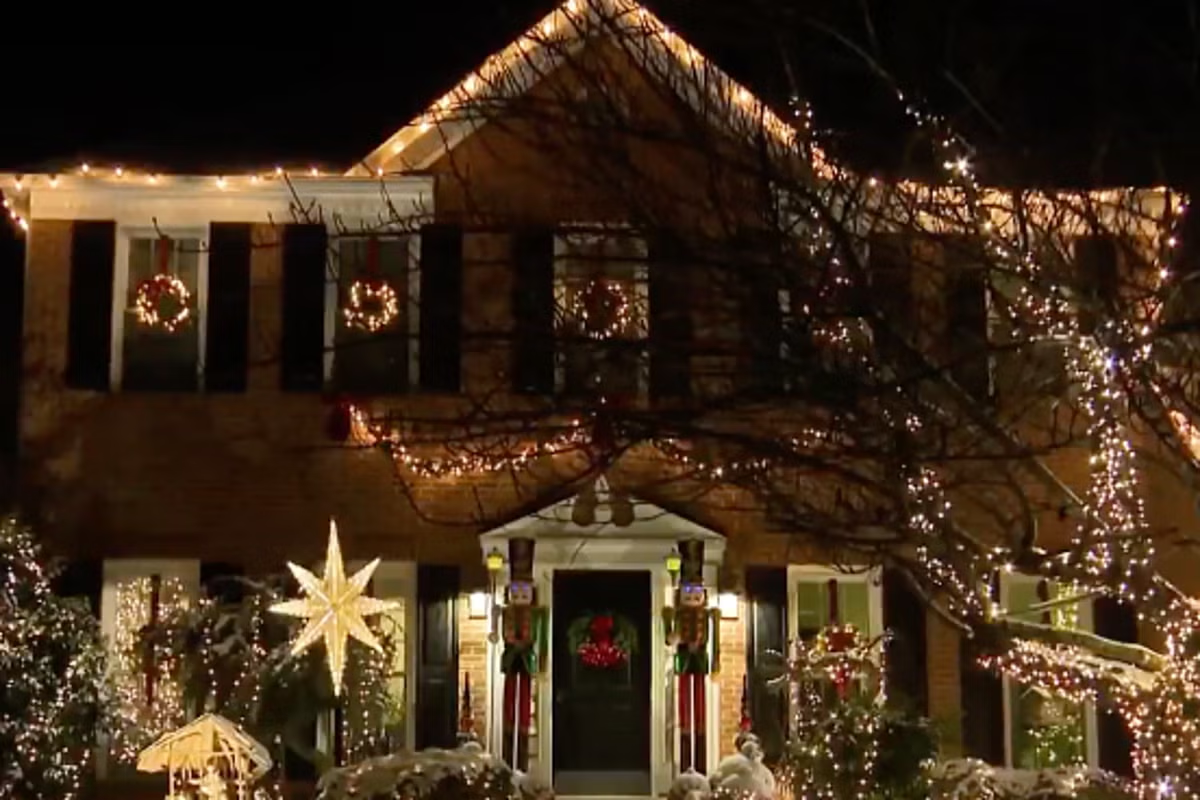
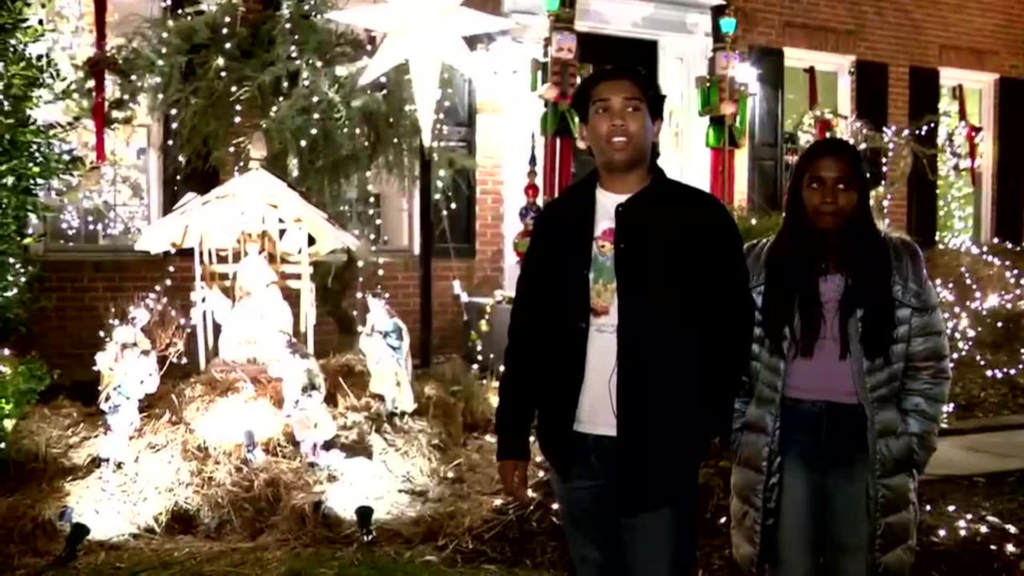
The Salgado family’s holiday display has evolved over time, growing larger in previous years before being deliberately reduced for the current season. Photographs from earlier holidays show expansive lighting and large illuminated figures spread across the entire front yard. In contrast, this year’s decorations consist primarily of traditional white and multicolored string lights, wreaths, several nutcrackers, a light-up star, and a manger scene situated within the garden area of the property.
According to the family, these decorations were chosen carefully to remain within the boundaries of their property and to avoid disturbing neighbors. They maintain that the lights are not directed beyond their lot, do not encroach on adjacent yards, and do not produce noise or other disruptions. From their perspective, the display is consistent with what can be found elsewhere in the neighborhood and falls well within reasonable expectations for Christmas décor.
The Middlebrook Manor South HOA, however, has taken a different view. While the association’s rules do not explicitly ban Christmas lights, they do prohibit nuisances, including loud noises, certain lawn ornaments, and lighting that extends beyond a homeowner’s property. The HOA determined that the Salgados’ display violated these provisions, categorizing it as an annoyance to the community. Based on this assessment, the association began issuing fines of $50 per day, which quickly accumulated to more than $600.
“People just want to enjoy the #Christmas spirit.” – A #Germantown family is being slapped with hundreds of dollars of fines for their Christmas decorations. Why they say their homeowners association is acting like the #grinch. @DCNewsNow pic.twitter.com/hQL43nF6Hw
— Liberty Simmons DC News Now (@LibertyZSimmons) December 12, 2025
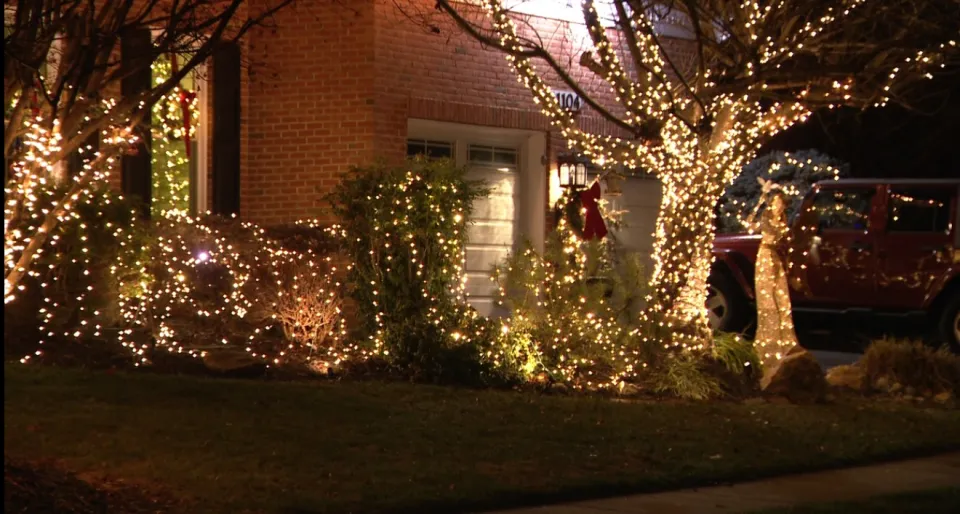
The family disputes both the characterization of their decorations as a nuisance and the interpretation of the HOA rules. They argue that the regulations are being applied in a manner that is inconsistent with the text of the governing documents. In their view, a manger scene and modest lighting cannot reasonably be considered a nuisance affecting the entire community, particularly when similar displays exist nearby without apparent penalty.
This disagreement highlights a common tension within HOA-governed communities. While associations are empowered to enforce rules designed to preserve property values and neighborhood aesthetics, those rules often rely on subjective standards such as “nuisance” or “annoyance.” When enforcement is based on such terms, conflicts can arise over interpretation, intent, and proportionality.
Legal Challenge and Claims of Selective Enforcement
As fines continued to mount, the Salgado family hired an attorney to contest the HOA’s actions. Their legal strategy centers on the argument that the association is engaging in selective enforcement, a claim that can carry significant weight under Maryland law if proven. According to the family’s attorney, other homes in the same neighborhood feature holiday displays that are similar in nature, if not as elaborate, yet have not been subjected to fines or enforcement measures.
Selective enforcement claims typically assert that an HOA has failed to apply its rules uniformly, targeting certain homeowners while allowing others to engage in comparable conduct without consequence. Courts often scrutinize such claims closely, as uniform enforcement is a cornerstone of an association’s legal authority. If an HOA enforces rules inconsistently, it risks undermining its own governing documents and exposing itself to legal liability.
Read : 34-Year-Old Computer Scientist Jack LaSota ‘Ziz’ Linked to Six Deaths Arrested in Maryland
In this case, the attorney representing the Salgados has described their display as attractive, traditional, and well within the bounds of customary Christmas decorations. The argument suggests that the issue is not the decorations themselves, but rather how the HOA has chosen to interpret and apply its nuisance provisions. By pointing to neighboring homes with comparable décor, the family aims to demonstrate that they are being singled out unfairly.
The HOA, for its part, has defended its position by emphasizing its obligation to enforce governing documents in accordance with Maryland law. Through legal counsel, the association has stated that its goal is to maintain a safe, respectful, and well-maintained community, and that enforcement actions are carried out uniformly. However, the HOA has declined to comment on specific homeowners or individual cases, limiting public insight into how enforcement decisions are made.
This legal standoff underscores the complexities inherent in HOA governance. Associations must balance individual freedoms with collective standards, often under the scrutiny of residents who may perceive enforcement as arbitrary or overly aggressive. For homeowners, challenging an HOA can be daunting, given the contractual nature of association rules and the resources required to pursue legal remedies.
Broader Implications for Homeowners and Community Rules
Beyond the immediate dispute, the Salgado family’s case has broader implications for homeowners living under HOA governance, particularly during holidays and other culturally significant periods. Seasonal decorations, religious displays, and festive lighting are common sources of HOA conflict nationwide, frequently prompting debates about free expression, religious accommodation, and the limits of association authority.
Read : Maryland Woman Wins $50,000 in Lottery by Using Numbers She Saw in Her Dream
In many jurisdictions, including Maryland, HOAs possess substantial power derived from covenants, conditions, and restrictions agreed to by homeowners at the time of purchase. These documents function as binding contracts, granting associations the right to regulate exterior appearances and impose fines for violations. However, that authority is not unlimited. Courts often require HOAs to act reasonably, in good faith, and without discrimination or selective enforcement.
Cases involving holiday decorations are especially sensitive because they touch on deeply held traditions and beliefs. While HOAs may regulate size, duration, and placement of decorations, overly restrictive or inconsistently applied rules can generate public backlash and legal scrutiny. Homeowners, meanwhile, must navigate the challenge of expressing personal or religious identity within the confines of community standards they may not fully control.
The Salgado family has indicated that, regardless of the outcome, they do not intend to abandon their tradition of decorating their home for the holidays. Their stance reflects a broader sentiment among homeowners who view such traditions as integral to family life and community spirit. At the same time, HOAs face pressure to ensure that decorations do not escalate into displays that genuinely disrupt neighbors or compromise safety.
As the legal process unfolds, the case may serve as a reference point for both homeowners and associations seeking clarity on what constitutes a nuisance and how enforcement should be carried out. Whether resolved through the courts or through negotiation, the dispute highlights the importance of clear rules, transparent enforcement, and open communication between associations and residents.
Ultimately, the Salgado family’s experience illustrates how a festive display can become a flashpoint for larger debates about governance, fairness, and the role of community rules in private life. As communities continue to grapple with these issues, the balance between collective order and individual expression remains a delicate and often contested space.
Thinking of trying out 377bet2. Has anyone used it before? I’m looking some insight before dipping. 377bet2
**mitolyn reviews**
Mitolyn is a carefully developed, plant-based formula created to help support metabolic efficiency and encourage healthy, lasting weight management.