

On a quiet Friday in Waterford, Michigan, a chilling crime unfolded that left a community in shock. Seth Thomas Martin, a 25-year-old man, confessed to stabbing his fiancée, 33-year-old Mallory Myers, to death in their shared home. The motive, as revealed in court, was Martin’s belief that Myers was “driving a wedge” between him and his roommate.
This tragic incident raises questions about relationships, personal conflicts, and the devastating consequences of unchecked emotions. Martin’s confession to police, coupled with his admission of long-held violent fantasies, paints a disturbing picture of a relationship marred by tension and a mind plagued by dark thoughts.
The Fatal Night: A Sudden and Violent Attack
The events leading to Mallory Myers’ death began in what seemed like an ordinary moment. According to authorities, Seth Thomas Martin and Myers were lying in bed together, looking at her phone, when the attack occurred. Without warning, Martin grabbed a knife and stabbed Myers approximately 10 times, targeting her neck, chest, and arm.
The brutality of the assault was staggering, and the fact that it took place in such an intimate setting adds to the horror of the crime. Myers, gravely injured, was unable to survive the attack and was pronounced dead at the hospital shortly after.
What makes this incident even more unsettling is Martin’s immediate response. Rather than fleeing the scene or attempting to hide his actions, he called 911 himself, confessing to the stabbing. During the call, he reportedly told dispatchers, “She’s right next to me – she’s not doing good,” admitting that he had stabbed Myers multiple times.
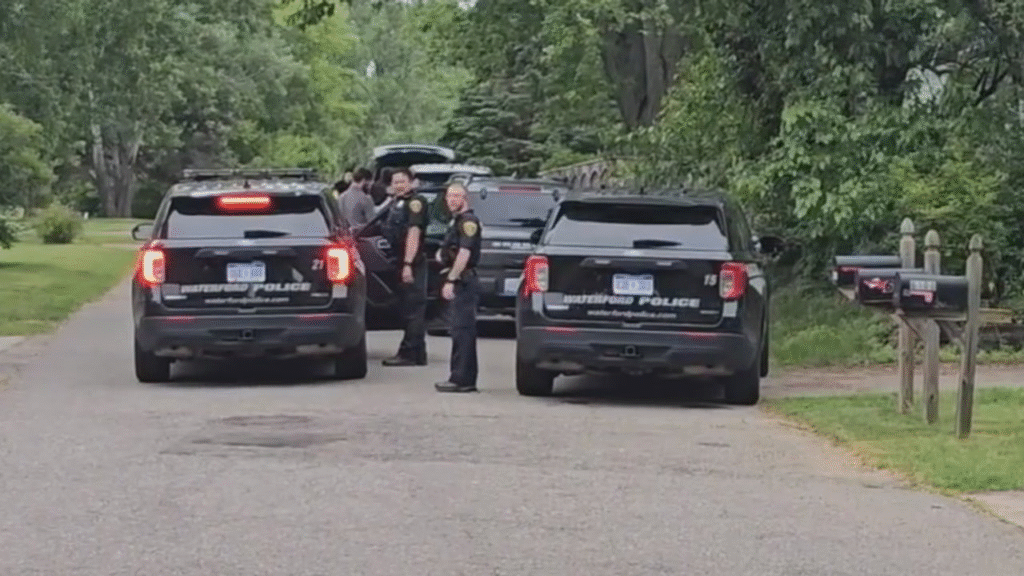
This candid confession, while chilling, provided police with clear evidence of his guilt. When officers arrived at the home, Martin was taken into custody without incident, showing no resistance. His willingness to turn himself in suggests a complex psychological state—perhaps a mix of guilt, resignation, or even a desire to be caught.
Read : What is Friendship Marriage: A Viral Marriage Trend in Japan
The suddenness of the attack raises questions about what triggered Martin’s actions. Was it a spontaneous outburst of rage, or had tensions been simmering for some time? The fact that the couple was engaged suggests they had plans for a future together, yet Martin’s drastic actions indicate a deep-seated conflict that ultimately led to tragedy. While the specifics of their relationship dynamics remain unclear, the mention of a “wedge” between Seth Thomas Martin and his roommate points to an external factor that may have exacerbated existing issues.
The Motive: A Wedge Between Roommates
At the heart of this case lies Seth Thomas Martin’s stated motive: his belief that Myers was driving a wedge between him and his roommate. During a court appearance on Monday, a detective revealed that Martin had expressed this sentiment to police, though no further details were provided about the nature of the conflict or the roommate’s identity.
This vague yet intriguing statement opens the door to speculation about the dynamics within Martin’s household. Was the roommate a close friend whose relationship with Martin was strained by Myers’ presence? Or was there a deeper, perhaps romantic, tension that Martin perceived as a threat?
Read : Christopher Rainey Killed His Landlord Roommate Over Eviction Notice
The idea of a “wedge” suggests a perceived division or rivalry, but without additional context, it’s difficult to pinpoint the exact nature of the conflict. Relationships, whether romantic or platonic, often involve complex interactions, and the introduction of a new partner can sometimes disrupt existing bonds.
If Martin felt that Myers was undermining his connection with his roommate, it could have created a sense of resentment or betrayal. However, the leap from relational tension to murder is extreme, indicating that Martin’s reasoning may have been distorted by other unresolved issues.
More disturbingly, authorities revealed that Martin had admitted to fantasizing about killing Myers early in their relationship. This admission is a critical piece of the puzzle, suggesting that his violent impulses were not a sudden reaction to a specific event but rather a recurring thought pattern. Such fantasies point to deeper psychological issues that may have gone unnoticed or unaddressed.
Did Martin exhibit warning signs that Myers or others overlooked? Was there a history of controlling behavior or emotional instability? These questions remain unanswered, but the combination of Martin’s stated motive and his violent fantasies paints a troubling picture of a man grappling with dark impulses.
The role of the roommate in this tragedy remains a mystery. Was the roommate aware of the tensions between Martin and Myers? Did they contribute, intentionally or not, to the conflict? Without further information, it’s impossible to assess their involvement, but their presence in Martin’s motive underscores the complexity of human relationships and how seemingly minor conflicts can escalate with devastating consequences.
Legal Proceedings and the Road Ahead
Following his confession, Seth Thomas Martin was arraigned on Monday, where a judge heard evidence in the case. The detective’s testimony, which included Martin’s own words from his police interview, laid bare the gruesome details of the crime.
The court learned of the approximate 10 stab wounds inflicted on Myers and Martin’s calm admission of guilt during his 911 call. Given the overwhelming evidence, the judge denied Martin bond, ensuring he would remain in custody pending further proceedings. His next court appearance, a probable cause hearing, is scheduled for June 27.
The denial of bond reflects the severity of the crime and the perceived risk Martin poses to the community. Murder charges, especially in cases involving premeditation or extreme violence, often result in strict pretrial detention. Martin’s confession and the lack of any reported resistance during his arrest may work in his favor during sentencing, as they suggest a degree of remorse or acceptance of responsibility.
However, his admission of violent fantasies could complicate his defense, as it may be used to argue that the crime was not a spontaneous act but the culmination of long-held desires. The probable cause hearing will be a critical step in determining whether there is sufficient evidence to proceed to trial. Given Martin’s confession and the physical evidence likely collected at the scene, it seems unlikely that the case will be dismissed.

The prosecution will likely focus on the brutality of the attack and Martin’s stated motives, while the defense may attempt to explore mitigating factors, such as mental health issues or emotional distress. If Martin’s fantasies about killing Myers are substantiated, the defense could argue for a psychological evaluation to assess his mental state at the time of the crime.
For the family and friends of Mallory Myers, the legal proceedings offer little solace in the face of such a profound loss. Myers, at 33, was likely looking forward to building a life with Martin, unaware of the danger lurking beneath the surface. Her death serves as a stark reminder of the unpredictability of human behavior and the importance of recognizing warning signs in relationships. As the case moves forward, the community of Waterford will grapple with the aftermath of this tragedy, seeking answers to questions that may never be fully resolved.
The murder of Mallory Myers by Seth Thomas Martin is a heartbreaking example of how personal conflicts can spiral into unthinkable violence. Martin’s belief that Myers was driving a wedge between him and his roommate, combined with his admitted fantasies of killing her, points to a troubled mind and a relationship fraught with tension.
The suddenness of the attack, the brutality of the stabbing, and Martin’s immediate confession create a complex narrative that defies easy explanation. As the legal process unfolds, the focus will shift to understanding Seth Thomas Martin’s motivations and ensuring justice for Myers.
This case serves as a sobering reminder of the fragility of human relationships and the devastating consequences of unresolved conflicts. For now, the memory of Mallory Myers lives on in the hearts of those who knew her, while the community mourns a life cut tragically short.