
In a disturbing incident that has sent shockwaves through communities in the United Kingdom, a young Sikh Woman Raped by two men in broad daylight in Oldbury, West Midlands. The attack, which occurred on Tuesday, September 9, 2025, near Tame Road, has been classified by West Midlands Police as a racially aggravated hate crime. During the assault, the perpetrators hurled racist abuse at the victim, explicitly telling her to “go back to your own country,” highlighting the intersection of sexual violence and xenophobia.
This event underscores the persistent challenges faced by minority communities in the UK, particularly South Asian and Sikh populations, amid rising reports of hate crimes. As investigations continue, the incident has sparked widespread outrage, calls for justice, and renewed discussions on community safety and racial tensions. The assault took place just before 8:30 a.m. in a secluded park area off Tame Road, a location that is typically considered safe for morning walks and daily routines. According to police statements, the woman was approached by two white men who subjected her to extreme violence.
The attackers not only committed the sexual assault but also made derogatory remarks targeting her ethnic and religious identity, emphasizing that she “does not belong here.” This verbal abuse was a clear indicator of racial motivation, leading authorities to treat the case under hate crime legislation. The victim, a British Sikh woman, reported the incident promptly, and she is currently receiving support from specialized services, though details about her condition remain private to respect her privacy and ongoing trauma.
Eyewitness accounts and initial police appeals describe the suspects in detail to aid the public in identifying them. One man is reported to be heavily built with a shaved head, dressed in a dark sweatshirt and wearing gloves. The second suspect was wearing a grey top with a silver zip. Both individuals are believed to be white men, and the police have intensified their search efforts, including reviewing CCTV footage from nearby areas and collecting forensic evidence.
West Midlands Police have issued a public appeal for information, urging anyone with dashcam footage, sightings, or other relevant details to come forward. “We’re investigating after a woman reported to us that she had been raped in Oldbury in what we are treating as a racially aggravated attack,” a police spokesperson stated, emphasizing the seriousness with which the case is being handled. A dedicated team of detectives is leading the probe, and enhanced patrols have been deployed in the area to reassure the local community.
This incident is not isolated but part of a troubling pattern of violence against the Sikh community in the UK. Just weeks prior, on August 2025, two elderly Sikh men were brutally assaulted outside Wolverhampton railway station by three teenagers. The victims, who were wearing traditional turbans that were dislodged during the attack, were repeatedly kicked while on the ground until bystanders intervened.
That assault, captured on video, also drew significant condemnation and highlighted vulnerabilities faced by visible Sikh identifiers like the turban. The Oldbury rape mirrors this in its racial undertones, with attackers targeting the woman’s Sikh identity as a point of prejudice. Community leaders have noted that such incidents have increased in frequency, possibly fueled by broader societal tensions, including economic pressures and political rhetoric that sometimes veers into xenophobia.
The timing of this attack is particularly poignant, coming shortly after a series of high-profile discussions on immigration and multiculturalism in the UK. Oldbury, a diverse town in the Sandwell borough with a significant South Asian population, has long been a hub for Sikh families who have contributed to local businesses, education, and public life.
However, recent years have seen a spike in reported hate crimes, with official statistics from the Home Office indicating a 20% rise in racially motivated offenses in the West Midlands region over the past year. This rape case amplifies concerns about the safety of women from ethnic minorities, who often face compounded risks of both gender-based and race-based violence. Advocacy groups like the Sikh Federation UK have described the assault as a “racist and misogynistic” act, demanding that the government prioritize resources for prevention and prosecution.
A Sikh women got Raped by two British white men as a racially motivated attack in Birmingham @TRobinsonNewEra @sneako @ShaykhSulaiman pic.twitter.com/KNoHOPYWRh
— Rob Stern (@SternRob67171) September 12, 2025
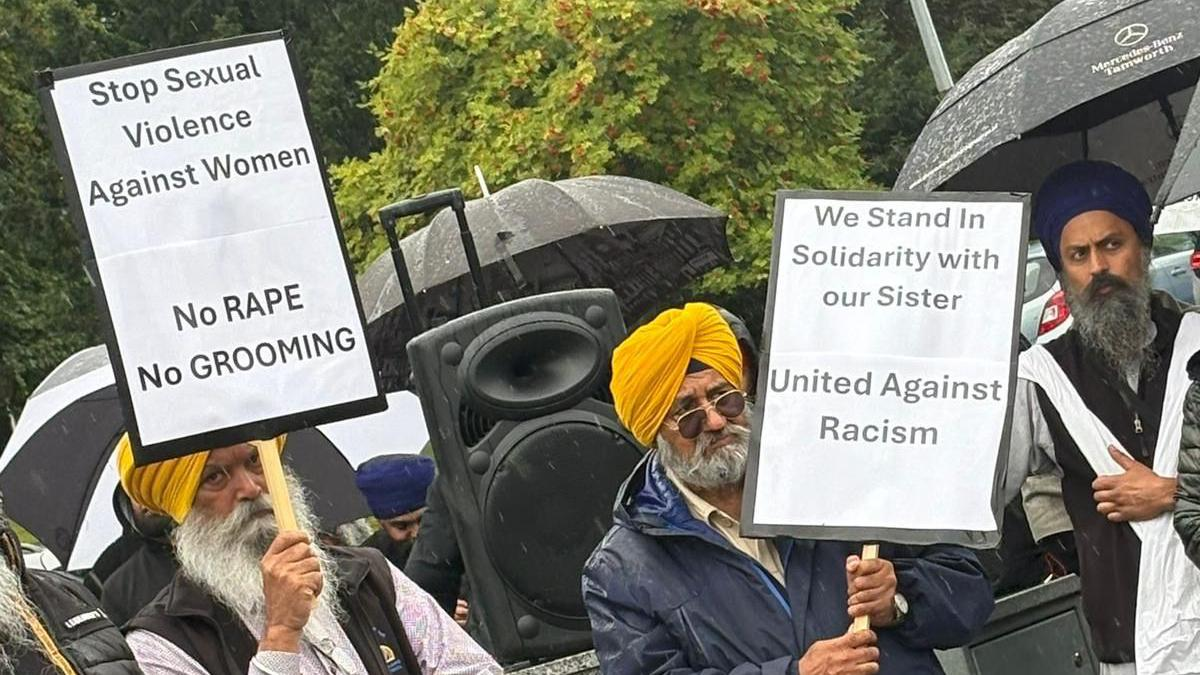
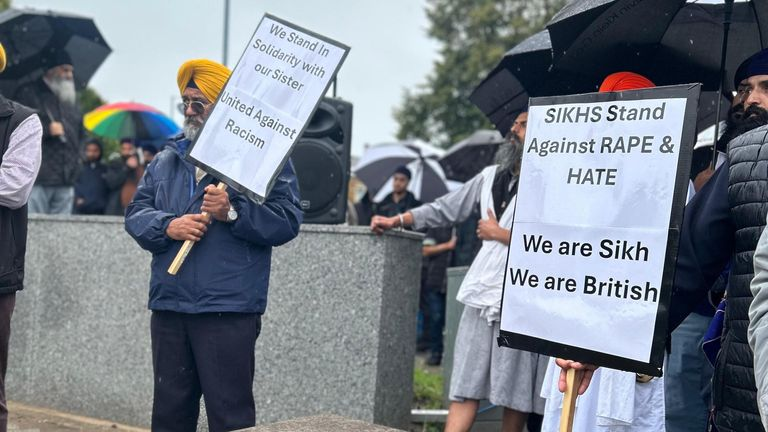
As news of the incident spread rapidly through local and international media, it quickly became a focal point for public discourse on social media and community forums. Hashtags related to Sikh rights and anti-racism trended in the West Midlands, with users sharing stories of similar experiences to raise awareness. Local residents expressed fear and solidarity, with some organizing impromptu vigils near the attack site to support the victim and call for stronger community policing.
The event has also prompted reflections on the broader implications for immigrant and minority integration in British society. For many Sikhs, who have been in the UK for generations—often tracing roots to post-World War II migrations—this attack feels like a betrayal of the multicultural ethos that the country prides itself on.
Community and Political Outrage
The response from the Sikh community and political figures has been swift and unified, transforming this tragedy into a rallying cry against racism and violence. Preet Kaur Gill, the Labour MP for Birmingham Edgbaston, was among the first to publicly condemn the attack, describing it as “an act of extreme violence but also being treated as racially aggravated.” In a heartfelt statement, Gill emphasized the victim’s right to belong, saying, “She does belong here. Our Sikh community and every community has the right to feel safe, respected, and valued. Racism and misogyny have no place in Oldbury, or anywhere in Britain.”
As a prominent Sikh politician herself, Gill’s words carried extra weight, resonating with constituents who see her as a voice for their concerns. She has pledged to collaborate closely with West Midlands Police to ensure a thorough investigation and to push for enhanced safety measures in public spaces. Similarly, Jas Athwal, the Labour MP for Ilford South, labeled the incident a “vile, racist, misogynist attack” that demands the utmost seriousness from authorities. Athwal linked the assault to “rising racial tensions” in the country, warning that unchecked prejudice could lead to more lives being devastated.
“Let’s be clear, this attack is a result of the rising racial tensions in our country, and now, a young woman has been left traumatised for life,” he stated, calling for a national conversation on curbing hate speech and its real-world consequences. His remarks highlight how political discourse can sometimes exacerbate divisions, urging leaders to foster unity rather than division. Other MPs, including Smethwick MP Gurinder Singh Josan, echoed these sentiments, confirming the racially aggravated nature of the crime and expressing disgust at the brutality involved.

Community organizations have also mobilized effectively. The UK Sikh Federation issued a strong statement denouncing the rape as both racist and misogynistic, urging the government to take immediate action to deliver justice. They highlighted the need for better support systems for victims of hate crimes, including counseling and legal aid tailored to ethnic minorities. Local gurdwaras in Oldbury and surrounding areas opened their doors for prayer sessions and support groups, providing a space for the community to grieve and strategize.
Sikh youth groups, often active on digital platforms, have launched campaigns to document and report similar incidents, aiming to build a database that could assist law enforcement. The outrage has extended beyond the UK, with diaspora communities in Canada and the US expressing solidarity and sharing resources on anti-racism initiatives. This collective response underscores the resilience of the Sikh community, known for its emphasis on equality, service (seva), and standing against injustice—a legacy rooted in the faith’s foundational principles.
However, it also reveals deep-seated frustrations with systemic failures. Many community members point to underfunding of hate crime units and delays in prosecutions as barriers to true accountability. In the wake of this attack, petitions have circulated calling for mandatory hate crime education in schools and increased funding for victim support services. The political outcry has put pressure on local councils in Sandwell to review public safety protocols, particularly in parks and green spaces where such assaults can occur undetected.
The intersection of racism and misogyny in this case has drawn attention from women’s rights groups as well. Organizations like Women’s Aid and Southall Black Sisters have offered their expertise, noting that ethnic minority women are disproportionately affected by sexual violence. They advocate for culturally sensitive approaches in investigations to avoid re-traumatizing victims. The community’s outrage is not just reactive but proactive, with plans for town hall meetings to discuss prevention strategies. This unified front demonstrates how a single incident can galvanize broader action, turning personal tragedy into communal empowerment.
Broader Implications and the Fight Against Hate Crimes
This horrific attack in Oldbury raises profound questions about the state of racial harmony in the UK and the urgent need for systemic change. As a nation built on waves of immigration that have enriched its cultural fabric, the UK faces ongoing challenges in combating xenophobia, especially when it intersects with gender-based violence. The Sikh community, with over 500,000 members in the UK, has long been a pillar of society—contributing to the NHS, armed forces, and economy—yet remains targeted due to visible religious symbols and perceived “otherness.”
This incident is a stark reminder that hate crimes are not relics of the past but persistent threats that require vigilant, multifaceted responses. Statistically, hate crimes in the UK have surged in recent years, with the Home Office reporting over 155,000 incidents in the year ending March 2025, a 10% increase from the previous period. Racial and religious motivations account for the majority, with South Asians, including Sikhs, overrepresented as victims.
The Oldbury rape exemplifies how such crimes can escalate from verbal harassment to physical assault, often in everyday settings like parks. Experts argue that economic anxieties, amplified by media narratives on immigration, contribute to this rise, creating an environment where perpetrators feel emboldened. The attackers’ slur—”go back to your country”—is a common trope in far-right rhetoric, underscoring the need to address online and offline hate speech.
In the context of Sikh experiences, this event echoes historical prejudices, from post-9/11 backlash to more recent assaults linked to mistaken identity with other groups. The recent Wolverhampton attack on elderly Sikhs, where turbans were knocked off, similarly invoked cultural disrespect. These patterns suggest a need for targeted education campaigns that highlight Sikh contributions and dispel stereotypes.
Policymakers are under pressure to implement the recommendations from the 2021 Sewell Report on racial disparities, which called for better data collection on hate crimes and community-led initiatives. Moreover, the intersection with sexual violence demands gender-specific interventions, such as training for police on cultural sensitivities to improve reporting rates, which currently hover around 50% for such offenses.
Looking ahead, the fight against hate crimes requires collaboration across sectors. Law enforcement must prioritize swift arrests and prosecutions to deter future perpetrators, while schools and workplaces can foster inclusive environments through diversity training. The Sikh community’s response—marked by resilience and advocacy—offers a model for other groups. As MP Preet Kaur Gill noted, every individual has the right to safety, regardless of background. This incident, while tragic, could catalyze positive change if it leads to policy reforms and heightened awareness.
Ultimately, the Oldbury attack is a call to action for the UK to reaffirm its commitment to multiculturalism. By supporting victims, holding perpetrators accountable, and addressing root causes of prejudice, society can prevent such atrocities. The victim’s courage in reporting the crime, amid fear and stigma, inspires hope that justice will prevail. As the investigation unfolds, the nation watches, hoping for a resolution that not only punishes the guilty but also heals divided communities. In a diverse country like the UK, ensuring safety for all is not just a moral imperative but a cornerstone of progress.