
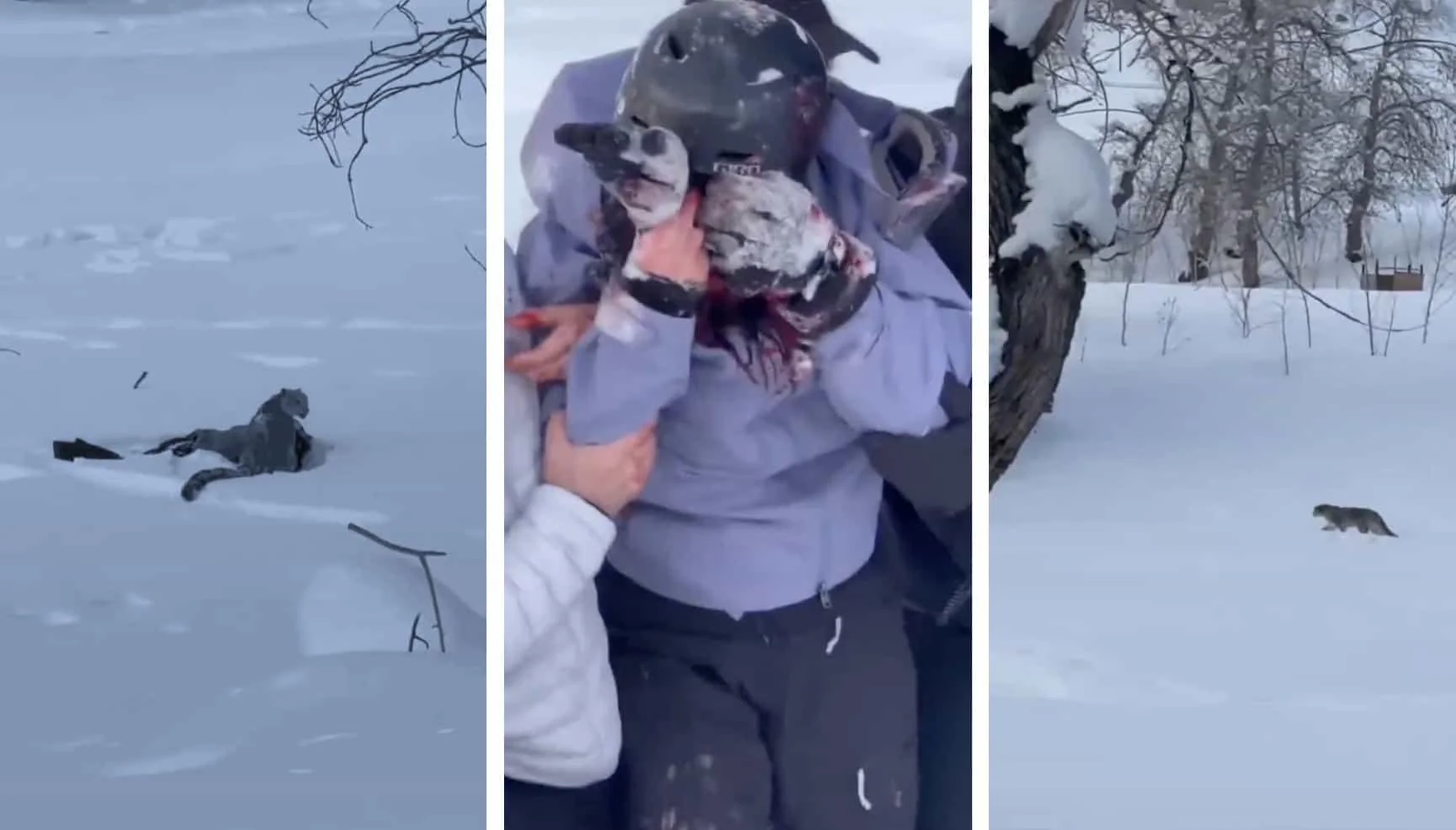
A disturbing incident at a renowned winter tourism site in northern China has drawn global attention after a female Skier Mauled by Snow Leopard, reportedly after moving closer to the animal to take a photograph. The attack, which was captured on video and rapidly spread across social media platforms, has reignited urgent discussions about wildlife safety, human behaviour in protected habitats, and the growing risks associated with social media-driven encounters with wild animals.
The incident occurred last week at Keketuohai UNESCO Global Geopark, a mountainous region known for its ski slopes as well as its role as a protected habitat for endangered wildlife, including snow leopards. While authorities have confirmed that the skier survived the attack and is receiving medical care, the footage has shocked viewers worldwide due to the rarity of such encounters and the apparent proximity between humans and a species that typically avoids people.
The case stands out not only because snow leopard attacks on humans are exceedingly uncommon, but also because it unfolded in a highly frequented tourist destination where warnings about wildlife presence were already in place. As officials review safety protocols at the site, the episode has become a stark example of how quickly recreational activities can turn dangerous when boundaries between humans and wildlife are crossed.
Skier Mauled by Snow Leopard at Keketuohai UNESCO Global Geopark
According to local reports and eyewitness accounts, the female skier was on the slopes at Keketuohai Geopark when she noticed a snow leopard nearby. The geopark, located in Xinjiang’s Altay region, is a designated UNESCO Global Geopark that balances tourism with conservation. During winter months, it attracts large numbers of skiers while also remaining part of the natural range of several protected species.
Witnesses stated that the skier moved closer to the animal, allegedly intending to take a photo or selfie. Despite posted advisories and general awareness that snow leopards inhabit the area, she reportedly approached the animal at close range. Moments later, the snow leopard lunged, knocking her to the ground. The attack unfolded rapidly. The animal was seen mauling the skier’s head and upper body as she lay on the snow, bleeding and largely motionless.
The incident lasted only seconds, but the severity of the attack immediately became apparent to onlookers, many of whom could be heard screaming and retreating in panic. Ski instructors and resort staff quickly intervened. Video footage shows several individuals rushing toward the scene, waving ski poles and shouting loudly in an attempt to scare the snow leopard away. Their actions appear to have been effective, as the animal eventually retreated, leaving the injured skier behind.
Emergency services were alerted, and the woman was transported to Fuyun County People’s Hospital. Authorities later confirmed that she survived the attack. Medical staff described her injuries as serious but stable, noting that her ski helmet played a crucial role in reducing the severity of head trauma.
Skier mauled by snow leopard after getting too close for a picture pic.twitter.com/PNiWA6Y9l1
— shahzaib javed (@zaibi0117) January 27, 2026
Doctors indicated that without protective gear, the outcome could have been far worse. Officials have not released the skier’s identity, and no further personal details have been made public. There have also been no reports of the snow leopard being injured, captured, or euthanised following the incident.
The Viral Video and Global Reaction
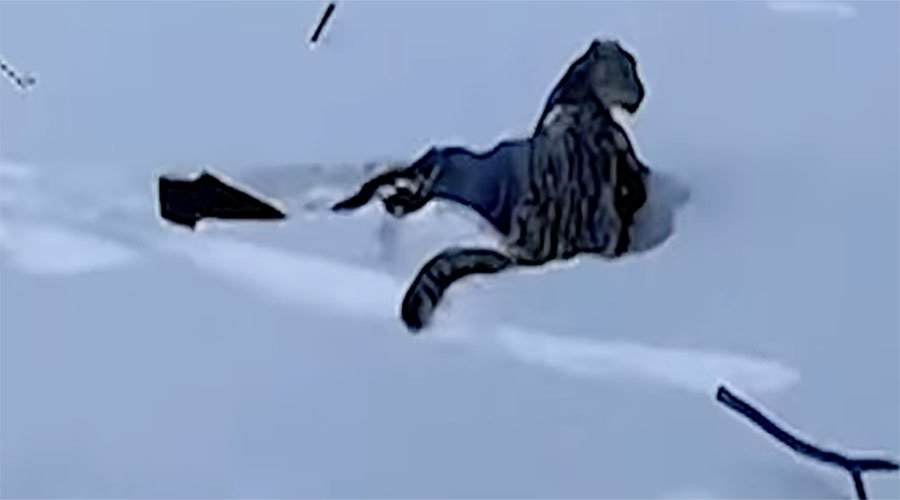
Footage of the attack spread rapidly across social media platforms including X, TikTok, and Facebook, where it was viewed millions of times within hours. The video shows the snow leopard standing over the fallen skier while bystanders shout in fear and attempt to keep their distance. Several platforms flagged the clip as disturbing, yet it continued to circulate widely, underscoring the powerful role of viral content in shaping public reaction.
Read : Skier Eric Battjes Dies After Crashing Into Tree at Copper Mountain Resort
The graphic nature of the footage sparked intense debate online. Many viewers expressed shock that such a rare animal-human encounter could occur in a busy ski resort, while others focused on the behaviour that preceded the attack. The suggestion that the skier approached the snow leopard to take a photo drew widespread criticism, with users pointing to the growing trend of risk-taking for social media content.
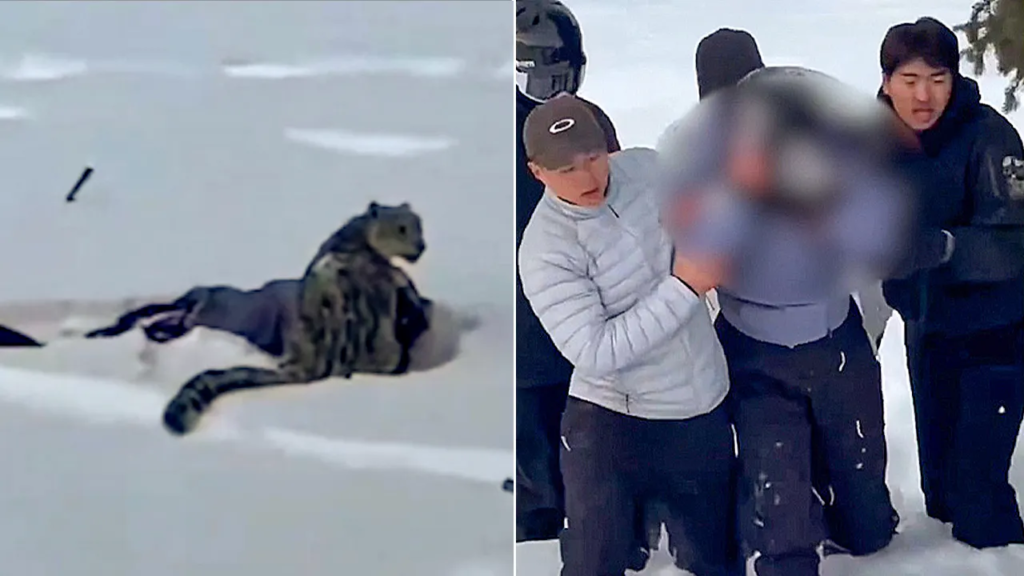
At the same time, there was significant relief expressed after confirmation that the skier survived. Conservation groups and wildlife experts used the moment to reiterate longstanding warnings about approaching wild animals, regardless of how calm or distant they may appear. The video also raised questions about crowd behaviour in wildlife encounters. In the footage, bystanders initially keep their distance, seemingly unsure how to respond. Only after the attack do trained staff intervene.
This hesitation highlighted the challenges faced by tourists and workers alike when confronted with unexpected wildlife interactions. The rapid spread of the video transformed what might otherwise have been a local incident into a global talking point. News outlets across multiple countries covered the story, often focusing on the contrast between the snow leopard’s reputation as an elusive animal and the sudden violence of the encounter.
Why Snow Leopard Attacks Are Rare and What Comes Next
Snow leopards are among the most elusive big cats in the world. Native to the mountainous regions of Central and South Asia, they are classified as endangered and are known for avoiding human contact whenever possible. Experts estimate that there are fewer than 7,000 snow leopards remaining in the wild, and documented attacks on humans are exceptionally rare.
Read : Skier Dies After Falling From Chairlift at Red Lodge Mountain Resort
Unlike lions or tigers, snow leopards do not see humans as prey. Conservation specialists explain that when attacks do occur, they are typically defensive in nature. In this case, experts believe the animal likely felt threatened or cornered due to the skier’s close proximity. The sudden movement of a person approaching for a photograph could have triggered a defensive response.
Local authorities confirmed that warnings about snow leopard sightings had already been issued in the Keketuohai area. The geopark lies within a protected habitat where the animals roam freely, particularly during winter when prey movements can bring them closer to human activity zones. Visitors are routinely advised to maintain a safe distance from wildlife and to avoid any attempt at close interaction.
Following the incident, officials announced that they are reviewing safety measures at the ski resort. This review includes evaluating the visibility and clarity of warning signage, assessing crowd control practices, and considering stricter enforcement of wildlife distance rules. Authorities have emphasised that the snow leopard was acting naturally and defensively, and that the animal itself should not be blamed for the encounter.
The case has renewed discussions among conservationists and tourism authorities about how to manage areas where recreational activities overlap with protected wildlife habitats. As winter tourism continues to grow in regions that are also ecologically sensitive, balancing human enjoyment with animal safety remains a complex challenge. While no new restrictions have yet been announced, officials indicated that enhanced education efforts for visitors are under consideration.
These could include mandatory safety briefings, increased patrols by trained staff, and clearer communication about the risks of wildlife encounters. The attack at Keketuohai has become a rare but significant example of what can happen when established boundaries between humans and wild animals are crossed. As investigations and reviews continue, the incident is likely to influence future policies at similar tourist destinations where endangered species and human recreation coexist.
Some genuinely nice stuff on this web site, I enjoy it.