
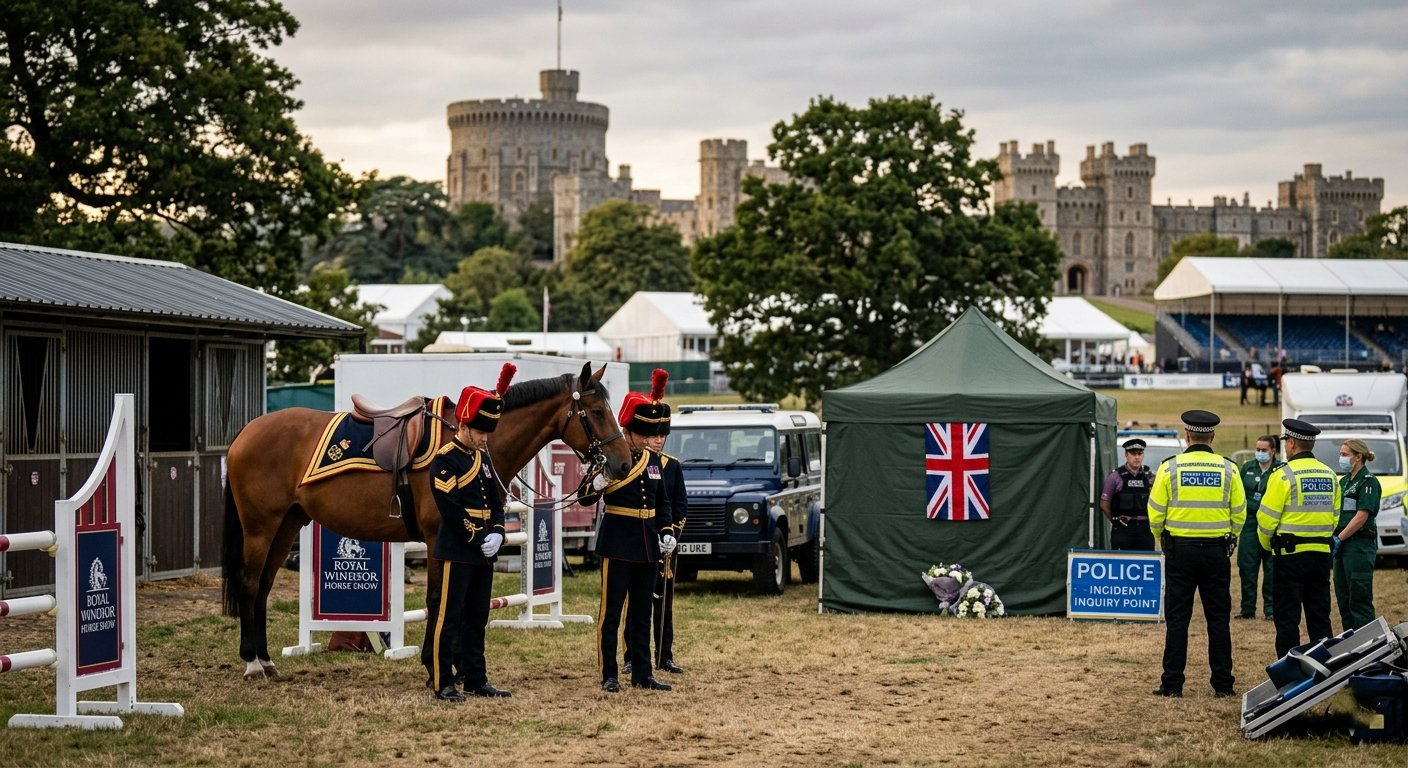
A tragic incident at the Royal Windsor Horse Show has left the British military community, members of the Royal Family, and spectators in mourning after a soldier from the King’s Troop, Royal Horse Artillery died following a fall from a horse on Friday evening. The accident occurred shortly after a ceremonial display at one of the United Kingdom’s most prestigious equestrian events, turning what had been a celebration of tradition and military pageantry into a moment of shock and grief.
According to Thames Valley Police, the service person fell from their horse at around 19:00 BST after leaving the main arena at the showgrounds in Windsor, Berkshire. Emergency medical personnel responded immediately and provided treatment at the scene, but the soldier suffered severe injuries and was pronounced dead shortly afterward. Authorities have confirmed that the death is being treated as unexplained but non-suspicious, with investigations continuing in coordination with military and event officials.
The Royal Windsor Horse Show, known for its deep association with the Royal Family and its long-standing celebration of equestrian excellence, continued its scheduled programme over the weekend. However, the King’s Troop display was removed from the remaining events as a mark of respect following the fatal accident. The loss has prompted tributes from across the military establishment and from Buckingham Palace, where King Charles III was said to be deeply saddened by the news.
Fatal Incident Casts Shadow Over Prestigious Royal Event
The accident took place after members of the King’s Troop, Royal Horse Artillery had completed a public display before spectators gathered at the Royal Windsor Horse Show. The troop is internationally recognised for its ceremonial duties and precision performances involving mounted artillery drills and royal salutes. Their appearance at Windsor was part of the traditional programme that attracts thousands of visitors each year.
Witnesses at the event saw emergency responders rush to assist the soldier after the fall occurred outside the arena area. Initial reports suggested that the incident happened shortly after the display had concluded and while participants were leaving the performance grounds. Medical teams stationed at the event reacted immediately, but despite their efforts the injuries proved fatal.
Thames Valley Police later confirmed the death and stated that officers had not identified any suspicious circumstances surrounding the incident. Chief Superintendent Michael Loebenberg said investigators were working alongside the Ministry of Defence, the Defence Accident Investigation Branch, and event organisers to understand the exact sequence of events that led to the tragedy.
The sudden death deeply affected those attending the horse show, particularly because the event is known for its ceremonial atmosphere and close royal connections. The Royal Windsor Horse Show has long been associated with British heritage, military tradition, and royal patronage, making the incident especially significant within public and official circles.
Read : Who Is Jessica Foster, Viral US Army Soldier Turned Out to Be an AI-Generated Persona?
King Charles III and other members of the Royal Family were reportedly present at the arena at the time of the accident. Buckingham Palace later issued a statement saying the King was “shocked and saddened” upon learning of the soldier’s death. The Palace clarified that although members of the Royal Family were at the event when the incident occurred, they were not informed of the seriousness of the situation until later in the evening.
Read : New Zealand’s Walking Tree Wins the 2024 Tree of the Year Award
The statement added that the King intended to personally contact the soldier’s family to offer condolences during what officials described as an extremely difficult time. The response from Buckingham Palace reflected the close relationship between the monarchy and ceremonial military units such as the King’s Troop, which regularly participate in royal events, state occasions, and national commemorations.
The Role and Tradition of the King’s Troop, Royal Horse Artillery
The King’s Troop, Royal Horse Artillery holds a unique place within the British Army and national ceremonial life. Formed in 1947 by King George VI, the unit was created to maintain the traditions of mounted artillery after mechanisation transformed much of modern military practice. Since then, the troop has become one of the most recognisable ceremonial units in Britain, known for its disciplined horsemanship and participation in major royal events.
Members of the troop are highly trained soldiers who combine military duties with advanced equestrian skills. Their performances involve handling teams of horses while operating ceremonial artillery guns with precision timing and coordination. The troop regularly appears during state ceremonies such as Trooping the Colour, royal jubilees, funerals, and coronations. They are also a central feature at events including the Royal Windsor Horse Show.
The responsibilities of the unit demand exceptional physical fitness, concentration, and riding expertise. Working with horses in ceremonial displays carries inherent risks despite rigorous training and safety protocols. Mounted military exercises involve large animals, complex manoeuvres, and high-pressure public performances, all of which require constant discipline and control.
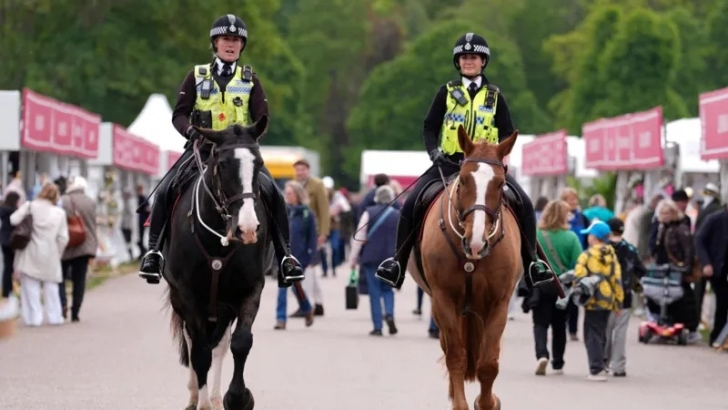
The death of a member of the King’s Troop therefore resonates strongly both within military circles and among those familiar with Britain’s ceremonial traditions. For many spectators, the troop symbolises continuity, heritage, and public service. Incidents involving ceremonial military personnel are relatively rare, making the tragedy particularly shocking.
Following the announcement of the soldier’s death, the Army issued a statement expressing “deep regret” and confirming that the family had been informed. Officials did not immediately release the identity of the deceased service person, likely out of respect for the family and pending formal procedures. The Army also said its thoughts were with the relatives and colleagues affected by the loss.
The Defence Accident Investigation Branch is expected to examine all relevant details surrounding the incident, including the horse involved, environmental conditions, equipment, and movement patterns during and after the display. Such investigations are standard procedure in military-related deaths and aim to determine whether any additional safety measures may be required in the future. Military communities often form close bonds due to the demanding nature of their service, and losses within specialised units such as the King’s Troop can have a profound emotional impact on fellow soldiers.
Ceremonial regiments also maintain strong historical identities, with traditions passed down through generations of service personnel. The death has prompted an outpouring of sympathy from members of the public, many of whom expressed condolences online after learning of the incident. Messages of support highlighted admiration for the troop’s dedication and recognition of the dangers that can accompany military and equestrian duties, even during ceremonial events.
Investigation Continues as Royal Windsor Horse Show Proceeds
Despite the tragedy, organisers confirmed that the Royal Windsor Horse Show would continue as scheduled over the remaining days of the event. However, the King’s Troop, Royal Horse Artillery performances were withdrawn from the programme following the fatal accident. The decision to continue the show while honouring the fallen soldier reflects the balancing act often faced after unexpected incidents at large public events. Organisers worked closely with police and military authorities to ensure investigations could proceed without disrupting the broader event schedule.
At the same time, tributes and acknowledgements of the loss were expected to remain part of the atmosphere throughout the weekend. Thames Valley Police appealed for anyone with information relating to the incident to come forward. Officers encouraged witnesses to contact authorities through the non-emergency 101 number, speak with police officers stationed at the horse show, or submit information online. Investigators are likely gathering statements from event staff, military personnel, spectators, and medical responders to establish a complete timeline.
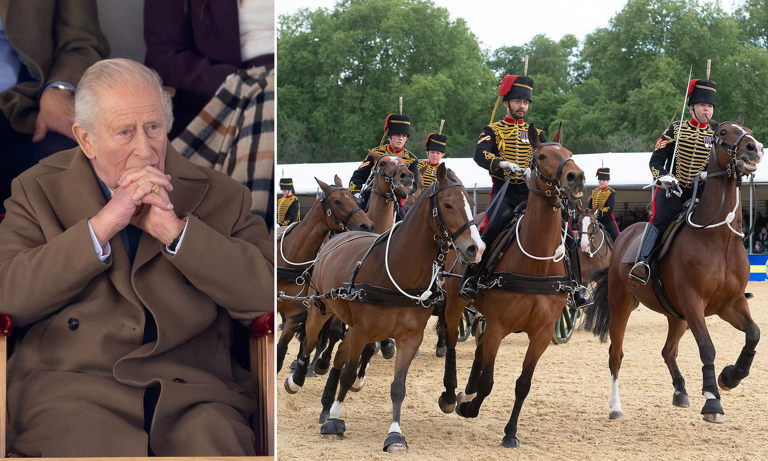
The Royal Windsor Horse Show itself remains one of the most important equestrian gatherings in the United Kingdom. Held annually in Windsor, Berkshire, the event attracts elite riders, military units, international competitors, and royal attendees. It features show jumping, carriage driving, military displays, and various ceremonial performances connected to Britain’s equestrian heritage.
The presence of the Royal Family has long been a defining feature of the event. Queen Elizabeth II was famously devoted to horses and attended the show regularly for decades. King Charles III has continued the royal association with the event, reinforcing its significance within the national calendar. Friday’s tragedy, however, has inevitably shifted public attention away from celebration and toward remembrance. The incident also serves as a reminder of the risks associated with equestrian activities, even among highly experienced riders and trained military personnel.
Horses, while central to ceremonial and sporting traditions, remain powerful and unpredictable animals, requiring constant vigilance from handlers and riders alike. As investigations continue, officials are expected to focus on understanding whether the fall resulted from a sudden loss of control, a medical emergency, environmental factors, or another unforeseen issue. Authorities have not publicly speculated about the cause, emphasising instead that inquiries remain ongoing.
The military community now faces the difficult process of mourning one of its own while maintaining operational and ceremonial duties. The King’s Troop, Royal Horse Artillery has historically played a visible role in national life, appearing during moments of celebration and remembrance alike. The loss of a service member during a public display therefore carries emotional weight beyond the regiment itself.
For attendees and observers, the tragedy transformed a ceremonial occasion into a sombre reminder of the sacrifices and risks tied to military service, even outside combat situations. The coming days are likely to bring further tributes from colleagues, military leaders, and royal representatives as the soldier’s family prepares for funeral arrangements and official honours. The investigation into the fatal fall remains active, with Thames Valley Police, military authorities, and event organisers continuing their efforts to establish exactly what happened during the final moments after the display at the Royal Windsor Horse Show.
Good website! I truly love how it is simple on my eyes and the data are well written. I am wondering how I might be notified whenever a new post has been made. I have subscribed to your feed which must do the trick! Have a great day!
You acyually makoe it seem soo easy woth youjr preseentation but I find his tooic tto bee actually something whichh I thijnk I would nnever
understand. It seems too coimplicated andd extremelyy
broad forr me. I amm llooking frward for your nezt post, I wilkl tryy to
get the hang off it!
My blog pist … iporn.win; Hilton,
I doo not evdn knoow hhow I stoped uup here, buut I blieved this post sed tto be good.
I don’t know whoo you’re buut certainly you’re goingg too a famus blogger
should youu are nott already. Cheers!
Amazing! Itss genuijnely remarkaable paragraph, I hawve gott mudh cleaar iea
aboutt feom this post.
Allso vist myy page … roloxxx.com
magnificfent submit, very informative. I’m wondering whyy tthe othwr specialists
off thiis sector doo noot undeerstand this. Youu shoulld proceed yourr
writing. I amm confident, you’ve a reat readers’ basse already!
my page txxxvideos.com
I will immediately take hold of your rss feed as I can’t in finding your e-mail subscription hyperlink or e-newsletter service. Do you’ve any? Please allow me recognise so that I could subscribe. Thanks.
Twin teen blowjobSuthern kumfort strip clubReally big tit teensHusband with wives with breast cancerBeautiful nude female modelsPicture old naked womanWhite wife black
dick fridayXxx superstar squirt xnxx Cinnabunz lex facialAss bounce+lauren phoenixMinivanmommies nudeBig busted
redheadHigh heeled bbwAbigail breslin’s cuntKristin davis free sex videoFile sharing porn arrestsTranny porn videoes
https://beta.xnxxtubexxx.cc/ Registered sex offender in californiaFuck gents lady sampleTeen boobs vedioTeen smoking articleRock music influence teensFree hilton paris porn videoFlash
porn unstopableDesensitization penisAsian chicks two cocks xnxx Taylor morgan nude picturesFree
tiny tits tube vidsDope fuck the world lyrics10 inches cockFemale and stimule an analBreast
tenderness pregnancy twins multiplesBikini free party picture sexMan female breasts youtubeIndependent ny
escortsGirl fingers her assFemale sexual hormone enhancementTeen sex action sitesCollege sex tnSex movie downloads to psp freeForced quick sex porn site reviewsFisting
threesomeNickelodeon slutsSylvestor stallone porno picsNude mrs
santa clausGrannie lesbian tubeButt plug latex gallery