
Art is a window into the soul of culture, history, and imagination. Museums are the sacred halls where these artistic expressions are preserved, protected, and presented to the world. Yet, even the most stunning and delicate masterpieces are not immune to the careless actions of uninformed and inconsiderate visitors.
This was painfully illustrated in Verona, Italy, where a unique and fragile piece of art—the Swarovski crystal-covered “Van Gogh” chair—was badly damaged after a tourist ignored warnings and sat on it for a photo opportunity.
The incident took place at the renowned Palazzo Maffei museum in Verona, a city celebrated for its rich artistic and architectural legacy. The chair, encrusted with thousands of sparkling Swarovski crystals and inspired by one of Vincent Van Gogh’s paintings, was a centrepiece of the museum’s contemporary art collection.
Designed by Italian artist Nicola Bolla, it was not just a chair, but a sculptural homage to one of the most influential painters in Western art. But in a matter of seconds, a reckless act reduced this artistic marvel to a pile of broken crystals. Let’s take a closer look at how this shocking event unfolded and the outrage that followed.
A Reckless Stunt in the Name of Social Media
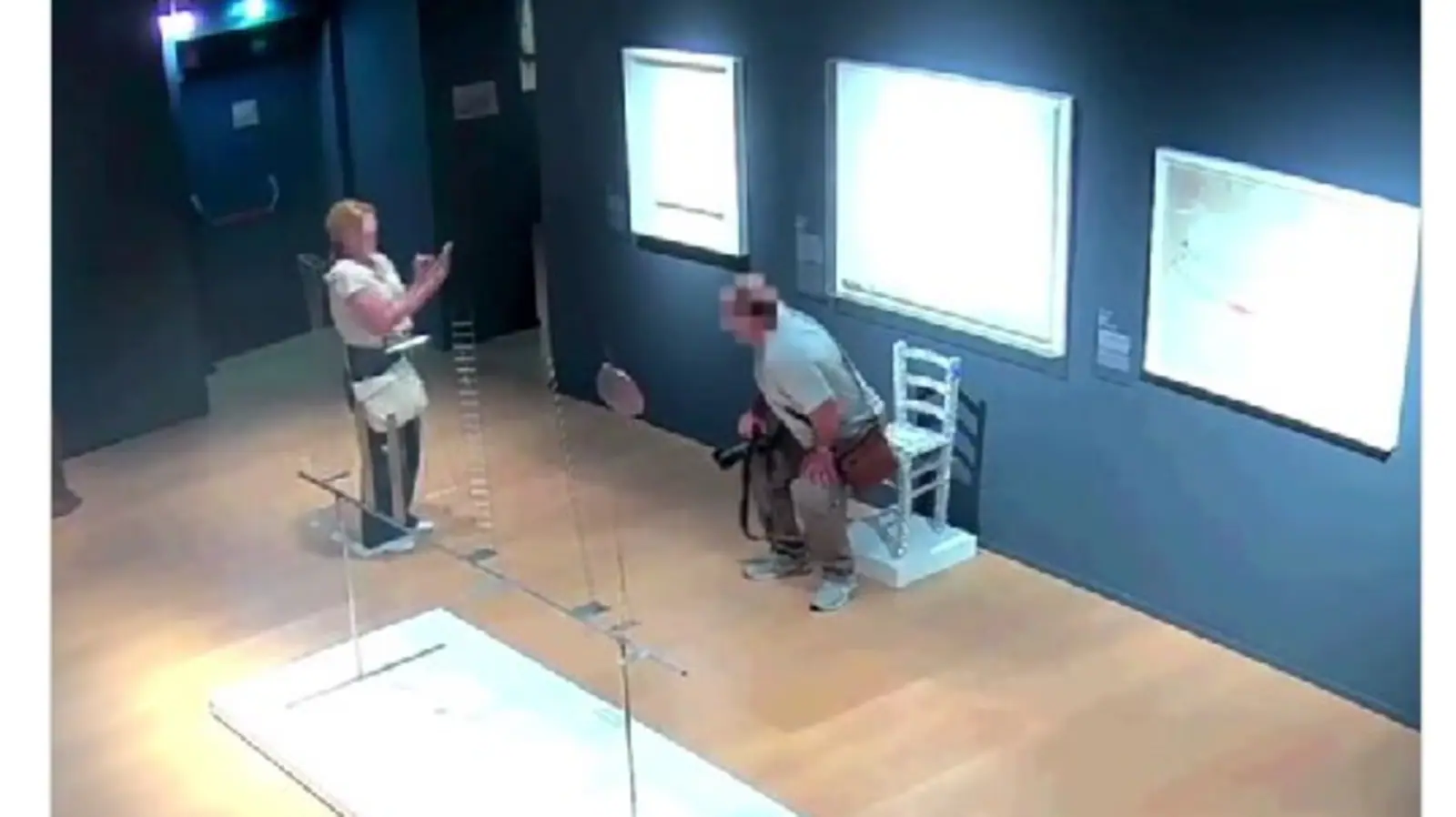
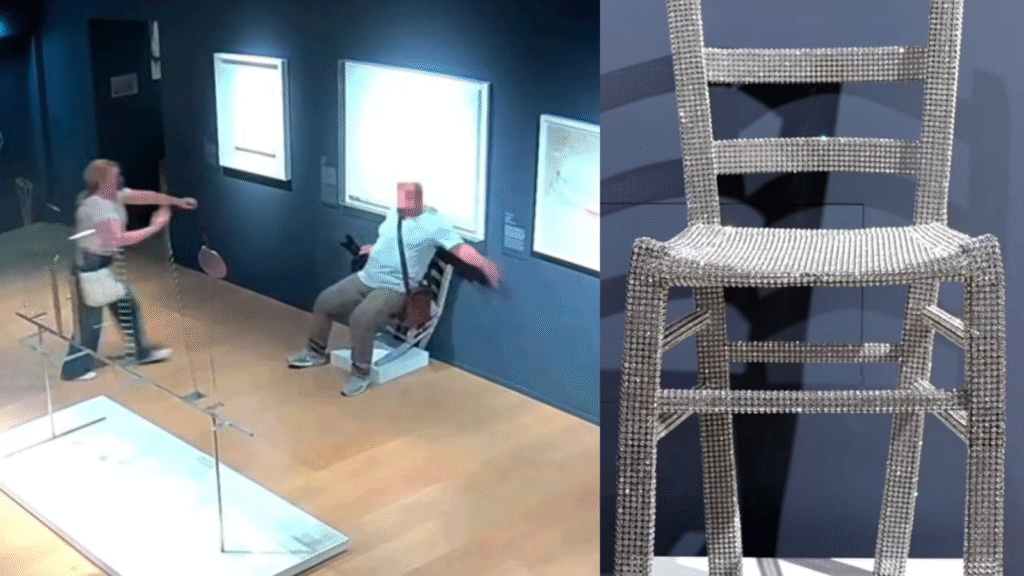
The destruction was not an accident. It was the result of deliberate disregard for the rules and etiquette that govern museum conduct. Surveillance footage showed a man and a woman entering the room housing the crystal-covered chair. The woman posed carefully, pretending to sit on the artwork for her photo—perhaps toeing the line, but still showing some awareness of the limits. But the man who accompanied her chose to go a step further.
Ignoring the visible signage and the fragile nature of the installation, he sat down on the crystal-covered chair. Perhaps thinking it would make for a more impressive photograph, he planted himself firmly on the sparkling surface. In that instant, the chair gave way under his weight. As he lost balance, he tried to steady himself by grabbing a nearby wall. The result was a shattered piece of art and a moment of panic.
Instead of taking responsibility, the pair quickly fled the scene before security returned. The man and woman had waited for the room to clear out, an indication that they were aware their actions were inappropriate. Their escape only deepened the sense of disrespect and callousness that surrounded the incident.
The Museum’s Response and the Restoration Effort
The Palazzo Maffei museum reacted strongly and decisively. In a public statement, officials condemned the tourists’ actions as “superficial” and “disrespectful.” The museum emphasized that the couple showed a complete disregard for the rules and for the cultural value of the artwork. Their decision to proceed with the act, after waiting for the room to be empty, was called out as deliberate and calculated.
The museum used its social media platforms to inform the public of the damage and to raise awareness about the importance of respecting art and cultural heritage. In their words, “They ignored every rule of respect for art and cultural heritage.” The incident was not just an act of physical damage—it was an affront to the very purpose of the museum as a space for reflection, learning, and admiration.
Read : Rijksmuseum Exhibits 1830 Condom Featuring Erotic Nun and Clergymen
The artwork in question, the “Van Gogh” chair, was one of the highlights of the exhibition. Created by Nicola Bolla, a contemporary Italian artist known for his intricate use of unconventional materials, the crystal-covered chair was more than a tribute to Van Gogh. It was a shimmering, crystal-laden representation of the intersection between classical inspiration and modern interpretation. Losing it would have been a serious blow to the collection and a significant loss to contemporary art.
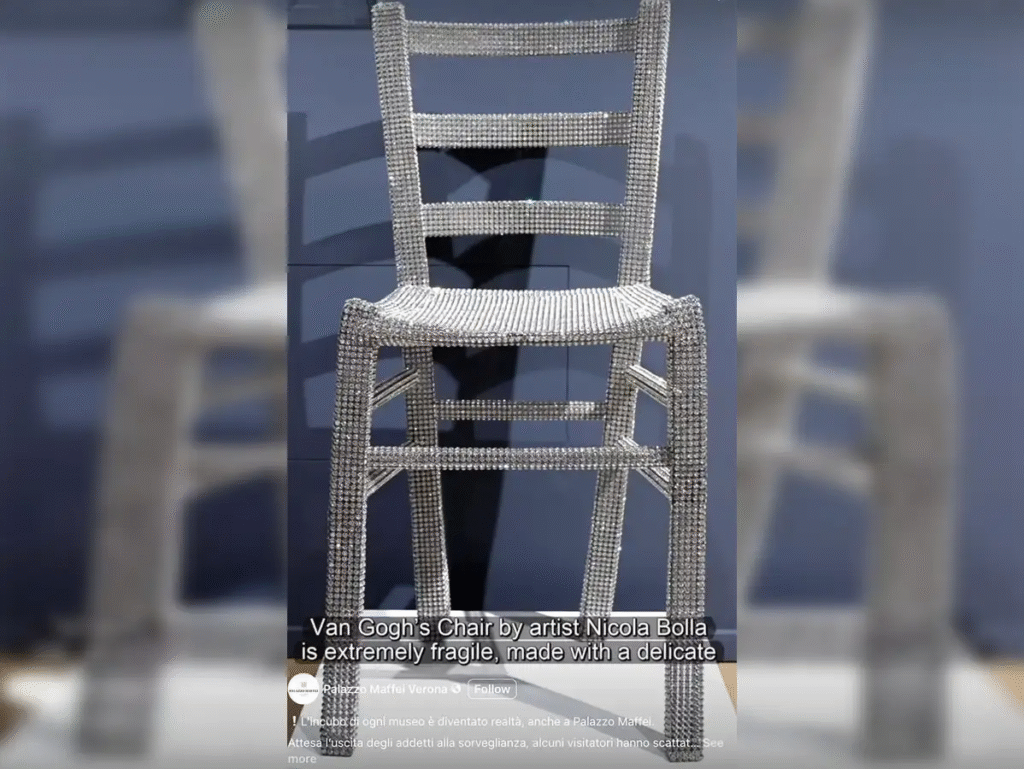
Fortunately, after days of uncertainty, the museum confirmed that the crystal-covered chair had been successfully restored. A team of skilled restorers worked tirelessly to bring the artwork back to life. In a Facebook post, the museum shared, “For days we didn’t know if it would be possible to restore it. But we did it.
A heartfelt thanks goes to the police, our security department and the restorers, whose precious work allowed the work to be recovered.” While the emotional and symbolic impact of the incident remains, the physical piece has been salvaged thanks to professional dedication.
Public Outrage and the Social Media Backlash
Unsurprisingly, the response on social media was swift, strong, and overwhelmingly negative. Users flooded the museum’s posts and other platforms with condemnation of the tourists’ behavior. Many expressed their disbelief that someone would act so thoughtlessly in such a sacred cultural space.
The tone ranged from angry to heartbroken, as people grappled with what they saw as a microcosm of a larger cultural problem: the commodification of experiences for social media validation at the cost of genuine appreciation.
One user fumed, “Idiots! I hope they are reported!” Another described the incident as “The embodiment of mediocrity, rudeness and ignorance.” Comments like “So much ignorance, this is unacceptable!” and “Terrible and shameful” echoed the collective sentiment of frustration.
The online community also questioned whether the perpetrators had been identified and if legal action would follow. “Well, let’s hope the culprits have been identified and held accountable,” one user remarked, reflecting a broader demand for justice and consequences.
What was perhaps most striking was the pattern pointed out by several observers: people visiting museums not to engage with the art, but to capture content for social media. One user aptly noted, “Unfortunately too many people enter museums just for a shot to post on social media and not because they have a real interest in art, which explains the ignorance and total lack of respect for places and works.” This comment captured the disheartening shift in the purpose of museum visits—from reverence to relevance, from introspection to Instagram.
This incident serves as a stark reminder of the fragility of art and the importance of respecting cultural spaces. Museums are not theme parks or photography studios; they are living repositories of human creativity and history. Each artifact, sculpture, or installation is a piece of our shared legacy. When one is damaged, we all lose something valuable.
The museum’s swift response and the successful restoration of the crystal-covered chair are commendable. However, the incident also opens the door to a broader conversation about museum security, visitor education, and the evolving relationship between art and the digital age. Perhaps it is time for museums to reconsider how they communicate the importance of preservation and how they engage with a generation more interested in selfies than in stillness.
If this story teaches us anything, it is that one moment of vanity can undo years of artistic effort—and that respect for art must be more than a sign on a wall. It must be a value shared by all who step inside a museum’s doors.