
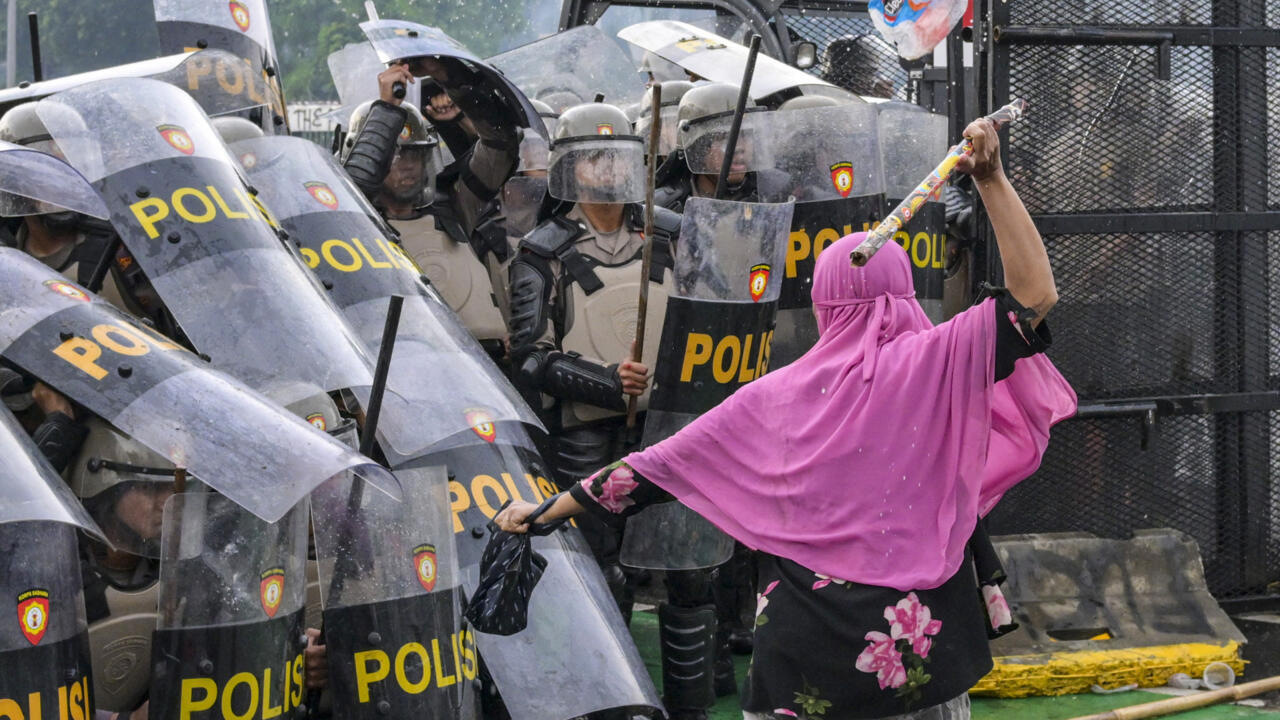
On August 28, 2025, Indonesia was rocked by the tragic death of 21-year-old Affan Kurniawan, a motorcycle taxi driver killed after being struck and run over by an armored police vehicle during a protest in Jakarta. The incident, which occurred outside the Indonesian House of Representatives, has sparked widespread outrage, fueling mass protests across the country.
Demonstrators, including students, motorcycle taxi drivers, and labor groups, have taken to the streets to demand justice for Kurniawan, police reform, and action against excessive parliamentary allowances. The unrest marks a significant challenge for President Prabowo Subianto, whose administration is nearing its one-year anniversary.
The Tragic Death of Affan Kurniawan
Affan Kurniawan, a 21-year-old ride-hailing driver working for Gojek and Grab, was not a protester but an innocent bystander caught in the chaos of a demonstration in Pejompongan, Central Jakarta. On the evening of August 28, 2025, Kurniawan had just completed a food delivery order and was reportedly preparing to pick up his next passenger when violent clashes erupted between riot police and protesters outside the House of Representatives.
The protests, which began earlier in the week, were driven by public anger over a range of issues, including a controversial housing allowance for parliamentarians, rising living costs, and unemployment. According to eyewitness accounts, an 11-ton armored vehicle from the National Police’s Mobile Brigade (Brimob) unit sped through the crowd of demonstrators, striking Kurniawan and causing him to fall.
Instead of stopping, the vehicle continued moving, running over him. Video footage circulating on social media captured the harrowing moment, showing the tactical vehicle plowing through the crowd and continuing despite objects being thrown at it. Kurniawan was rushed to Dr. Cipto Mangunkusumo Hospital, but medical efforts to save him were unsuccessful, and he was pronounced dead shortly after.
Kurniawan’s death sent shockwaves through Indonesia, particularly among the ride-hailing community. His mother, Erlina, a 41-year-old housemaid, spoke of her grief, describing her son as the backbone of their family who had been saving to buy land and build a house in their village in Lampung, South Sumatra. Fellow drivers remembered Kurniawan as hardworking, humorous, and generous, often sharing his mother’s homemade breakfasts with friends.
WATCH: Protesters set fires in Jakarta on Thursday, August 28, after motorcycle taxi driver Affan Kurniawan died during clashes with police over low wages and lawmakers’ perks.
— PTVph (@PTVph) August 31, 2025
(1/3) pic.twitter.com/b0Fj6XgUt8
His funeral on August 29 at Karet Bivak Public Cemetery in Jakarta drew thousands of motorcycle taxi drivers, who formed a convoy to honor him, many wearing the signature green jackets of Gojek. The outpouring of grief underscored the deep sense of solidarity among drivers and the broader public, who viewed Kurniawan’s death as a symbol of systemic issues, including police brutality.
Nationwide Protests and Public Outrage
The death of Affan Kurniawan ignited a firestorm of protests that quickly spread beyond Jakarta to major cities like Surabaya, Medan, Bandung, Makassar, and Yogyakarta. Demonstrators, including students from the University of Indonesia and the All-Indonesia Students’ Union, marched to police headquarters and government buildings, demanding justice for Kurniawan and an end to excessive police force. The hashtag #polisipembunuh, translating to #killerpolice, trended on social media, amplifying public anger and calls for accountability.
The protests were initially sparked on August 25 by reports that all 580 members of the House of Representatives were receiving a monthly housing allowance of 50 million rupiah (approximately $3,000), nearly ten times the minimum wage in Jakarta and twenty times that in poorer regions. This allowance, introduced in 2024, was seen as extravagant and insensitive at a time when many Indonesians are grappling with soaring living costs, rising taxes, and mass layoffs.
Read : Three Arrested After Police Officers Injured in Protest Outside Bell Hotel in Epping
Protesters, including labor unions like the Indonesian Trade Union Confederation, also demanded higher wages, tax reforms, and protections against outsourcing and layoffs. The killing of Kurniawan added fuel to these grievances, transforming the demonstrations into a broader movement against police brutality and government insensitivity.
Thousands of delivery and motorcycle taxi drivers joined the funeral of Affan Kurniawan, killed on Aug 28 when an armored police van ran him over outside Indonesia’s parliament as police dispersed protests demanding wage hikes, lower taxes, and cuts to political perks.
— Maktoob (@MaktoobMedia) August 29, 2025
Watch pic.twitter.com/pxF2MOJIJT
Clashes between protesters and security forces intensified on August 29 and 30. In Jakarta, demonstrators marched to the Mobile Brigade headquarters, some attempting to storm the compound. Police responded with tear gas and water cannons, while protesters hurled rocks, bottles, fireworks, and Molotov cocktails.
In the Kwitang neighborhood, a five-story building near the police compound was set ablaze, trapping several people inside. In Surabaya, protesters stormed the governor’s office, and in Makassar, the local parliament building was torched, resulting in four deaths. In Surakarta, a joint prayer between demonstrators and police turned chaotic when provocateurs infiltrated the crowd, leading to vandalism and further clashes. These incidents highlight the escalating tensions and the deep-seated frustration with both the government and security forces.
Government and Police Response
The Indonesian government and police have faced immense pressure to address the crisis. President Prabowo Subianto, in a video message on August 29, expressed shock and disappointment at the “excessive actions” of the police, calling for calm and ordering a thorough and transparent investigation into Kurniawan’s death. He emphasized that officers involved must be held accountable and visited Kurniawan’s family on August 29 to offer condolences and pledge financial support. Jakarta’s governor, Pramono Anung, also visited the family, committing to cover funeral costs and provide additional assistance.
The National Police, led by Chief Listyo Sigit Prabowo, issued a public apology to Kurniawan’s family and the ride-hailing community, acknowledging that the 21-year-old was not involved in the protests but was simply performing his job. Seven members of the Mobile Brigade Corps were detained and found to have violated the police professional code of ethics.
They were placed on leave until September 17, 2025, pending further investigation. Jakarta Police Chief Asep Edi Suheri also apologized and confirmed the incident, while Inspector General Abdul Karim provided updates on the case, promising legal action if violations were confirmed.
Despite these responses, public trust remains low. Critics, including Amnesty International Indonesia’s executive director Usman Hamid, have pointed to a pattern of police brutality, citing Kurniawan’s death as one of many cases of excessive force. The Indonesian Legal Aid Foundation has called for investigations into police conduct, alleging repressive tactics, including the use of special operations units typically reserved for combating terrorism. Protesters have also accused the police of obstructing legal aid and targeting vulnerable groups, such as teenagers, during arrests.
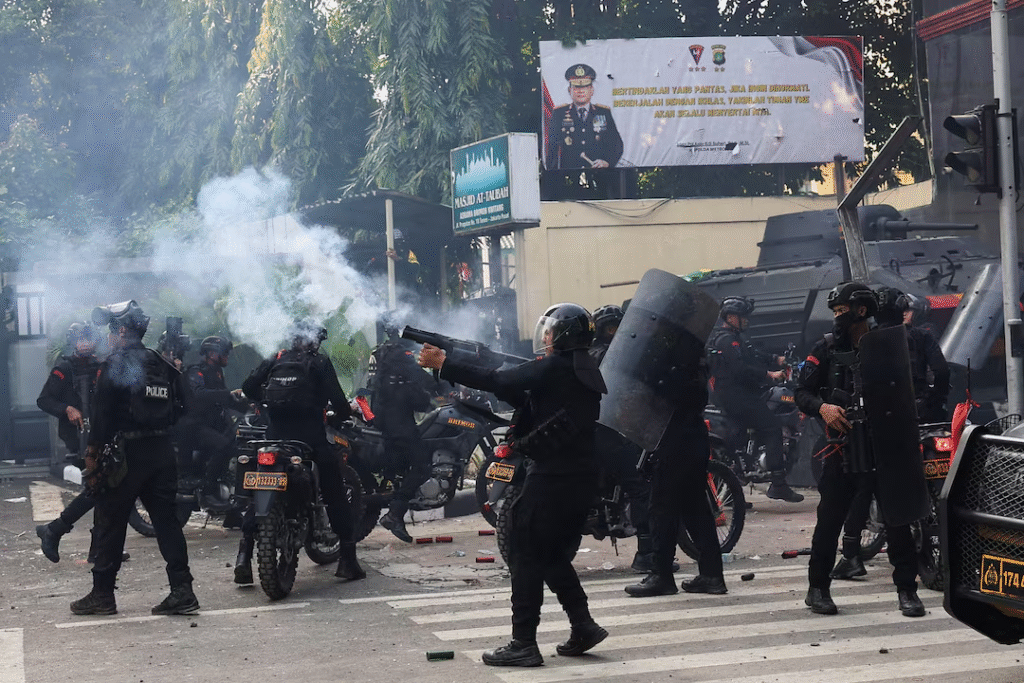
The government’s broader policies have come under scrutiny as well. President Prabowo’s budget cuts to fund initiatives like a free meal program for schoolchildren and a new sovereign wealth fund have sparked discontent, exacerbating economic frustrations. The protests, now in their fifth day as of August 30, represent the most significant challenge to Prabowo’s presidency, which has prioritized rapid, state-driven growth but struggled to address public grievances over inequality and governance.
The death of Affan Kurniawan has become a rallying cry for Indonesians fed up with economic inequality, excessive parliamentary privileges, and police brutality. What began as protests against a lavish housing allowance for lawmakers has evolved into a nationwide movement demanding systemic change.
The tragic loss of a young, hardworking driver has galvanized students, workers, and ride-hailing drivers, who see Kurniawan’s death as emblematic of broader injustices. The government’s apologies and promises of investigation have done little to quell the unrest, as protesters continue to clash with security forces and demand accountability.
As Indonesia grapples with this crisis, the events of August 2025 highlight deep-seated issues that require more than temporary measures or financial aid to resolve. The call for justice for Affan Kurniawan is not just about one life lost but about addressing the systemic failures that have left millions feeling unheard and marginalized.
For President Prabowo Subianto, the path forward will require balancing public demands for reform with maintaining stability in a country on edge. Whether the government can deliver on its promises of accountability and address the root causes of the protests remains to be seen, but for now, the streets of Indonesia remain a battleground for justice and change.