
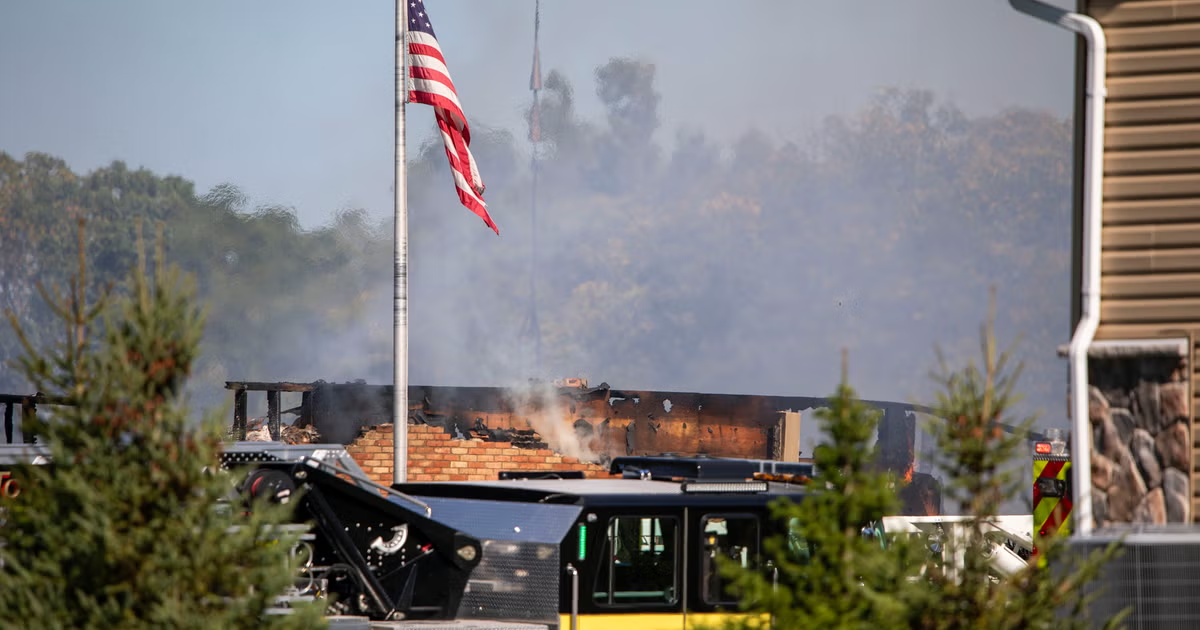
In a shocking act of violence that has left communities reeling, a mass shooting unfolded during Sunday morning worship services at a Church of Jesus Christ of Latter-day Saints in Grand Blanc Township, Michigan, on September 28, 2025. The assailant, identified as 40-year-old Thomas Jacob Sanford from nearby Burton, Michigan, rammed his vehicle into the church building and unleashed a barrage of gunfire on hundreds of congregants gathered for the service.
The attack, which also involved arson, claimed the lives of four individuals and injured eight others, turning a place of peace and reflection into a scene of unimaginable horror. As investigations continue, this tragedy underscores the fragility of safety in everyday spaces and the profound impact of gun violence on American soil. The incident occurred just before 10:30 a.m. local time at the chapel located in the 4200 block of McCandlish Road, a quiet suburban area about 60 miles northwest of Detroit.
According to Grand Blanc Township Police Chief William Renye, emergency calls flooded in at 10:25 a.m., reporting shots fired and a vehicle crashing into the structure. Sanford, driving a Chevrolet Silverado truck, accelerated through the front doors, shattering glass and sending worshipers into panic. He then exited the vehicle armed with what authorities described as an assault rifle and began firing indiscriminately into the crowd. Eyewitness accounts, shared through initial police briefings, paint a picture of chaos: families diving for cover behind pews, children screaming, and brave individuals attempting to shield others from the onslaught.
The rapid escalation didn’t end with the gunfire. Investigators believe Sanford deliberately poured an accelerant—possibly gasoline from canisters in his truck—throughout the sanctuary and ignited it, engulfing parts of the building in flames. Thick black smoke billowed from the chapel, complicating rescue efforts as firefighters battled both the blaze and the ongoing threat. The fire spread quickly, damaging the wooden interior and forcing evacuations amid the acrid fumes. By the time the first responders arrived, the scene was a nightmarish blend of bullet casings, bloodstains, and smoldering debris.
Law enforcement’s response was swift and decisive. Officers from the Grand Blanc Township Police Department, supported by Genesee County Sheriff’s deputies, converged on the site within minutes. As they approached the parking lot behind the church, they encountered Sanford, who had retreated outside after the initial assault. A fierce exchange of gunfire ensued, lasting mere seconds but ending with Sanford being fatally shot at 10:33 a.m.—just eight minutes after the first 911 call. No officers were injured in the confrontation, a testament to their training and resolve in the face of extreme danger.
The Bureau of Alcohol, Tobacco, Firearms and Explosives (ATF) quickly joined the investigation, confirming the use of high-powered weaponry and accelerants, while bomb technicians swept the area for additional threats. As the dust settled and the flames were extinguished, the human toll became heartbreakingly clear. Four lives were lost in the attack: two victims succumbed to gunshot wounds inside the chapel, while the other two perished from smoke inhalation and burns as the fire raged.
The injured, numbering at least eight, were rushed to nearby hospitals including Hurley Medical Center in Flint and McLaren Regional Medical Center. Among them were worshipers of all ages, including several children who suffered non-life-threatening injuries from shrapnel and trampling during the evacuation. Medical teams reported treating wounds ranging from bullet grazes to severe burns and respiratory distress. Families waited anxiously in makeshift triage areas set up across the street at the Trillium Theater, where emotional reunions mixed with inconsolable grief.
The Church of Jesus Christ of Latter-day Saints, often referred to as the Mormon church, issued a somber statement acknowledging the “tragic act of violence” that interrupted their sacred Sunday services. Spokesperson Doug Andersen emphasized the community’s faith in Jesus Christ as a source of comfort amid the sorrow, thanking first responders for their heroism. “We are deeply grateful for the outpouring of prayers and concern from so many people around the world,” the statement read. “In moments of uncertainty, we find strength through our Savior.”
An active shooting-terror attack just took place at the Church of Jesus Christ of Latter-day Saints in Grand Blanc, Michigan.
— Alex Jones (@RealAlexJones) September 28, 2025
The terrorist rammed his truck through the front of the large church, then began shooting attendees and set the church on fire..
I would given it a 98%… pic.twitter.com/qIuLmAhCd5
This attack struck particularly close to home for the global faith, coming mere hours after the death of its longtime president, Russell M. Nelson, who passed away at age 101 on September 27, 2025. Nelson’s passing had already cast a shadow of mourning over the 17 million-member church, amplifying the devastation felt by congregants worldwide. Local leaders were quick to condemn the violence and rally support. Michigan Governor Gretchen Whitmer described the shooting as “despicable,” vowing to monitor the situation closely and hold the Grand Blanc community in her prayers.
“Violence anywhere, especially in a place of worship, is unacceptable,” she said in a public address. U.S. Senator Gary Peters and Representative Dan Kildee echoed these sentiments, calling for unity and justice. The Grand Blanc Community Schools System, recognizing the ripple effects on families, closed all 13 campuses on Monday, September 29, to allow time for counseling and healing. Mental health resources were mobilized, with crisis teams from the Michigan Department of Health and Human Services deploying to the area to assist survivors and witnesses.
The Suspect: Thomas Jacob Sanford’s Troubled Path
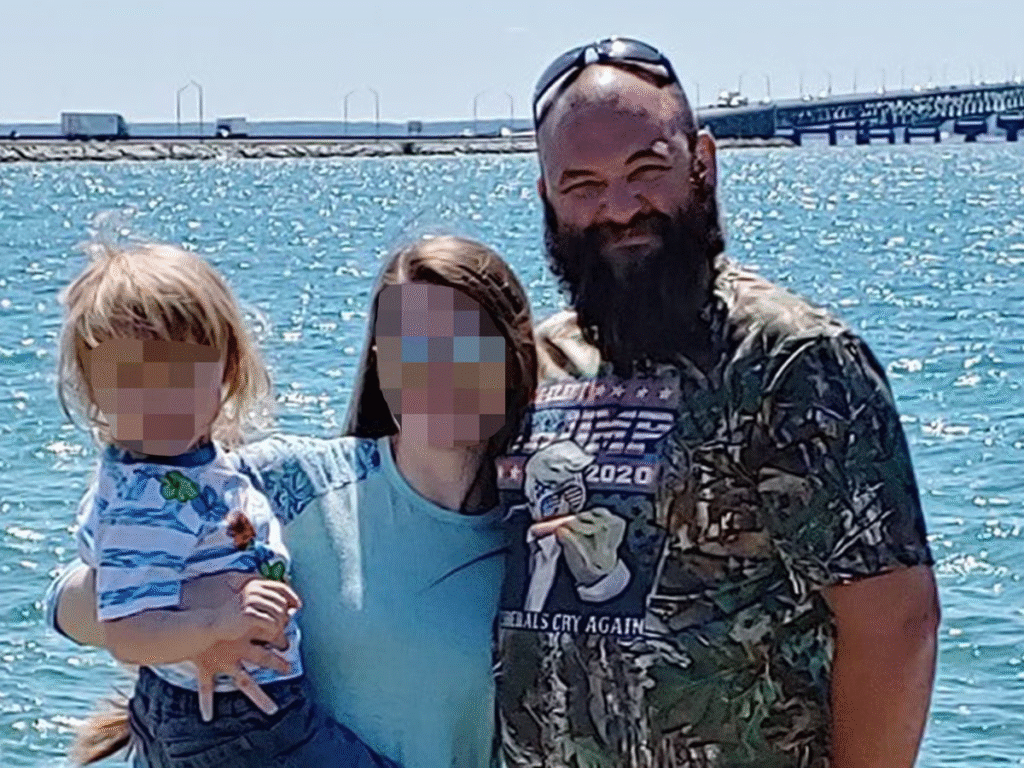
At the center of this harrowing event is Thomas Jacob Sanford, a 40-year-old resident of Burton, Michigan—a working-class city of about 30,000 people just six miles from the targeted chapel. Born and raised in the region, Sanford graduated from Goodrich High School in 2003, where he was remembered by peers as a quiet, unassuming young man with a passion for the outdoors. A 2007 profile in the Clarkston News captured him on the cusp of military service, eagerly preparing for deployment to Fallujah, Iraq, as a U.S. Marine Corps rifleman. Military records confirm his service in the Iraq War, where he earned commendations for combat duty but also grappled with the invisible scars of deployment.
Post-service, Sanford returned to civilian life, settling into Burton with his wife and their son, now 10 years old. Public records and social media glimpses reveal a man who enjoyed hunting, fishing, and sharing photos of Michigan’s natural landscapes—posts that contrasted sharply with the rage unleashed on Sunday. Yet, beneath this facade lay personal struggles. In 2015, a GoFundMe campaign raised over $3,000 to support his family after his son’s diagnosis with congenital hyperinsulinism (CHI), a rare genetic disorder causing the pancreas to overproduce insulin and leading to severe hypoglycemia.
The fundraiser highlighted the financial and emotional strain on the family, with appeals for help covering medical bills and specialized care. Friends and donors described Sanford as a devoted father, but hints of isolation emerged in later years, with sparse online activity suggesting withdrawal. Authorities have uncovered no prior criminal record for Sanford, and neighbors in his modest Burton neighborhood expressed stunned disbelief upon learning of his involvement. “He kept to himself, but he was always polite—waved hello when we’d see him walking his dog,” one anonymous resident told reporters outside his home, which investigators searched Sunday afternoon for clues.
Cellphone records and digital forensics are being analyzed, but as of Monday evening, no manifesto or clear motive has surfaced. Police Chief Renye cautioned against speculation, noting that Sanford’s military background prompted a review of his discharge status—honorable, per preliminary checks—and access to firearms. The ATF traced the assault rifle to a legal purchase in 2022, underscoring ongoing debates about gun access for veterans.
What drove Sanford to this point remains a painful enigma. Was it untreated post-traumatic stress from Iraq? The relentless burden of his child’s illness? Or a deeper, unspoken grievance against the church or society at large? Interviews with former comrades paint a portrait of a soldier hardened by war, prone to bouts of anger but never violent. “Tom was one of the good ones—fought for his country, came home broken but trying,” a fellow Marine shared anonymously. As the investigation deepens, these questions loom large, reminding us that the line between ordinary hardship and catastrophic breakdown can be perilously thin.
Community Response and the Road to Recovery
In the wake of such profound loss, the Grand Blanc community has responded with a resilience born of shared Midwestern spirit. Vigils sprang up spontaneously Sunday evening outside the charred church facade, where flickering candles and handwritten notes formed a makeshift memorial. Strangers embraced tearful survivors, and local businesses shuttered early to host blood drives and donation centers. Faith leaders from across denominations—Protestant, Catholic, Jewish—joined Mormon bishops in interfaith prayers, affirming that hate has no place in houses of God.
The Church of Jesus Christ of Latter-day Saints mobilized its vast network, dispatching counselors from Salt Lake City headquarters to provide spiritual and psychological support. Families of the victims received immediate aid, including temporary housing for those displaced by the fire. Survivor Katelyn Kruse, a 26-year-old from nearby Fenton, recounted her escape in a heartfelt interview: “I dropped to the floor when the shots rang out, praying for my little brother next to me. We made it out, but I’ll never forget the screams.” Stories like hers humanize the statistics, fueling calls for gun reform and mental health funding from advocacy groups like Everytown for Gun Safety.
On a broader scale, this tragedy reignites national conversations about violence in sacred spaces—from Pittsburgh’s Tree of Life synagogue to Charleston’s Emanuel AME church. Experts note a disturbing uptick in attacks on religious sites, often tied to ideological extremism or personal vendettas. In Michigan, where gun ownership rates hover above the national average, lawmakers face renewed pressure to close loopholes in assault weapon sales. Yet, amid the policy debates, the focus remains on healing: school reopenings delayed, therapy sessions extended, and community barbecues planned to rebuild bonds.