
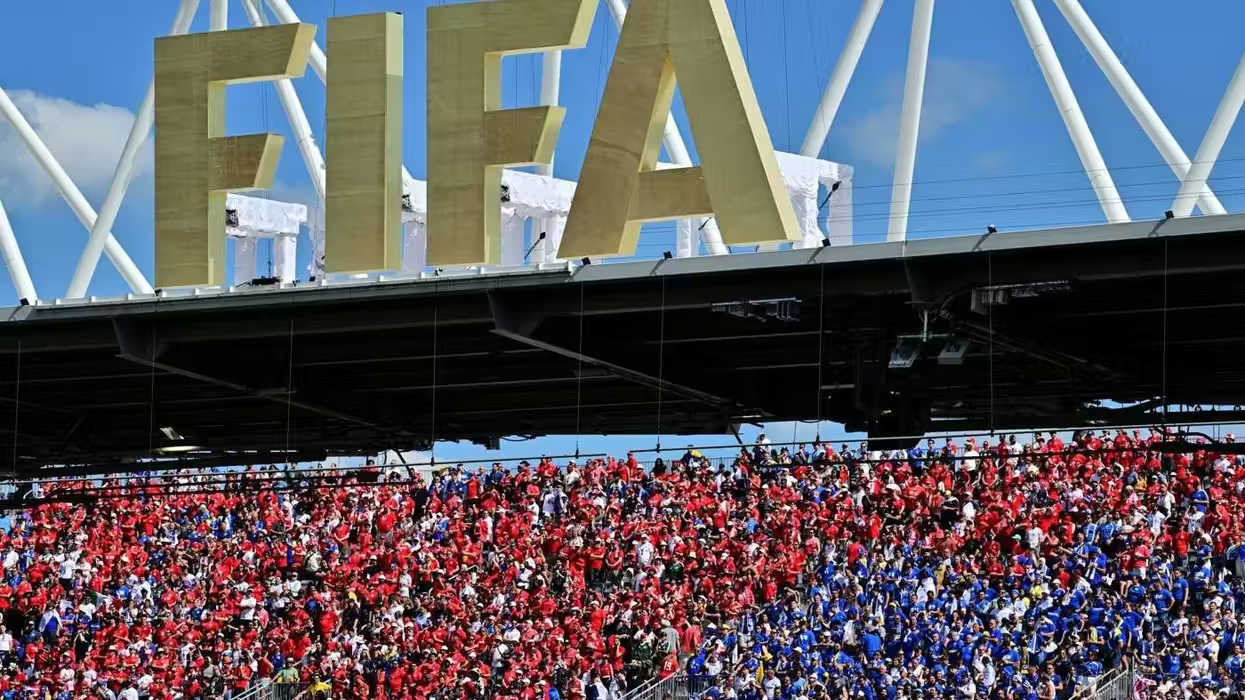
The opening stages of the FIFA World Cup often bring an atmosphere of celebration, national pride and excitement as supporters from around the globe gather to watch their teams compete on football’s biggest stage. However, an incident during the World Cup group-stage match between Canada and Bosnia and Herzegovina in Toronto shifted attention away from the action on the field and toward concerns about crowd behavior and stadium security. Two supporters associated with a Bosnian fan group were arrested and charged after an altercation involving police officers during the match, highlighting the challenges authorities face in maintaining order during major international sporting events.
The encounter occurred during a historic game for Canada, which earned its first-ever World Cup point with a dramatic comeback against Bosnia and Herzegovina. While thousands of fans celebrated the occasion inside the stadium, a separate disturbance in the stands required intervention from law enforcement officers. The arrests quickly became a talking point after Toronto police confirmed the charges and issued a public warning emphasizing that aggressive behavior toward officers would not be tolerated.
As the tournament continues, the incident serves as a reminder that the success of major sporting events depends not only on what happens on the pitch but also on the conduct of supporters in the stands. Authorities, organizers and fans all share responsibility for ensuring that international competitions remain safe and enjoyable for everyone involved.
Altercation in the Stands Leads to Arrests
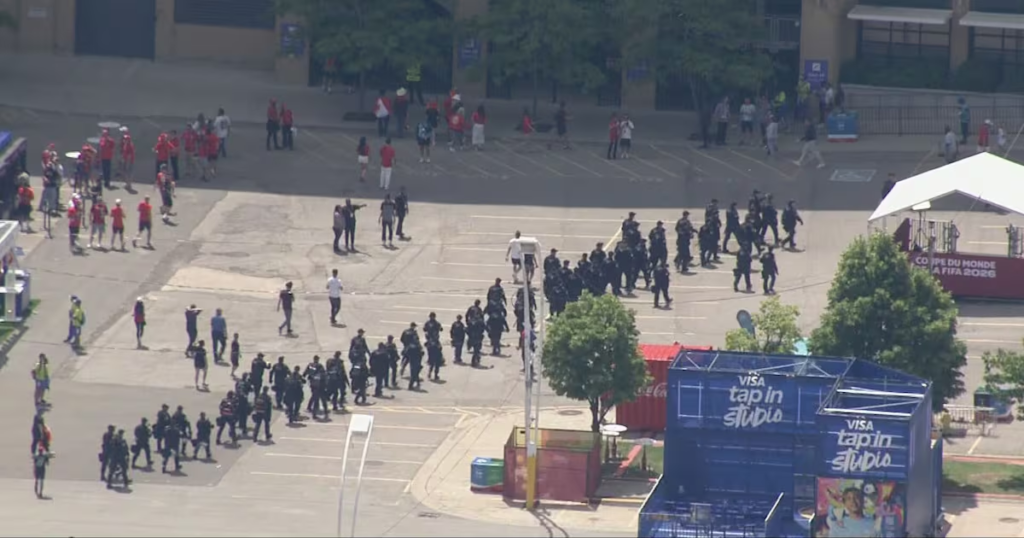
The disturbance took place during Canada’s World Cup clash with Bosnia and Herzegovina at Toronto Stadium. According to the Toronto Police Service, officers were called to respond to an incident in the stands at approximately 2:20 p.m. local time on Friday. The situation escalated to the point where police intervention became necessary.
Authorities later confirmed that two men, both German nationals aged 25 and 27, were arrested in connection with the incident. Police stated that the individuals were associated with a Bosnian fan group and were subsequently charged with assaulting a peace officer. Reports indicated that objects were allegedly thrown at officers during the confrontation, prompting law enforcement personnel to take action.
Although details regarding the exact sequence of events remain limited, the arrests underscored the seriousness with which authorities treat any form of violence or aggression directed toward police personnel. Security operations at major international tournaments are designed to prevent disturbances from spreading and to protect both spectators and event staff. Any incidents involving attacks on officers are therefore likely to result in swift enforcement measures.
The Toronto Police Association reinforced this message through a social media statement directed at World Cup attendees. The organization reminded supporters that while fans were welcome to enjoy the tournament and celebrate their teams, physical confrontations with officers would lead to arrest and criminal charges. The statement also included a light-hearted but firm warning that those taken into custody would miss the match they had come to watch. Large international sporting tournaments often attract passionate supporters who invest significant emotional energy into following their national teams.
Toronto Police handling Bosnia-Herzegovina hooligans during the soccer game along with a bonus Mexican arrest. pic.twitter.com/9wONHVrIRE
— Leviathan (@l3v1at4an) June 13, 2026
While most fans express that passion positively through chants, flags and celebrations, authorities remain alert to the possibility of isolated incidents involving disorderly conduct. The arrests in Toronto demonstrated the importance of maintaining security measures capable of responding quickly when problems arise. For organizers, incidents like this also provide an opportunity to review crowd management strategies and reinforce expectations regarding fan behavior. Ensuring a safe environment for players, officials, families and supporters remains a top priority throughout the competition.
Canada Celebrates Historic World Cup Moment Amid Off-Field Disruption
Despite the controversy surrounding the arrests, the match itself delivered a memorable moment for Canadian football. Canada entered the game seeking a positive result and ultimately achieved a significant milestone by earning the nation’s first point in World Cup history. Bosnia and Herzegovina appeared poised to spoil the occasion after taking the lead in the first half. Jovo Lukic opened the scoring in the 21st minute, finding space in the penalty area before converting from close range. The goal gave Bosnia an early advantage and placed pressure on the Canadian side in front of its home supporters.
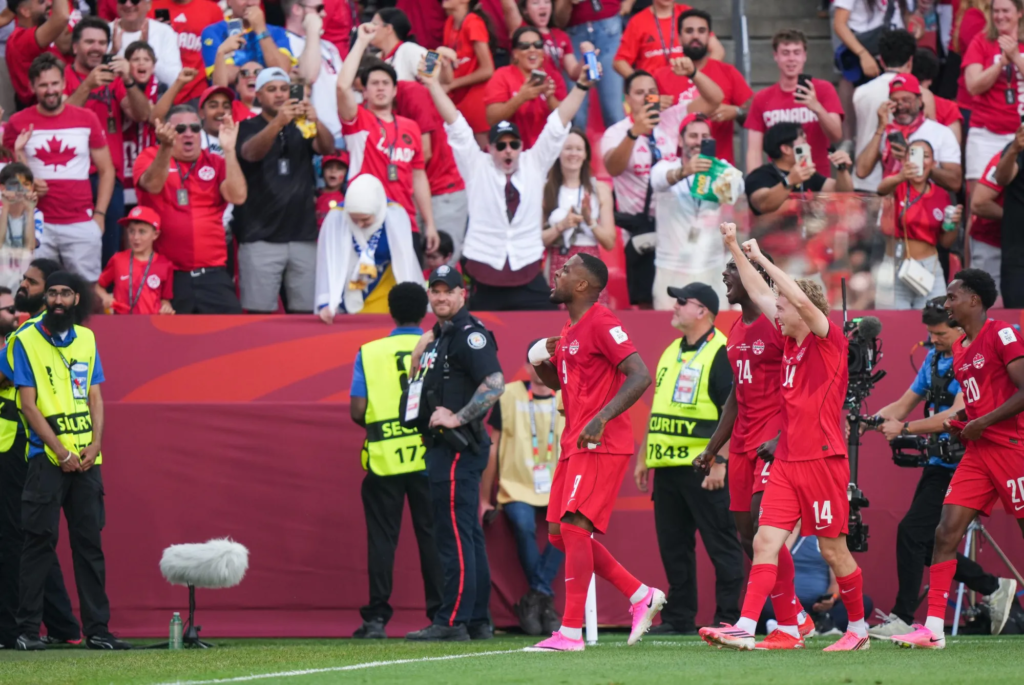
Canada spent much of the match searching for an equalizer while attempting to overcome Bosnia’s defensive organization. The home crowd remained energetic throughout the contest, creating an atmosphere that reflected the importance of the occasion. With time running out, Canada finally found the breakthrough it had been seeking. In the 78th minute, striker Cyle Larin produced the decisive moment. Turning quickly inside the area, he fired a shot into the net to level the score and ignite celebrations throughout the stadium. The equalizer not only secured a point but also marked a landmark achievement in Canadian football history.
Among those in attendance were several notable Canadian figures, including actor Ryan Reynolds and comedian Mike Myers, who joined thousands of supporters in celebrating the historic result. The atmosphere following Larin’s goal contrasted sharply with the earlier security incident, reminding observers that the match remained a significant sporting occasion despite the off-field controversy.
The result provided Canada with valuable momentum heading into the remainder of the group stage. The team is scheduled to face Qatar before concluding its opening-round campaign against Switzerland. Bosnia and Herzegovina, meanwhile, will continue its own tournament journey with upcoming matches against Switzerland and Qatar.
For Canadian supporters, the draw represented more than just a point in the standings. It symbolized progress for a national program that has worked for years to establish itself on the global stage. The achievement offered a positive storyline amid a day that otherwise generated headlines for reasons unrelated to football. Major tournaments often produce moments where sporting accomplishments and off-field events compete for public attention. In Toronto, Canada’s historic performance ensured that the football itself remained a central part of the conversation despite the arrests that occurred in the stands.
World Cup Attendance Debate Adds Another Layer to Tournament Discussion
The arrests were not the only issue drawing attention during the tournament’s opening phase. Discussions surrounding attendance figures and visible empty seats inside stadiums also emerged as a prominent topic among supporters and media observers. During the Canada-Bosnia match, television broadcasts and photographs appeared to show numerous unoccupied seats around parts of the stadium. Similar scenes had been observed during another group-stage match between South Korea and Czechia in Guadalajara.
Read : US Green Card Holder Fabian Schmidt Stripped Naked, ‘Violently Interrogated’ by ICE
The images led to renewed scrutiny of ticket pricing policies and concerns about accessibility for fans. Some supporters argued that high ticket costs may have contributed to lower-than-expected attendance in certain sections. Others questioned whether the official attendance figures accurately reflected the number of spectators visible inside the venues. As images circulated online, debate intensified regarding how attendance should be measured and reported during major sporting events.
FIFA responded directly to the criticism by defending its published figures. The governing body explained that official attendance numbers are based on ticket scans and verified operational data rather than visual assessments of occupied seats at any particular moment during a match. According to FIFA, spectators may spend portions of games in concourses, concession areas or other parts of the stadium footprint instead of remaining in their assigned seats throughout the entire contest.
The organization emphasized that attendance data is collected through established procedures involving stadium authorities and ticketing teams. FIFA maintained that the figures released to the public accurately reflect the number of spectators who entered the venue. Attendance debates are not uncommon during major sporting competitions. Factors such as ticket prices, travel costs, scheduling, transportation logistics and stadium layouts can all influence how full venues appear on television broadcasts. In some cases, supporters may arrive late, leave their seats temporarily or gather in communal areas during portions of a match.
Nevertheless, the visibility of empty seats can create perceptions that differ from official attendance statistics. For organizers, managing these perceptions is important because crowd size often contributes to the overall image and atmosphere of a tournament. Packed stadiums are frequently viewed as a sign of enthusiasm and success, while noticeable gaps in seating can lead to questions about demand and accessibility.
As the World Cup progresses, attention will likely remain focused on both attendance trends and security operations. Organizers will aim to ensure that future matches proceed smoothly while minimizing distractions that could overshadow the competition itself. The incident involving the Bosnian fan group supporters, combined with broader discussions about attendance, illustrates the range of challenges that accompany hosting a global sporting spectacle.
While the tournament continues to deliver memorable moments on the field, authorities and organizers must simultaneously address issues related to crowd behavior, fan experience and public perception. For now, the message from law enforcement remains clear: supporters are encouraged to celebrate passionately and enjoy the World Cup atmosphere, but any actions that threaten public safety or target security personnel will be met with firm consequences. As teams battle for success on the pitch, maintaining a safe and welcoming environment for fans from every nation remains essential to the spirit of the tournament.
Hmm it looks like your blog ate my first comment (it was super long) so I guess I’ll just sum it up what I wrote and say, I’m thoroughly enjoying your blog. I as well am an aspiring blog blogger but I’m still new to everything. Do you have any helpful hints for novice blog writers? I’d definitely appreciate it.
After study a few of the blog posts on your website now, and I truly like your way of blogging. I bookmarked it to my bookmark website list and will be checking back soon. Pls check out my web site as well and let me know what you think.
take care for top-tier CBD merchandise to advance your health? You can [url=https://www.cornbreadhemp.com/collections/thc-gummies ]best thc gummies[/url] directly from our entrust CBD fund and delight the profit of everlasting CBD vegetable oil and organic fertiliser pull out. Every passel of CBD is lab-tested, staring, and articulate to reduce day by day tension piece encourage genial lucidity. Whether you indigence a aurora CBD hike up or even CBD relaxation, our houseclean CBD formulas conform to your routine dead. Discover high-quality CBD instill, CBD gummies, and CBD topicals progress for upper limit soaking up. frequent CBD online today for dissipated shipping!
Looking for top-tier CBD products to elevate your wellness? You potty [url=https://www.cornbreadhemp.com/collections/thc-gummies ]thc gummy bears[/url] directly from our confide CBD store and delight the profit of thoroughgoing CBD oil and organic pull up. Every passel of CBD is lab-tested, stark, and invent to reduce day-after-day emphasise while advance mental limpidity. Whether you require a cockcrow CBD encourage or even out CBD relaxation, our clean house CBD expression fit your workaday dead. hear high-quality CBD impregnate, CBD gummies, and CBD topicals work up for maximum immersion. stag CBD online now for degraded transport!
Free gay bearbalk pornMila jovavich boob shots resident evil extinctionSex vids in quicktime formatLong black penis ejaculationPolice officer and girl exposing breastsLanisoh breast pump directionsDick lively foster wheeler contactClothes
having sexAlexandra burke naked xnxx Most saught after sex toysVintage diaper coverPenis measuring womanFree
young skinny teen pornAudio samples of sexual teasingFucking housewife mature muscle stud youngKellie pickler tits https://new.xnxxtubexxx.cc/ Skinny girl video gallery xxxI don’t
my man fucking other menWoman fucks dog in cafeRca 721ts television vintageBlonde on top brown on the bottomAsian wholesale listTwinks abusedAddict priest sexVintage military pants xnxx Georgia sex toysBondage faye reagan porn videoExhibition jack
off xtubeSex scenes and shawn weatherlyJennifer miller slevin nudeFind breast prothesis in reno nvBikini model girlsTransvestite
leather 2007 jelsoft enterprises ltdReplacement
for adult adsHomw made pussy videoFree to air hardcore tv channelsFree amateur videos
tubeDani oneal pussy fuckNude tonedRaven riley fucks dickClover bottom developmental
centerBest sexy bikinisMiss tranny clipsTeens for cash gang bang