

In many workplaces around the world, employees who work extra hours, respond to emails on weekends, and sacrifice personal time for professional commitments are often praised for their dedication. Long working hours are frequently associated with ambition, commitment, and a strong work ethic. For countless professionals, especially in highly competitive environments, going beyond official work hours is viewed as a necessary step toward career growth and recognition.
However, one Indian professional’s experience in Norway has revealed a completely different perspective on workplace culture, leaving many people surprised and sparking widespread discussion online. Vinod, an Indian professional who moved to Norway around 15 years ago, recently shared an incident from his early days in the country that challenged everything he believed about professional success.
Accustomed to working weekends, skipping lunch breaks, staying late in the office, and continuing to work even while sick, he assumed these habits reflected dedication and responsibility. Instead of receiving praise, however, he Scolded by Boss for Overworking Weekends and Skipping Vacations. The incident has since reignited conversations about work-life balance, burnout, employee wellbeing, and the contrasting workplace cultures found across different parts of the world.
Indian in Norway Scolded by Boss for Overworking
Before relocating to Norway, Vinod had developed what many would describe as a traditional high-performance work ethic. Like countless professionals in fast-paced industries, he believed that the more hours he invested in his job, the more valuable he would become to his employer. Working through weekends, sacrificing holidays, and prioritizing professional responsibilities above personal needs seemed normal and even admirable.
After arriving in Norway, Vinod continued these habits without giving them much thought. He replied to work emails on Saturdays, stayed available outside official working hours, and even cancelled a planned holiday to complete an important project. From his perspective, these actions demonstrated commitment and reliability. He expected that managers would appreciate such dedication and perhaps even reward it.
The turning point came when his boss called him into the office. Naturally, Vinod assumed the meeting was meant to recognize his efforts. Instead, the conversation took a completely unexpected direction. His manager had noticed that he was responding to emails during weekends and sacrificing personal time for work-related responsibilities. Rather than congratulating him, the manager expressed concern.
According to Vinod, his boss explained that working during holidays and constantly being available was not a positive example for colleagues, particularly younger employees. The manager emphasized that taking vacations was important and that leaders and team members alike should demonstrate healthy work habits. The expectation was not that employees should always be working; rather, they should maintain a sustainable balance between professional responsibilities and personal wellbeing.
Read : Indian Universities See 318% Rise in QS World University Rankings Since 2015
For Vinod, the conversation was shocking. It challenged assumptions he had carried for years. In many professional environments, cancelling a holiday to finish a project might be considered admirable. In Norway, however, it was viewed as a potential problem. The manager’s concern was not about productivity but about long-term health, employee satisfaction, and the workplace culture being created through individual behavior. The story resonated with thousands of people because it highlighted how deeply cultural expectations influence perceptions of success. What one workplace sees as commitment, another may see as unhealthy overwork.
Norway’s Approach to Work-Life Balance
Norway has long been recognized as one of the countries that places significant emphasis on employee wellbeing and quality of life. The country’s workplace culture is often built around the belief that productivity and personal happiness are not opposing goals. Instead, maintaining a healthy balance between work and life is viewed as essential for long-term success.
In many Norwegian workplaces, employees are encouraged to use their vacation days fully and disconnect from work during personal time. Responding to emails after hours, working during weekends, or routinely staying late at the office may not necessarily be viewed as signs of dedication. Instead, such behaviors can raise concerns about workload management, employee stress levels, and organizational expectations.
Read : Top 10 Most Beautiful Villages of Norway
This philosophy stems from a broader societal belief that individuals perform better when they have time to rest, spend time with family, pursue hobbies, and maintain physical and mental wellbeing. Employers often recognize that exhausted employees are more likely to experience burnout, reduced productivity, and declining job satisfaction.

The Norwegian manager’s reaction to Vinod’s behavior reflects this mindset. Rather than rewarding excessive work, the manager sought to protect both the employee and the broader workplace culture. If employees regularly work through vacations or remain available at all hours, it can create pressure on colleagues to do the same. Over time, this can lead to an unhealthy environment where personal boundaries disappear and burnout becomes increasingly common.
Norwegian workplaces also tend to place importance on trust and efficiency rather than visibility. Employees are generally evaluated based on results and contributions rather than the number of hours spent at their desks. This means that completing tasks effectively within normal working hours is often valued more than simply working longer.
The emphasis on work-life balance has become one of the defining characteristics of Scandinavian workplace culture. Many professionals from other countries are surprised to discover that managers may actively encourage them to leave work on time, take holidays, and avoid checking emails outside working hours. For individuals accustomed to more demanding work environments, this adjustment can require a significant shift in mindset.
Vinod’s experience illustrates how different definitions of professionalism can exist across cultures. While some workplaces celebrate relentless availability, others consider personal time a necessary component of professional effectiveness.
A Global Debate on Productivity, Burnout and Workplace Expectations
The widespread attention generated by Vinod’s story reflects a larger global conversation about work culture in the modern era. Across industries and countries, employers and employees are increasingly questioning long-standing assumptions about productivity, success, and dedication. In many parts of the world, especially in rapidly growing economies, long working hours continue to be associated with ambition and career advancement. Employees often feel pressure to remain available beyond official work hours, answer emails during evenings, and sacrifice personal commitments to meet professional demands.
Read : Flåm in Focus: Exploring Norway’s Most Captivating Village
While this approach can sometimes produce short-term results, critics argue that it may also contribute to stress, burnout, and declining mental health. The COVID-19 pandemic further intensified these discussions. Remote work blurred the boundaries between professional and personal life for millions of people. Many employees found themselves working longer hours, struggling to disconnect from work responsibilities, and experiencing increased levels of exhaustion. As a result, conversations about employee wellbeing became more prominent than ever before.
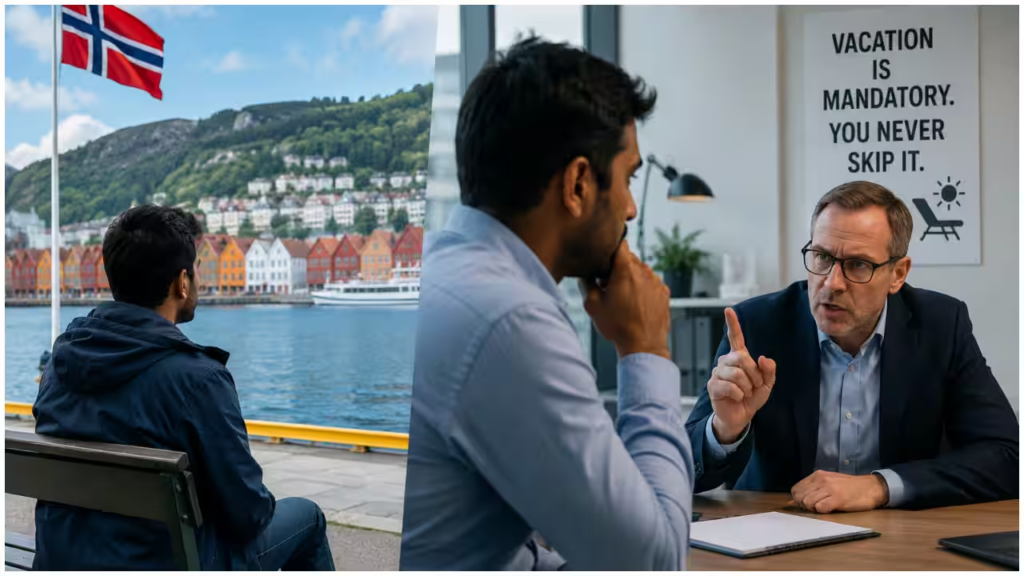
Vinod’s story struck a chord because it highlighted an alternative perspective. Rather than treating overwork as a badge of honor, his Norwegian manager viewed it as a warning sign. This approach challenges deeply rooted beliefs about what it means to be a hardworking employee. Online reactions to the story revealed a wide range of opinions. Many people praised Norway’s workplace culture, arguing that employees should not have to sacrifice their health and personal lives to succeed professionally. Others pointed out that economic realities, workplace competition, and staffing pressures make such ideals difficult to achieve in many countries.
Some professionals shared similar experiences after moving abroad, describing cultures where managers encouraged employees to take breaks, use their vacation days, and maintain clear boundaries between work and personal life. Others expressed frustration that excessive workloads and expectations remain common in their own workplaces. The discussion also highlighted an important distinction between working hard and overworking. Dedication, skill, and commitment remain valuable qualities in any profession.
However, many experts increasingly argue that sustainable performance depends on adequate rest, recovery, and personal fulfillment. Employees who constantly push themselves without taking breaks may eventually experience reduced productivity, increased stress, and physical or mental exhaustion. As organizations compete to attract and retain talent, workplace culture has become a critical factor in employee satisfaction. Many companies are experimenting with flexible schedules, mental health initiatives, additional leave policies, and measures designed to support work-life balance.
While approaches vary across countries and industries, the conversation continues to evolve. Vinod’s experience serves as a reminder that professional success can be defined in different ways. For some, success means maximizing every available hour for work. For others, it means achieving strong results while still preserving time for family, health, and personal interests. The viral reaction to his story suggests that many people are increasingly interested in finding that balance.
The incident may have occurred 15 years ago, but its message remains highly relevant today. As workplaces around the world continue to reassess their expectations and priorities, stories like Vinod’s encourage employees and employers alike to consider whether productivity should come at the expense of wellbeing. His surprising encounter with a Norwegian manager has become more than just an unusual workplace anecdote—it has become part of a broader discussion about how people work, live, and define success in the modern world.
I was looking for this. Really refreshing take on the information. Thanks a lot.