
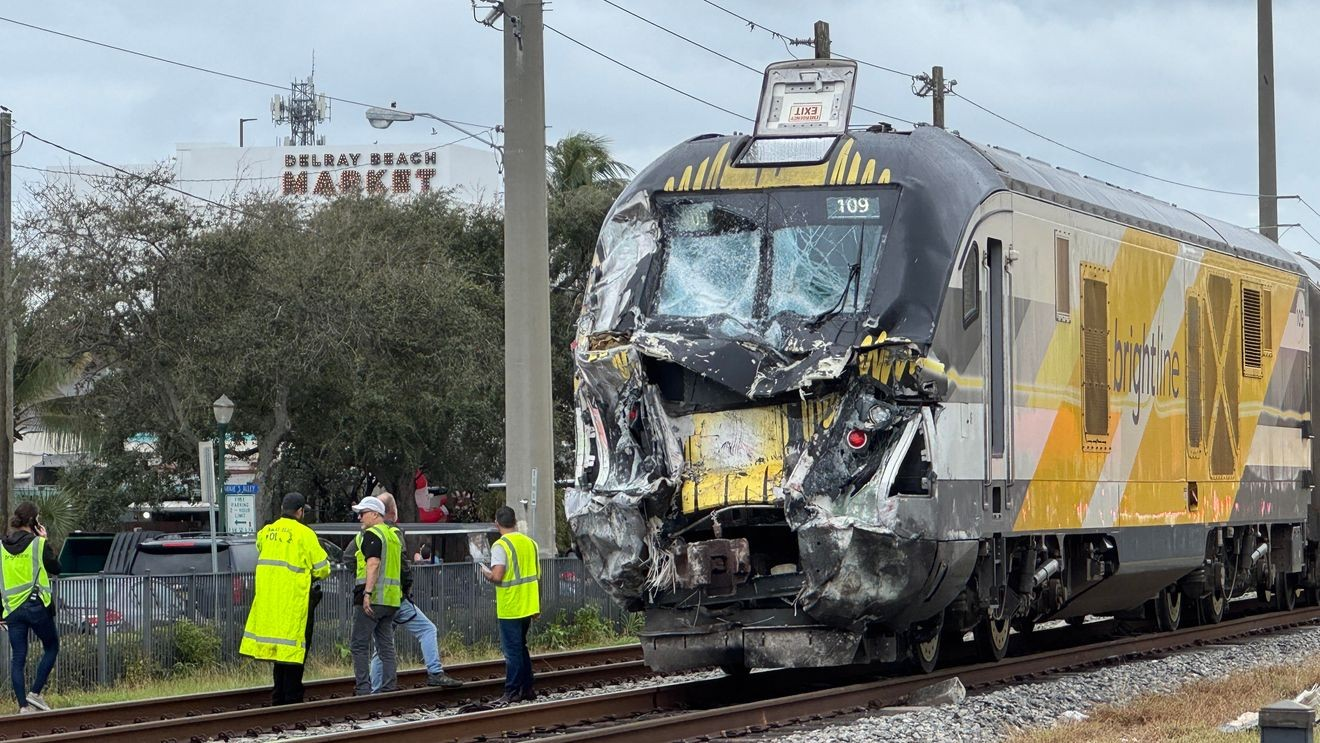
Train Crashed into Fire Truck in Florida on Saturday morning, leaving 15 people injured in a devastating collision in downtown Delray Beach. The crash involved a Brightline high-speed train and a fire truck, leading to significant damage and raising concerns about railroad safety.
As investigations unfold, this incident sheds light on the critical need for caution at railroad crossings and the persistent challenges of preventing accidents on the nation’s railroads.
Details of the Collision
The collision occurred at approximately 10:45 a.m. in a bustling area of downtown Delray Beach. According to reports and video footage, the fire truck had stopped at the crossing, waiting for a freight train to pass.
Once the freight train cleared, the fire truck maneuvered around the lowered crossing arms to cross the double tracks with its lights flashing. Tragically, it drove directly into the path of an oncoming Brightline high-speed train.
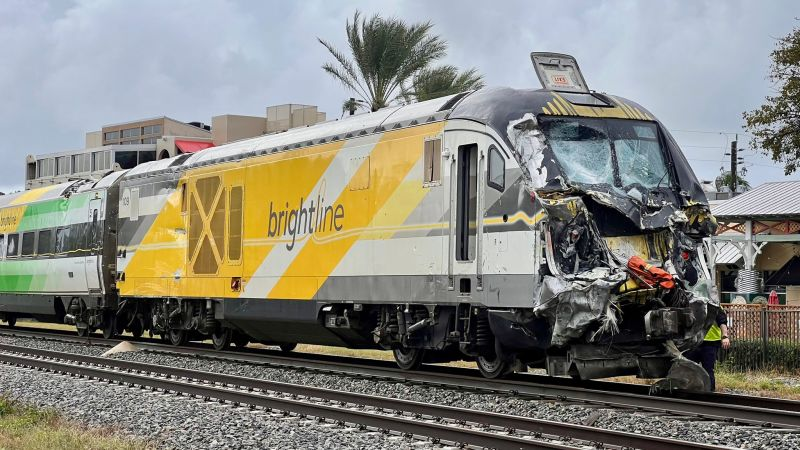
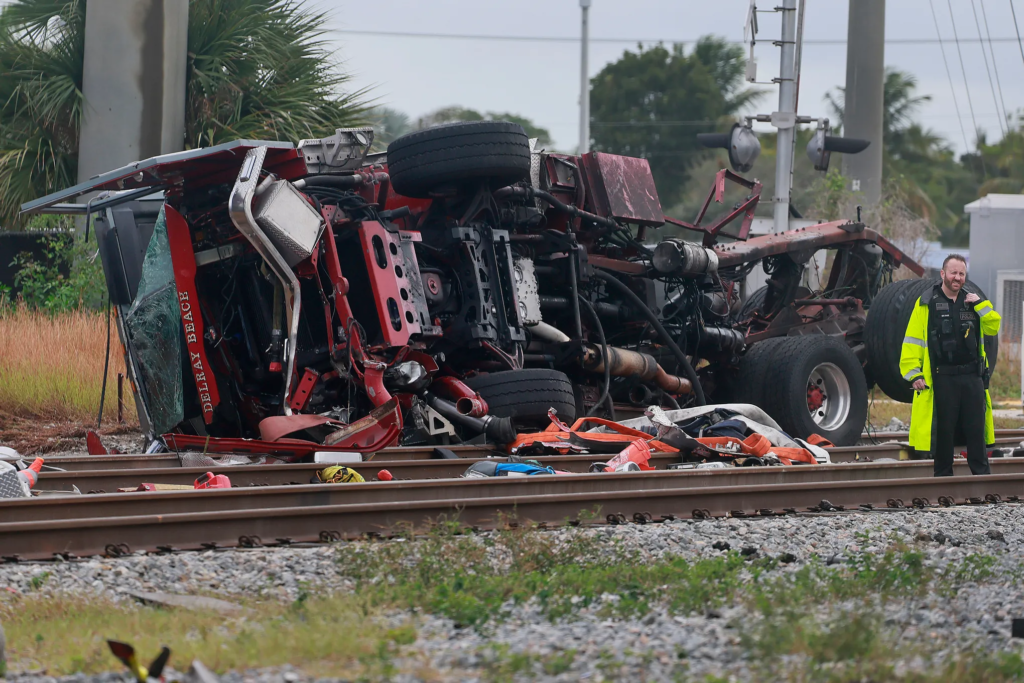
The aftermath of the crash was chaotic. The Brightline train came to a stop with its front end heavily damaged, while the fire truck was split in half, with debris scattered across the area.
The ladder from the fire truck was found several yards away in the grass, and parts of the truck were embedded in the train’s front. Witnesses described the scene as devastating, with the train’s front completely smashed and firefighters scrambling to assist injured colleagues.
Read : Erratic! Four Minute Toilet Break Delayed Over 125 Trains in South Korea
Three firefighters from the Delray Beach Fire Rescue were hospitalized in stable condition, while 12 passengers on the train sustained minor injuries and were transported to nearby hospitals.
WATCH (UPDATE): A high-speed Brightline train in Florida collided with a Delray Beach Fire Rescue ladder truck Saturday morning pic.twitter.com/yKRLEC9Lg7
— Video Forensics (@Video_Forensics) December 29, 2024
Emmanuel Amaral, a local resident who rushed to the scene, described hearing the loud crash and witnessing the immediate aftermath, including firefighters climbing out of the truck’s front window to pull their injured teammates to safety.
Safety Concerns and Investigations
The crash highlights the ongoing challenges of ensuring railroad safety, particularly at crossings. A Brightline safety officer emphasized the importance of drivers adhering to safety rules and never bypassing closed gates. However, the complexity of the situation, involving emergency vehicles in active service, raises questions about protocols for such scenarios.
The Federal Railroad Administration (FRA) has taken up the investigation, with the National Transportation Safety Board (NTSB) also gathering information to decide whether to launch its own probe. This incident adds to the scrutiny Brightline has faced regarding its safety record.
Since beginning operations in 2017, Brightline has reported over 100 fatalities, the highest death rate among U.S. railroads. Most of these incidents were attributed to suicides, pedestrians attempting to cross tracks, or drivers ignoring crossing gates, with Brightline found not to be at fault.
Beyond Florida, railroad safety has been under the spotlight since the Norfolk Southern train derailment in East Palestine, Ohio, in February 2023.
That incident, which spilled toxic chemicals and caused widespread damage, spurred calls for industry-wide reforms. Despite these efforts, significant changes to railroad operations remain limited, and proposed legislative reforms have stalled in Congress.
Broader Implications for Railroad Safety
This collision is a stark reminder of the challenges facing U.S. railroads in improving safety at crossings. Brightline’s route between Miami and Orlando, which includes the site of the Delray Beach crash, has seen multiple fatal incidents. Earlier this year, two crashes at the same crossing in Melbourne resulted in three deaths.
High-speed rail operations bring unique challenges, as the increased speed reduces reaction times for both operators and vehicles at crossings.
Despite implementing advanced safety measures, including warning systems and crossing gates, the human factor remains a significant vulnerability. Drivers bypassing gates, often underestimating the speed of oncoming trains, continue to be a leading cause of accidents.
The broader implications of the Delray Beach crash extend to other rail incidents across the country. Earlier this month, a Union Pacific train in Pecos, Texas, collided with a semitrailer truck at a crossing, resulting in two fatalities and significant property damage.
Such incidents underscore the urgent need for more robust safety protocols and community education about the risks at railroad crossings.
The collision between the Brightline high-speed train and the Delray Beach fire truck is a sobering reminder of the fragility of railroad safety in high-traffic areas.
While investigations will uncover the specific causes and assign responsibility, the broader takeaway is clear: enhanced safety measures, stricter adherence to crossing protocols, and increased public awareness are essential to prevent such tragedies.
As high-speed rail expands across the United States, prioritizing safety at crossings must remain a critical focus for operators and regulators alike.