
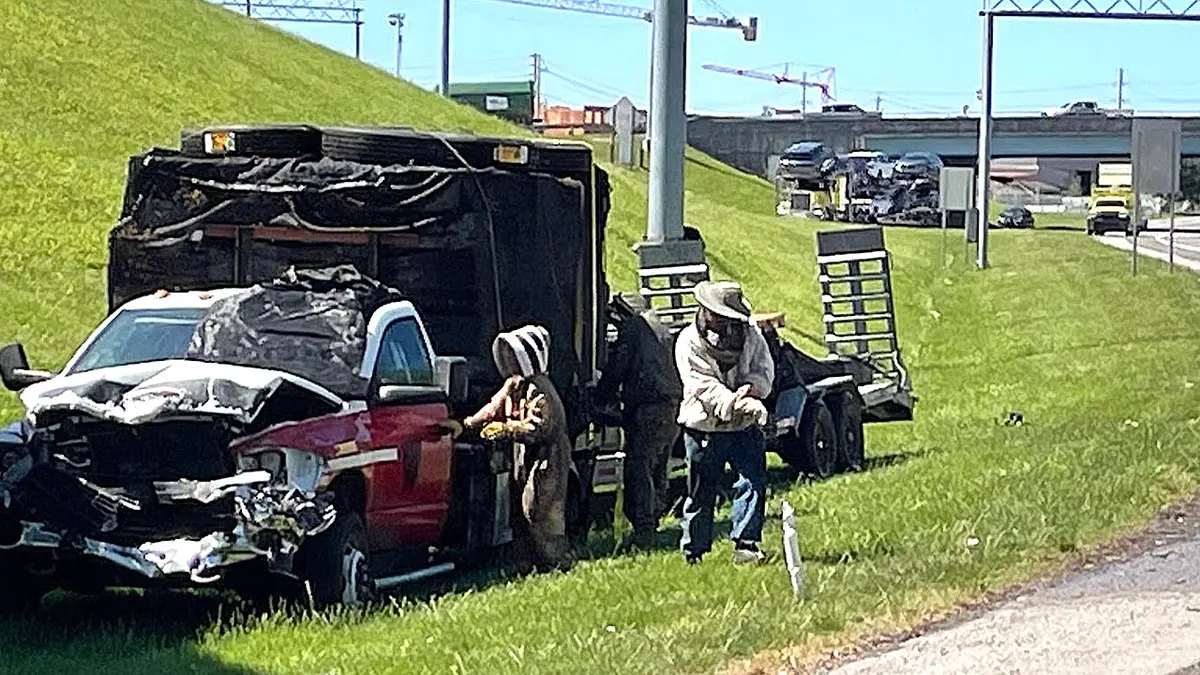
A routine highway journey turned into an extraordinary and highly unusual disruption when a pickup truck transporting approximately one million bees crashed along Interstate 40 in Knoxville, Tennessee. The incident, which unfolded late Friday morning near the Henley Street exit, brought traffic to a halt and prompted a swift and coordinated response from transportation officials, emergency personnel, and professional beekeepers. While accidents involving commercial transport vehicles are not uncommon, the scale and nature of this crash introduced a rare challenge, transforming a busy highway ramp into a temporary swarm zone filled with airborne bees.
Authorities quickly moved to secure the area as the bees, released from damaged hives, spread across the crash site and surrounding roadway. Drivers caught in the vicinity were instructed to remain inside their vehicles to avoid potential stings, while responders worked carefully to manage both the wreckage and the live cargo. Despite the alarming visuals and the sheer number of bees involved, officials later confirmed that no injuries were reported, marking a fortunate outcome in what could have escalated into a dangerous situation.
Highway Chaos Triggered by Unusual Cargo Spill
The crash occurred at approximately 11 a.m., a time when traffic along Interstate 40 is typically active with commuters and commercial vehicles. The pickup truck, which was transporting a large load of beehives, reportedly lost control near the exit ramp leading to Henley Street. Upon impact, the structure holding the hives was compromised, allowing the bees to escape rapidly into the open air. Within moments, the area surrounding the crash site became densely populated with swarming insects, creating a hazardous environment for anyone nearby.
Transportation officials immediately closed the affected ramp to prevent additional vehicles from entering the area and to reduce the risk of panic or secondary accidents. Drivers already present were advised to stay inside their cars with windows closed, as bees tend to react defensively when their hives are disturbed. The sight of thousands—if not millions—of bees hovering over the roadway added a layer of urgency to the response efforts.
Personnel arriving at the scene faced a dual challenge: managing the physical damage caused by the crash while also dealing with a live and highly active swarm. Unlike typical cargo spills involving inanimate materials, this situation required specialized handling to ensure both public safety and the preservation of the bees themselves. Protective measures were essential, as even trained responders could be at risk without proper equipment.
Read : Remains of 800-Year-Old Chimu Civilization Individuals with Jewelry Discovered in Peru
Updates from transportation authorities kept the public informed throughout the incident, emphasizing the importance of avoiding the area and adhering to safety instructions. The unusual nature of the crash drew widespread attention, highlighting how a single incident involving live cargo can disrupt infrastructure in unexpected ways.
Beekeepers and Emergency Crews Work to Contain the Swarm
As the situation unfolded, professional beekeepers were called in to assist with containment efforts. Wearing full-body protective suits designed to prevent stings, these specialists worked alongside emergency responders to regain control of the bees. Their expertise proved critical in safely managing the swarm, as improper handling could have agitated the insects further and increased the risk to both workers and the public.
Read : Danger! 250 Million Bees Escape After Semi-Truck Overturns in Whatcom County
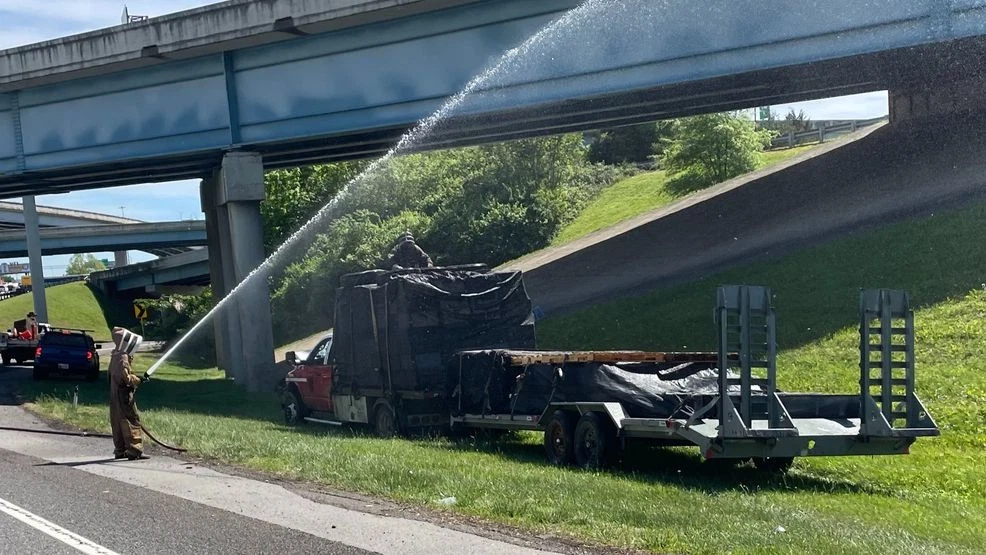
The bees, displaced from their hives, initially clustered around the wreckage and nearby surfaces, a natural behavior as they attempt to regroup and protect their colony. Beekeepers used specialized techniques to calm and collect the swarm, including controlled spraying methods and strategic repositioning of hive components to encourage the bees to settle. These efforts required patience and precision, as sudden movements or loud disturbances could trigger defensive reactions.

Meanwhile, crews worked to clear the damaged vehicle and assess the condition of the remaining hives. The truck itself sustained significant damage, with parts of the trailer structure visibly compromised. Despite this, the coordinated approach between responders and beekeepers allowed for a gradual restoration of order at the scene.
Over time, the density of bees in the air began to decrease as containment measures took effect. Authorities monitored the situation closely, ensuring that the swarm was fully under control before reopening the roadway. The process took several hours, reflecting both the complexity of the task and the commitment to handling the incident responsibly.
By the time the ramp was reopened, the bees had been successfully relocated or secured, and the immediate danger had passed. Officials confirmed that the insects were safely moved away from the area, minimizing long-term impact and allowing normal traffic flow to resume.
The Risks and Importance of Large-Scale Bee Transportation
The incident sheds light on the broader practice of transporting bees across regions, a critical component of modern agriculture. Commercial beekeepers frequently move large numbers of hives to support pollination efforts, particularly for crops that depend heavily on bee activity. These operations are essential for maintaining food production systems, but they also involve logistical challenges and inherent risks.
Read : Buzzpocalypse! Swarm of Bees Stings 24 in French Town of Aurillac
Transporting live bees requires careful planning, including secure containment, proper ventilation, and route considerations to minimize stress on the colonies. Even under ideal conditions, the process carries potential hazards, especially when vehicles are involved in accidents. A compromised load can quickly escalate into a public safety concern, as demonstrated by the Knoxville crash.
Similar incidents have occurred in other parts of the country, underscoring the need for stringent safety measures and rapid response protocols. While such events are relatively rare, their impact can be significant due to the combination of traffic disruption and the presence of large numbers of insects capable of stinging when threatened.
At the same time, the successful handling of this situation highlights the effectiveness of coordinated emergency response systems. The collaboration between transportation officials, first responders, and beekeeping professionals played a key role in preventing injuries and ensuring that both people and bees were protected. The ability to adapt quickly to an unusual scenario demonstrates the importance of preparedness and specialized knowledge in managing unexpected events.
In the aftermath of the crash, questions remain about what may have caused the vehicle to lose control. Authorities have not released details regarding the circumstances leading up to the incident, leaving open the possibility of further investigation. Regardless of the cause, the outcome serves as a reminder of how even routine transport operations can take unpredictable turns.
The Knoxville bee spill stands as a striking example of how infrastructure, agriculture, and public safety can intersect in unexpected ways. While the immediate disruption has been resolved, the incident leaves behind valuable lessons about risk management, emergency coordination, and the essential yet complex role of bees in modern ecosystems.