
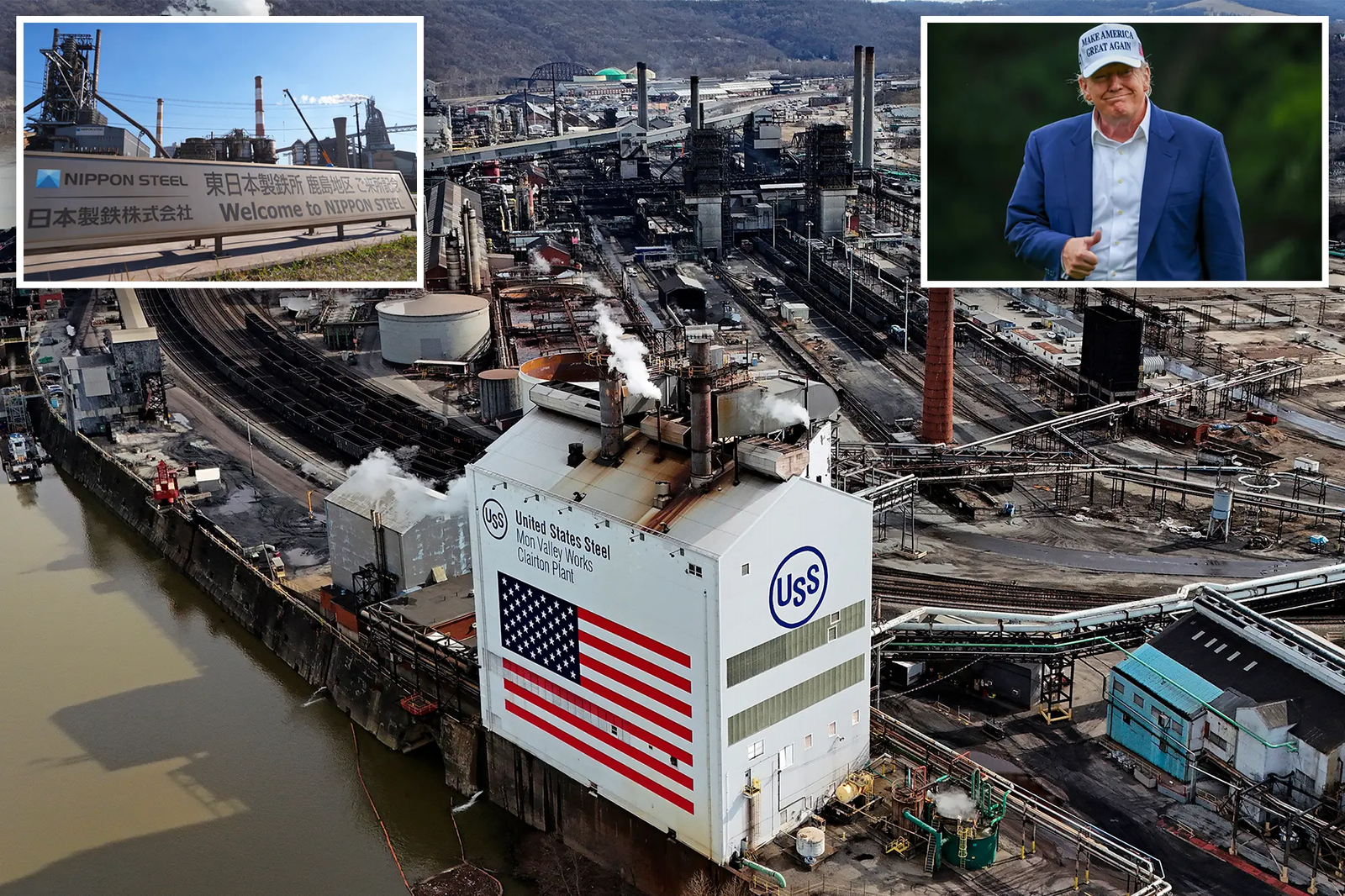
In a significant shift in the ongoing narrative surrounding the acquisition of US Steel by Japan’s Nippon Steel, former President Donald Trump has signed an executive order that sets the stage for the deal to move forward. The move comes after months of speculation, national security reviews, and political debate about the implications of foreign ownership of a company historically seen as a pillar of American industrial strength.
Trump’s intervention adds a new layer to the unfolding story, offering conditional support in exchange for strict safeguards aimed at protecting U.S. national interests. The order, signed on a Friday, does not finalize the acquisition but rather outlines a pathway for it to proceed, contingent upon the implementation of a “national security agreement” that both companies must adhere to.
While the details of this agreement remain largely undisclosed, the executive order signals the Trump administration’s willingness to accept foreign investment in American strategic industries under tightly controlled conditions. At the heart of the agreement is the notion of a “golden share” — a special class of ownership that grants veto power to the U.S. government over key decisions affecting national security.
The companies involved — Nippon Steel and US Steel — have hailed the executive order as a landmark moment, celebrating what they describe as a “historic partnership” that promises to bring massive investment and revitalization to American manufacturing. In their joint statement, the firms committed to $11 billion in new investments by 2028, expressing optimism about the future of American steelmaking under this new arrangement.
Golden Share and National Security Oversight
One of the most attention-grabbing aspects of Trump’s executive order is the inclusion of the so-called “golden share.” This term generally refers to a type of share that gives its holder the right to veto certain corporate decisions. In this context, it means that the U.S. government will retain some level of authority to block moves by Nippon Steel that could conflict with national security interests.
The executive order notes that the Committee on Foreign Investment in the United States (CFIUS) found “credible evidence” that the acquisition by Nippon Steel might present risks to national security. However, the review also concluded that these risks could be mitigated by the terms set out in the national security agreement.
What exactly those terms are remains uncertain, as neither the federal government nor the companies have provided specific details. Still, the move reflects a growing trend in the U.S. government to exercise stronger oversight over foreign investments, particularly in industries deemed critical to the nation’s infrastructure and defense.
Read : Insane! 23-Year-Old Anthony Thomas Reyes Jumps Mar-a-Lago Wall to Marry Donald Trump’s Granddaughter
Trump’s rhetoric around the golden share has also raised eyebrows. During a speech, he asserted that as president he would have “total control” over what US Steel does, and emphasized the symbolic and practical importance of maintaining American ownership. He went so far as to say he was “a little concerned” about how future presidents might wield that power, but he remained confident that the agreement gives the government a firm hand in managing the steel industry’s strategic direction.
Read : Trump Challenges Biden to Golf Match with $1 Million Charity Bet
The concept of a golden share is not new — it has been used in various forms around the world to protect national interests in key industries. However, its implementation in this context is particularly notable given the political sensitivity surrounding the deal. Steel has long been a symbol of American industrial power and self-sufficiency, and foreign ownership of such a company is bound to stir strong opinions across the political spectrum.
Political Reversal and Strategic Calculations
The executive order also represents a political reversal of sorts for Trump. During his campaign for the presidency, he expressed strong opposition to the Nippon Steel deal, raising concerns about foreign ownership of American assets. Yet now, as president, he has chosen to allow the deal to proceed under strict conditions. This shift reflects the complicated dynamics at play — balancing economic opportunity with national security, and campaign rhetoric with the practical demands of governance.
Trump’s ability to extract concessions from the companies — including the massive investment commitment and the golden share provision — may be seen as a win for his administration’s tough-on-trade and America-first economic agenda. It suggests that the Trump administration is not entirely against foreign investment but is willing to permit it when it comes with guarantees that protect U.S. interests.

The $11 billion investment pledged by Nippon Steel and US Steel is not insignificant. The companies claim this will lead to the modernization of American steelmaking facilities, the creation of thousands of jobs, and the strengthening of local communities. In their joint statement, they thanked President Trump and his administration for their “bold leadership,” promising to follow through on their commitments and contribute to making “American steelmaking and manufacturing great again.”
Still, questions remain. The specifics of how the investment will be deployed, what types of projects will be prioritized, and how the golden share will be exercised in practice are all unknowns. Moreover, there is the issue of public perception and political backlash. Critics are likely to question whether this deal truly serves the national interest or if it sets a precedent for foreign control over critical industries under the guise of regulatory safeguards.
Economic Implications and Industry Outlook
The steel industry in the United States has faced significant challenges over the past few decades, including competition from low-cost producers abroad, declining domestic demand, and aging infrastructure. The entry of a major international player like Nippon Steel could provide much-needed capital, technology, and innovation to help modernize the sector.
From an economic perspective, the infusion of $11 billion in investment over the next few years could be a game-changer for US Steel. The company has struggled to maintain its competitiveness amid rising costs and stiff global competition. Modernizing plants, expanding capacity, and investing in new technologies could help reverse that trend, making American steel more competitive on the global stage.

However, the political implications cannot be ignored. Trump’s executive order appears to walk a tightrope — allowing the deal to proceed while maintaining a high level of governmental oversight. The success of this strategy will depend largely on how effectively the terms of the national security agreement are enforced, and whether future administrations remain committed to the framework now being put in place.
The broader message this sends to international investors is also noteworthy. It suggests that the U.S. is open to foreign investment in strategic industries, but only on its own terms. This could have ripple effects across sectors such as technology, defense, and energy, where similar concerns about national security are likely to arise.
As for US Steel and Nippon Steel, the coming months will be critical. They must finalize the agreement with the Treasury Department and other federal agencies involved in the CFIUS process. They must also begin to implement their investment commitments and navigate the complex political landscape that this deal has created.
Ultimately, the partnership could represent a new model for foreign investment in America — one where economic integration is balanced with national oversight. But whether that model proves successful remains to be seen. The devil, as always, is in the details, and those details are still largely under wraps.