
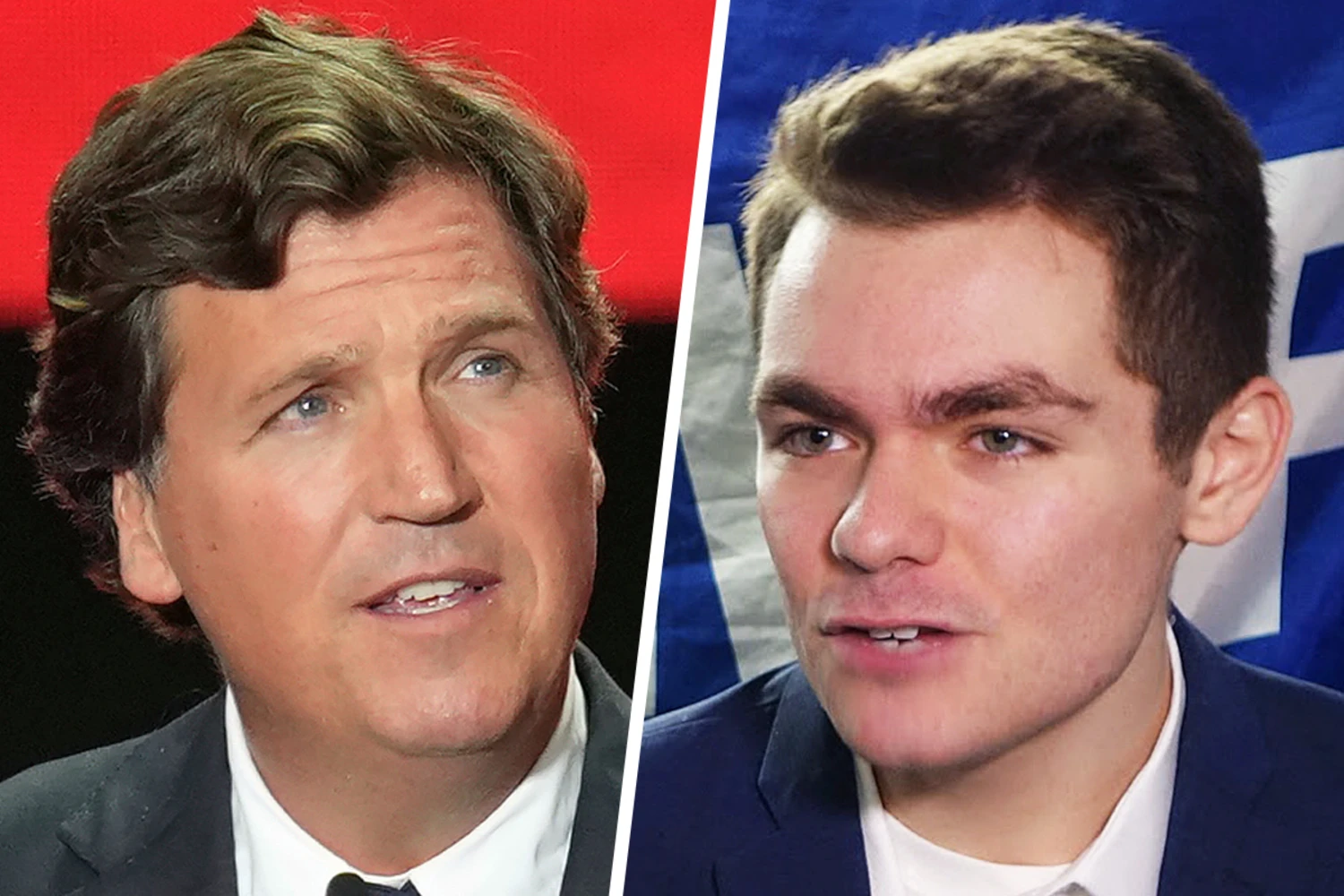
Former Fox News host Tucker Carlson has once again found himself at the center of controversy, this time following a widely condemned interview with white nationalist Nick Fuentes. The interview, which featured Fuentes making antisemitic and extremist remarks with little pushback, has triggered a fierce backlash within conservative circles and prompted at least one major sponsor to withdraw its support. The fallout has not only reignited debates about Carlson’s role in amplifying extremist voices but also exposed deep divisions within the American right over the limits of free speech and political association.
Rocket Money Cuts Ties Following Public Pressure
Two days after media watchdog site Popular Information published a detailed report criticizing companies for sponsoring Tucker Carlson’s show, Rocket Money — a financial services app owned by Rocket Companies — quietly severed its advertising relationship with him. The report accused Rocket Money and other sponsors of “financing white supremacy” by continuing to advertise on Carlson’s online platform following his friendly two-hour conversation with Fuentes, a figure long associated with hate speech and Holocaust denial.
During the November 3 episode of his podcast, Carlson had personally promoted Rocket Money, reading ad copy and offering a special discount URL tied to his name. The sponsorship appeared to be part of a broader, deliberate advertising partnership rather than an automated placement. However, just two days after the Popular Information story went live, all references to Rocket Money vanished from Tucker Carlson’s YouTube page, and the promotional URL was deactivated.
According to Popular Information, Tucker Carlson’s show initially featured multiple advertisers in its episode description, but Rocket Money was the only one to disappear in the wake of the controversy. The publication emphasized that these were not algorithmically placed ads but direct sponsorships where Carlson “personally read ad copy for all three companies and promoted special discount codes.” The outlet argued that by continuing to advertise, these firms were effectively underwriting Carlson’s efforts to normalize white nationalist ideology.
Rocket Companies, which boasts a market capitalization approaching $50 billion, emphasizes on its website that it adheres to a strict ethical code, claiming that “the high road is not optional; for us, it’s the only choice.” The company’s corporate values include a commitment to inclusivity and “doing the right thing,” pledging to foster an environment built on trust and mutual respect. The swift removal of its sponsorship appears to be an effort to maintain this image amid mounting public scrutiny.
The Nick Fuentes Interview
— Tucker Carlson (@TuckerCarlson) October 27, 2025
(0:00) The Origins of Nick Fuentes
(17:10) The Daily Wire’s Efforts to Destroy Fuentes
(35:02) Why Fuentes Decided to Challenge the Conservative Establishment
(46:25) Why Did Fuentes Attack Joe Kent?
(57:31) Identity Politics
(1:01:55) Why Did Fuentes… pic.twitter.com/slCKkjqKv5
Tucker Carlson’s response to the uproar was characteristically defiant. In a follow-up interview with fellow commentator Megyn Kelly, he dismissed critics who accused him of promoting extremism, saying, “Do your own interview the way that you want to do it. You’re not my editor. Buzz off.” Yet while Carlson attempted to brush off the incident, his brand’s growing association with extremist rhetoric has made corporate advertisers increasingly wary of the reputational risks of supporting him.
This development echoes previous episodes during Carlson’s tenure at Fox News, when he faced a wave of advertiser boycotts over inflammatory remarks about immigration and race. Between 2018 and 2019, dozens of major companies withdrew their commercials after he described immigration as making America “poorer and dirtier,” and later dismissed white supremacy as a “hoax.” Those earlier controversies led to an exodus of sponsors from his primetime program — a pattern now repeating itself in his post-Fox career.
Conservative Fractures and the Heritage Foundation’s Turmoil
Beyond the financial repercussions, the Fuentes interview has ignited fierce ideological battles within the conservative movement. Tucker Carlson’s willingness to give a platform to a figure widely condemned for antisemitic, racist, and extremist views has caused visible fractures among right-wing commentators, think tanks, and organizations traditionally aligned with the broader MAGA movement.
The most significant institutional fallout has emerged from the Heritage Foundation, one of the most influential conservative think tanks in Washington. Its president, Kevin Roberts, initially defended Carlson in the face of widespread outrage, characterizing the backlash as an attack from a “venomous coalition” of “globalist elites” opposed to Carlson’s populist message. Roberts described Carlson as “a close friend of the Heritage Foundation,” appearing to stand by him despite the content of the interview.
Read : Joseph Kinney Arrested After Showing Up for Nursing Job Interview
However, the response within Heritage was swift and severe. Multiple staff members reportedly resigned in protest, including individuals associated with the think tank’s antisemitism task force. Internal dissent forced Roberts into an embarrassing reversal. During a contentious staff meeting, he publicly apologized for his earlier remarks, acknowledging that he had “made a mistake” and stating, “I let you down, and I let down this institution, and I’m sorry, period, full stop.”
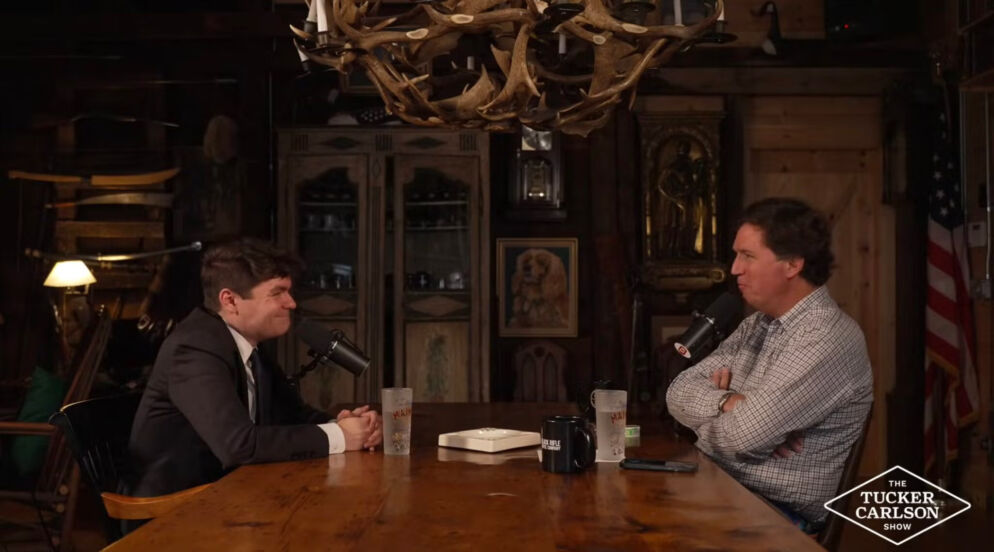
The episode underscored the widening divide within conservative ranks between those aligned with a traditional, policy-focused conservatism and those embracing the more radical, grievance-driven populism that Tucker Carlson has increasingly embodied. Prominent conservative voices such as Ben Shapiro and Mark Levin were among the first to denounce Carlson’s interview, accusing him of legitimizing antisemitism and betraying core American values. Shapiro, in particular, warned that giving Fuentes a platform risked mainstreaming Holocaust denial and hatred under the guise of free speech.
By contrast, a faction of pro-Carlson commentators argued that the backlash represented another attempt to “cancel” dissenting voices on the right. They contended that Carlson was merely exploring controversial viewpoints and engaging in open dialogue, even if those views were deeply offensive to many. This split reflects an ongoing struggle within the conservative movement to define the boundaries of acceptable discourse — and whether figures like Fuentes should ever be considered legitimate participants in political conversation.
The tension has been further exacerbated by Carlson’s own remarks during the interview. At one point, he appeared to agree with Fuentes’s characterization of Christian Zionists, saying, “What is that? I can just say for myself, I dislike them more than anybody, because it’s Christian heresy. And I’m offended by that as a Christian.” This comment, perceived by many as a direct attack on Christian supporters of Israel, provoked outrage from both religious conservatives and Jewish groups, many of whom viewed it as deeply antisemitic.
A Familiar Pattern of Controversy and Consequences
The uproar surrounding Carlson’s Fuentes interview represents a continuation of a pattern that has defined his career: courting controversy, dismissing criticism, and facing inevitable fallout from sponsors and mainstream institutions. Since departing Fox News earlier this year, Carlson has sought to rebrand himself as an independent voice unconstrained by corporate media, hosting interviews and commentary on his own digital platform and social media channels. Yet his most recent actions suggest that freedom from traditional network oversight has only intensified his willingness to engage with extremist figures.
Nick Fuentes, the central figure in this latest controversy, is a notorious far-right activist who has repeatedly expressed admiration for Adolf Hitler and has been banned from multiple platforms for hate speech. His so-called “Groyper Army” movement advocates for a form of white nationalism that explicitly rejects both multiculturalism and traditional American conservatism. Carlson’s decision to feature Fuentes in a friendly, uncritical interview was seen by many as a dangerous normalization of extremist ideology.
Read : Palestine-Born Columbia University Student Mohsen Mahdawi Detained at US Citizenship Interview
The public reaction has been swift and intense. Civil rights groups, Jewish organizations, and even many conservatives have condemned Carlson’s decision, warning that such exposure risks legitimizing hate speech under the pretense of open dialogue. Critics argue that by treating Fuentes as a serious political thinker rather than a purveyor of racist and antisemitic propaganda, Carlson gave credibility to ideas that should remain firmly outside mainstream discourse.
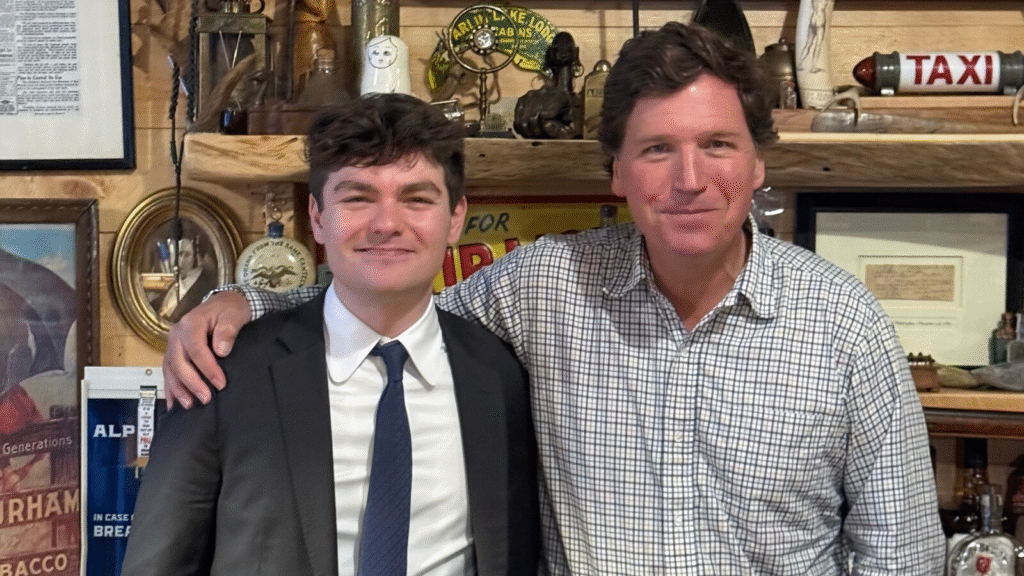
The loss of Rocket Money as a sponsor may only be the beginning. While other companies have not yet followed suit, history suggests that advertisers tend to distance themselves from Carlson’s platforms when controversies reach this level of public visibility. His previous experience at Fox News demonstrated that advertisers are sensitive to accusations of supporting racism, sexism, or antisemitism, regardless of the political orientation of their audiences.
Still, Carlson’s influence among segments of the American right remains strong. His podcast and video series continue to attract large viewership online, and his loyal fan base often interprets sponsor withdrawals as evidence of a broader corporate or media conspiracy to silence conservative voices. This narrative of persecution has, paradoxically, strengthened Carlson’s appeal within certain circles that prize defiance against perceived political correctness.
Nonetheless, the long-term implications of the Fuentes controversy may prove more damaging than previous scandals. The interview’s explicit engagement with Holocaust denial, antisemitic tropes, and white nationalist ideology has alienated not only liberal critics but also key segments of the conservative establishment. The resulting backlash from figures like Shapiro and institutions like the Heritage Foundation suggests that Carlson’s willingness to align, even indirectly, with such rhetoric could isolate him further from mainstream conservative politics.
While Carlson has weathered numerous controversies throughout his career, the latest episode reveals a shrinking margin for error in an increasingly polarized environment. Advertisers are more cautious than ever about being associated with divisive content, and political allies are less willing to defend actions that cross into overt extremism. Whether the loss of Rocket Money signals the start of a larger advertiser retreat remains to be seen, but it underscores the risks Carlson faces as he continues to test the boundaries of political discourse.
For now, Carlson appears determined to forge ahead, defiantly rejecting criticism and doubling down on his self-styled image as a truth-teller unafraid of controversy. Yet the financial and reputational costs of that stance are becoming increasingly clear. As public outrage grows and sponsors reconsider their associations, Carlson’s ability to sustain his platform without corporate backing may depend on the very audience segments most drawn to his provocations — a dynamic that could push his rhetoric, and his audience, even further toward the political fringes.
Really insightful article! Seeing platforms like 9apiso ph login focus on transparency with RTP is a huge step for player trust. Easy registration & quick deposits (like GCash!) are key too. Great read!
益群网:终身分红,逆向推荐,不拉下线,也有钱赚!尖端资源,价值百万,一网打尽,瞬间拥有!多重收益,五五倍增,八级提成,后劲无穷!网址:1199.pw
Tại 888slot , mỗi khách hàng đều là một thượng khách. Chúng tôi cam kết mang lại dịch vụ hỗ trợ 24/7, đảm bảo mọi hành trình trải nghiệm của bạn luôn thông suốt. TONY03-01H