
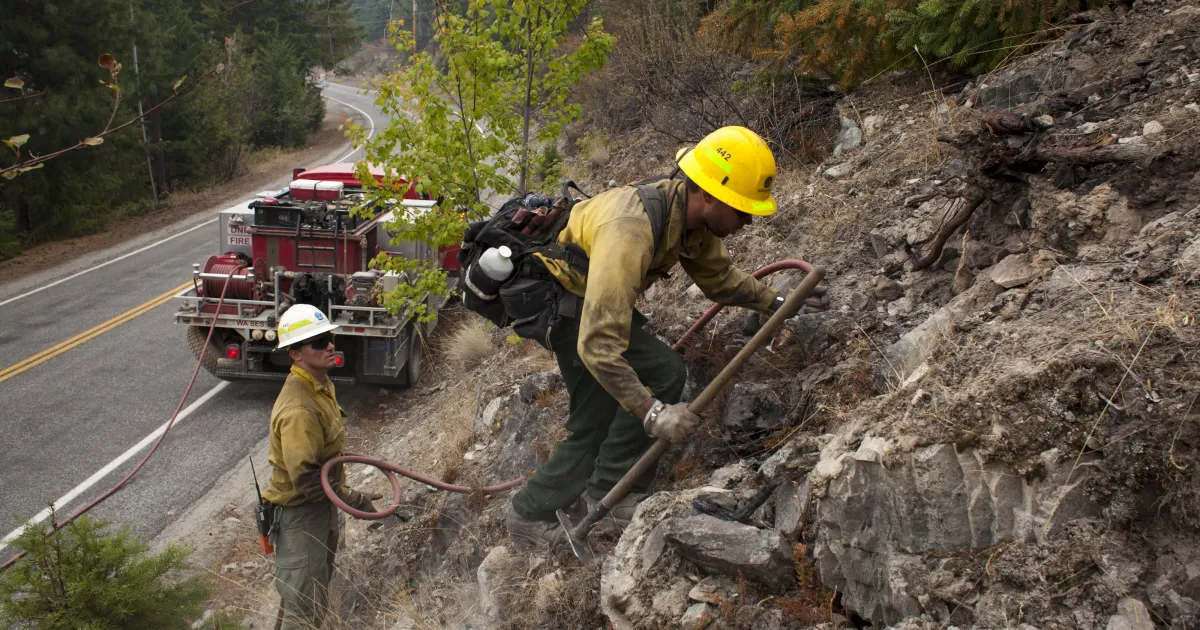
On August 27, 2025, an unprecedented event unfolded in Washington State’s Olympic National Forest, where Firefighters Arrested by Border Patrol agents while actively engaged in combating the Bear Gulch Fire, the state’s largest active wildfire. This incident, which took place near Lake Cushman on the Olympic Peninsula, has sparked widespread controversy, drawing sharp criticism from state officials, lawmakers, and advocacy groups. The arrests occurred during a critical firefighting operation, raising questions about federal immigration enforcement priorities and their impact on public safety during natural disasters.
Two Firefighters Arrested by Border Patrol
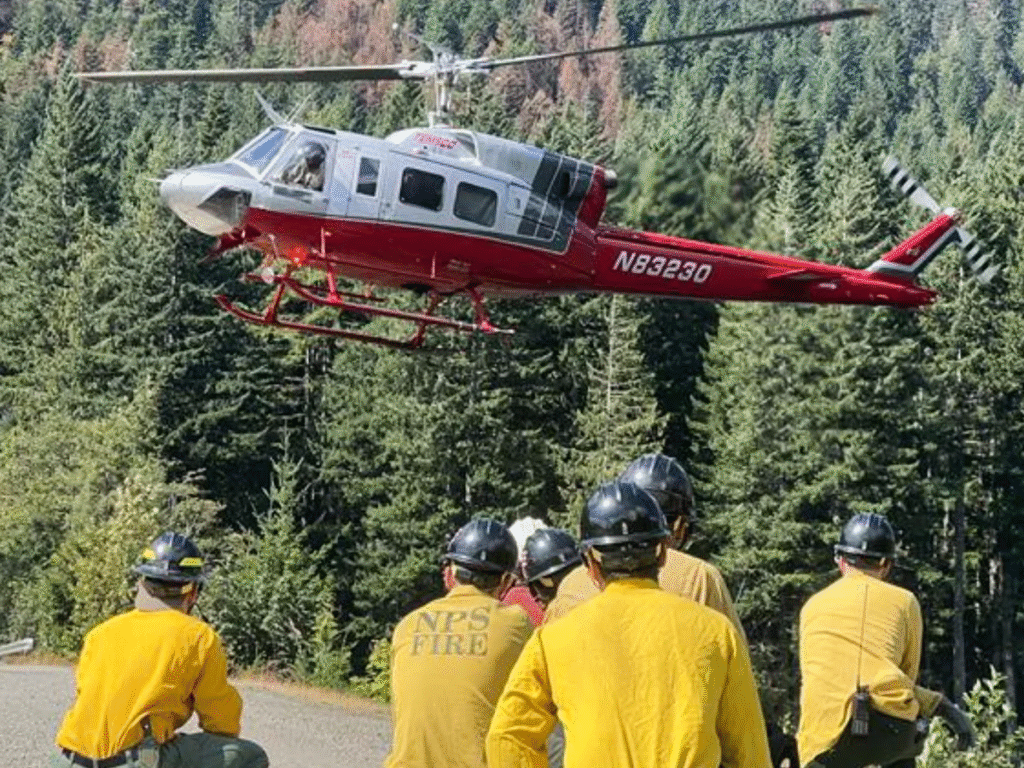
The Bear Gulch Fire, which began on July 6, 2025, has scorched approximately 9,000 acres in the Olympic National Forest and National Park, with containment levels at just 13% as of August 29, 2025. The fire, fueled by intense heatwaves and dry conditions, has posed significant challenges to the nearly 400 personnel deployed to manage it, including six 20-person hand crews, five of which are private contractors.
On the morning of August 27, two contract firefighters, part of a 44-person crew from Table Rock Forestry Inc. and ASI Arden Solutions Inc., were detained by Border Patrol agents during an identity verification operation. According to U.S. Customs and Border Protection (CBP), the Bureau of Land Management (BLM) and the U.S. Forest Service requested assistance from Border Patrol after terminating contracts with the two Oregon-based firefighting firms due to a BLM criminal investigation.
The exact nature of the investigation remains undisclosed, but CBP stated that agents were called to verify the identities of 44 crew members at a remote work site near Lake Cushman. During this process, two individuals were identified as being in the United States illegally, with one having a prior order of removal. The detained firefighters were subsequently transported to a CBP facility in Bellingham, Washington.
Videos and photos from the scene, shared by fellow crew members and reported by outlets like The Seattle Times and KOMO News, depicted federal agents in “Police” vests detaining the firefighters, who were handcuffed. Crew boss David “Buenos” Diaz, who witnessed the arrests, described the operation as disruptive, noting that agents spent over three hours checking the identities of the crew members, who were primarily tasked with cutting wood in a support role.
Read : Idaho Firefighters Frank Harwood and John Morrison Shot Dead by 20-Year-Old Wess Roley
Firefighters expressed frustration, with one anonymously telling The Seattle Times, “You risked your life out here to save the community. This is how they treat us.” Another reported being denied the opportunity to say goodbye to the detained crew members, highlighting the emotional toll of the incident.
Read : Turkey Will Lose More Than It Gains: Putin on Trade with the West
The arrests did not directly interrupt active firefighting efforts, according to statements from the Western Washington Type 3 Incident Management Team and the U.S. Forest Service. However, the operation has been criticized for its timing and location, as it occurred in a fire zone during a critical response to a wildfire that has already forced evacuations and threatened local communities.
Political and Community Backlash
The arrests have ignited a firestorm of criticism from Washington and Oregon officials, who argue that detaining firefighters during an active wildfire response undermines public safety and reflects misguided federal priorities. Washington Senator Patty Murray condemned the Trump administration’s immigration policies as “fundamentally sick,” arguing that the arrests exacerbate an already strained firefighting capacity.
“Trump has undercut our wildland firefighting abilities in more ways than one—from decimating the Forest Service and pushing out thousands of critical support staff, to now apparently detaining firefighters on the job,” Murray stated. She demanded immediate answers regarding the whereabouts of the detained firefighters and the administration’s policy on immigration enforcement during natural disasters.
Washington Governor Bob Ferguson echoed these concerns, expressing that he was “deeply concerned” about the arrests and had directed his team to seek further information from federal agencies. Commissioner of Public Lands Dave Upthegrove, who oversees Washington’s wildland firefighting efforts, called the operation “crude and inhumane,” noting that it stoked fear and mistrust among firefighters risking their lives to protect the state.
Oregon Senator Ron Wyden described the arrests as an “evil stunt,” emphasizing that one of the detained firefighters was an Oregon resident who had lived in the U.S. for 19 years and was in the process of obtaining legal status through a U-visa application. The detained Oregon firefighter, represented by the Portland-based Innovation Law Lab, has been a focal point of the controversy. According to his attorneys, the firefighter arrived in the U.S. at age four and has resided in Keizer, Oregon, for nearly two decades.
He applied for a U-visa in 2018 after assisting federal investigators in a crime involving his family, a program designed to protect victims of serious crimes who cooperate with law enforcement. His lawyers argue that his arrest was illegal, citing Department of Homeland Security (DHS) policies under the Biden administration that prohibited immigration enforcement at emergency response sites absent exigent circumstances. “Although we have been searching for him since yesterday afternoon, CBP has concealed his whereabouts,” said staff attorney Rodrigo Fernandez-Ortega, adding that the firefighter has been unable to contact his family or legal counsel.
The backlash extended beyond elected officials. Dennis Lawson, president of the Washington State Council of Fire Fighters, emphasized the team-oriented nature of firefighting, stating that losing any member, regardless of the reason, hampers their ability to serve communities effectively. Democratic Representatives Emily Randall and Pramila Jayapal also voiced outrage, with Randall stating, “This is not making America safer,” and Jayapal calling the arrests “absurd” and “against America’s best interests.”
Broader Implications and Context
The arrests at the Bear Gulch Fire highlight a broader tension between immigration enforcement and public safety, particularly under the Trump administration’s aggressive immigration policies. Since January 2025, Immigration and Customs Enforcement (ICE) has deported nearly 200,000 individuals in the first seven months of Trump’s second term, a pace that exceeds previous years but falls short of the administration’s goal of 1 million deportations annually.
The operation at the Bear Gulch Fire is notable for its rarity, as veteran firefighters and union representatives, such as Steve Gutierrez of the National Federation of Federal Employees, noted that immigration enforcement actions are uncommon in active fire zones. The incident also underscores the reliance on private contractors in the Pacific Northwest, where federal firefighter shortages have strained resources. Unlike California, which employs a robust multiagency firefighting approach, Washington and Oregon often depend on private firms like Table Rock Forestry and ASI Arden Solutions to fill gaps.
These contractors, however, may face less stringent background checks compared to federal agencies like the U.S. Forest Service, potentially leading to oversight issues as seen in this case. DHS and CBP have defended their actions, asserting that the arrests did not interfere with firefighting operations and were part of a coordinated effort to ensure the integrity of government operations.
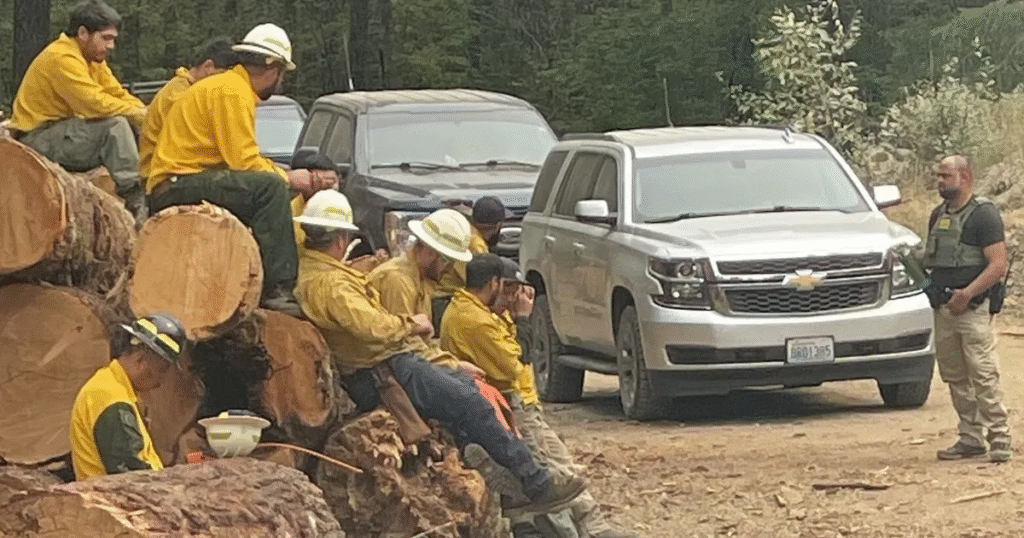
A senior DHS official clarified that the detained individuals were not actively fighting the fire but were in a support role, cutting logs for firewood. “No active firefighters were even questioned, and U.S. Border Patrol’s actions did not prevent or interfere with any personnel actively engaged in firefighting efforts,” the official stated. CBP’s Blaine Sector Chief Patrol Agent Rosario Vasquez emphasized the agency’s commitment to enforcing immigration laws “unapologetically” wherever violations are encountered.
However, critics argue that such enforcement actions during a wildfire response send a chilling message to essential workers, particularly those from immigrant communities, who play a vital role in disaster response. The arrests have also raised questions about the Trump administration’s departure from previous DHS policies, such as those implemented during the Biden administration, which prioritized life and safety during natural disasters by limiting immigration enforcement in emergency zones.
As the Bear Gulch Fire continues to burn, with containment efforts hampered by high temperatures and dry conditions, the arrests serve as a stark reminder of the complex interplay between immigration policy and public safety. The detained firefighters’ fate remains uncertain, with ongoing efforts by their legal representatives to secure their release and clarify their status. Meanwhile, the incident has galvanized calls for reform, with lawmakers like Murray and Wyden urging a reevaluation of immigration enforcement practices to prioritize community safety and the contributions of essential workers, regardless of their status.
In conclusion, the arrests of two firefighters at the Bear Gulch Fire have exposed deep divisions over immigration enforcement and its impact on critical public services. As Washington State grapples with one of its worst wildfire seasons, the incident underscores the need for policies that balance legal accountability with the urgent demands of disaster response, ensuring that those who risk their lives to protect communities are not penalized for their efforts.