

The death of a loved one is a devastating personal loss, but for Tye Hinson, grief was compounded by a financial and ethical dispute that has drawn public attention in Florida and beyond. Hinson, a cosmetologist based in Florida, was preparing to marry her longtime partner, William Coney, when tragedy struck just months before their planned wedding. What followed was not only the sudden collapse of wedding plans but also a refusal by the chosen venue to refund thousands of dollars already paid.
The case has sparked debate around contractual rigidity, compassion in business, and how wedding venues respond when life-altering events upend carefully laid plans. Hinson and Coney, who had known each other for more than two decades, were scheduled to marry in May at the Crystal Ballroom Lake Mary, an all-inclusive wedding venue in Central Florida. The venue had been selected to accommodate an expanding guest list and to host what was meant to be a joyful milestone for the couple.
Instead, shortly before Thanksgiving, Coney died unexpectedly at the age of 42 after suffering a fatal heart attack. According to Hinson, she contacted the venue just two days later to inform them of the loss and to discuss next steps. Rather than receiving understanding or financial relief, Hinson says she was told that the contract’s non-refundable clauses would be enforced in full.
In total, she had paid $7,609 to the venue, including a $2,000 non-refundable administrative fee paid at the time of signing the contract in August, as well as an additional $5,609 paid just two days before Coney’s death. The venue declined to return any portion of that amount, citing the terms agreed upon months earlier. The situation has since become a focal point of public discussion, raising questions about where legal obligations end and moral responsibility begins, especially in circumstances involving death rather than voluntary cancellation.
The Financial Dispute and the Venue’s Contractual Position
At the heart of the dispute is the Crystal Ballroom Lake Mary’s contract, which includes a strict non-refundable policy. According to the venue’s owner, Lukasz Rogowski, the policy is clearly stated in writing before clients sign and is reviewed during the initial consultation. Rogowski has emphasized that full-service venues operate under different financial and operational models compared to individual vendors, incurring significant costs well in advance of an event.
In statements provided to News 6, Rogowski expressed sympathy for Tye Hinson’s loss but maintained that the venue’s position is rooted in long-standing policy rather than indifference. He explained that deposits and payments cover preparatory costs, staffing, planning, and operational commitments that are often locked in months ahead of an event date. From the venue’s perspective, refunding large sums after such preparations would undermine its ability to operate sustainably.
Rogowski also pointed to the availability of third-party cancellation insurance, which the Crystal Ballroom recommends to clients before contracts are signed and again during the planning process. Such insurance is designed to protect couples from unforeseen events, including serious illness or death. While acknowledging that no policy can ease emotional loss, Rogowski argued that these safeguards exist precisely because weddings involve significant financial risk.
However, Hinson’s account highlights a different interpretation of fairness. She has stated that she understands contracts well, noting her own professional experience providing makeup services for weddings and events. In her line of work, she has issued refunds even when contracts technically allowed her to retain payments, including in situations where clients faced disasters such as hurricanes destroying their homes before scheduled weddings. For Hinson, the refusal to refund any portion of the money after her fiancé’s death felt less like a business decision and more like a lack of basic human compassion.
Read : Brunei: Second-richest Country in Southeast Asia
The financial aspect is further complicated by timing. Hinson had paid more than $5,600 just two days before Coney’s sudden passing, meaning much of the payment had been made before the venue had incurred the bulk of event-day expenses. Critics of the venue’s decision argue that this detail weakens the justification for retaining the full amount, while supporters counter that preparation and opportunity costs are not always visible or immediate.
A Suggested Memorial and the Emotional Fallout
Beyond the financial dispute, Hinson has said that one interaction with venue staff was particularly painful. According to her account, after being denied a refund, a Crystal Ballroom employee suggested that she could hold a memorial service for her late fiancé at the venue on the original wedding date. While the venue has not publicly detailed the context of this suggestion, Hinson described it as deeply upsetting.
For her, the idea of replacing a wedding with a memorial in the same space underscored how disconnected the response felt from the reality of her grief. “This wasn’t like a cancellation. This was a person dying,” Hinson told News 6, a statement that has since resonated widely online. The emotional impact of such exchanges has fueled public sympathy for Hinson and intensified scrutiny of the venue’s policies.

Many observers argue that extraordinary circumstances warrant flexibility, even when contracts are clear. Others contend that businesses must adhere to consistent rules to avoid subjective decision-making and potential legal exposure. Adding to the contrast, Hinson noted that all of her other wedding vendors refunded payments or canceled contracts without penalty after learning of Coney’s death, even when those contracts included non-refundable clauses. This disparity has been central to her frustration and has shaped public perception of the Crystal Ballroom’s stance.
The venue, for its part, has stated that it typically works through wedding planners rather than directly with clients in complex situations. Rogowski confirmed that his team has been communicating with Hinson’s wedding planner, Patricia Aro, rather than with Hinson herself. He also said the company often tries to accommodate clients facing serious illness, loss, or emergencies by offering options such as postponements or alternative use of space, while still operating within contractual boundaries.
While these explanations provide insight into the venue’s internal processes, they have done little to quell criticism from those who believe the response lacked sensitivity to the human reality behind the paperwork.
Public Reaction, Legal Context, and Broader Implications
The case has sparked widespread discussion about the balance between legal contracts and ethical responsibility, particularly in the wedding industry. Weddings are inherently emotional events, and vendors often market themselves not just as service providers but as partners in once-in-a-lifetime moments. When tragedy intervenes, expectations of empathy can clash with business realities.
Legally, the Crystal Ballroom’s position may be defensible. Non-refundable clauses are common in event contracts, and courts often uphold them when terms are clear and agreed upon in advance. From a strictly legal standpoint, the death of a fiancé does not automatically void a contract unless specific force majeure or cancellation provisions apply. This reality underscores the importance of cancellation insurance, which many couples overlook or decline in an effort to manage costs.
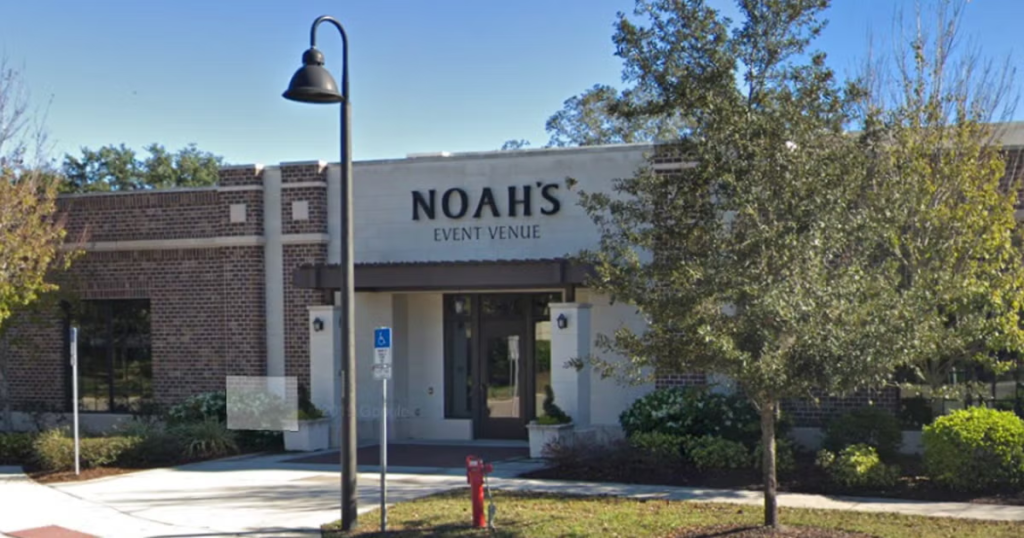
Yet public opinion often operates on a different axis than legal analysis. In this case, many people see a distinction between a couple choosing to cancel a wedding and a wedding becoming impossible due to death. The suggestion that compassion should override contractual enforcement in such rare and devastating circumstances has been a recurring theme in public commentary.
The controversy has also drawn attention to a GoFundMe campaign organized by wedding planner Patricia Aro to help Hinson recover some of the lost funds. At the time of reporting, the campaign had raised more than $3,500 toward its $4,000 goal. Aro’s message on the fundraiser emphasized empathy and called on the Crystal Ballroom to reconsider its position, framing the issue as one of moral choice rather than legal obligation.
Rogowski has stated that he personally donated $525 to the fundraiser, clarifying that the contribution was made in his individual capacity and was unrelated to the venue’s official stance. While some have viewed the donation as a gesture of goodwill, others see it as insufficient compared to the amount retained by the business.
Beyond this individual case, the situation raises broader questions for couples, vendors, and policymakers. Should contracts in the wedding industry include clearer provisions for death and other extreme circumstances. Should venues adopt discretionary compassion clauses, or would such flexibility create inconsistency and financial risk. And how should businesses balance the need for predictable revenue with the reputational cost of appearing unempathetic.
For Hinson, the issue remains deeply personal. What was meant to be a celebration of a lifelong bond has become a public dispute layered onto grief. Her experience has resonated with many who see it as a reminder that behind every contract is a human story, and that the way businesses respond to tragedy can leave a lasting impression far beyond a single transaction.