

The announcement of a newborn baby boy named Yahya Sinwar at University Hospital Leipzig (UKL) in eastern Germany has ignited a storm of controversy and public backlash. What was intended to be a simple and joyous celebration of new life quickly escalated into a heated debate over the appropriateness and implications of naming a child after a figure so closely associated with violence and terrorism. This incident has brought to light the sensitive intersection of personal freedoms, social responsibility, and the complexities of geopolitical contexts reflected in naming conventions.
The Announcement and Immediate Controversy
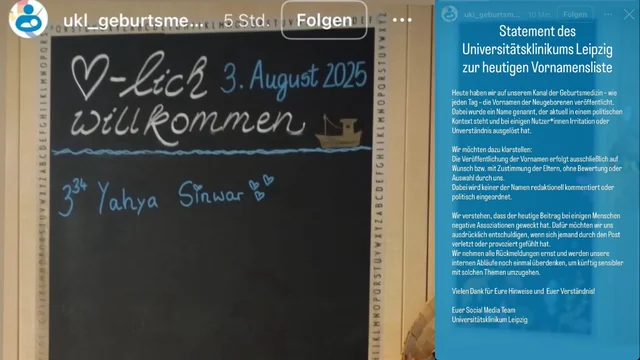
On a seemingly ordinary Monday morning, University Hospital Leipzig published a social media post celebrating the birth of several babies, including a boy named Yahya Sinwar. The announcement was part of a regular practice where the hospital shared the first names of newborns, with parental consent.
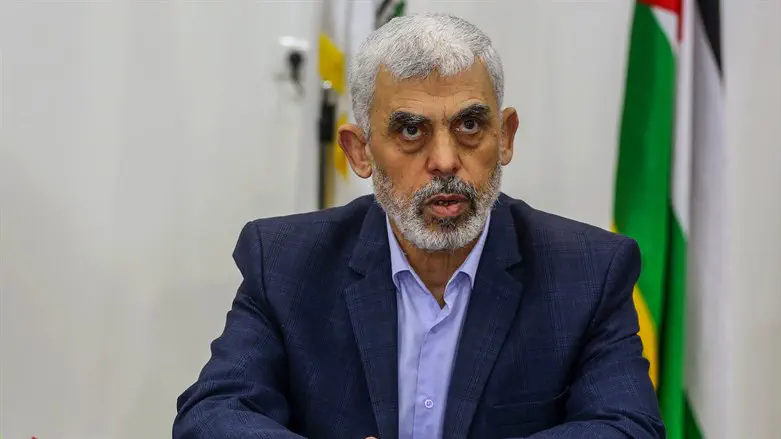
However, the post quickly drew negative attention after it was noticed that one of the babies had been named after Yahya Sinwar, the former leader of Hamas. Sinwar, widely known as the architect of the devastating October 7, 2023 massacre, was killed by the Israeli Defense Forces (IDF) in October 2024.
The hospital staff apparently did not recognize the political and violent associations of the name at the time of posting. A screenshot from the announcement even showed a staff member having drawn a heart over the “i” in Sinwar, which many interpreted as an insensitive gesture considering the name’s infamous bearer. Once the public backlash became apparent, UKL removed the post from social media and issued an official apology, acknowledging the hurt and provocation caused.
Read : Mohammed Deif: Hamas Leader and Mastermind of October 7 Attack on Israel’s Ben Gurion University
The backlash was amplified notably by Jewish-German rapper Ben Salamo, who publicly questioned whether it should be permissible in Germany to name a child after a “terrorist and mass murderer.” His remarks resonated widely, reflecting a collective discomfort and moral unease within parts of German society, particularly among communities deeply affected by the legacy of violence and terrorism.
Legal and Cultural Constraints on Baby Naming in Germany
In Germany, parents enjoy a considerable degree of freedom when choosing names for their children, but this right is not absolute. While parents may initially select any name, it must subsequently be approved by the local registry office before being officially recorded on the population register. This legal framework exists to safeguard the welfare of the child and maintain social order.
Read : How Israeli Military Tracked And Killed Hamas Chief Yahya Sinwar In Gaza
According to the Leipzig registry office, a first name must not endanger the child’s welfare, be insulting, or be obviously unsuitable. Names that are linked to extremist, anti-constitutional, or violent content or individuals can be refused. The office explained that if there is disagreement between the parents and the registry regarding the appropriateness of a name, the issue is escalated to the courts for a final decision.
Historically, certain names have been rejected due to their controversial or offensive nature. For example, names like “Adolf” — due to its association with Adolf Hitler — “Satan,” “McDonald,” or even “Superman” have been banned. The inclusion of the name “Yahya Sinwar” in this context places it under intense scrutiny, as Sinwar’s role as a Hamas leader responsible for violent attacks aligns with the criteria that may make the name unacceptable for official registration.
UKL emphasized that it does not vet or filter baby names before posting announcements on social media; names are shared exclusively with parental consent and without editorial judgment or political classification. Still, this incident has triggered a reassessment of internal procedures to better handle such sensitive matters in the future.
Broader Implications: Identity, Tolerance, and Political Sensitivities
The controversy surrounding the naming of the baby Yahya Sinwar at University Hospital Leipzig is not simply about the act of choosing a name—it raises broader questions about identity, tolerance, and the political sensitivities entwined with names that carry heavy historical and geopolitical baggage.
From the perspective of the Palestinian cause, Hamas, through its official news agency SAFA, responded with criticism of the backlash. They framed the situation as symbolic of larger issues where Palestinians face vilification and marginalization in Western media and political discourse. The group argued that while Palestinian children in Gaza are often buried without names due to conflict-related casualties, a newborn’s name in Germany being a cause for scandal reveals a skewed global moral compass.
This perspective highlights how names can become battlegrounds for larger cultural and political conflicts, reflecting deep-seated tensions around identity and recognition in a polarized world. In this case, the name “Yahya” itself, independent of Sinwar’s surname, is of Arabic origin and is the equivalent of John the Baptist in Islamic tradition—a common and culturally significant name among Muslims globally.
Interestingly, despite the controversy in Germany, the name “Yahya” has been growing in popularity elsewhere. In the United Kingdom, the Office for National Statistics reported that “Yahya” entered the top 100 baby boys’ names list in 2024, jumping 33 places to rank at number 93.
A total of 583 baby boys were given the name across England and Wales in 2024. While this rise is notable, commentators have stressed there is no definitive link between the name’s popularity and support for the Hamas leader. Yet, some observers found the trend unsettling, comparing it to the hypothetical and unlikely resurgence of a name like “Adolf” in Britain during the 1940s.
The incident at UKL thus serves as a reminder of how names can carry significant political and emotional weight, particularly in contexts with histories of conflict and trauma. It also illustrates the delicate balance institutions must strike between respecting individual freedoms and acknowledging the potential impact of public expressions that intersect with broader social concerns.
The University Hospital Leipzig controversy surrounding the naming of a baby boy Yahya Sinwar has sparked intense debate over the limits of parental naming rights, societal values, and the implications of commemorating controversial figures through names. While the hospital acted according to existing protocols—sharing names with parental consent and without vetting—the backlash demonstrates how such matters can rapidly escalate into political and ethical disputes.
Germany’s legal framework provides mechanisms to reject names deemed harmful or inappropriate, and it remains likely that the registry office will refuse the name “Yahya Sinwar” for official registration. Yet, the incident also opens important discussions about identity, tolerance, and the ways names can reflect broader geopolitical and cultural struggles.
As this situation continues to unfold, it underscores the need for sensitivity and awareness when dealing with issues that resonate far beyond the individual level, touching on collective histories, traumas, and values shared by communities worldwide. The naming of a child is profoundly personal, but when linked to divisive figures, it becomes a mirror reflecting the complex and often painful realities of the world we live in.