
The University of Cambridge, one of the world’s most prestigious academic institutions, has found itself at the center of a legal battle concerning the right to protest on its premises.
The university recently lost a bid in the High Court to impose a long-term injunction prohibiting demonstrations related to the Israel-Palestine conflict at key locations on its campus.
The case has highlighted significant tensions between institutional authority and the right to free expression, drawing widespread attention from legal experts, student activists, and human rights organizations.
The Legal Battle and Its Implications
The university’s request for an injunction sought to prevent any direct action related to the Israel-Palestine conflict from taking place at four key locations until February 2030.
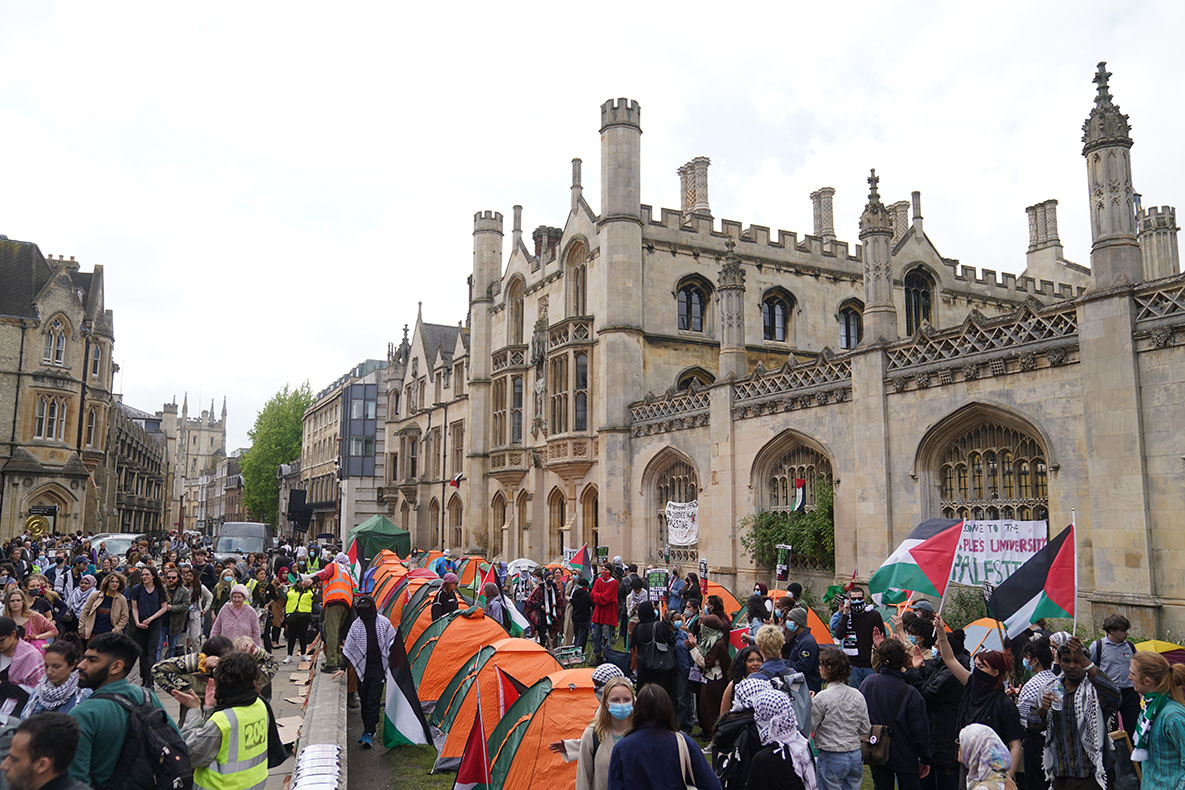
This request came in response to protests organized by the activist group “Cambridge for Palestine,” which had set up encampments in Senate House Yard in May and November 2024, as well as staging a demonstration at Greenwich House.
The university argued that these protests had disrupted its academic operations and posed a significant risk to the peaceful conduct of ceremonies and other important events.
However, in a ruling delivered by Mr. Justice Fordham, the High Court rejected the university’s application for a five-year injunction. The judge cited concerns over the lack of adequate time for interested parties to respond to the university’s bid and questioned whether such a broad restriction on protests was justifiable.
Instead, the court granted a much narrower and more limited order, specifically barring protests at Senate House and Senate House Yard during an upcoming graduation ceremony. The decision has been seen as a major victory for those advocating for free speech and the right to protest, reaffirming the principle that universities should be spaces for open debate and dissent.
Balancing Free Speech and Institutional Order
The case raises fundamental questions about the balance between maintaining order on university campuses and protecting the right to protest. The University of Cambridge had presented evidence of two graduation ceremonies that had been disrupted by protests, alongside concerns about potential future disruptions.
However, Mr. Justice Fordham noted that the court had not been provided with a complete picture, as ten other graduation ceremonies had proceeded without incident during the same period. This discrepancy in evidence suggested that the university’s claim of widespread disruption might have been overstated.
The ruling also underscored the legal principle that any restrictions on protest must be proportionate and based on clear evidence of necessity. The judge emphasized that while universities have a legitimate interest in ensuring their activities can proceed smoothly, they must also respect the fundamental rights of students and staff to express their views.
The decision is expected to set a precedent for similar cases in the future, particularly as universities across the UK and beyond grapple with growing student activism on issues ranging from climate change to geopolitical conflicts.
Reactions and Future Implications
The ruling has sparked strong reactions from various stakeholders. The European Legal Support Centre (ELSC), whose lawyers challenged the university’s bid, hailed the decision as a “significant victory” for civil liberties.
In a statement, the organization argued that the University of Cambridge’s attempt to impose a sweeping ban on protests represented an unprecedented attack on the right to assembly and free expression. The ELSC further suggested that the ruling should serve as a warning to other universities contemplating similar restrictions.
On the other hand, university officials have expressed disappointment with the decision, maintaining that their primary concern was to ensure that academic events, particularly graduation ceremonies, could proceed without disruption.
A spokesperson for the university indicated that Cambridge remains committed to upholding free speech but must also consider the impact of protests on students, faculty, and visitors. The university is expected to review its legal options and may seek alternative measures to manage demonstrations in the future.
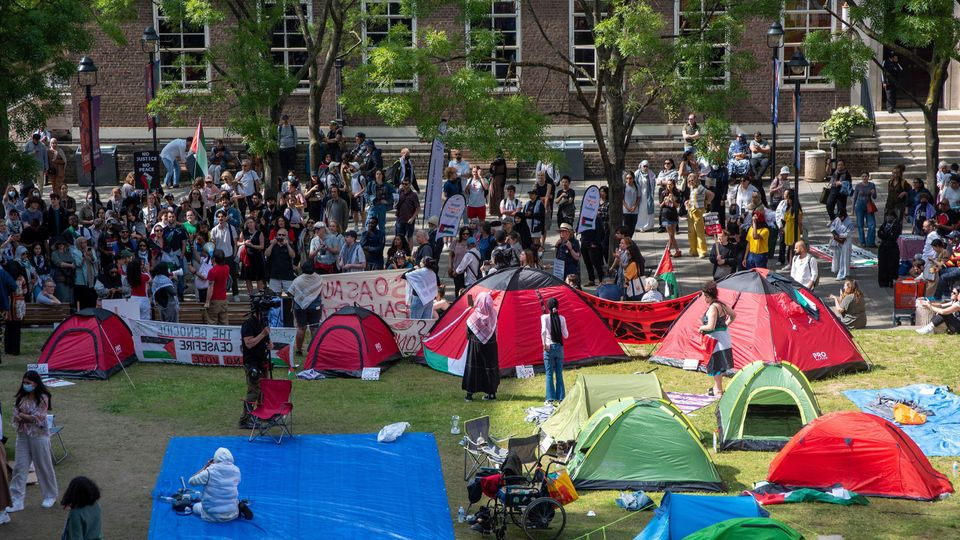
The case also raises broader questions about how universities should engage with politically charged issues. Institutions of higher learning have long been sites of political activism, and the current wave of protests over the Israel-Palestine conflict is part of a larger global trend.
Universities must navigate these challenges carefully, balancing their commitments to academic freedom, institutional neutrality, and the rights of their students and staff.
Looking ahead, the decision by the High Court could influence policies at other academic institutions, prompting them to reconsider how they approach protest regulation.
The ruling affirms that while universities have the right to seek legal remedies in cases of genuine disruption, overly broad and preemptive measures may not withstand judicial scrutiny. As student activism continues to evolve, universities will need to find ways to engage constructively with protest movements rather than resorting to sweeping legal prohibitions.
In conclusion, the University of Cambridge’s failed bid for a long-term injunction against Israel-Palestine protests marks a crucial moment in the ongoing debate over free speech and institutional authority in higher education.
The case underscores the need for universities to uphold democratic principles while managing the practical realities of campus life.
Moving forward, it remains to be seen how Cambridge and other institutions will respond to the growing wave of student activism and whether this ruling will lead to more open engagement between university administrations and protest groups.
The conversation around free speech and the right to protest in academic spaces is far from over, and the implications of this decision are likely to reverberate for years to come.