
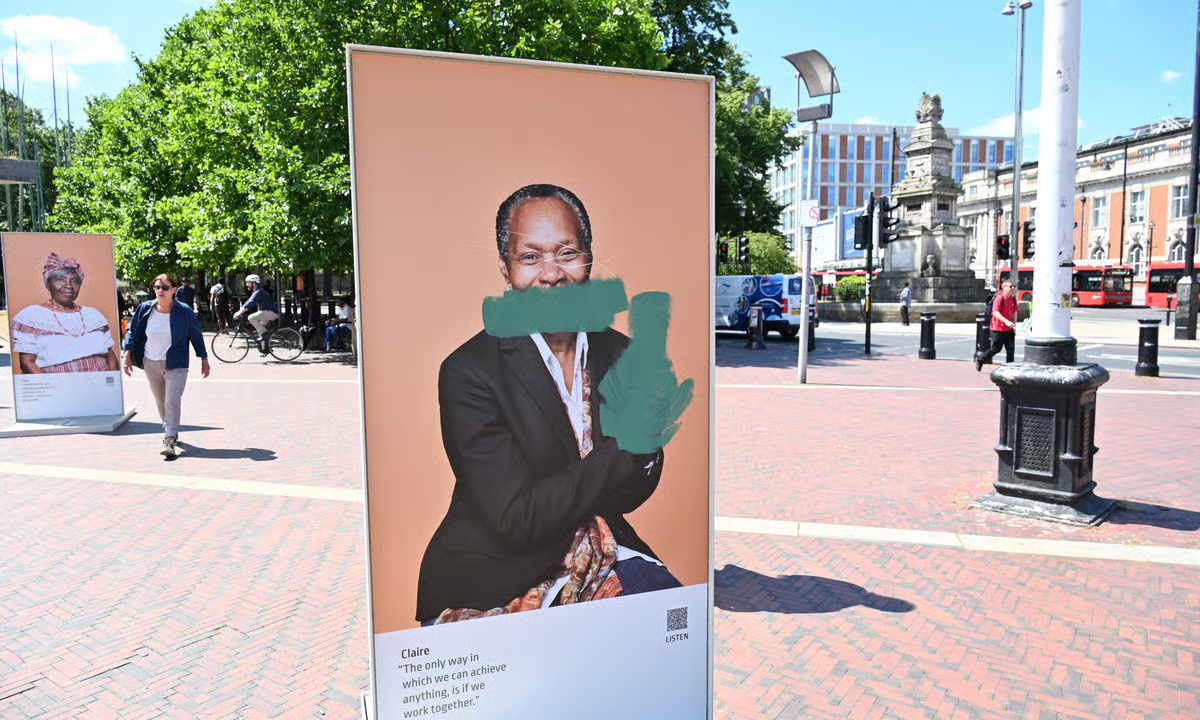
The Windrush generation holds a sacred place in the heart of British history, especially in communities like Brixton, south London, where their cultural legacy continues to thrive. That legacy came under attack on Thursday morning when portraits from a public exhibition in Windrush Square were vandalised, prompting swift action from the Metropolitan Police.
A 24-year-old man has now been arrested on suspicion of vandalism in connection with the incident. While the motive has not been determined as hate-related, the act has triggered a wave of community concern, sadness, and determination to protect this significant symbol of shared heritage.
The Incident at Windrush Square
In the early hours of Thursday morning, at approximately 6:09 a.m., officers from the Metropolitan Police were called to Windrush Square in Brixton following reports of vandalism. The square, a well-known landmark in the heart of Brixton, serves not only as a community space but also as a cultural symbol, especially for people of Caribbean descent.
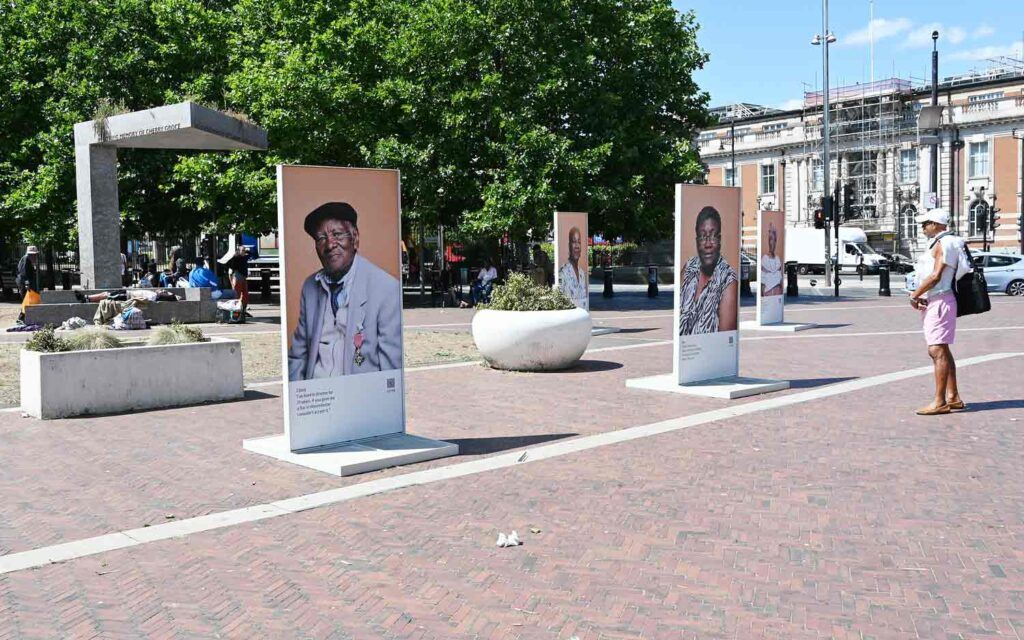
At the time, it was hosting a public exhibition featuring portraits that honoured the Windrush generation — the thousands of Caribbean immigrants who arrived in Britain between 1948 and 1971 to help rebuild the country after World War II. The portraits displayed in the open-air exhibition were reportedly damaged in what police have described as an act of vandalism.
While the police have been careful to point out that the crime is not currently being treated as racially motivated or a hate crime, the emotional impact on the community has been substantial. The visuals of the damage — torn or defaced images of people who represent struggle, resilience, and contribution to modern British society — sparked outrage on social media and within local activist circles.
Read : Lady Liberty’s Mural with Face Hidden in Shame Unveiled in France
On Saturday, a 24-year-old man was arrested in connection with the vandalism. He is currently in custody as the police continue their investigation. According to the Metropolitan Police, further inquiries are underway to establish the precise circumstances and motivations behind the act. The police also emphasised that the investigation remains open and ongoing, and that community reassurance is a priority.
This video showing the aftermath of the Windrush exhibition vandalism brings it home how hateful someone is.
— Lorraine King (@lorrainemking) July 6, 2025
They took the time out to attack every single Black face.
London has over 940,000 CCTV cameras so it shouldn't take long to identify this monster.
🎥 Patrick Hutchinson pic.twitter.com/luL39twwMt
Superintendent Gabriel Cameron, who leads local policing in Brixton, released a public statement aimed at calming the community. He acknowledged the distress that the act has caused and reassured residents that a suspect has been arrested. “We believe that this was not a hate crime,” he said, adding that police officers remain in the area to respond to any concerns from local residents and to support the exhibition’s organisers.
Understanding the Windrush Legacy
To fully grasp why this incident has struck such a nerve, one must understand the significance of the Windrush generation in British society. Named after the HMT Empire Windrush ship that brought one of the first large groups of Caribbean migrants to the UK in 1948, the Windrush generation contributed immeasurably to rebuilding post-war Britain.
Many worked in public services such as the NHS, public transport, and construction industries. Despite their contribution, the community faced decades of institutional racism, exclusion, and, more recently, the Windrush scandal, where hundreds of people were wrongly detained or deported due to changes in immigration policy.
The Windrush exhibition in Brixton is more than just a public display of art; it is a celebration of identity, legacy, and belonging. It acknowledges the struggles and triumphs of a generation that helped shape modern Britain but was often excluded from its narratives of progress. The portraits in the exhibition are personal and powerful, giving a face to history and bringing dignity to those who laid the foundations of multicultural Britain.
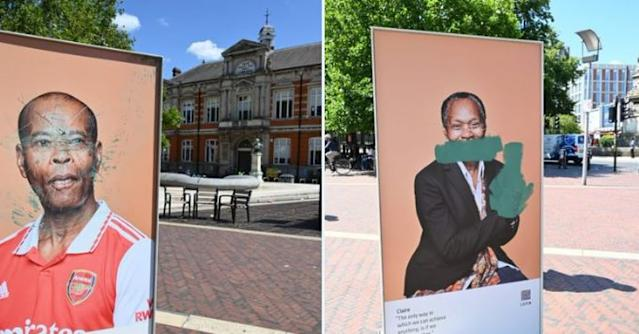
By vandalising this exhibition, the perpetrator—whether intentionally or not—attacked not just images, but the very idea of historical remembrance and recognition. Even though the police have stated there is no evidence to label the act a hate crime, it still symbolizes the fragile space in which minority communities maintain their cultural presence in public life.
The incident has also rekindled conversations about the importance of safeguarding public art, especially those dedicated to marginalised communities. Exhibitions like these play a crucial role in education and awareness, particularly for younger generations who may not be fully familiar with the Windrush story. Damaging such an exhibition undermines these educational efforts and wounds a community still healing from the injustices of the past.
Community Response and the Path to Restoration
In the wake of the vandalism, the community’s reaction has been swift and unified. Residents, activists, artists, and local leaders have condemned the act while rallying together to support the restoration of the exhibition. A fundraising page was quickly set up to help cover the costs of repairing or replacing the damaged portraits. As of the latest reports, the campaign has already raised more than £2,000, with donations continuing to pour in.
This act of collective support has offered a ray of hope in an otherwise disheartening situation. The show of solidarity underscores the community’s refusal to let one act of destruction erase decades of contribution, sacrifice, and pride. Local councillors and MPs have also joined the chorus of voices denouncing the vandalism and calling for enhanced protection for public cultural displays.
Community-led events are also being planned in response. There are discussions around hosting educational workshops, community art projects, and even commemorative events to not only restore the damaged exhibition but also elevate its visibility and significance. In many ways, the vandalism has had the unintended effect of energising the community to speak louder about the Windrush legacy.
Superintendent Cameron noted that local neighbourhood officers have been in contact with the exhibition’s organisers and will continue to maintain a presence in the area. This move is aimed at not only deterring any repeat incidents but also at rebuilding trust and ensuring the community feels heard and protected.
The incident also brings attention to the vulnerability of outdoor public art and the need for preventive measures. Many have called for better surveillance and monitoring of sites of cultural importance, especially those that may be susceptible to acts of vandalism or political unrest. Some have even proposed incorporating technology like anti-graffiti coatings or installing temporary barriers during off-hours. However, these solutions come with their own set of challenges and costs.
Regardless of how the physical damage is addressed, the incident in Windrush Square has opened up a broader dialogue on representation, cultural preservation, and the need for continued public education. It’s a reminder that while Britain has made strides in embracing diversity, the journey is far from over, and the symbols that represent marginalised histories must be fiercely protected.
The Windrush generation’s story is one of resilience, contribution, and pride. Acts of vandalism like the one seen in Brixton cannot be allowed to overshadow that story. As the community comes together to repair what was broken, the renewed focus on their enduring legacy may ultimately prove to be the most powerful response of all.