
The usually calm town of Baran in Rajasthan was preparing for a grand celebration, marking the 35th anniversary of the district’s foundation. With cultural programs, colorful displays, and special attractions lined up over three days, locals and visitors alike gathered in anticipation.
However, the festivity turned into tragedy in mere moments when a man, identified as Vasudev Khatri, met with a fatal accident involving a hot air balloon. The incident, which unfolded in front of a stunned crowd and was caught on camera, has since led to mourning and a suspension of all celebration activities.
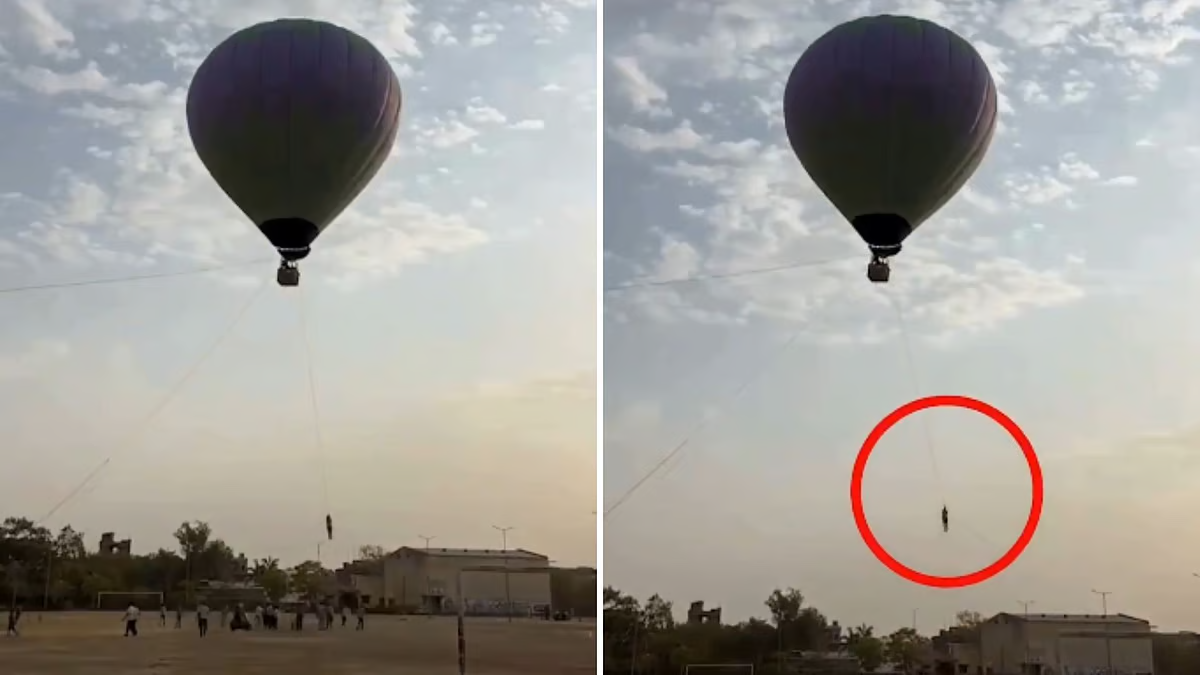
According to initial reports, the balloon ride was one of the main features of the event. Mr. Khatri was not a participant in the ride, but a member of the crew responsible for testing and managing the hot air balloon. He was seen standing near the balloon, attending to his duties, when he suddenly got entangled in one of the ropes.
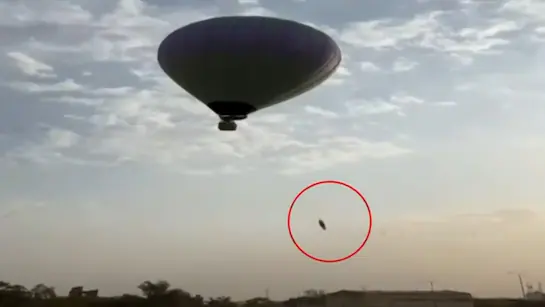
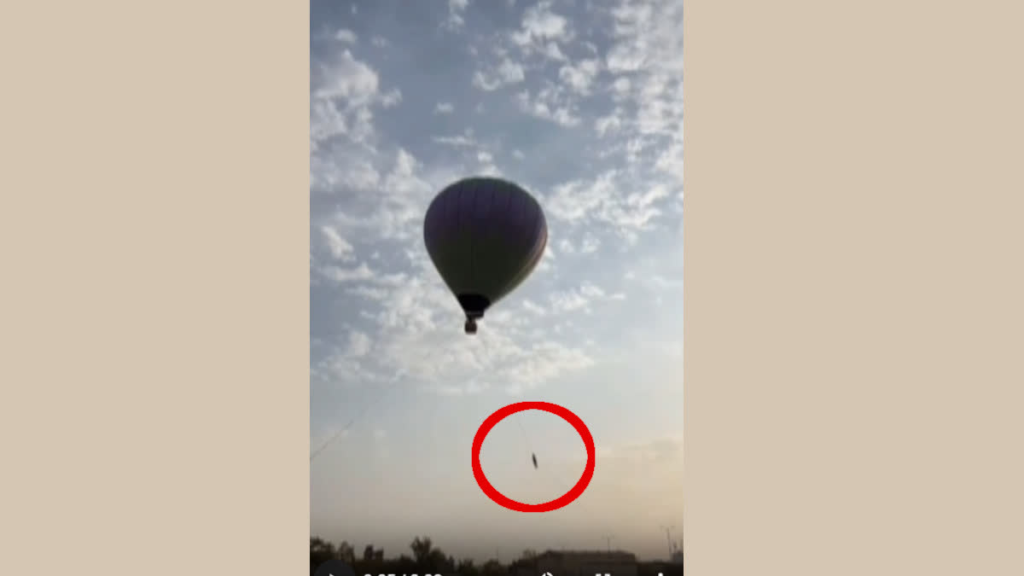
The balloon, which had begun its ascent, started pulling him upward. Witnesses watched in horror as he was dragged skyward, unable to free himself. The balloon rose to an estimated height of about 100 feet before a critical rope snapped, leading to his fall to the ground.
He was immediately rushed to a nearby hospital, but the injuries sustained were too severe. Doctors declared him dead shortly after his arrival. The incident has not only caused immense grief to his family and community but also sparked discussions about safety and accountability in public events.
An Unforeseen Tragedy During a Joyous Celebration
The foundation day of Baran district was intended to be a lively and joyous event, bringing together people from across the region to celebrate their shared heritage.
The district administration had collaborated with various local companies and vendors to organize the celebration. Among these was a hot air balloon service that had previously worked with the administration and was considered experienced in operating balloon rides.
However, the tragedy has raised serious questions about the precautions in place during such large-scale public events. Eyewitnesses reported that there seemed to be a lack of proper safety barriers and protocols around the balloon area.
The Hot Air Balloon, which was being tested at the time of the accident, should have been under strict supervision. That someone could become unintentionally tangled in its ropes points to serious lapses in basic safety measures.
Hot air balloon specialist falls to death during trial at Rajasthan fair.
— AH Siddiqui (@anwar0262) April 10, 2025
A 40-year-old hot air balloon operator died after falling during a trial run of the main show at Khel Sankul ground in Baran cityin Rajasthan, the concluding day of the 3-day Baran Utsav.#AirBalloon pic.twitter.com/0Z6gN1XNHR
The district administration, led by Collector Rohitash Singh Tomar, responded quickly to the situation. All remaining events scheduled for the three-day celebration were promptly cancelled.
Tomar confirmed that the Hot Air Balloon was operated by a company with a prior working relationship with the district. However, he assured that a full investigation would be carried out to understand what went wrong and whether negligence played a role in Mr. Khatri’s death.
Safety Concerns and the Need for Stringent Oversight
The tragic incident has once again highlighted the importance of safety in public gatherings and events involving high-risk activities. Hot air balloons, though thrilling and picturesque, require meticulous planning, expert handling, and above all, foolproof safety arrangements.
Every component—from the Hot Air Balloon’s structure and gas equipment to the ropes and mooring—must be in perfect working condition. Additionally, crowd control and crew safety must be paramount when preparing and launching such flights.
In Vasudev Khatri’s case, several questions remain unanswered. Was he provided with the necessary training and protective gear for the task he was performing? Was the area cordoned off properly to avoid accidental contact with the Hot Air Balloon or its ropes? Who was supervising the balloon testing? And crucially, what kind of emergency response plan was in place should something go wrong?
Authorities have promised a thorough inquiry, but such tragedies often fade from public memory without concrete reforms. The accident serves as a grim reminder that no public event—regardless of how routine or celebratory it may seem—should compromise safety standards for the sake of spectacle.
India has witnessed several such unfortunate incidents in the past during festivals and public functions, where inadequate planning and oversight led to injury or loss of life. Whether it’s a stampede, structural collapse, or equipment failure, many of these could be avoided with better regulation, regular inspections, and adherence to standard operating procedures. As such, the responsibility doesn’t rest solely on the event organizers but also on local authorities to enforce rules and ensure accountability.
A Life Lost, A Lesson to Be Learned
The loss of Vasudev Khatri has sent ripples of grief across Baran and his hometown, Kota. For his family, it is an irreparable personal tragedy. For the people of Baran, it is a moment of shock and sadness that overshadowed what was supposed to be a landmark celebration. For India at large, it is another preventable incident that underscores the urgent need for stronger event management policies.
The video of the incident, now circulating widely on social media, paints a chilling picture of how quickly joy can turn into disaster. It also serves as a visual testimony to the vulnerabilities that exist when proper safety protocols are not followed.
The visuals of Mr. Khatri being pulled into the air, struggling helplessly, and ultimately falling to his death, have left an indelible mark on all who witnessed it, both in person and online.
In response, there have been calls from civil society and political figures alike for stricter regulation of public events involving physical risks. Suggestions include mandatory safety audits for high-risk attractions, compulsory insurance coverage for crew members, and on-the-spot emergency medical setups at large gatherings. While these are not new ideas, they must be implemented seriously to prevent such tragedies from recurring.
The administration’s swift action in cancelling the remaining festivities was a necessary and respectful gesture, but real change must come through policy, not symbolism. The investigation into the incident must be transparent and thorough, and if negligence is found, those responsible should be held accountable under law.
Meanwhile, the local community has begun gathering in memory of Mr. Khatri, offering condolences to his family and expressing their outrage at the avoidable nature of his death. His colleagues and friends describe him as a dedicated worker who had long experience with handling event setups, making his sudden death all the more shocking and heartbreaking.
Ultimately, while the celebration was meant to honor the growth and unity of Baran, it has now become a moment of collective mourning. The legacy of this tragic day will only hold meaning if it prompts genuine change—change that ensures no one else has to suffer a similar fate under circumstances that should have been entirely avoidable.