

Vitaly Zdorovetskiy, the controversial Russian YouTuber known for his over-the-top prank videos and bold public stunts, has once again found himself in the international spotlight—this time, not for a viral video, but for a legal scandal in the Philippines. On April 3, he was taken into custody by Philippine authorities at a hotel in Pasay City, after an order was issued declaring him an “undesirable” foreign national.
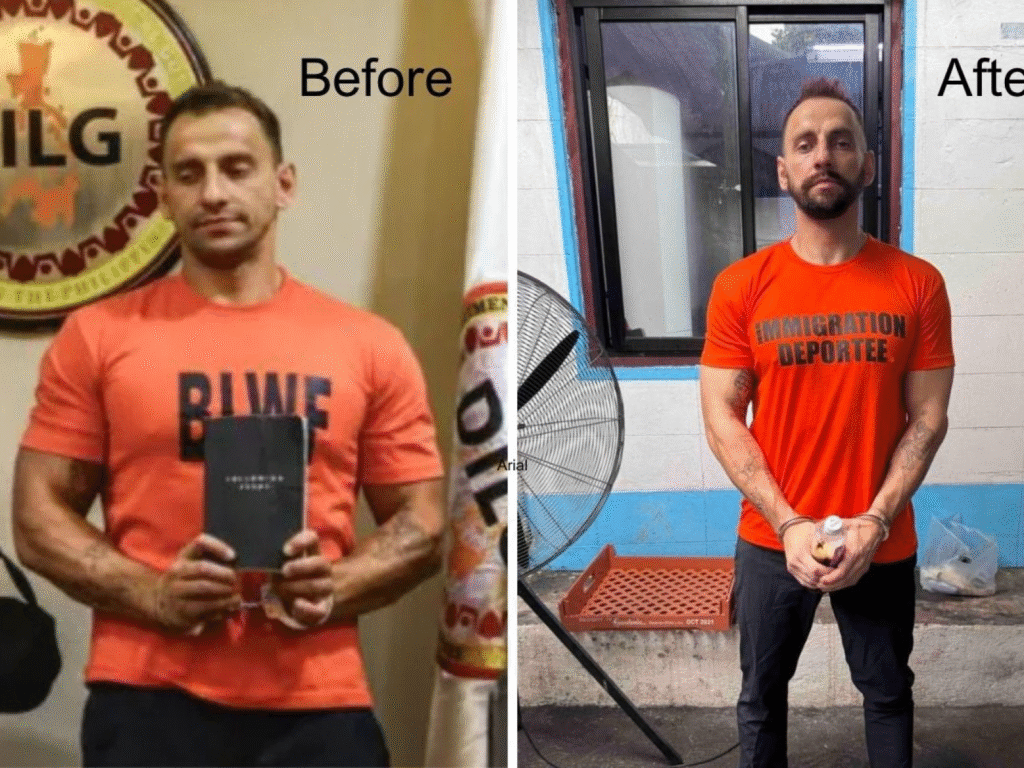
Since then, concerns about his health and well-being have emerged, following the circulation of images showing his dramatic weight loss while in detention. Zdorovetskiy, once known for his muscular build and bold antics, now appears weak, thin, and drastically changed—leading fans around the world to express deep concern about his condition and legal future.
Vitaly Zdorovetskiy’s arrest and continued detention have triggered a wave of reactions across social media, with his supporters demanding answers and accountability.
The Arrest and Charges: What Happened in Pasay City?
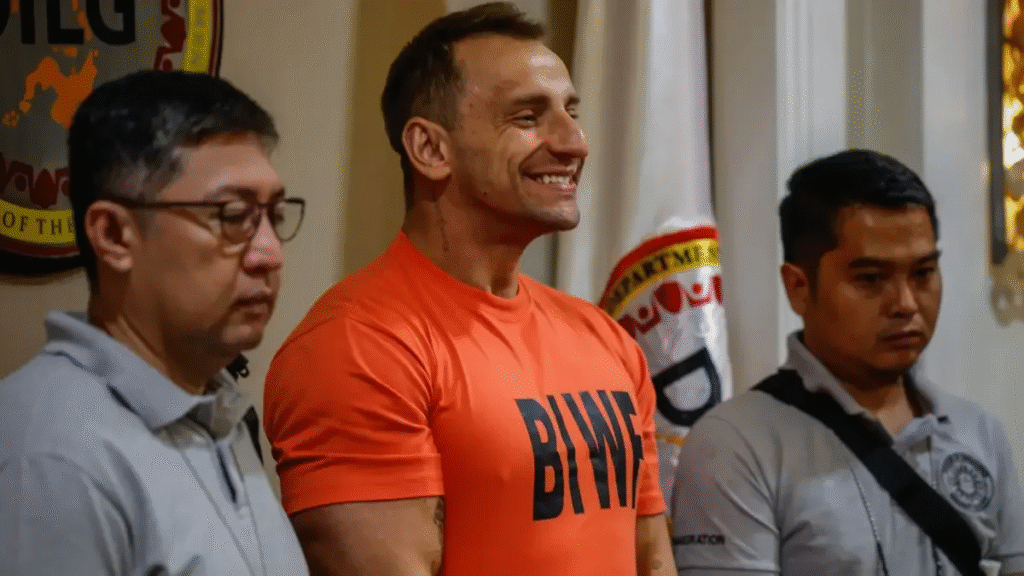
Vitaly Zdorovetskiy was arrested by Philippine authorities at a hotel in Pasay City, a bustling area in Metro Manila, after several incidents involving public harassment during livestreams. According to reports, the YouTuber was declared an “undesirable” foreign national by the Bureau of Immigration—a status that permits law enforcement to detain a foreigner without immediate deportation if they are deemed a public threat. The official charges brought against Zdorovetskiy include unjust vexation, alarm and scandal, and attempted theft.
The Interior Secretary of the Philippines, Jonvic Remulla, made a public statement following the arrest. He confirmed that Zdorovetskiy’s acts—many of which were documented and shared online—amounted to clear violations of public decency and order.
These acts, mostly performed during his livestreams, reportedly included the harassment of security guards and ordinary citizens. The Secretary emphasized that Zdorovetskiy would not be deported immediately but instead would be held accountable for his actions under Philippine law. He is currently detained at the Bureau of Immigration facility in Muntinlupa, awaiting trial.
This is YouTube streamer Vitaly Zdorovetskiy who harrassed Filipinos during a livestream in BGC. Please @immigPH, @CIDG_PNP hunt this foreigner down and charge him with every relevant crime. Don’t let him do this to Filipinos in their own country. pic.twitter.com/ORVyJQmrqA
— Gerry Cacanindin (@GerryCacanindin) April 1, 2025
The legal concept of “unjust vexation” in the Philippines refers to any act that causes irritation, annoyance, or distress to another person without sufficient justification. When combined with “alarm and scandal” and “attempted theft,” these charges suggest a pattern of behavior that was not merely annoying but potentially harmful and criminal. These are not light charges; if found guilty, Zdorovetskiy could face significant jail time and even further restrictions on his freedom beyond his current detention.
Fan Reactions to Vitaly’s Weight Loss
In the days following his arrest, a before-and-after photo of Vitaly Zdorovetskiy began circulating on social media, particularly on X (formerly Twitter). The comparison stunned fans and casual observers alike. The once-buff internet prankster, known for his athletic physique and bold on-camera personality, looked almost unrecognizable—visibly thinner, pale, and seemingly unwell.
The image set off a wave of concern among his followers. One fan tweeted, “Yeah, that’s not good,” while another remarked, “He went from being on steroids to barely being on breakfast.” Other comments ranged from humorous to deeply empathetic: “Looks like a completely different person,” “Jail food leans ya out apparently,” and “Holy smokes, man life is crazy.” Some even called for intervention, tagging officials like @SecRubio in hopes of attracting political attention to the situation.
Though the meme-like nature of the internet tends to amplify both criticism and support, the overall tone of the fanbase was serious: people were genuinely concerned for Vitaly’s physical and mental health. Whether it’s a result of poor prison conditions, stress, or other underlying factors, the transformation has raised serious questions about how detainees—especially foreigners—are treated within the Philippine detention system.
It’s worth noting that the Bureau of Immigration detention center in Muntinlupa, where Zdorovetskiy is currently held, is not designed for long-term imprisonment. These facilities are typically overcrowded and lack many basic amenities. They are not ideal environments for maintaining physical health, especially for someone used to a vastly different lifestyle.
Zdorovetskiy’s team and legal representatives have not issued any formal public statement about his health or legal strategy, but his visible condition speaks volumes. It is unclear whether he has access to regular medical care, a proper diet, or even legal counsel on a consistent basis.
A Career Built on Controversy and Provocation
This is not the first time Vitaly Zdorovetskiy has faced legal consequences for his behavior. He has a long history of arrests linked to his stunts, which often push the boundaries of public decency and legality. His career began with prank videos on YouTube, including the infamous “Miami Zombie Prank” and “Russian Hitman Prank,” which catapulted him to internet stardom. Over the years, his channel evolved into a platform for increasingly outrageous and sometimes dangerous pranks, frequently involving unsuspecting members of the public.
Zdorovetskiy has also been arrested multiple times in different countries, including the U.S., for stunts that disrupted public events or violated local laws. He once ran onto the field during the 2014 FIFA World Cup Final in Brazil and was later banned from all FIFA events. In 2016, he was detained for scaling the Hollywood sign. These incidents, while often played for laughs on social media, have had real-world consequences, and his latest run-in with the law is arguably the most serious yet.
The rise of social media has given content creators enormous reach and influence, but it has also blurred the lines between entertainment and harassment, free expression and public disturbance. In Vitaly’s case, his comedic provocations have repeatedly crossed into territory deemed unacceptable or even criminal. The current situation in the Philippines underscores how these lines are drawn very differently in different cultural and legal contexts.
Some of his defenders argue that Zdorovetskiy’s antics are no different from the shock-based content produced by other internet celebrities, and that he’s being targeted unfairly because he’s a foreigner. However, critics maintain that pranking strangers—especially in a foreign country with a different set of social norms—is not just irresponsible, but dangerous.
In many ways, this arrest marks a turning point in Zdorovetskiy’s career. Whether he emerges from this ordeal with renewed caution or a hardened resolve to continue his brand of chaos remains to be seen. What’s certain is that the days of easy fame from viral pranks may be over, replaced instead with courtrooms and detention centers.
Vitaly Zdorovetskiy’s arrest in the Philippines has become more than just a legal matter; it is a cautionary tale about the limits of online fame, the risks of cultural insensitivity, and the consequences of pushing boundaries too far. From his dramatic arrest to his shocking transformation in custody, this saga has captured global attention. Fans remain concerned not only for his legal future but for his basic health and human dignity.
While Zdorovetskiy built a name for himself by challenging authority and mocking societal norms, his current situation is a sobering reminder that real-world systems can—and will—push back. His case may prompt a broader discussion about responsible content creation, the ethics of pranking, and how far creators can go before entertainment turns into exploitation.
Until then, Vitaly remains in detention, awaiting trial in a foreign land, his fate uncertain and his story far from over.