
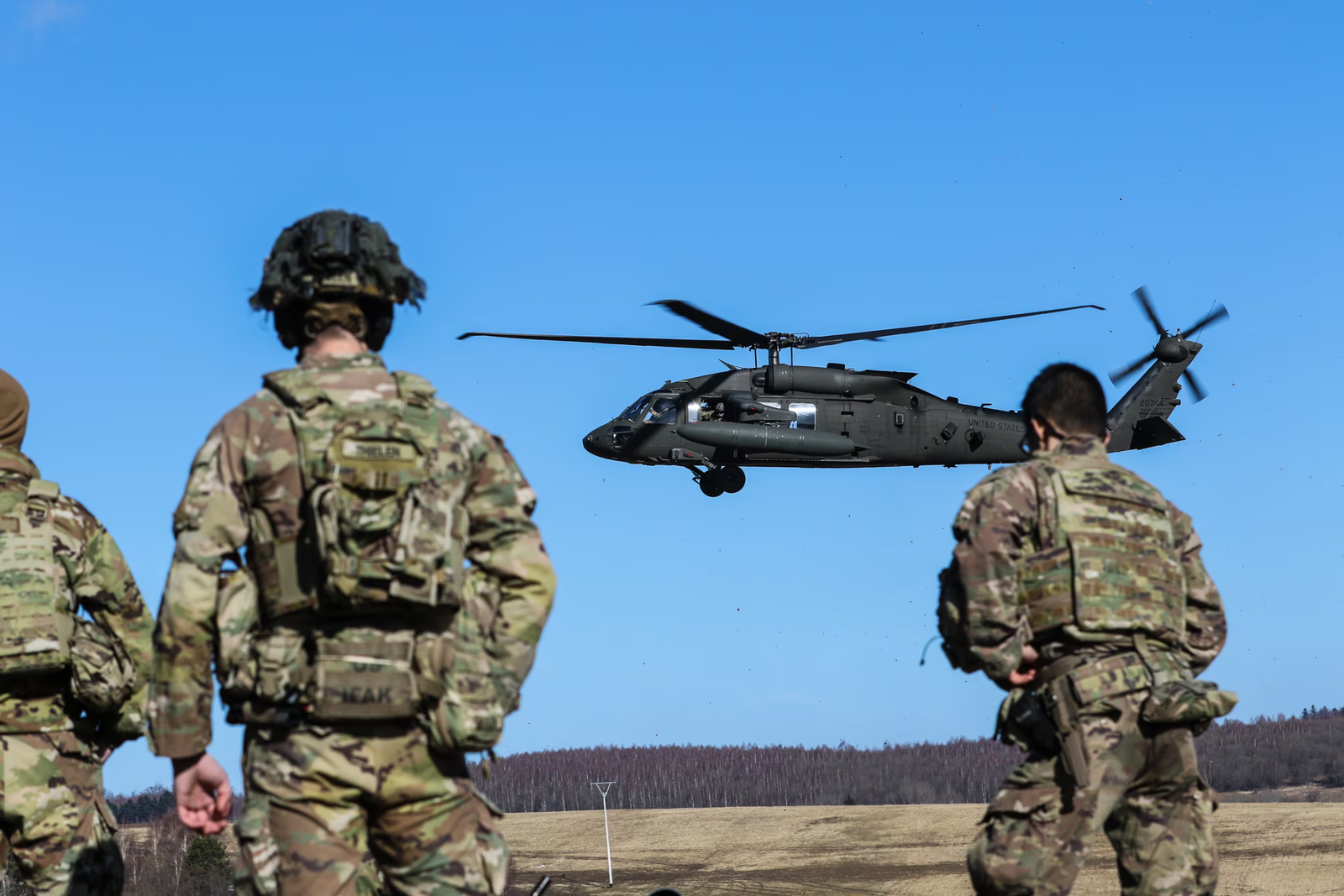
The potential deployment of the United States Army’s 82nd Airborne Division to West Asia comes at a moment marked by both escalating military tensions and tentative diplomatic signaling. While discussions around a possible pause in hostilities and the prospect of negotiations have surfaced, parallel military preparations suggest that Washington is maintaining strategic flexibility.
The movement of a highly specialized rapid-response unit such as the 82nd Airborne underscores the seriousness of the situation, particularly in the context of tensions involving Iran and broader regional stability. This dual-track approach—combining diplomacy with visible military readiness—reflects a longstanding pattern in U.S. foreign policy, where force projection often complements negotiation efforts rather than contradicting them.
The 82nd Airborne Division: Structure, Capabilities, and Historical Role
The 82nd Airborne Division is one of the most elite and strategically significant units within the United States Army. Stationed at Fort Bragg in North Carolina, it is a light infantry division trained specifically for rapid deployment and airborne operations. Its defining capability lies in its readiness to mobilize within as little as 18 hours of receiving orders, allowing it to respond swiftly to emerging crises anywhere in the world. Unlike conventional ground forces, the division is designed to parachute into contested or hostile territory, often behind enemy lines, to secure critical objectives such as airfields, infrastructure, or supply routes.
The division is composed of multiple brigade combat teams supported by aviation units, artillery, and logistical elements, enabling it to function as a self-sustaining force in the early stages of an operation. This integrated structure allows the 82nd Airborne to establish a foothold in volatile environments, paving the way for the arrival of heavier forces if required. Its specialization in joint forcible entry operations makes it unique within the U.S. military, as it is specifically trained to initiate military campaigns under high-risk conditions.
Historically, the 82nd Airborne has played a significant role in major conflicts. Originally formed during World War I, it gained prominence during World War II when it was reconstituted as an airborne division. It participated in critical operations across Europe, including airborne assaults in Sicily and the Normandy landings. These operations demonstrated the effectiveness of airborne forces in disrupting enemy defenses and securing strategic positions ahead of larger invasions.
JUST IN: 🇺🇸 The U.S. plans to deploy 1,000+ troops from the elite 82nd Airborne Division to the Middle East, trained for parachute insertions and securing hostile areas.pic.twitter.com/mWY99swzuG
— Donald J Trump Posts TruthSocial (@TruthTrumpPost) March 25, 2026
In the decades that followed, the division continued to be deployed in various conflicts and military operations, including Vietnam, Panama, the Gulf War, and Iraq. Its consistent use in high-priority missions reflects its reliability as a rapid-response force capable of adapting to diverse operational environments. The 82nd Airborne has therefore become not only a symbol of military readiness but also a practical tool for executing time-sensitive and strategically important missions.
Why the U.S. is Deploying the 82nd Airborne to West Asia
The decision to deploy elements of the 82nd Airborne Division to West Asia must be understood within the broader context of rising tensions between the United States and Iran. Although there have been public statements suggesting a pause in hostilities and the possibility of negotiations, the underlying conflict dynamics remain unresolved. The deployment of such a high-readiness unit signals that the United States is preparing for multiple scenarios, ranging from deterrence and containment to potential military engagement.
One of the primary reasons for deploying the 82nd Airborne is to establish a credible deterrent. By positioning a rapid-response force within striking distance of key areas, the United States sends a clear message that it is capable of escalating its military presence quickly if necessary. This can serve to discourage adversarial actions by increasing the perceived risks of confrontation. In volatile regions, deterrence often relies not only on stated intentions but also on visible military capabilities, and the presence of an elite airborne unit reinforces that message.
Read : Who Is Jessica Foster, Viral US Army Soldier Turned Out to Be an AI-Generated Persona?
Another important factor is operational readiness. The 82nd Airborne is particularly suited for situations where speed and flexibility are essential. In the event of sudden developments—such as attacks on U.S. assets, threats to allied nations, or disruptions to critical infrastructure—the division can be deployed rapidly to stabilize the situation. Its ability to secure key locations, such as ports or airfields, makes it a valuable asset in both offensive and defensive scenarios.
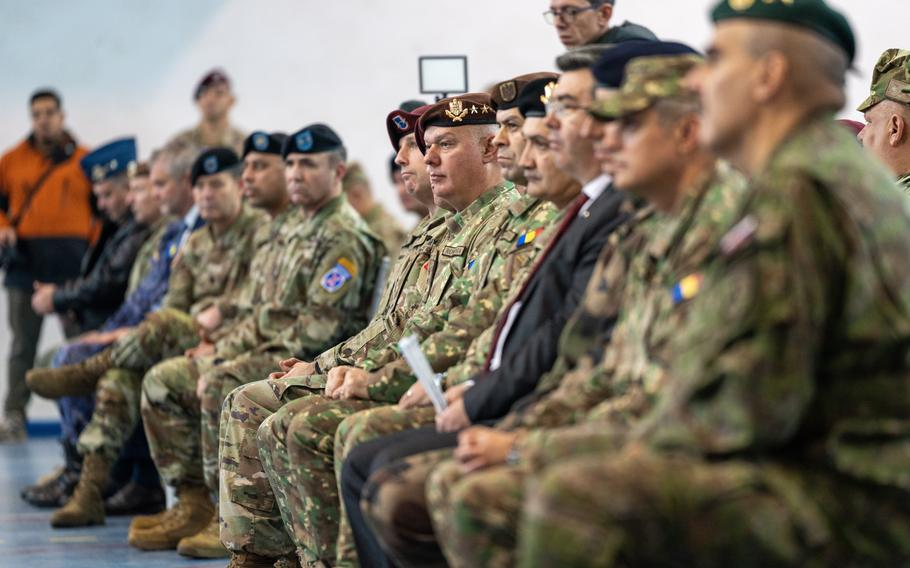
The deployment also aligns with broader strategic considerations related to energy security and regional influence. Certain areas in West Asia hold significant importance due to their role in global oil supply chains. Ensuring access to or control over these areas can have far-reaching economic and geopolitical implications. While it remains unclear whether specific targets are being considered, the positioning of forces suggests that the United States is preparing to protect its interests in the region.
Additionally, the deployment may serve as a contingency measure in case diplomatic efforts fail. Even as discussions about peace or de-escalation continue, the absence of mutual trust between the parties involved creates uncertainty. By deploying the 82nd Airborne, the United States ensures that it is not caught unprepared if the situation deteriorates. This approach allows policymakers to pursue negotiations from a position of strength, backed by the assurance that military options remain available.
Implications for Regional Stability and the Path Forward
The arrival of a force like the 82nd Airborne in West Asia carries significant implications for regional stability. On one hand, it may contribute to deterrence by signaling a strong U.S. commitment to defending its interests and those of its allies. On the other hand, it could escalate tensions by prompting countermeasures from regional actors who perceive the deployment as a threat. This delicate balance between deterrence and escalation is a defining feature of military posturing in conflict-prone regions.
Read : Army Instructors Antony Pugh and Connor Forgan Jailed for Sexual Relations with 17-Year-Old Recruit
From the perspective of Iran, the deployment is likely to be viewed with suspicion and concern. Public statements from Iranian officials indicate that they are closely monitoring U.S. troop movements and remain skeptical of claims about peace negotiations. This skepticism is rooted in the belief that military deployments may be used to gain strategic advantage rather than to support genuine diplomatic efforts. As a result, the presence of the 82nd Airborne could harden positions rather than facilitate dialogue, depending on how it is perceived and managed.
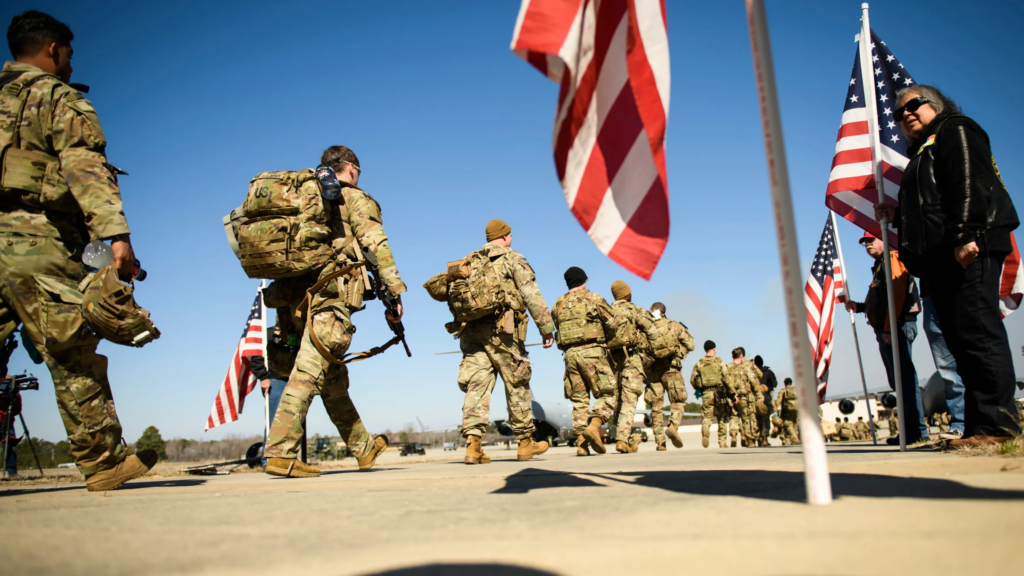
For the United States, the challenge lies in balancing military preparedness with diplomatic engagement. While the deployment enhances its ability to respond to potential threats, it also raises the stakes of any miscalculation. In a region where tensions can escalate rapidly, the presence of highly capable forces increases both the opportunities for swift action and the risks of unintended confrontation.
The situation also highlights the broader complexity of modern conflict, where military, political, and economic factors are deeply intertwined. Decisions about troop deployments are rarely driven by a single objective; instead, they reflect a combination of strategic priorities, risk assessments, and geopolitical considerations. In this case, the deployment of the 82nd Airborne appears to serve multiple purposes, including deterrence, preparedness, and strategic positioning.
Looking ahead, the outcome will depend largely on how the situation evolves in the coming days and weeks. If diplomatic efforts gain traction, the deployment may remain a precautionary measure that ultimately does not lead to direct conflict. However, if tensions continue to rise, the presence of the 82nd Airborne could become a key factor in shaping the course of events. Its capabilities make it a powerful instrument, but also one that must be used with careful consideration of the potential consequences.
In this context, the deployment underscores a fundamental reality of international relations: the pursuit of peace often occurs alongside preparations for conflict. The 82nd Airborne Division, with its unique combination of speed, flexibility, and combat readiness, embodies this duality. Its presence in West Asia is not merely a military development but a reflection of the broader strategic landscape, where uncertainty, competition, and the search for stability coexist in complex and often unpredictable ways.