
In the sweltering heat of a Washington, D.C., summer evening, an ordinary act of frustration escalated into a symbol of defiance that captured the nation’s attention. On August 10, 2025, a man later identified as Sean Charles Dunn hurled a wrapped Subway footlong sandwich at a federal agent patrolling the streets.
What could have been dismissed as a minor altercation amid ongoing protests quickly snowballed into a viral sensation, earning Sean Charles Dunn the moniker “Sandwich Guy.” Overnight, he transformed from an anonymous resident into a folk hero for some and a cautionary tale for others, embodying the tensions simmering in the capital under President Donald Trump’s controversial federal takeover of local law enforcement.
This incident didn’t occur in a vacuum. Since early 2025, following Trump’s return to the White House, the administration has ramped up federal involvement in D.C.’s affairs, citing rising crime and homelessness as justifications. Despite data from the Justice Department showing violent crime at a 30-year low nationwide, Trump announced on August 11—just one day after the sandwich-throwing episode—a temporary federalization of the D.C. police force.
This move included deploying up to 800 National Guard troops and federal agents from agencies like U.S. Customs and Border Protection (CBP) to patrol city streets. Critics, including local officials and civil liberties groups, decried it as an overreach, eroding the district’s autonomy and evoking fears of authoritarian control. Supporters argued it was necessary to restore order in a city plagued by political divisions.
Sean Charles Dunn’s act resonated deeply in this charged atmosphere. Video footage of the event spread like wildfire across social media platforms, amassing millions of views within hours. It showed a man confronting armed federal agents, his voice laced with anger over their presence in “his city.” The sandwich, an unlikely weapon, struck one agent in the chest before the perpetrator fled, only to be chased down and arrested.
What followed was a cascade of legal repercussions, public outcry, and cultural memes that solidified Sandwich Guy’s place in D.C. lore. But who is this man, and how did a simple sub become a rallying cry? This blog delves into the story, piecing together the facts from court documents, official statements, and eyewitness accounts to uncover the making of a modern legend.
The Fateful Night: The Incident Unfolds
The events of August 10, 2025, unfolded in the vibrant neighborhood around 14th and U Streets Northwest, a historic corridor known for its nightlife, restaurants, and cultural significance in D.C.’s African American community. It was a typical Sunday evening, but the air was thick with unease. Federal agents, including those from CBP, had been increasingly visible in the area as part of the Trump administration’s push to bolster law enforcement presence.
This deployment was part of a broader initiative announced earlier in the year, where the president vowed to address what he described as a “crime epidemic” in the nation’s capital, despite statistics indicating a 26% drop in violent crime from 2024 to mid-2025, according to Metropolitan Police Department data. Around 10 p.m., Sean Charles Dunn, a 37-year-old D.C. resident, approached a group of CBP agents stationed near the intersection.
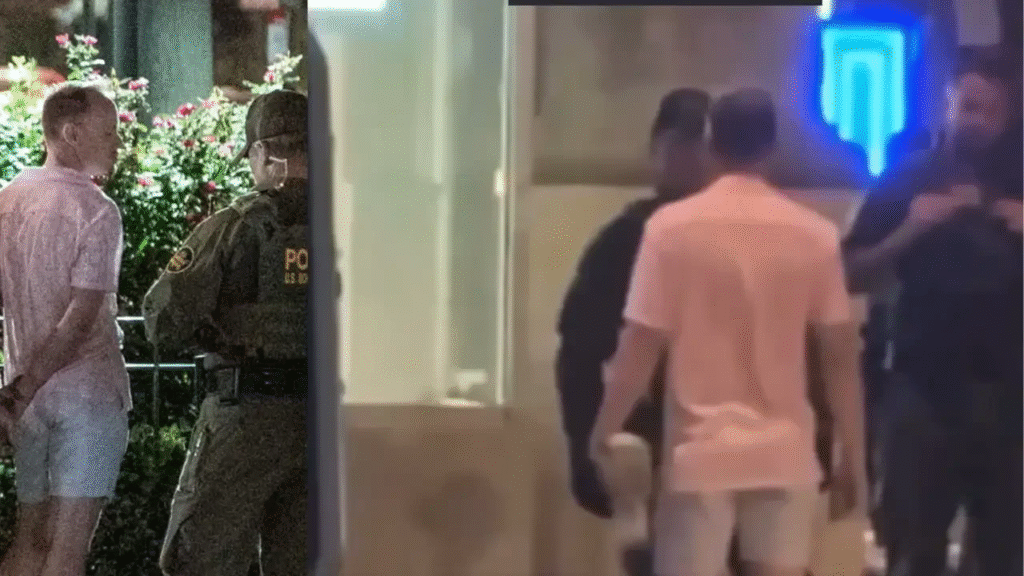
According to a criminal complaint filed in U.S. District Court, Dunn positioned himself mere inches from one agent, identified in documents as Officer Lairmore, and began shouting profanities. “F— you! You f—–g fascists! Why are you here? I don’t want you in my city,” he yelled, as captured in a video that would soon go viral. The footage, recorded by a bystander and posted online, shows Dunn pacing aggressively, gesturing wildly, and repeatedly warning the agents to “back up.” The agents, clad in tactical gear, remained mostly stoic, but the tension was palpable.
Read : DOJ Employee Sean Charles Dunn Arrested for Throwing Sandwich at Federal Agent
Then, in a moment that would define the night, Sean Charles Dunn reached into a bag and pulled out a wrapped sub-style sandwich—later confirmed to be a footlong from a nearby Subway restaurant. He hurled it at Officer Lairmore, striking him squarely in the chest. The impact was minimal; the agent appeared unharmed, with no reports of injury. However, the act crossed a legal threshold. Dunn immediately turned and fled across the street, prompting a brief chase.
Multiple agents pursued him, tackling him to the ground and placing him under arrest. During processing by the Metropolitan Police Department, Sean Charles Dunn reportedly confessed without hesitation: “I did it. I threw the sandwich,” as noted in an affidavit by transit police detective Daina Henry. The arrest came at a pivotal time. Just hours later, on August 11, President Trump formalized his administration’s takeover, declaring that federal forces would assume control of D.C. policing for at least 30 days, with potential extensions via congressional approval.
🔥FAFO: In D.C., Sean Charles Dunn charged with Felony Assault, throwing a Subway sandwich, and he will be prosecuted. 🇺🇸⚔️ pic.twitter.com/elhx5T6oMl
— Monica (@MonBreeden) August 14, 2025
This included National Guard assistance in patrols, a move that required no immediate legislative nod but stirred controversy. Dunn’s confrontation highlighted the raw emotions among some residents who viewed the federal agents as intruders in a city already fraught with political symbolism. Protests had been building for weeks, with demonstrators marching against what they called a “manufactured crisis” designed to consolidate power and undermine local governance, including D.C.’s protections for immigrants and progressive policies.
In the immediate aftermath, authorities moved swiftly. Sean Charles Dunn was charged with assaulting a federal officer under 18 U.S.C. § 111, a felony that carries a maximum penalty of one year in prison, or up to eight years if deemed to involve physical contact with intent to commit another crime.
U.S. Attorney for D.C. Jeanine Pirro, a Trump appointee, addressed the case in a video statement, emphasizing the administration’s zero-tolerance stance: “He thought it was funny. Well, he doesn’t think it’s funny today, because we charged him with a felony: assault on a police officer. And we’re going to back the police to the hilt.” The incident, while seemingly trivial, underscored the heightened stakes in D.C., where even non-lethal acts against federal personnel could lead to severe consequences.
Behind the Man: Sean Charles Dunn’s Background
Sean Charles Dunn is not the caricature some media portrayals might suggest. Born in 1988, the 37-year-old has deep roots in Washington, D.C., where he has lived for much of his adult life. Prior to the incident, Dunn worked as a paralegal in the Justice Department’s Office of International Affairs, a role that involved supporting legal efforts on extraditions, mutual legal assistance treaties, and international criminal matters.
Sources familiar with his employment describe him as a dedicated professional, though details of his tenure remain limited due to privacy protocols. His position placed him squarely within the federal bureaucracy, ironically making him part of the system he allegedly railed against that night. Dunn’s path to the DOJ wasn’t publicly detailed, but court records and statements indicate he held the job until his abrupt firing following the arrest.
Attorney General Pam Bondi announced his termination on August 14 via a social media post, framing it as a purge of disloyal elements: “I just learned that this defendant worked at the Department of Justice — NO LONGER. Not only is he FIRED, he has been charged with a felony.” Bondi went further, labeling Dunn “an example of the Deep State we have been up against for seven months as we work to refocus DOJ.” This rhetoric aligned with the Trump administration’s ongoing narrative of rooting out perceived internal opposition, a theme echoed since the president’s inauguration in January 2025.
Little is known about Dunn’s personal life, as he has maintained a low profile. He attempted to surrender voluntarily on August 13 after learning of a federal warrant, according to his lawyer, Sabrina Shroff, who described him as cooperative. Shroff argued in initial court appearances that the charges were overblown, pointing to the non-violent nature of the act—no weapons were involved, and the “assault” amounted to a thrown sandwich. However, prosecutors countered that intent and context mattered, especially amid the administration’s emphasis on protecting law enforcement.
Sean Charles Dunn’s actions that night may stem from broader frustrations shared by many D.C. residents. The district, which lacks full statehood and voting representation in Congress, has long chafed under federal oversight. Trump’s takeover amplified these grievances, with locals feeling their city was being treated as a political pawn.
Dunn’s outburst—”I don’t want you in my city”—echoed sentiments from protests where demonstrators carried signs decrying the deployment as an erosion of democracy. While Dunn hasn’t spoken publicly since his arrest, his confession suggests a moment of impulsive rage rather than premeditated violence. Facing mounting legal fees and unemployment, supporters have rallied online, proposing donation drives to aid him, though no official funds have been established as of August 22.
Rise to Legend: Viral ‘Sandwich Guy‘ Fame and Cultural Impact
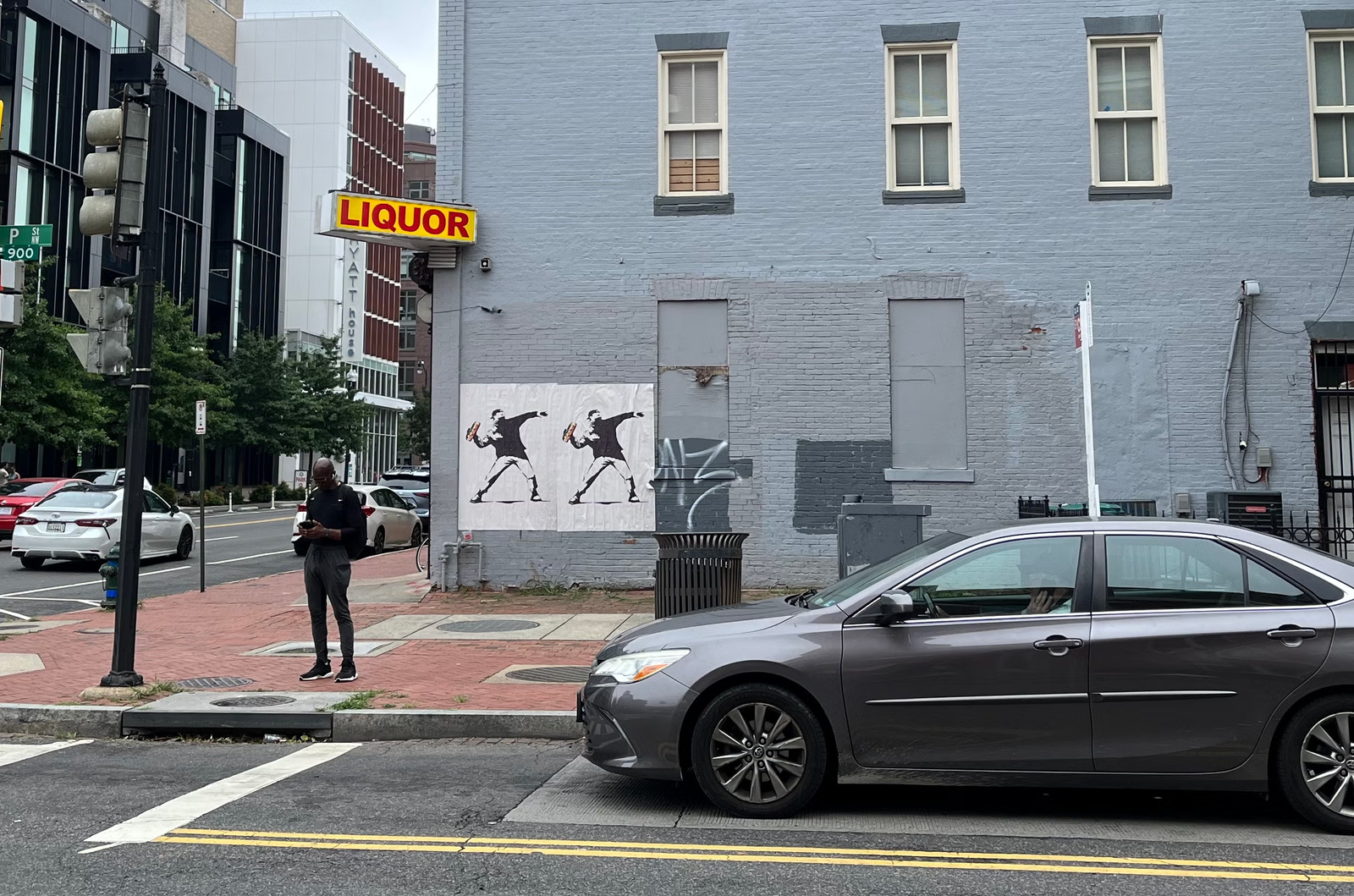
What began as a fleeting confrontation exploded into cultural phenomenon almost instantly. The video, first posted by a bystander, racked up over 10 million views within days, spawning memes, street art, and even merchandise. By mid-August, “Sandwich Guy” posters adorned walls in Adams Morgan, depicting Dunn mid-throw with captions like “Defend the District.” Etsy sellers capitalized on the buzz, offering T-shirts emblazoned with sandwich motifs and slogans such as “Sub-versive Resistance.” One printmaker noted sales surging as the image became a shorthand for anti-authoritarian sentiment.

The virality wasn’t accidental. In an era of rapid social media dissemination, the absurdity of assault via sandwich juxtaposed against the seriousness of federal charges created perfect meme fodder. Online communities, from Reddit threads to cryptocurrency enthusiasts, amplified the story.
A memecoin called $SANDWICH launched on platforms like Solana, tying into the narrative with claims it represented “a piece of cultural history.” Posts urged donations for Dunn’s legal defense, with one user vowing to contact him directly. Go-go music protests, a D.C. staple, incorporated “Sandwich Guy” chants, blending local culture with national politics.
Public reactions were polarized. For progressives and D.C. autonomy advocates, Dunn embodied resistance to Trump’s policies, which included using the takeover to enforce immigration laws and dismantle local protections. Street artists hailed him as a “folk hero,” drawing parallels to historical figures who used everyday objects in protest. Conversely, administration officials and conservatives condemned the act as emblematic of lawlessness, with Pirro and Bondi using it to justify stricter enforcement.
As of August 22, 2025, Sean Charles Dunn’s case proceeds in federal court, with a preliminary hearing scheduled. Yet, his legend endures, a testament to how one act can crystallize broader struggles. In a divided America, Sandwich Guy reminds us that legends aren’t born in grand gestures but in the messy intersections of daily life and power. Whether hero or villain, his story underscores D.C.’s enduring fight for self-determination amid federal shadows.