

Sarah Palin, a prominent figure in American politics, has been in the spotlight for nearly two decades, known for her roles as Alaska’s governor, a vice-presidential candidate, and a vocal conservative commentator.
On April 22, 2025, Palin faced another legal setback when a federal jury in Manhattan ruled against her in the retrial of her defamation lawsuit against The New York Times. This marked her second loss in the case, which centered on a 2017 editorial that Palin claimed wrongfully linked her to a mass shooting.
The case has drawn significant attention, not only for its implications for Sarah Palin’s public image but also for broader debates about press freedoms and defamation law in the United States.
Sarah Palin:
Sarah Palin burst onto the national stage in 2008 when she was selected as the Republican vice-presidential running mate for Senator John McCain in his campaign against Barack Obama and Joe Biden. Born on February 11, 1964, in Sandpoint, Idaho, Palin grew up in Alaska, where she developed a reputation as a charismatic and relatable figure.
Before entering politics, she worked as a sportscaster and commercial fisher, and she was a runner-up in the 1984 Miss Alaska pageant. Her political career began in the 1990s when she served on the Wasilla city council and later as mayor of the small Alaskan town.
In 2006, Palin made history by becoming Alaska’s youngest governor and the first woman to hold the office. Her tenure was marked by a focus on resource development and ethics reform, earning her both praise and criticism.
Sarah Palin’s down-to-earth persona, often highlighted by her “hockey mom” identity, resonated with many conservatives, but her unconventional style and occasional gaffes made her a polarizing figure. In 2009, she resigned as governor, citing the strain of numerous lawsuits and media scrutiny, a decision that surprised many and fueled speculation about her future ambitions.
Read : List of 52 Destinations to Visit in 2025 by New York Times
After leaving office, Palin became a prominent media personality, authoring books, starring in reality TV shows, and serving as a Fox News contributor. She remained a vocal supporter of conservative causes and later aligned herself with the Tea Party movement and Donald Trump.
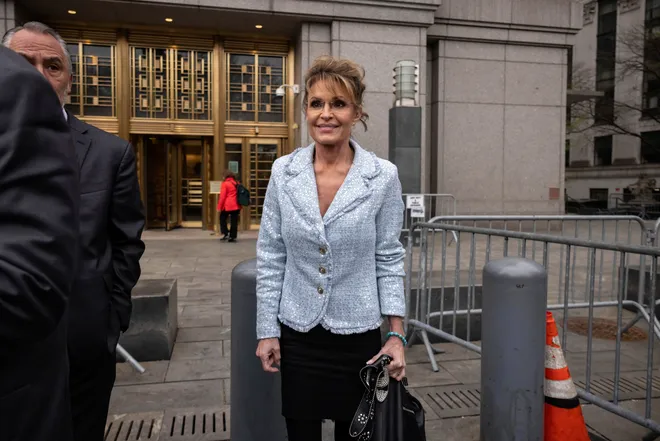
In 2022, she ran unsuccessfully for Alaska’s U.S. House seat, losing both a special election and the general election. Throughout her career, Sarah Palin has positioned herself as a champion of “Main Street” America, often clashing with what she calls the “liberal media elite.” Her defamation lawsuit against The New York Times was seen by many as an extension of this battle, reflecting her ongoing fight against perceived media bias.
The Defamation Case:
The defamation lawsuit stems from a June 14, 2017, New York Times editorial titled “America’s Lethal Politics,” published in the wake of a shooting at a congressional baseball practice in Virginia that injured Republican Representative Steve Scalise and others.
The editorial drew a comparison to the 2011 mass shooting in Tucson, Arizona, where six people were killed and Democratic Congresswoman Gabrielle Giffords was seriously wounded.
It inaccurately stated that Palin’s political action committee (PAC) had circulated a map with “stylized crosshairs” over Giffords’ district, implying a link between Palin’s rhetoric and the shooting. The map, from 2010, did target electoral districts, but there was no evidence connecting it to the shooter, Jared Lee Loughner, whose motives were not politically driven.
Sarah Palin filed the lawsuit in 2017, arguing that the editorial damaged her reputation and led to increased death threats. She claimed the Times acted with “actual malice,” a legal standard established in the 1964 Supreme Court case New York Times v. Sullivan, which requires public figures to prove that false statements were made knowingly or with reckless disregard for the truth.
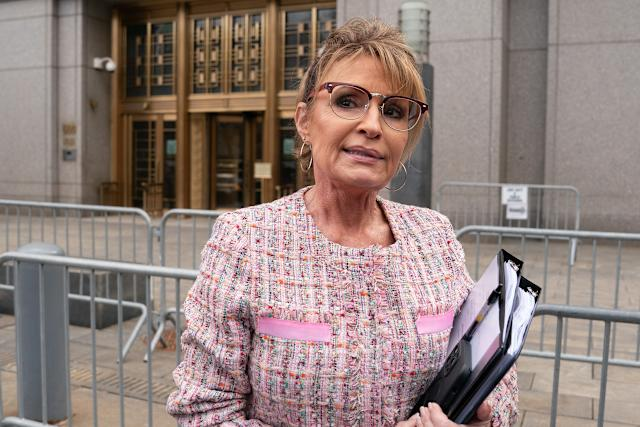
The Times acknowledged the error, issuing a correction within 14 hours and apologizing, but maintained it was an honest mistake, not malice. The case has had a tumultuous legal journey. In 2017, U.S. District Judge Jed Rakoff initially dismissed the lawsuit, but the 2nd U.S. Circuit Court of Appeals reinstated it in 2019, allowing Sarah Palin to proceed to trial.
The first trial, in February 2022, ended in defeat for Sarah Palin when both Rakoff and a jury ruled in favor of the Times. Rakoff dismissed the case during jury deliberations, stating Palin failed to prove actual malice, but allowed the jury to deliver its verdict for appellate purposes.
The jury unanimously found the Times not liable. However, the 2nd Circuit overturned the 2022 verdict in August 2024, citing procedural errors by Rakoff, including his premature dismissal and the exclusion of evidence that could have supported Sarah Palin’s claims. The appeals court also noted that some jurors received push notifications about Rakoff’s ruling, potentially tainting their deliberations.
The retrial began on April 14, 2025, in Manhattan federal court, with Rakoff presiding again. The week-long trial saw testimony from Sarah Palin, who described the editorial as a “life-changer” that “kicked the oomph” out of her, and from former Times editorial page editor James Bennet, who admitted to the error and apologized tearfully, saying he was “tormented” by it.
Palin’s legal team argued that the Times and Bennet showed reckless disregard for the truth, pointing to prior Times reporting that debunked any link between Palin’s PAC and the Arizona shooting.
The Times countered that the error was unintentional, corrected swiftly, and did not reflect malice. After two hours of deliberation, the jury ruled on April 22, 2025, that the Times was not liable, reaffirming the 2022 outcome.
Implications for Press Freedom and Defamation Law
Palin’s defamation case has been closely watched for its potential to reshape media law, particularly the New York Times v. Sullivan precedent. The 1964 ruling set a high bar for public figures to win defamation lawsuits, requiring proof of actual malice to protect press freedoms under the First Amendment.
Palin and some conservatives, including former President Donald Trump, have viewed the case as a vehicle to challenge this standard, arguing it makes it too difficult for public figures to combat false reporting. Supreme Court Justices Clarence Thomas and Neil Gorsuch have also called for revisiting Sullivan, citing changes in the media landscape, such as the rise of online disinformation.
However, the 2nd Circuit clarified that Palin waived her right to challenge the actual malice standard by not raising it earlier, limiting the case’s scope to factual disputes. The Times victory in the retrial was hailed by its legal team as a reaffirmation of American law: “Publishers are not liable for honest mistakes.”
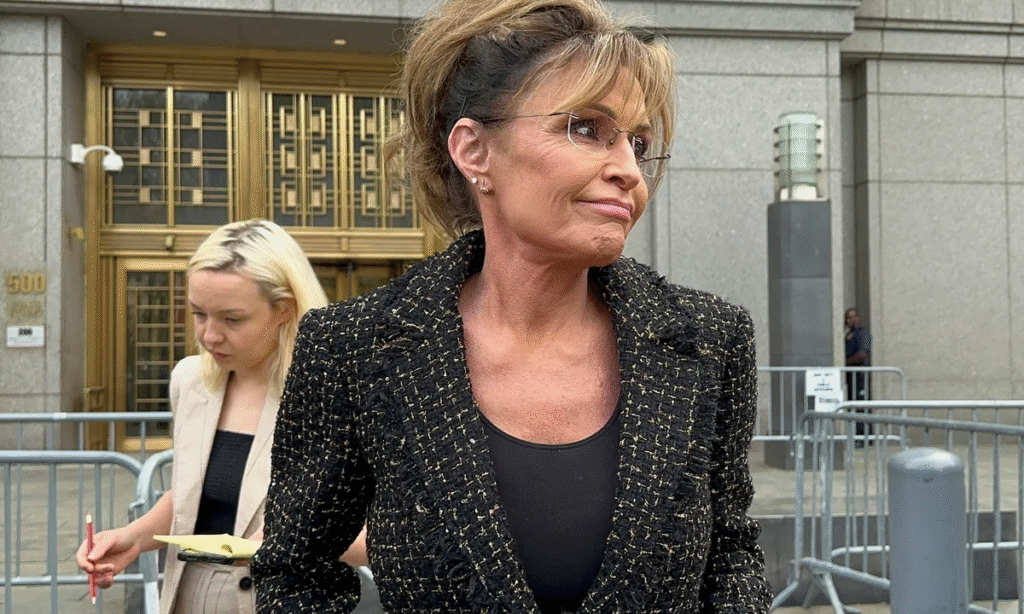
This outcome underscores the difficulty public figures face in proving defamation, especially when media outlets issue prompt corrections. Legal experts noted that Palin’s failure to demonstrate tangible damages, such as lost income or opportunities, weakened her case, as she explicitly stated she was not seeking monetary compensation.
The case also reflects broader tensions in the media environment. Palin’s lawsuit came at a time when trust in media has declined, and high-profile defamation cases have resulted in significant settlements, such as CNN’s payment to a security contractor and ABC’s $15 million settlement with Trump.
These cases highlight the risks media outlets face, even if the Sullivan standard remains intact. For Palin, the trial was less about financial gain and more about holding the press accountable, as she told reporters, “Justice delayed isn’t necessarily justice denied.”
Her supporters, including conservative outlets like Breitbart and Newsmax, framed the retrial as a chance to confront “fake news,” while critics, such as Daily Kos, saw her loss as a reminder of her polarizing legacy.
Palin’s legal team has not confirmed whether they will appeal again, but she remains defiant, urging her followers on X to “keep fighting for integrity in media” and to “quit making things up.” As she left the courthouse, Palin expressed relief at returning to her family and Alaskan life, signaling her resilience despite the defeat.
The case, while a legal loss, kept her in the public eye, reinforcing her narrative as a fighter against media overreach. For the Times, the victory bolsters its defense of journalistic errors as protected speech, but the broader debate over defamation law and press accountability is far from settled.
In conclusion, Sarah Palin’s second loss in her defamation case against The New York Times highlights her enduring role as a lightning rod in American politics. From her rise as a political star to her legal battles, Palin’s story reflects the challenges of navigating fame, media scrutiny, and the legal system as a public figure.
The case’s outcome strengthens existing protections for the press, but it also underscores ongoing cultural divides over truth, accountability, and the role of media in a polarized society.