
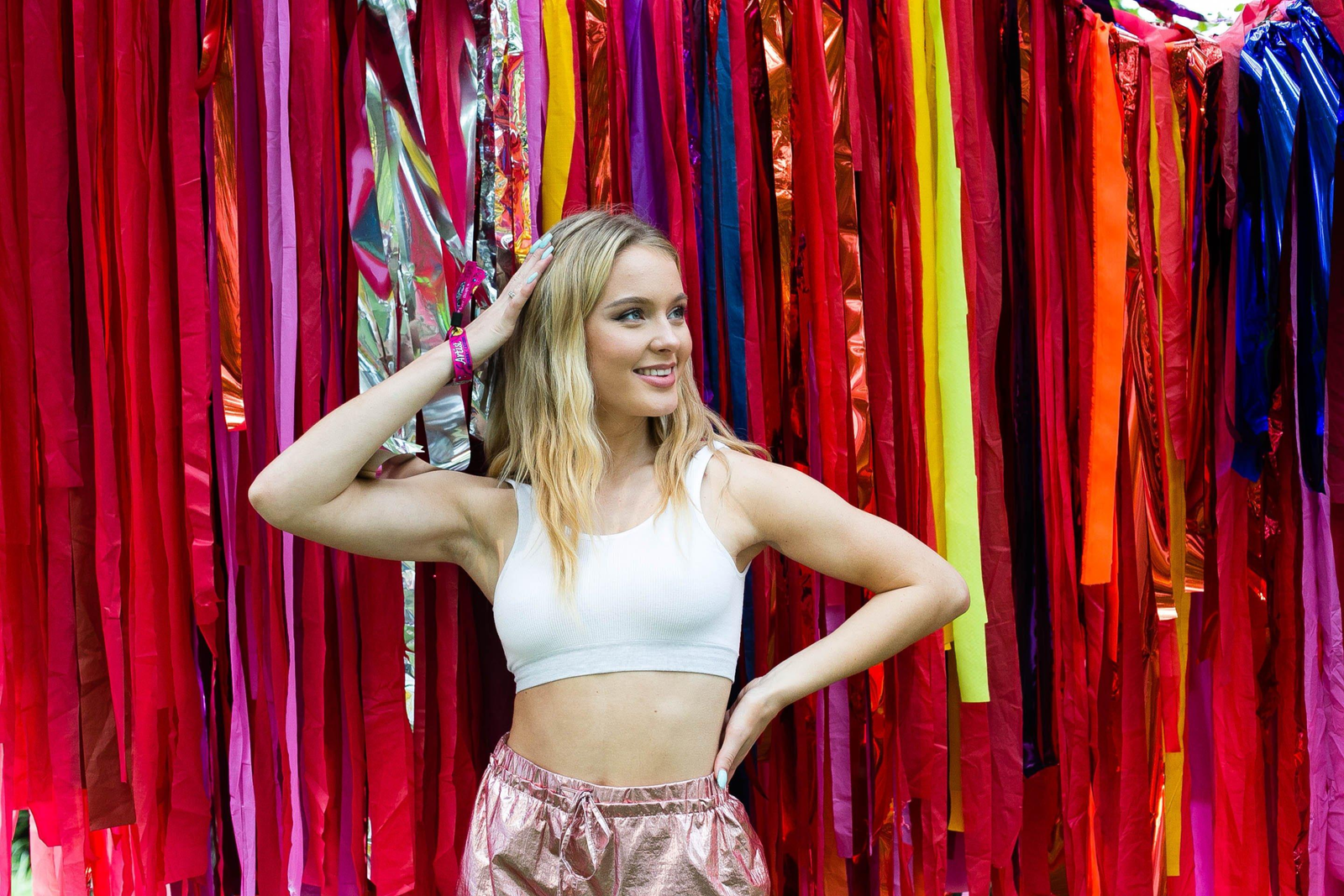
Zara Larsson is one of Sweden’s most internationally recognised pop artists, known for a career that has blended commercial success with outspoken views on social and political issues. In recent days, she has once again drawn widespread attention, not for her music but for a series of Instagram stories in which she expressed strong support for immigrants and progressive causes while sharply criticising US Immigration and Customs Enforcement (ICE) and the Trump administration.
The posts, written in blunt and provocative language, ignited intense debate across social media platforms, drawing both fierce criticism and vocal support. Larsson’s comments emerged against the backdrop of heightened political tension in the United States following the fatal shooting of a 37-year-old woman, Renee Good, by an ICE agent in Minneapolis.
Conflicting narratives about the circumstances of the shooting, along with polarised political responses, provided the immediate context for her intervention. By linking her personal views, her partner’s immigration struggles, and broader systemic criticism of US immigration enforcement, Larsson placed herself at the centre of a highly charged public conversation that extends far beyond celebrity culture.
Zara Larsson’s Career and Public Persona
Born on December 16, 1997, in Stockholm, Zara Maria Larsson rose to prominence at an early age. She first gained national attention in Sweden after winning the talent show Talang in 2008, performing Whitney Houston’s “Greatest Love of All.” The victory marked the beginning of a career that would quickly expand beyond her home country. As a teenager, Larsson signed with major labels and began releasing music that resonated strongly with young audiences across Europe.
Her breakthrough on the international stage came with hits such as Lush Life, Never Forget You, and Ain’t My Fault, songs that combined polished pop production with themes of independence and self-confidence. In 2017, she reached a major milestone in the UK when Symphony, her collaboration with electronic group Clean Bandit, topped the singles chart. The song’s success cemented her status as a global pop figure and opened doors to performances at major festivals and events, including appearances connected to British royal celebrations.
Alongside her music career, Larsson has cultivated a public image as an artist unafraid to speak openly about feminism, equality, and social justice. Over the years, she has used social media to comment on issues ranging from gender politics to body image, often adopting a direct and unapologetic tone. This willingness to engage publicly with contentious topics has earned her praise from supporters who view her as principled and authentic, while also attracting criticism from those who see her comments as overly simplistic or inflammatory.
Zara Larsson via Instagram story:
— Pop Base (@PopBase) January 10, 2026
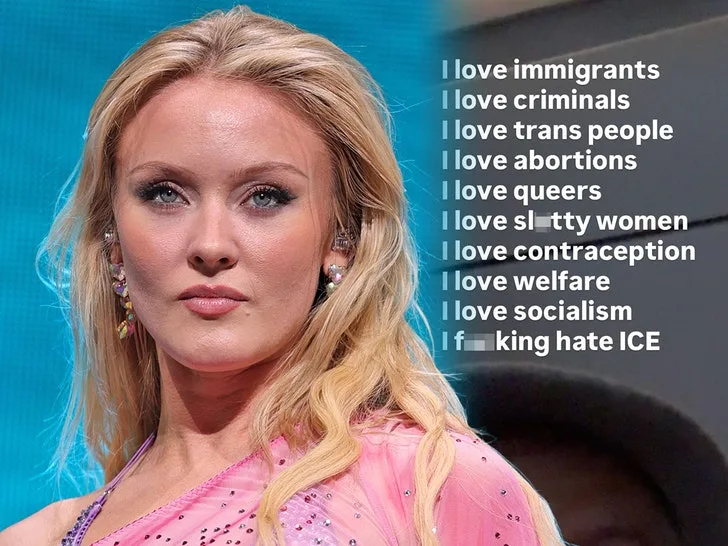
“I love immigrants
I love criminals
I love trans people
I love abortions
I love queers
I love slutty women
I love contraception
I love welfare
I love socialism
I fucking hate ICE” pic.twitter.com/KpaCdLHRnA
Her online presence, particularly on Instagram and X, has become an extension of her public persona. Rather than limiting her platforms to promotional content, Larsson frequently shares personal reflections and political opinions. This approach has ensured that her statements often circulate far beyond her fan base, reaching broader audiences and, at times, provoking backlash.
The Instagram Posts That Sparked the ICE Controversy
The controversy that has now placed Larsson at the centre of international debate began with a set of Instagram stories in which she listed what she described as “things she likes.” The list included immigrants, trans people, abortions, queer people, contraception, welfare, socialism, and what she explicitly referred to as “criminals.” She concluded the post with a blunt declaration of hatred for ICE, the US federal agency responsible for immigration enforcement.
The language and framing of the list immediately attracted attention, with critics focusing particularly on her inclusion of “criminals” and her aggressive condemnation of ICE. As screenshots of the stories circulated, the posts prompted thousands of reactions, ranging from accusations that she was endorsing lawlessness to expressions of support from those who share her opposition to US immigration policies.
Following the initial backlash, Larsson returned to Instagram to address the criticism directly. In a subsequent series of stories, she defended her stance and elaborated on her reasoning. Central to her explanation was her boyfriend’s experience with US immigration authorities. According to Larsson, her partner has been barred from entering the United States due to a drug-related offence involving marijuana that occurred more than six years ago. She described the situation as deeply frustrating, saying it has forced the couple to spend months apart each year.
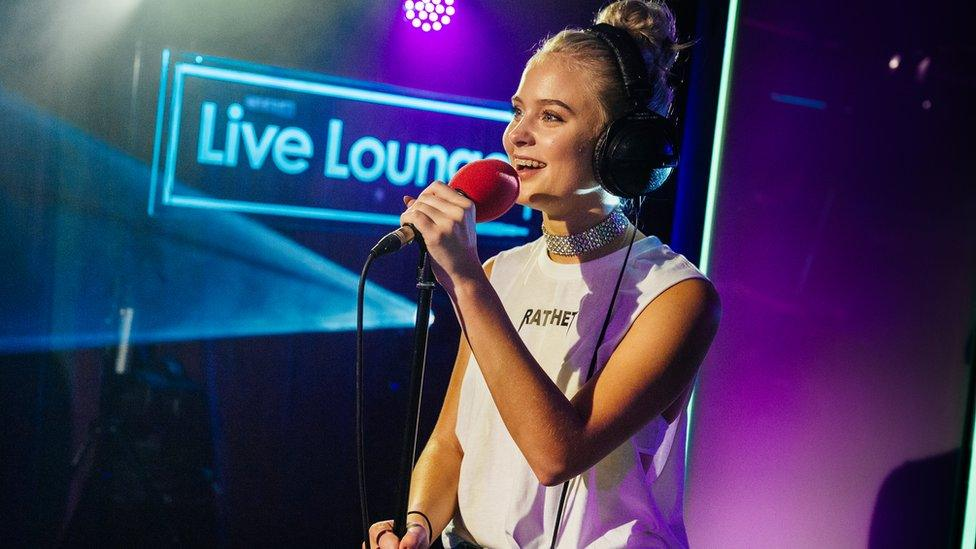
Larsson framed this personal experience as evidence of what she views as an overly punitive and inflexible immigration system. While acknowledging that drug offences are illegal under US law, she argued that the consequences imposed in her partner’s case were disproportionate. She went further, stating that she believes marijuana should be legal, though she described that position as part of a broader debate.
Her criticism escalated in tone as she compared ICE agents unfavourably to individuals engaged in drug use, stating that she would rather have “someone smoking crack” in her home than an ICE agent. She characterised ICE officers as “killing, kidnapping, violent, and hateful criminals,” and suggested that the agency’s culture was shaped by toxic masculinity, fear, and low intelligence. In later posts, she alleged that ICE agents had been “groomed by white supremacy,” claiming they were executing an ideology rooted in hate rather than justice.
These remarks coincided with ongoing protests in Minneapolis following the death of Renee Good. Larsson explicitly connected her condemnation of ICE to the shooting, expressing outrage at what she saw as the agency’s use of force and the federal government’s defence of its actions. Her comments echoed statements from local officials, including Minneapolis mayor Jacob Frey, who publicly told federal agents to leave the city, while sharply contradicting claims from the Trump administration that the deceased posed a terrorist threat.
Public Reaction and the Broader Political Context
The reaction to Larsson’s posts was swift and deeply polarised. On X, users reposted screenshots of her Instagram stories, prompting thousands of comments that reflected the broader ideological divide surrounding immigration and law enforcement in the United States. Critics accused her of irresponsibility and hypocrisy, arguing that her wealth and international mobility insulated her from the realities of crime and border enforcement. Some questioned her support for “criminals,” suggesting it ignored victims of crime, including those from marginalised communities she claimed to support.
Read : 22-Year-Old Latin Singer Maria de la Rosa Fatally Shot in Ambush in San Fernando Valley
Others framed her comments as emblematic of what they described as out-of-touch celebrity activism. Several users mocked the notion that a successful pop star could credibly speak on immigration policy, while others argued that her views were shaped by personal inconvenience rather than an understanding of national security concerns. The language of some responses was harsh, with Larsson labelled a “psycho liberal” and her comments dismissed as performative.
At the same time, Larsson received significant backing from fans and activists who applauded her willingness to criticise ICE so openly. Supporters argued that her comments highlighted real injustices within the US immigration system and praised her for using her platform to draw attention to issues that often affect people with far less visibility. For these supporters, her boyfriend’s experience served as a relatable example of how minor offences can have long-lasting and disruptive consequences for individuals and families.
The controversy unfolded amid an already volatile political climate. The shooting of Renee Good had triggered protests across Minneapolis, some of which resulted in clashes between demonstrators and law enforcement. Vice President JD Vance publicly defended the ICE agent involved, stating that the shooting was an act of self-defence. In contrast, local and state officials challenged the federal government’s account, disputing claims that Ms Good was a domestic terrorist and demanding transparency.
An FBI investigation into the shooting was launched, though Minnesota state officials complained that they were being blocked from participating. Homeland Security Secretary Kristi Noem insisted that the state had no jurisdiction over the investigation, a claim that was rejected by Governor Tim Walz, who argued that Minnesota must be involved. This standoff underscored the broader tension between federal authority and local governance, a theme that resonated strongly with critics of ICE.
Within this context, Larsson’s remarks can be seen as part of a wider cultural debate about the role of celebrities in political discourse. Her comments blurred the line between personal grievance and ideological critique, raising questions about how public figures use their influence and how their words are interpreted by audiences with differing political perspectives. For some, her statements represented a raw and honest reaction to perceived injustice. For others, they exemplified the risks of reducing complex policy issues to emotionally charged social media posts.
What remains clear is that Zara Larsson’s intervention has extended her public profile beyond music once again, reinforcing her reputation as an artist who does not shy away from controversy. Whether viewed as principled advocacy or reckless provocation, her Instagram posts have become part of a larger conversation about immigration, law enforcement, and the power of celebrity voices in shaping public debate.