

A Florida woman’s late-night pizza run turned into a criminal charge when she was caught driving at more than twice the speed limit. Twenty-one-year-old Yazmin Erazo from Holiday, Florida, was arrested Thursday after deputies clocked her traveling 107 miles per hour in a 55 mph zone on U.S. Highway 19 in Palm Harbor.
According to authorities, Erazo was racing to reach a Little Caesars restaurant before it closed, a decision that has now brought her face to face with the state’s new extreme speeding law. The case has sparked discussion about Florida’s crackdown on reckless driving and the growing dangers of excessive speed on public roads.
Florida’s New Crackdown on Extreme Speeding
The arrest comes just months after Florida introduced a stricter legal framework targeting extreme speeding, marking a significant shift in how the state penalizes dangerous driving. Under the new law, Florida House Bill 351, which took effect on July 1, driving 50 mph or more above the posted speed limit or traveling at 100 mph or higher in a way that endangers public safety is no longer treated as a mere traffic infraction—it is now a criminal offense.
For years, speeding violations in Florida were handled primarily through fines, license points, or temporary suspensions. However, state lawmakers and law enforcement agencies grew increasingly concerned about the rise in severe crashes tied to excessive speed. The new legislation reflects that concern, transforming certain speeding incidents into criminal acts with lasting consequences.
According to the statute, a first offense can lead to up to 30 days in jail, a fine of as much as $500, or both. Repeat offenders face up to 90 days in jail and fines reaching $1,000. In addition, a driver convicted twice within five years could have their license revoked for a minimum of 180 days and up to a full year. Unlike traditional speeding tickets, these charges appear on criminal background checks, potentially influencing future employment opportunities, housing applications, and even professional licensing.
Lawmakers justified the tougher penalties by citing Florida’s rising road fatalities and the disturbing number of accidents involving young drivers. Between 2013 and 2023, the state recorded a 43 percent increase in traffic deaths. Most of these speeding-related fatalities involved men between the ages of 16 and 25—a demographic that experts say is particularly prone to risk-taking behavior behind the wheel.
Read : Deliciousness at Doorsteps : The Top 10 Food Delivery Companies Worldwide
Yazmin Erazo’s case, though unusual for its motive, fits squarely into the category of extreme speeding targeted by the new law. By allegedly driving 107 mph in a 55 mph zone, she surpassed both the 100 mph threshold and the 50 mph-over-limit condition required for a criminal charge. Her arrest, therefore, serves as one of the early examples of how Florida’s newly strengthened traffic enforcement policy is being applied.
The Incident and Its Legal Fallout
According to the Pinellas County Sheriff’s Office, deputies spotted Erazo’s vehicle racing down U.S. Highway 19 on Thursday evening. The road, known for its steady traffic and frequent commercial activity, is not typically associated with high-speed driving. When radar confirmed that Erazo was traveling at 107 mph, deputies initiated a traffic stop. Upon being pulled over, the 21-year-old reportedly told officers that she was speeding to get to Little Caesars before the restaurant closed for the night.
While the excuse may have sounded trivial, the consequences were anything but. Deputies arrested Erazo on a charge of dangerous and excessive speeding under the new Florida law. She was later released on bail pending further legal proceedings.
If convicted, Erazo could face the full range of penalties associated with a first-time offense, including possible jail time. Although no crash occurred, and no injuries were reported, prosecutors can still pursue the case under the criminal statute because the law focuses on the act of driving at an extreme speed that poses potential danger, rather than requiring proof of harm or collision.
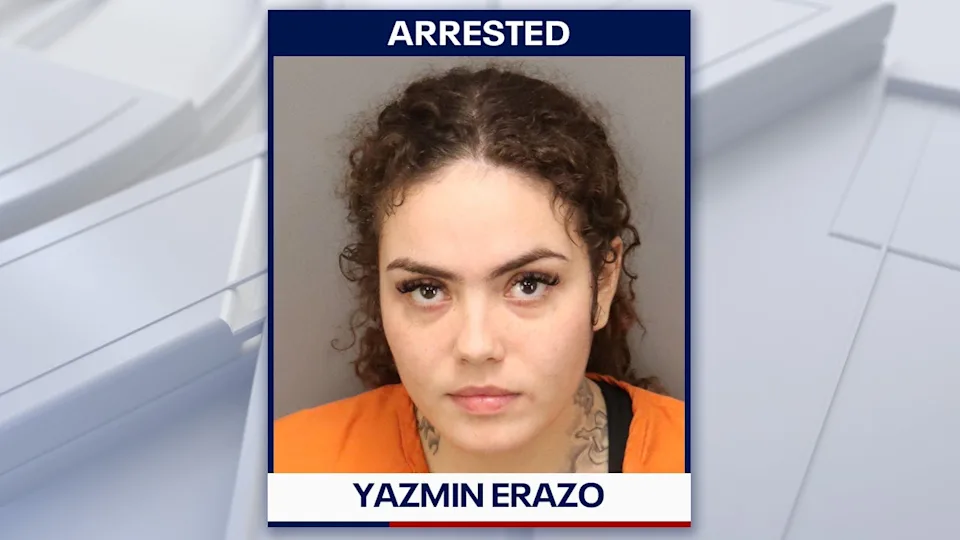
Legal experts have pointed out that cases like this illustrate the new line Florida has drawn between careless driving and criminal behavior. Attorney Michael Farkash of the Gainesville-based firm Fine, Farkash & Parlapiano noted that the intent of the legislation is to deter drivers before tragedy occurs. “The point isn’t to wait for an accident to happen,” he said. “If someone is going 50 or more miles per hour over the limit, that in itself is a threat to everyone else on the road. The law recognizes that and acts accordingly.”
Data from Alachua County underscores the need for such preventive measures. The county has already reported 71 crashes this year linked to speeding and aggressive driving. These incidents have resulted in four serious injuries and two fatalities. Law enforcement officials argue that stricter penalties can serve as a powerful deterrent, particularly for younger drivers who may underestimate the risks associated with high-speed driving.
Erazo’s arrest has also drawn public attention for the almost absurd reason behind her haste. The idea of risking one’s life and others’ safety for a pizza pickup has become a talking point online, illustrating the disconnect between impulse and judgment that often underlies reckless driving cases. Yet beneath the humor lies a serious message about responsibility on the road and the consequences of disregarding speed limits.
Rising Concerns Over Speed-Related Fatalities in Florida
Florida’s lawmakers introduced HB 351 in response to mounting data showing a troubling rise in both reckless driving and speed-related fatalities. Between 2013 and 2023, the state experienced a 43 percent increase in traffic deaths, according to state crash statistics. While improvements in road infrastructure and vehicle safety technology have helped reduce other types of accidents, speeding remains one of the most persistent and deadly factors.
Experts attribute this trend to several overlapping causes. Urban sprawl and long commuting distances often lead to driver impatience and aggressive behavior, especially during late-night or low-traffic hours when drivers feel emboldened to accelerate. The widespread use of high-performance vehicles and modified cars has also contributed to higher speeds on major roadways. In addition, the proliferation of social media content glamorizing fast driving and street racing has further encouraged dangerous behavior among younger motorists.
Florida law enforcement agencies have been expanding their use of radar, aerial surveillance, and automated license plate readers to identify and apprehend high-speed offenders. The Florida Highway Patrol has also been conducting “Operation Safe Drive” initiatives in high-risk areas, focusing on highways where excessive speed and reckless lane changes are common.
Read : 45-Year-Old Robert Cherone Crushed to Death by Robotic Machine at Palermo’s Pizza
Despite these measures, the problem persists. The National Highway Traffic Safety Administration estimates that nearly one-third of all fatal crashes in the United States involve speeding. In Florida, many of these cases share similar patterns: drivers under 25, operating at night, often on wide, multi-lane highways with minimal traffic.

Erazo’s arrest captures the essence of this trend—a young driver, operating at an extremely high speed, in a moment of impulsive decision-making. While her motive was unusual, the outcome aligns with what law enforcement sees daily: high-risk behavior stemming from impatience, distraction, or underestimation of danger.
Traffic safety advocates say the broader goal of the new law is not only punishment but also deterrence. By shifting extreme speeding from a civil matter to a criminal one, the state hopes to change driver psychology. The prospect of a criminal record, potential jail time, and long-term license consequences introduces a much higher cost for those tempted to treat public roads like racetracks.
Public safety campaigns in Florida have also begun emphasizing the social and economic impacts of reckless driving. Beyond legal penalties, a criminal speeding conviction can affect one’s ability to secure employment, particularly in professions that require background checks or driving credentials. It can also raise insurance premiums dramatically, sometimes leading to policy cancellation.
Law enforcement officials have expressed hope that as awareness of HB 351 spreads, fewer drivers will take the kind of risks that landed Erazo in jail. They argue that while many people may not fear a traffic ticket, the stigma of a criminal charge carries far more weight.
A Broader Reflection on Speed, Law, and Judgment
Though the details of Yazmin Erazo’s case have gained attention for their unusual motivation, the underlying issues are anything but rare. The intersection of youthful impulsivity, convenience culture, and powerful vehicles continues to pose challenges for traffic enforcement nationwide. The situation underscores the fragile boundary between everyday decisions and life-altering consequences.
Read : What Is the Pentagon Pizza Index and Its Connection to Israel’s Bombing of Iranian Nuclear Sites?
Highway 19, where Erazo was stopped, is a busy corridor known for its mix of commercial traffic, residential access points, and frequent speed enforcement zones. Driving at 107 mph on such a stretch is not only unlawful but potentially catastrophic. Even a minor error—an unexpected lane change, debris on the road, or a car exiting a side street—could turn a moment of haste into a fatal collision.
Florida’s decision to criminalize extreme speeding represents an evolving understanding of road safety. Instead of treating excessive speed as a personal choice with limited consequences, the state now recognizes it as a public threat. The law seeks to prevent harm rather than respond to it after the fact, aligning with a broader trend in traffic policy emphasizing proactive deterrence.
For many Floridians, the story of a young woman risking arrest to reach a pizza restaurant might seem absurd, but it serves as a vivid reminder of how quickly routine decisions can escalate. While Yazmin Erazo has been released on bail and awaits the outcome of her case, her situation offers a cautionary tale about the limits of impulse and the power of accountability under the law.
Florida’s roads, already among the nation’s most dangerous, face continuous challenges from speed and inattention. As authorities push for stricter enforcement and public education, the hope is that stories like this will become less common—not because they cease to make headlines, but because drivers begin to recognize that no convenience, no craving, and no closing time is worth a criminal record or a life lost.