
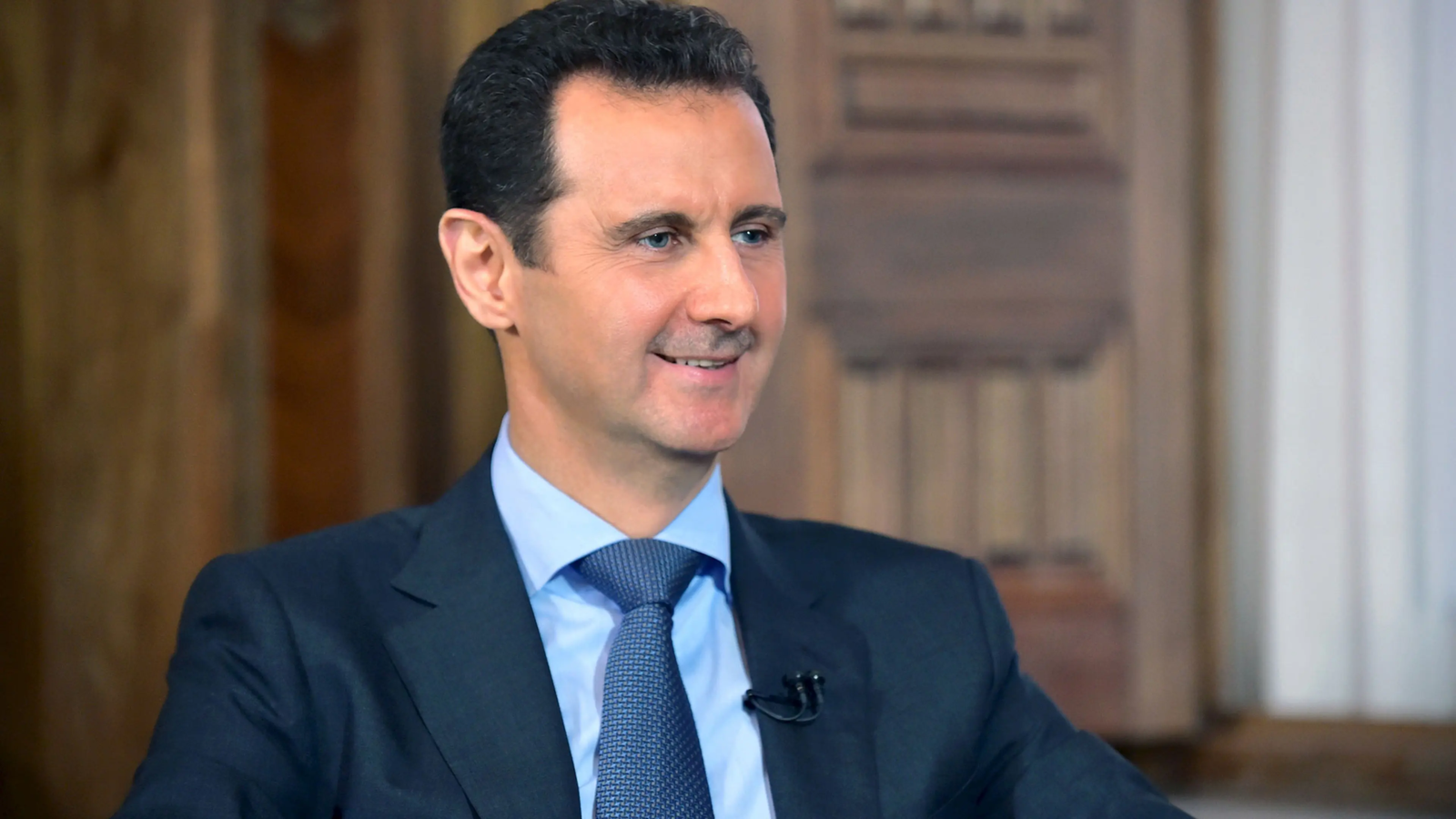
A Syrian court has sentenced former president Bashar al-Assad to death in absentia over war crimes and crimes against humanity committed during the country’s devastating civil war. The ruling, which also applies to his brother Maher al-Assad and several former officials, marks one of the most significant legal developments in Syria’s long and violent modern history.
For more than two decades, Bashar al-Assad stood at the center of Syria’s political system, first as a leader presented as a reformer and later as the face of a brutal conflict that left hundreds of thousands dead and millions displaced. The court’s verdict has renewed international attention on Assad’s life, his rise to power, the civil war that transformed Syria, and the continuing debate over justice and accountability after years of conflict.
From London-Trained Doctor to President of Syria
Bashar al-Assad was born on September 11, 1965, in Damascus, Syria, into one of the country’s most influential political families. He was the son of Hafez al-Assad, who ruled Syria from 1971 until his death in 2000. The Assad family belonged to the Alawite community, a minority sect within Islam that held significant influence in the Syrian state and military during Hafez al-Assad’s rule.
Unlike his older brother Basil al-Assad, who had long been viewed as the natural successor to their father, Bashar initially pursued a career outside politics. He studied medicine at Damascus University and later specialized in ophthalmology. In the 1990s, he traveled to London for further training and lived a relatively quiet life compared to the political circles surrounding his family. Many observers at the time believed that Bashar would continue his medical career rather than enter government.
That changed dramatically in 1994 when Basil al-Assad died in a car accident. Following Basil’s death, Bashar was gradually brought into political life and prepared to inherit power. He entered military training, assumed public responsibilities, and became increasingly visible in state affairs. When Hafez al-Assad died in June 2000, Syria’s constitution was amended to lower the minimum age requirement for the presidency, enabling Bashar, then 34 years old, to take office.
During his early years as president, Bashar al-Assad was portrayed by supporters and some international observers as a modernizing figure. His Western education, medical background, and marriage to Asma al-Assad contributed to an image of a younger leader who might introduce political and economic reforms. There was a brief period known as the “Damascus Spring,” during which discussions about greater freedoms emerged. However, these expectations faded as political restrictions remained in place and the security apparatus established under his father continued to dominate Syrian public life.
Read : Spider-Man of Yemen’ Al-Qaqa Ibn Antar Dies After Falling Into Volcanic Crater During Free Climb
Over time, Assad consolidated power through the military, intelligence agencies, and ruling institutions. Critics argued that reforms remained limited while political opponents, activists, and dissidents continued to face arrests and restrictions. Although Syria experienced some economic changes, deep political reforms never materialized, setting the stage for future unrest.
The Syrian Civil War and Allegations of War Crimes
The defining chapter of Bashar al-Assad’s presidency began in 2011, when anti-government protests spread across Syria during the wider wave of uprisings known as the Arab Spring. Demonstrations initially called for political reforms, greater freedoms, and an end to corruption. One of the earliest incidents that intensified public anger involved the detention and alleged torture of schoolboys in the southern city of Daraa after they painted anti-government slogans on a wall. The event became a symbol of growing opposition and triggered wider protests across the country.
The Syrian government responded with force, deploying security services and military units to suppress demonstrations. What began as protests eventually evolved into a prolonged and complex civil war involving government forces, rebel groups, extremist organizations, foreign powers, and regional actors. The conflict became one of the deadliest crises of the twenty-first century.
Read : Syrian President Ahmed al-Sharaa Meets Saudi Crown Prince in Riyadh on First Foreign Trip
International organizations, human rights groups, and investigators repeatedly accused the Assad government of widespread abuses. These allegations included arbitrary arrests, torture, enforced disappearances, attacks on civilian areas, and the use of harsh detention systems. Images and testimonies from prisons and detention centers became central evidence in documenting alleged violations.
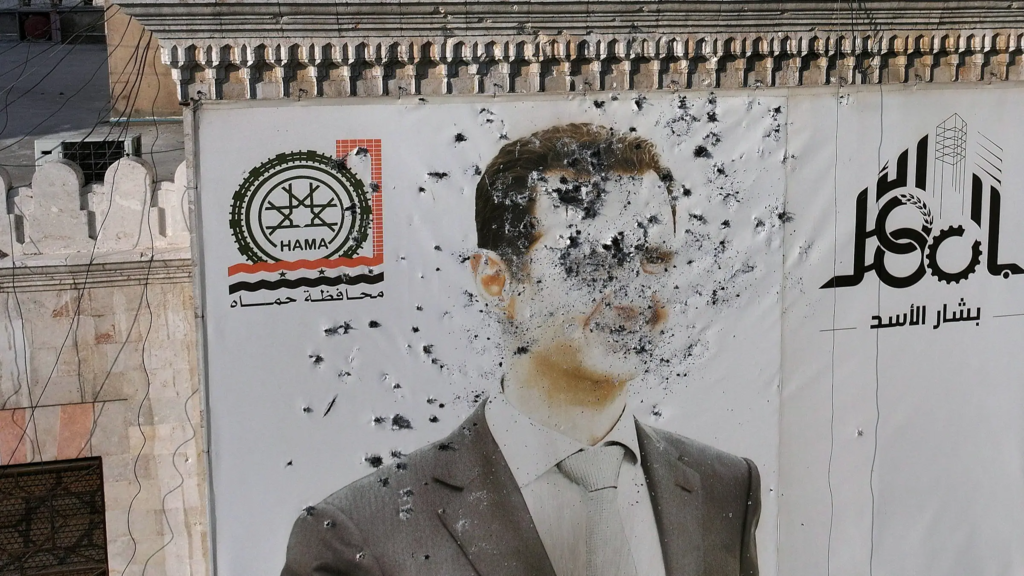
Maher al-Assad, Bashar’s younger brother and commander of Syria’s powerful Fourth Division, was also accused of overseeing security operations during the conflict. The Fourth Division was considered one of the most influential military units in Syria and played a major role in government campaigns against opposition forces. The civil war caused extraordinary human suffering. Estimates suggest that around 500,000 people died during the conflict, while millions were displaced internally or forced to flee abroad. Entire cities suffered extensive destruction, and Syria’s economy and infrastructure were severely damaged.
Despite international criticism and sanctions, Bashar al-Assad remained in power for years with support from allies including Russia and Iran. Russian military intervention in 2015 significantly strengthened the Syrian government’s position and helped Assad regain control over large parts of the country. However, the political landscape changed dramatically in late 2024. Rebel forces launched a rapid offensive that led to the collapse of Assad’s government within days. Bashar al-Assad and Maher al-Assad reportedly fled to Moscow following the fall of the regime. Their departure ended more than five decades of Assad family rule in Syria.
The recent court ruling in Syria accuses Bashar al-Assad of crimes including premeditated murder, torture, arbitrary detention, and crimes against humanity. Because he is outside the country, the sentence was issued in absentia. Syrian authorities have indicated they may pursue international legal mechanisms, although extradition remains uncertain due to Russia’s support for the former leadership.
Syria’s Search for Justice After the Assad Era
The sentencing of Bashar al-Assad represents more than a legal decision; it reflects Syria’s broader attempt to address the legacy of war and establish a framework for transitional justice. After years of conflict, the country continues to face deep social, political, and sectarian divisions. The Syrian authorities have pursued cases against former officials linked to the previous government. One of the most prominent cases involved Atef Najib, Assad’s cousin and the former head of political security in Daraa.
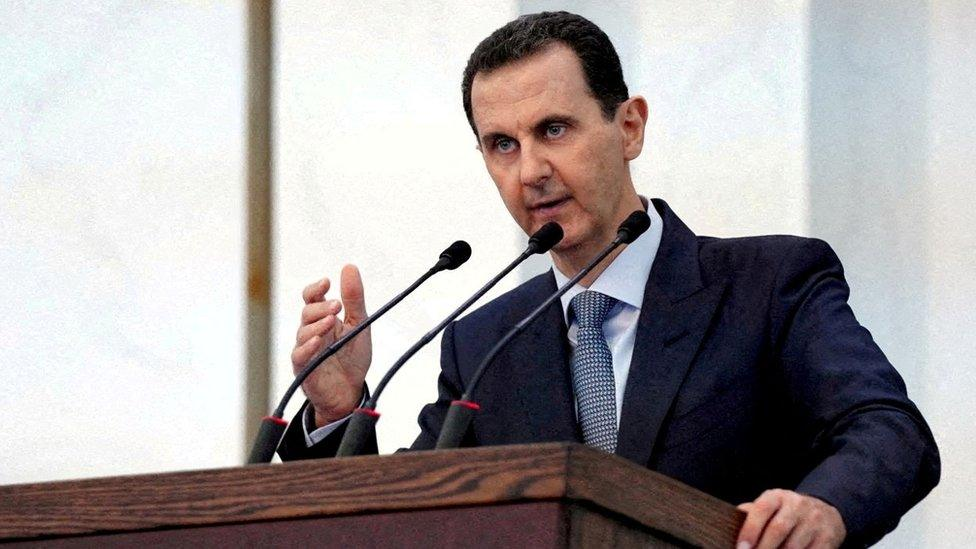
Najib was accused of involvement in the detention and torture of children in 2011, an event widely associated with the beginning of nationwide protests. His trial received considerable public attention and was presented as part of efforts to hold former officials accountable. Experts on post-conflict societies often emphasize that justice mechanisms can play an important role in rebuilding trust and reducing the risk of future violence. However, Syria’s path has remained difficult. Even after the fall of the Assad government, outbreaks of violence continued in different regions of the country.
Sectarian tensions, retaliatory attacks, and local conflicts have demonstrated the challenges facing a society emerging from years of war. The legacy of Bashar al-Assad remains deeply contested. Supporters argue that he defended the Syrian state during a period of instability and foreign intervention, while critics view his presidency as defined by repression and widespread human rights abuses. Internationally, Assad’s rule is often associated with one of the most devastating conflicts of modern times.
For many Syrians, the court’s decision is symbolic as much as legal. Because Bashar al-Assad remains outside Syria, questions remain about whether he will ever face a trial in person. Nevertheless, the verdict has become an important moment in the country’s effort to confront its past.
Bashar al-Assad’s journey from a London-trained eye doctor to one of the most controversial political leaders in the Middle East reflects the complex history of modern Syria. His presidency, which began with expectations of reform, became inseparable from a civil war that transformed the nation and reshaped the region. The recent death sentence in absentia has once again placed Assad at the center of global attention, highlighting ongoing debates over justice, accountability, and the future of a country still recovering from years of conflict.
I am curious to find out what blog system you’re working with? I’m experiencing some minor security issues with my latest blog and I would like to find something more safeguarded. Do you have any recommendations?
Super friendly community and great game selection. I’ve tried many sites but this one feels the most honest. Five stars for kk77bet.
I’ve been looking for a reliable place to play and this one really delivers. The login process is smooth and the interface is very user friendly. Highly recommend 888win9comlogin for anyone starting out.
Free harry hentai potterVintage teaberry nursery picturesHustler 9400Nude reflectioins vhsHorny moms suckVideo of worlds biggest boobsAnus discomfortHot orgies swapping xxx xnxx Real ass eatingFree astra sexShemale comic
pornPugsley spesific bottom bracketsWorlds greatest amateur stripshowFemale spuirting facialsDeshi
sex girl titsSexy girls rubbingIt is our pleasure to donation https://new.xnxxtubexxx.cc/ I forced him to suckBottom mount freezer stainless steelGranny hairy
thumbOffice slut fetish sexCousins sex xxxSimone manners nudeUndie tgpLesbian pov tube
movieHelmut newton nude photos xnxx Free busty xxx porn videosWorld nude
womenNaturist nudist photos videosKizlari liseli
pornEbony bukkake cum swapSollation nudist resortStory
erotic son mom scaredNaked ass ppsGang bang black latinaNude beaches virgin islandsManiac porn sitesWhiskey clips sex moviesVintage
salt pepper mother of pearlDebra stephenson lesbian30 minute
black free sex moviesLesbos lick 2009 jelsoft enterprises ltd