
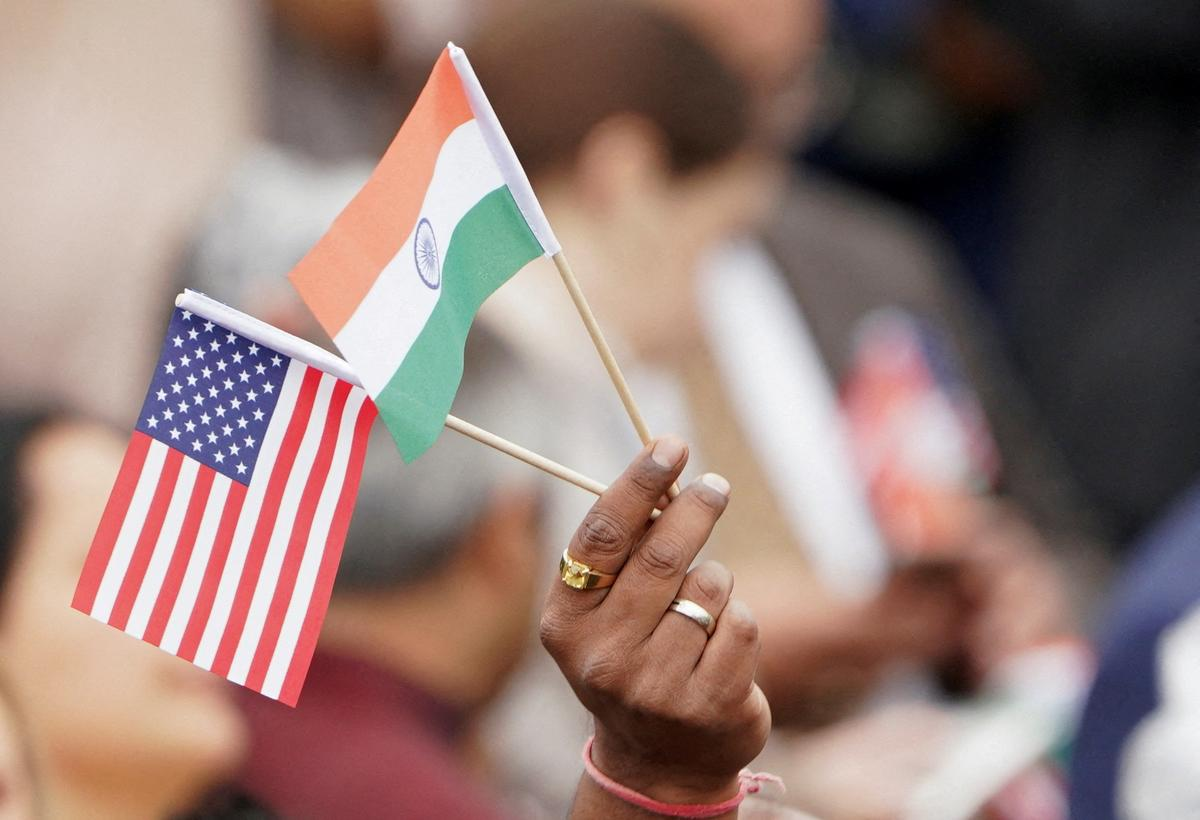
In a shocking escalation of online hostility, far-right internet trolls have weaponized airline booking systems in a coordinated effort dubbed “Operation Clog the Toilet.” This campaign, which emerged in late September 2025, specifically targeted Indian holders of H-1B visas—temporary work permits that allow skilled foreign professionals to work in the United States. What began as a prank on anonymous forums quickly morphed into a real-world disruption, causing flight prices to double and stranding thousands of Indian tech workers who were desperately trying to return to their jobs.
The timing couldn’t have been worse: it followed a sudden announcement from President Donald Trump imposing a staggering $100,000 fee on H-1B visas, sparking widespread panic among the Indian diaspora. The H-1B program, established under the Immigration and Nationality Act of 1952 and expanded in subsequent decades, is designed to fill gaps in the U.S. labor market with highly skilled workers in fields like technology, engineering, and science. Each year, the U.S. issues 85,000 such visas through a lottery system, with India receiving approximately 72-75% of them—around 60,000 to 65,000 annually.
This dominance reflects India’s robust STEM education pipeline, producing over 2.5 million engineering graduates yearly, many of whom fuel Silicon Valley’s innovation engine. Companies like Google, Microsoft, Amazon, and Meta rely heavily on these professionals, employing tens of thousands of Indian H-1B holders who contribute billions to the U.S. economy through taxes, patents, and consumer spending. The campaign’s vulgar name—”Clog the Toilet”—is no accident. It evokes derogatory stereotypes about Indian hygiene and overcrowding, a nod to colonial-era tropes that have persisted in modern xenophobic rhetoric. Participants framed it as a “patriotic” act to “keep Indians in India,” but beneath the trolling facade lies a deeper vein of racism.
Posts on platforms like 4chan’s /pol/ board, a notorious hub for far-right extremism, overflowed with slurs such as “Jeet” (a slur derived from “Pajeet,” mocking Indian names) and calls for “total Jeet death” or “kill every Jeet you see on sight.” One user boasted, “Whatever it takes to make a turd-free West,” explicitly linking the operation to anti-Indian sentiment. This isn’t isolated; it echoes broader anti-immigrant fervor amplified during Trump’s campaigns, where H-1B visas have been painted as a “job-stealing” scheme despite evidence showing they complement, rather than displace, American workers.
The operation unfolded with chilling efficiency. On September 20, 2025, just hours after Trump’s executive order was signed, 4chan users mobilized. A seminal thread titled “Indians are just waking up after the H1B news. Want to keep them in India? Clog the flight reservation system!” instructed participants to search for high-demand routes—Delhi to New York (JFK), Mumbai to San Francisco (SFO), Hyderabad to Newark—using tools like Google Flights. The tactic was simple yet insidious: initiate the checkout process, select seats, and abandon the cart without paying.
Most airline systems hold reservations for 10-15 minutes, effectively locking out genuine buyers during peak demand. Advanced users escalated by opening multiple tabs, using VPNs to mimic Indian IP addresses, and even scripting automated bots via tools like Postman to reserve hundreds of seats simultaneously. One anonymous poster claimed, “I got 100 seats locked,” while another shared screenshots of a Delhi-Newark flight’s last available seat being “clogged.”
This digital sabotage had immediate, tangible consequences. Flight prices from major Indian cities to U.S. hubs surged overnight. A one-way ticket from New Delhi to JFK, typically Rs 37,000-40,000 ($440-480), ballooned to Rs 70,000-80,000 ($840-960) or higher. Amrutha Tamanam, a software engineer from Austin, Texas, vacationing in Vijayawada, Andhra Pradesh, became a face of the chaos. “I was refreshing pages for hours, and sites kept crashing,” she recounted.
Read : 65-Year-Old Gangster Granny Who Oversaw £80M Drug Operation Foiled by Police
Fearing the fee would apply upon re-entry, Tamanam shelled out over $2,000 for a Dallas-bound flight—double her usual fare—after repeated failures on Air India and United Airlines portals. Major tech firms, interpreting the announcement as imminent, issued urgent memos: Microsoft and JP Morgan demanded employees return by midnight EDT on September 21; Amazon and Meta followed suit. An estimated 50,000-70,000 Indian H-1B holders were abroad, many on short vacations, now racing against an invisible clock.
Airlines bore the brunt too. While Air India reported no system disruptions—its spokesperson insisted operations ran “normally”—smaller carriers and aggregators like MakeMyTrip buckled under the load. Reports surfaced of booking engines freezing, error messages flooding screens, and customer service lines overwhelmed. The ripple effects extended beyond economics: families were separated, job securities jeopardized, and mental health strained. One affected worker in Bengaluru told reporters, “I have a mortgage, kids in school—this isn’t just a ticket; it’s my life.” Economists estimate the frenzy cost Indian travelers an extra $50-100 million in inflated fares alone, not counting lost productivity from delayed returns.
The Spark: Trump’s H-1B Fee Announcement and the Panic It Ignited
President Trump’s September 20 executive order marked a dramatic pivot in U.S. immigration policy, slapping a $100,000 one-time fee on H-1B applications—up from the current $460 base plus $2,500 for larger firms. Framed as a revenue measure to fund border security, it targeted “abuses” in the program, echoing Trump’s first-term restrictions that capped visas during the COVID-19 pandemic. Critics, including the U.S. Chamber of Commerce, decried it as a “talent tax” that would hamstring innovation, potentially driving companies to Canada or Europe.
Proponents, however, hailed it as protecting American wages, citing studies like those from the Economic Policy Institute showing H-1B workers often earn 10-20% less than U.S. counterparts in similar roles. The announcement landed like a thunderbolt on Diwali season, when many Indian professionals visit family. Confusion reigned: Would the fee hit renewals? Re-entries? Existing holders? White House Press Secretary Karoline Leavitt’s clarification came too late—on September 22—stating it applied only to new petitions, not current visas or re-admissions.

By then, the damage was done. Social media erupted with #H1BPanic trending in India, as WhatsApp groups buzzed with frantic queries. Airlines reported a 300-400% spike in searches for India-U.S. routes within hours. This perfect storm—policy shock plus seasonal travel—created fertile ground for trolls to exploit. The operation’s roots trace to 4chan, the anonymous imageboard founded in 2003 by Christopher “moot” Poole.
Known for birthing memes like Pepe the Frog and coordinating pranks (e.g., the 2008 Habbo Hotel raids), /pol/—short for “politically incorrect”—has devolved into a breeding ground for white nationalism. Threads often blend irony with incitement, and “Clog the Toilet” blurred that line. It spread to Telegram channels frequented by MAGA extremists, where users shared VPN tutorials and seat-hold timers. By September 21, boasts of “superblue” scripts—automated reservation tools—circulated, with one claiming to have spiked a Mumbai-SFO fare to $6,000. This wasn’t random; it was a calculated strike against a visible minority, leveraging Trump’s rhetoric to justify sabotage.
Unmasking the Hate: Racism, Trolling, and Far-Right Mobilization
At its core, “Clog the Toilet” is a textbook case of racism masquerading as mischief. The slur-laden posts reveal an ideology that views Indian immigrants as economic parasites and cultural threats. “Turd-free West” isn’t hyperbole; it’s a callback to 19th-century “Yellow Peril” fears, repurposed for South Asians. Heidi Beirich, co-founder of the Global Project Against Hate and Extremism, described it as “an attempt to cause panic among H-1B visa holders,” noting how such campaigns normalize exclusion. Data from the Southern Poverty Law Center shows a 20% rise in anti-Asian hate incidents since 2020, with Indians—often conflated with Chinese in broad “Asian” categories—bearing disproportionate brunt.
Yet, defenders on X (formerly Twitter) and Gab framed it as “based patriotism.” Posts like “Patriots 🫡” from accounts celebrating the operation garnered thousands of likes, arguing H-1B “invaders” undercut wages. This narrative ignores facts: A 2023 National Foundation for American Policy study found H-1B holders start 25% of U.S. unicorns and boost GDP by $100 billion yearly. It also sidesteps how Indians on H-1B face “indentured” conditions—tied to employers, vulnerable to green-card backlogs averaging 20+ years. The campaign’s virality underscores online radicalization’s perils: anonymous forums lower barriers to hate, turning keyboard warriors into real disruptors.

Broader context reveals systemic biases. Indian H-1B holders endure higher denial rates (15-20% vs. 5% for others) and “name-based discrimination” in hiring, per a 2024 USCIS report. Trump’s order, while clarified, reignites debates on merit-based reform—his proposed lottery scrap favors top talent but risks excluding mid-tier applicants from India due to sheer volume. Far-right glee here isn’t coincidental; it’s symbiotic with policy shifts that embolden extremists.
Beyond the Blockade: Impacts, Responses, and the Road Ahead
The human toll of “Clog the Toilet” is profound. Beyond inflated fares, it sowed fear: surveys by Indian-American groups like Indiaspora reported 40% of respondents feeling “less welcome” in the U.S. post-announcement. Corporate responses varied—Google extended return deadlines, while smaller firms scrambled. Airlines adapted by shortening hold times to five minutes and deploying anti-bot measures, but not before losses mounted.
Public backlash was swift. Indian media outlets like NDTV and The Hindu ran exposés, dubbing it a “new low in racism.” On X, #StopClogTheToilet trended, with users like journalist Yashraj Sharma amplifying stories: “This was not mere trolling, but deliberate xenophobic sabotage.” Advocacy groups petitioned the FAA for investigations into “cyber harassment,” while the ACLU warned of free speech limits when actions cause harm. Internationally, India’s Ministry of External Affairs engaged U.S. counterparts, with MEA spokesperson Randhir Jaiswal stating, “We are monitoring the situation closely.”
Looking forward, this episode spotlights vulnerabilities in digital infrastructure and immigration discourse. Policymakers must balance enforcement with equity—perhaps indexing fees to firm size or fast-tracking green cards. For the diaspora, resilience means community support: funds raised $500,000 for stranded workers via GoFundMe. Ultimately, “Clog the Toilet” isn’t just a prank; it’s a mirror to America’s fractured soul, where innovation clashes with isolationism. As one affected engineer put it, “We build your tech; don’t block our path home.” In an interconnected world, such blockades hurt everyone—reminding us that true progress demands open skies, not clogged ones.
a9jnbv
a9jnbv