
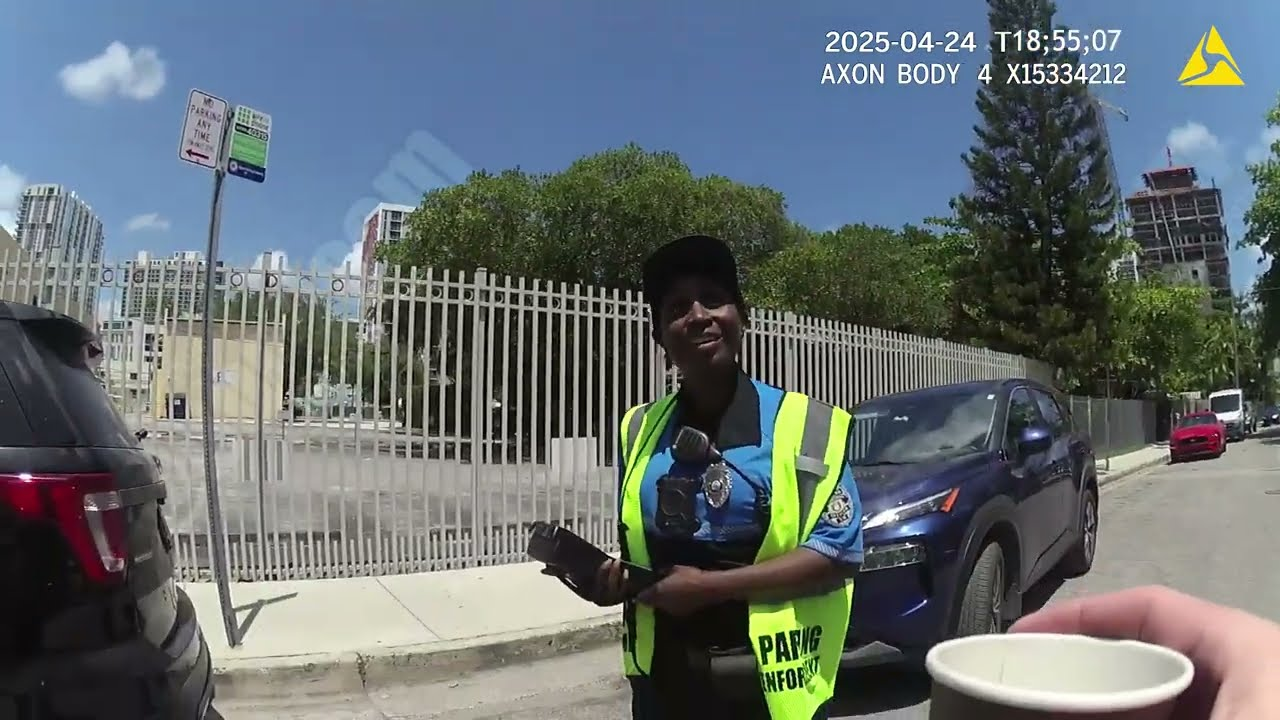
A video claiming to show a dramatic confrontation between a parking enforcement worker and a police officer has taken social media by storm. In the viral footage, a uniformed woman appears to issue a parking ticket to a police officer for illegal parking. What follows is a heated exchange between the two, ending with the Cop Arresting Female Parking Officer on the spot.
Captured through a convincing bodycam aesthetic, the video instantly drew the attention of netizens across platforms like X (formerly Twitter), Instagram, TikTok, and YouTube. But while the confrontation may seem real at first glance, it turns out the entire incident was nothing more than a scripted production.
The viral clip has been widely shared, with thousands of users commenting on the seemingly outrageous abuse of authority. One user tweeted, “Sounds like the cop is threatening her,” while another remarked, “This woman deserves the fattest of All raises. NOW. Hell yeah lady.”
The reactions ranged from outrage to admiration, and the scenario portrayed resonated with many who are already critical of law enforcement behavior. However, the emotional responses were triggered by a fabrication. The video was, in fact, produced by the YouTube channel Bodycam Declassified, which specializes in creating fictional videos that mimic real police bodycam footage.
Despite the channel’s clear disclaimer that their content is entirely scripted and acted, the realistic style of the video led many viewers to believe it was authentic. The situation underscores the growing problem of viral misinformation on social media, especially when it’s cloaked in the aesthetics of reality. Many were duped into thinking they had witnessed a real abuse of power, only to later discover it was a staged performance.
The Clip That Shocked the Internet
The video in question begins with what appears to be an ordinary encounter between a parking enforcement officer and a police vehicle parked illegally. The uniformed woman approaches the car, checks the surroundings, and then places a ticket on the windshield.
Moments later, the police officer arrives and confronts her, questioning her authority and escalating the situation quickly. The conversation becomes increasingly intense, and the officer eventually appears to detain the woman in handcuffs, all captured in bodycam-style footage that mimics real police interactions.
What made the video particularly compelling to viewers was its apparent authenticity. The lighting, camera angles, dialogue, and uniforms all mirrored what one would expect in actual bodycam recordings.
Read : James Farthing Who Won $167m in Powerball Lottery Arrested the Next Day for Kicking A Cop
The clip’s viral success was driven not just by the dramatic confrontation, but by its ability to blend reality with fiction seamlessly. The stakes of the scene—an officer using his authority to retaliate against a worker performing her job—sparked emotional reactions and widespread sharing.
Police officer loses his cool after getting a parking ticket on camera 🚨❓
— DramaAlert (@DramaAlert) May 4, 2025
Who is in the right? pic.twitter.com/6qcuzYK09m
However, the clip was a complete fabrication. It was designed as entertainment and shared by Bodycam Declassified, a channel that openly admits in its description that their videos are scripted productions.
The actors, the plot, and even the conflict were entirely staged for the camera. Nonetheless, many viewers either missed or ignored the disclaimer, allowing the video to circulate widely as though it documented a real event.
Behind the Camera: Bodycam Declassified’s Content Model
Bodycam Declassified is a YouTube channel that has built a reputation for producing hyper-realistic, scripted videos made to resemble actual police encounters captured on body cameras. Their videos often showcase dramatic, high-stakes scenarios such as arrests, domestic disputes, or confrontations between citizens and law enforcement.
The creators use cinematic editing techniques and bodycam-style filming to enhance the illusion of authenticity. However, a clear disclaimer is present in their channel’s bio, which reads: “The content on Body Cam Declassified is created and produced content, not actual bodycam footage from official sources. Our videos represent original creative works that we script, film, edit, and produce ourselves.”
Despite this disclaimer, the realistic nature of the videos frequently misleads viewers. The clip of the parking enforcement worker allegedly being arrested by a police officer is a prime example.
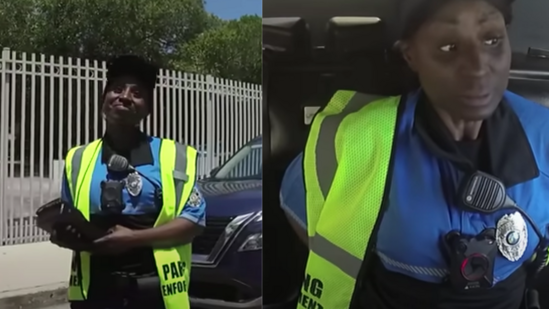
While the acting and visual presentation are impressively convincing, no official records or news reports support the claim that such an incident ever occurred. Furthermore, both individuals featured in the video have been confirmed as actors, not real law enforcement or city workers.
The video is a textbook example of what is sometimes called “rage bait”—content designed to provoke strong emotional reactions, particularly anger or indignation. This kind of media tends to go viral quickly, especially when it taps into existing social anxieties or public mistrust, such as the current climate surrounding law enforcement accountability. Though entertaining and well-produced, Bodycam Declassified’s videos are essentially fiction disguised as reality.
This blurring of lines between fact and fiction can have troubling implications. In an era where misinformation spreads rapidly and contributes to societal divisions, even fictional content—when not clearly labeled—can influence public perception and discourse in unintended ways. Critics of Bodycam Declassified argue that the channel is exploiting public distrust of police officers for profit and engagement, without taking responsibility for the confusion its content causes.
Public Reaction and the Problem of Misleading Content
The public response to the viral video was immediate and impassioned. Many users expressed disbelief at what they thought was an unjust arrest. Others rallied behind the parking worker, hailing her as brave and righteous.
“This is the content we need to see 😂,” one user posted. While some comments reflected humorous or supportive sentiments, others revealed a deeper concern about the unchecked power of law enforcement and the potential repercussions for standing up to it.
Unfortunately, because the video was convincingly edited and distributed without a prominent disclaimer, a significant portion of viewers remained unaware of its fictional nature.
Only after fact-checking and scrutiny did it become widely acknowledged that the footage was staged. Even then, some users continued to spread it as though it were real, either willfully ignoring the truth or failing to verify its source.
This incident is far from isolated. Bodycam Declassified has released several other videos in the same format, including one in which a blind man is falsely accused of carrying a weapon. Like the parking maid video, that clip also went viral, drawing outrage and disbelief before being debunked. These videos often lack context when they are clipped and shared on social media, making it easy for misinformation to spread.
Critics argue that while fictional content has its place, channels like Bodycam Declassified cross a line when they present dramatized videos in a style that mimics real events without clear, immediate disclosures. As social media continues to be a dominant source of information for many people, content creators have a responsibility to differentiate between storytelling and reality, especially when dealing with sensitive topics like police conduct and civil rights.
The issue also exposes a larger problem: the decline in media literacy. Many users, especially younger audiences, may not have the tools or critical thinking skills to differentiate staged content from actual documentation. This makes it easier for fake videos to shape public opinion, fuel outrage, or even influence political attitudes.
Platforms like YouTube, TikTok, and X have content policies regarding misinformation, but the lines become blurry when the content is technically fiction, yet presented in a way that strongly resembles real-world documentation. Some social media users have called for Bodycam Declassified to include more prominent disclaimers or to change its content labeling practices altogether.
In the meantime, the incident serves as a cautionary tale. Before reacting to viral content, it’s essential to verify the authenticity of the source, understand the context, and remain skeptical of media that appears too perfectly aligned with your own biases. As the digital landscape continues to evolve, so too must our capacity to navigate it responsibly.