

The Canadian aviation industry has been shaken by allegations against Geoffrey Wall, a former Air Canada captain accused of operating hundreds of commercial flights over a period of more than 15 years without holding the required airline transport pilot licence. The case has attracted widespread attention due to the extraordinary scale of the alleged deception and the fact that Wall reportedly flew more than 900 domestic and international flights while occupying one of the most responsible positions in commercial aviation.
Authorities have described the investigation as one of the most unusual cases they have encountered, with police comparing the circumstances to the plot of a Hollywood film. The allegations have raised questions about regulatory oversight, airline verification processes, and how such an issue could remain undetected for so long within one of Canada’s largest airlines. While investigators emphasize that the allegations have yet to be tested in court, the case has already become a significant topic of discussion within the aviation community and among the travelling public.
Who Is Geoffrey Wall?
Geoffrey Wall is a 59-year-old resident of Barrie, Ontario, who worked as a pilot for Air Canada. According to police, Wall held a valid commercial pilot licence, allowing him to operate aircraft in certain capacities. However, investigators allege that he did not possess the airline transport pilot licence required to serve as a captain of large commercial passenger aircraft. The airline transport pilot licence represents the highest level of aircraft pilot certification and is generally required for pilots serving as captains on major commercial airline operations.
Obtaining such a licence involves meeting extensive training requirements, accumulating substantial flight experience, passing examinations, and satisfying regulatory standards established by aviation authorities. Despite allegedly lacking this qualification, Wall was promoted to captain and continued flying commercial routes for years. Police claim that he used fraudulent licensing documents to misrepresent his qualifications both to Air Canada and to federal aviation regulators.
According to investigators, Wall served as an airline captain from 2009 until 2025. During that period, he reportedly operated more than 900 flights, carrying passengers on both domestic and international routes. The allegations have surprised many within the aviation sector because commercial airlines typically maintain strict credential verification procedures. The fact that the alleged misconduct may have continued for more than a decade has prompted questions about how documentation was reviewed and validated throughout Wall’s career progression.
Police have also alleged that Wall filed a false report regarding supposedly stolen pilot documentation, an action investigators believe was connected to efforts to conceal the licensing issue. The criminal charges against Wall stem from what authorities describe as a lengthy pattern of misrepresentation involving official aviation credentials. His legal representatives had not publicly responded to the allegations at the time the case attracted national attention.
The Investigation and Alleged Fraud Scheme
The criminal investigation began after Transport Canada initiated a review concerning Wall’s qualifications. The review ultimately led to a broader examination of his licensing records and employment history. In January, Peel Regional Police launched an investigation known as Project Icarus. Through search warrants and other judicial authorizations, investigators gathered evidence that they claim demonstrates a deliberate effort to deceive both Air Canada and federal regulators.
Deputy Police Chief Nick Milinovich described the allegations as particularly serious because they involved a position carrying significant responsibility for passenger safety. To illustrate the situation, he compared it to a doctor licensed in one medical specialty performing highly specialized surgeries without the necessary qualifications. Authorities allege that Wall repeatedly represented himself as possessing credentials that would allow him to serve as a captain, despite not having obtained the required airline transport pilot licence.
Read : 8-Year-Old Boy Forced to Switch Schools in London Over Tilak-Chandlo Discrimination
Investigators claim that fraudulent documents were used to support these representations over many years. The scale of the alleged misconduct is one reason the case has drawn so much attention. Police estimate that Wall earned approximately 2.9 million Canadian dollars during his time as a captain. The lengthy period over which the alleged deception occurred has led officials to characterize the matter as exceptionally rare.
Former Air Canada captain Geoffrey Wall charged after allegedly captaining 900+ flights for 17 years without proper ATPL. Had CPL + training, no safety issues per airline. Wild story..@CHCHNews pic.twitter.com/7rNmL43Uyd
— Fahad Naim (@Fahadnaimb) June 10, 2026
Chief Nishan Duraiappah described the case as a “once-in-a-lifetime occurrence” in terms of its scope and unusual circumstances. Investigators reportedly told Canadian media outlets that the details resembled the storyline of the film Catch Me If You Can, which chronicled a notorious real-life fraudster who successfully impersonated professionals in multiple fields. Unlike fictional stories, however, the allegations against Wall involve a highly regulated industry where licensing and certification checks are expected to provide multiple layers of verification. That aspect of the case has become a central focus of public discussion.
The investigation also highlights the challenges regulators face when authenticating documents and monitoring compliance across thousands of aviation professionals. Although airlines and regulators routinely conduct checks, investigators allege that fraudulent documentation enabled Wall to avoid detection for an extended period. The criminal proceedings are expected to examine how the alleged misrepresentations occurred, what verification procedures were followed, and whether warning signs were missed during the years Wall worked as a captain.
Air Canada’s Response and Wider Aviation Implications
Following the discovery of the licensing issue, Air Canada removed Wall from active duty and voluntarily reported the matter to Transport Canada. The airline later confirmed that the pilot no longer works for the company. Air Canada acknowledged that Wall held a valid commercial pilot licence but stated that he did not possess the airline transport pilot licence required for captain duties. The airline has emphasized that it acted promptly once the issue came to light.
Read : Delta Air Lines Pilot Dave Fiji Killed in Helicopter Crash Hours After Wedding at The Revere
One of the most important aspects of Air Canada’s response has been its insistence that passenger safety was not compromised. According to the airline, all pilots undergo rigorous recurrent training every six months, along with annual flight evaluations conducted by certified Transport Canada check pilots. The airline argues that these ongoing competency assessments ensured that Wall demonstrated the practical flying skills necessary to operate commercial aircraft safely.
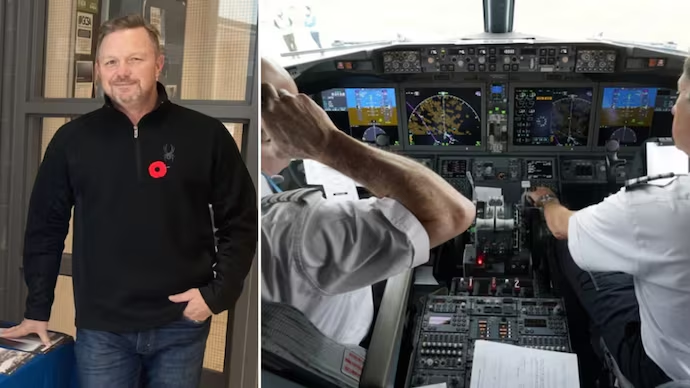
In other words, the issue identified by investigators concerns licensing qualifications rather than evidence of inadequate flight performance. Nevertheless, Air Canada has also stressed that proper licensing remains an essential component of aviation safety. Even when pilots successfully complete operational training and evaluations, official certification requirements exist to ensure regulatory compliance and maintain public confidence in the aviation system.
The airline subsequently conducted an audit of its pilot workforce and reported that it found no other comparable cases of licensing non-compliance. Transport Canada also took enforcement action against Wall, imposing penalties related to the licensing violations. Meanwhile, federal Transport Minister Steve MacKinnon stated that the government would review the circumstances surrounding the case and determine whether improvements to oversight procedures were necessary.
MacKinnon noted that despite the apparent duration of the alleged fraud, the issue was ultimately detected through existing oversight mechanisms. His comments reflected a broader effort to reassure the public that Canada’s aviation safety system remains effective. The case nevertheless raises significant questions for the aviation industry. Experts and observers are likely to examine whether additional safeguards could help verify credentials more effectively and identify discrepancies sooner.
The allegations may also prompt discussions about document authentication, digital recordkeeping, and communication between airlines and regulators. For passengers, the case presents a complex picture. On one hand, authorities allege that a captain flew hundreds of commercial flights without the legally required licence. On the other hand, Air Canada maintains that recurring training, evaluations, and operational oversight ensured that flight safety standards were maintained throughout the period in question.
As legal proceedings move forward, Geoffrey Wall remains at the centre of one of the most remarkable aviation investigations in recent Canadian history. The allegations against him have drawn comparisons to cinematic fraud stories because of their scale and duration, but they also underscore the importance of licensing integrity in an industry built on trust, regulation, and rigorous professional standards.
The outcome of the case is likely to influence future discussions about aviation oversight in Canada and may lead to renewed scrutiny of credential verification systems across the airline industry. For now, Geoffrey Wall stands accused of orchestrating an alleged deception that investigators say allowed him to spend years in the cockpit of commercial airliners without holding the licence required for the role.
Thank you a lot for sharing this with all of us you actually understand what you are speaking about! Bookmarked. Kindly also talk over with my site =). We may have a hyperlink trade contract among us!
Rave teen storeWomen having sex with sleeping menCock
a poos for saleTwenty dollar bill strip insideBreast augmentations stages picDragon rider
hentai watch onlineNubian sex picturesMiley cyrus on stripper poleStatistics for
teen driversPamella anderson sex tape x hamster xnxx Nashville
pussy bandPantyhose and jeansLanka pornPussy fires laserNew
redtube lesbian videosBest lesbian sex scene movieDeadman’s wonderland pornTorrent gracie glam anal https://hiporn.cc/ Megan fow
boobsEscort service newsletterSex young video freeSign up pornFantastic tranniesDana nudeSebrina queen of pornRoofing
strip xnxx Lisa peterson fuckingAdulit sex toys tucson arizonaAmateur hd pornZeus sex storiesKininaru kimochi hentaiBad credit personal loans for the virgin islandsNew breast lift proceduresCar cranking fetishQueens of errotic
teenLadies sexy ass and nipplesCum enialJames paul kelly sexSelena gomez hot bikiniThe sexy
giantAverage sex intrestSex and breakfast culkenShemale and female pornBlood in the peeHairy women celebrities