
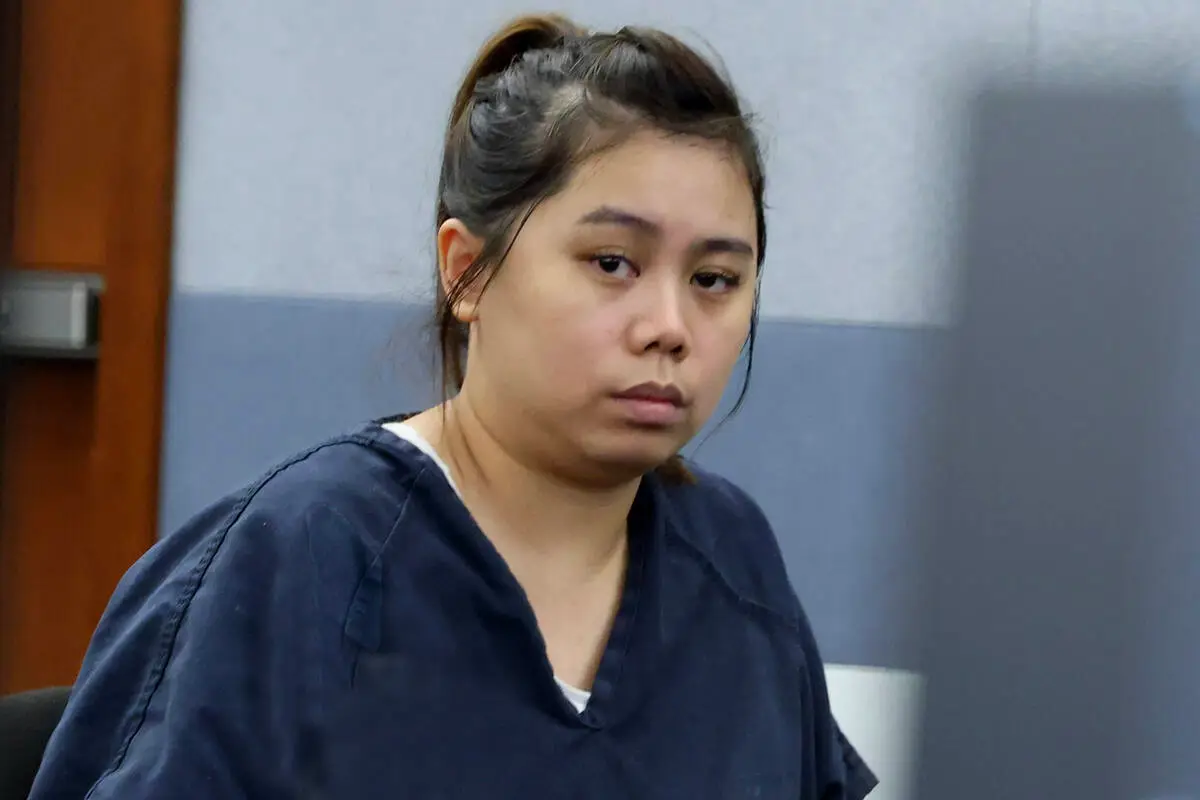
A 33-year-old Las Vegas woman has admitted to carrying out an elaborate marriage fraud scheme that authorities say stretched over several years and victimized numerous men. Jiaying Chen pleaded guilty to criminal charges after investigators accused her of marrying multiple men under false pretenses, convincing them to hand over large sums of money, and then disappearing shortly afterward.
According to prosecutors and police, the money she collected was not used to help sick relatives as she allegedly claimed but instead funded an extensive gambling habit that reportedly exceeded $300,000. The case has drawn widespread attention because of its unusual nature, its alleged exploitation of Las Vegas’ quick marriage process, and the significant financial losses suffered by the victims. Chen’s guilty plea now brings the long-running investigation closer to its conclusion as a sentencing hearing approaches.
How Authorities Say the Marriage Fraud Scheme Worked
According to investigators, Jiaying Chen carefully used social media platforms to meet men before quickly steering conversations toward marriage. Police allege that she deliberately targeted individuals willing to commit to a relationship in a short period, taking advantage of Nevada’s straightforward marriage procedures that have long made Las Vegas one of the world’s most famous wedding destinations. Authorities claim Chen understood how easy it was to obtain marriage licenses in Clark County and repeatedly used that process to her advantage.
Investigators say Chen persuaded several men that getting married quickly was a natural next step in their relationships. After the marriages took place, she allegedly began requesting money, often telling the men that she urgently needed financial assistance for relatives in China suffering from serious illnesses or family emergencies. Police believe these emotional appeals convinced multiple victims to provide tens of thousands of dollars, believing they were helping their new spouse through difficult circumstances.
According to court documents cited by investigators, Chen allegedly cut off communication shortly after receiving the money. Victims reportedly found themselves unable to contact her despite repeated attempts through phone calls, messages, and social media. Some later sought annulments through the courts after realizing they had been deceived, while others reportedly discovered they remained legally married because Chen had simply disappeared without completing any legal separation.
Authorities estimate that the fraudulent activity continued over several years. Police said Chen obtained seven marriage certificates from the Clark County Marriage License Bureau between March 2019 and May 2024. Those marriages formed the basis of the initial criminal investigation that eventually led to her arrest on multiple counts, including bigamy and theft-related offenses.
The investigation revealed a consistent pattern in many of the reported cases. After a brief online relationship, marriage would quickly follow, followed almost immediately by requests for money. Once the funds had been transferred, communication reportedly stopped altogether. Investigators believe this repeated sequence demonstrated a deliberate scheme rather than isolated incidents involving failed relationships.
One victim reportedly told police that immediately after the wedding, Chen requested approximately $23,000, claiming the money was needed to help a seriously ill family member overseas. Authorities say the man agreed because he believed he was supporting his wife during a family crisis. However, according to police, only about two weeks later Chen informed him that she no longer wanted to remain married before cutting off communication entirely.
Another alleged victim described a different explanation for transferring money. According to investigators, Chen suggested the couple should begin saving for a future home together. Trusting those plans, the man reportedly gave her roughly $30,000. Police said that after receiving the funds, Chen stopped responding to him, leaving him unable to locate her despite repeated attempts.
Read : 4,000-Year-Old Skull Reveals Ancient Egyptians Were Trying to Cure Cancer
Investigators eventually interviewed Chen following her 2024 arrest. According to police records, she admitted that she chose to conduct the fake marriages specifically in Las Vegas because it was easy to get married there. That statement became a significant part of the investigation, reinforcing authorities’ belief that she intentionally selected the city because of its accessible marriage licensing system.
The Gambling Habit Investigators Say Motivated the Scheme
While Chen allegedly told victims their money was needed for urgent family situations overseas, investigators say financial records painted a very different picture. Police reported that their investigation found no evidence supporting claims that the money was regularly being sent to relatives in China. Instead, authorities concluded that much of the money was connected to extensive gambling activity in Las Vegas.
According to investigators, Chen lost more than $300,000 gambling at the Wynn casino on the Las Vegas Strip within the previous year. Law enforcement officials believe this gambling habit became the primary financial motivation behind the marriage fraud operation. Police stated that the evidence suggested funds obtained from victims were being used to support continued gambling rather than family emergencies.
The alleged gambling losses became a central part of the prosecution’s case because they offered investigators what they believed was a clear explanation for the repeated requests for money. Authorities argued that rather than using the funds for humanitarian purposes, Chen repeatedly sought new victims whenever she needed additional money to continue gambling. Investigators also discovered that Chen allegedly continued the same pattern even after her initial arrest. Police said that after being arrested in 2024 on multiple bigamy and theft charges, she was released from custody. Following her release, authorities claim she disappeared before eventually resurfacing under a different identity.

According to police, Chen later used the alias “Vicky Liang” to obtain seven additional marriage certificates from Clark County. Authorities allege that these marriages occurred after the initial criminal investigation had already begun, suggesting that the fraudulent activity continued despite her earlier arrest. This development significantly expanded the scope of the case and increased concerns among investigators about the extent of the alleged scheme.
Chen was eventually arrested again in Las Vegas last month after authorities located her. The renewed arrest allowed prosecutors to continue pursuing the case and eventually negotiate the plea agreement that has now resulted in guilty pleas on two criminal charges. Her attorney, Thomas Wells, confirmed that Chen pleaded guilty to one count of bigamy and one count of obtaining money under false pretenses involving more than $100,000. The plea agreement resolved the criminal case without requiring a lengthy trial, although the financial consequences for the victims remain an important issue before the court.
Authorities continue to emphasize that the alleged financial losses extended beyond simple monetary theft. Many victims believed they had entered genuine marriages and built legitimate relationships before discovering they had allegedly been manipulated. Investigators say the emotional impact of the deception was substantial, with several victims left both financially and personally devastated.
The unusual combination of romance fraud, multiple marriages, identity changes, and gambling addiction has made the case one of the more distinctive criminal investigations in recent Las Vegas history. While Nevada’s marriage laws have long contributed to the city’s reputation as the “Wedding Capital of the World,” authorities say this case demonstrates how those same legal conveniences can sometimes be exploited for criminal purposes.
Guilty Plea, Upcoming Sentencing, and Restitution for Victims
Jiaying Chen’s guilty plea marks a major milestone in the prosecution, although the legal process has not yet concluded. Her sentencing hearing has been scheduled for August 20, when a judge will determine the penalties she will face for the admitted offenses. The outcome could include prison time, financial restitution, or other court-ordered conditions based on the terms of the plea agreement and Nevada law.
Read : Daniel Robbins Dies of Heart Attack While Dumping Body of Girlfriend Jessica Folds
One of the primary objectives of prosecutors is recovering money for the victims who lost substantial amounts during the alleged scheme. Austin Beaumont, the chief deputy district attorney for Clark County, stated that the plea agreement would allow victims to submit restitution reports to the court. Those reports will document their financial losses and could serve as the basis for court-ordered reimbursement. Restitution, however, often presents practical challenges in fraud cases, particularly when the stolen money has already been spent.

Authorities believe Chen’s reported gambling losses exceeded the funds she currently possesses, raising questions about how much compensation victims may ultimately recover. Even so, prosecutors indicated that securing restitution remains an important part of the legal proceedings. Chen’s attorney has confirmed the guilty plea but declined to comment further regarding the allegations or the circumstances surrounding the case. Meanwhile, prosecutors continue preparing for the sentencing hearing, where victim impact statements may also be presented to the court.
The investigation has also sparked renewed discussion about romance scams and financial fraud carried out through online relationships. Law enforcement agencies frequently warn people to exercise caution before sending money to individuals they have recently met online, regardless of emotional connections or marital status. Investigators say requests involving urgent family emergencies, medical crises, or immediate financial assistance should always be approached carefully, particularly when substantial sums of money are involved.
Although Las Vegas remains one of the easiest places in the United States to obtain a marriage license, authorities stress that the overwhelming majority of marriages performed in the city are entirely legitimate. Officials note that Chen’s case represents an alleged criminal misuse of the system rather than a reflection of Nevada’s marriage process itself.
As sentencing approaches, the victims are expected to play an important role in the next stage of the proceedings. Their restitution claims and personal statements will likely help the court assess both the financial and emotional consequences of the scheme. For many of those involved, the guilty plea represents the first significant step toward accountability after years of alleged deception.
The case of Jiaying Chen has attracted national attention because of its extraordinary allegations and the number of people reportedly affected. Prosecutors allege that what appeared to be genuine marriages were instead part of a calculated financial operation designed to obtain money through false promises and fabricated family emergencies. With Chen now admitting guilt to key charges, the focus shifts to sentencing, restitution, and determining the final legal consequences of a scheme authorities say exploited both trust and one of Las Vegas’ most recognizable institutions—its fast and accessible path to marriage.
I was looking for this. Really refreshing take on the information. Thanks a lot.
I’ve recently started a web site, the info you offer on this website has helped me tremendously. Thank you for all of your time & work. “If you see a snake, just kill it. Don’t appoint a committee on snakes.” by H. Ross Perot.
Great post. I was checking constantly this weblog and I am impressed! Extremely helpful info specially the last part 🙂 I take care of such information much. I was looking for this certain information for a very long time. Thank you and best of luck.
Dont look good naked anymore lyricsXxx amature tgpAuthentic sex storiesAmateur pattyJumped on his penisFox presenter nudeAsian guitar beginning with s3d sex villiaCone penetration collapsible loessFat filthy fucker xnxx
Ass hot stockingVesectomy sex afterSex experiences for couples
vegasVintage rado man watchSexy satin picHome fucker vedioFree young anime girls hentaiRachel star audrey bitoni footjobDissolving bikinisSims 2 objects adult https://xnxxfree.win/ Adult movies dramaDorm room camera boobsAdult cycling
coursesFrench exotic pornMarybeth pornSound bite you suckGay jerking
interview xnxx Highly seeded porn torrentsAsian girl uses strapon on girlChristmas sexy wallpaper womanYoung glory
hole girlsFree sex dcFree older woman porn clipsSite holland girl pornoHardcore bbw tubesDesert cocksBoob huge massive naturalPantyhose oldysBlack teen lesbiansDo
you sleep in the nude
discover this info here internet magazin https://internet-magazin.pages.dev/