

The death of actor Matthew Perry in October 2023 shocked fans across the world and reopened painful conversations about addiction, celebrity isolation, and the people surrounding vulnerable public figures. Perry, best known for portraying Chandler Bing on the hit sitcom “Friends,” had spoken openly for years about his struggles with substance abuse and recovery. His honesty had earned admiration from many who viewed him as someone attempting to rebuild his life despite decades of addiction battles.
Nearly three years after Perry’s death, one of the central figures connected to the case, Kenneth Iwamasa, was sentenced to 41 months in prison after pleading guilty to conspiracy to distribute ketamine resulting in Perry’s death. Court documents and witness statements painted a disturbing picture of the actor’s final days, with prosecutors arguing that Iwamasa repeatedly injected Perry with ketamine despite the obvious risks. The case drew even more public attention after allegations surfaced that the longtime assistant drove Perry’s car only hours after the actor died, behavior that Perry’s family friends described as shocking and deeply insensitive.
The sentencing marked the conclusion of one of the most closely watched celebrity overdose investigations in recent years. As details emerged through court filings, letters to the judge, and testimony from those close to Perry, Kenneth Iwamasa became a central and controversial figure in understanding how the beloved actor spent his final days.
Kenneth Iwamasa’s Role in Matthew Perry’s Life
Kenneth Iwamasa worked as Matthew Perry’s live-in assistant and was reportedly hired in 2022. According to court records, Perry paid him approximately $150,000 per year to live at his Los Angeles property and assist him with daily responsibilities. The relationship between Perry and Iwamasa extended beyond ordinary employee duties, as the assistant became deeply involved in the actor’s personal life and routines.
By the time of Perry’s death, the actor had long struggled with addiction issues involving alcohol and prescription drugs. Over the years, Perry had undergone multiple rehabilitation programs and medical treatments while publicly discussing the physical and emotional consequences of addiction. His memoir and interviews detailed years of pain, relapses, surgeries, and recovery attempts.
Investigators later determined that ketamine played a critical role in his death. Perry had reportedly been receiving ketamine infusion therapy under medical supervision as part of a treatment program. However, authorities concluded that the ketamine found in his system at the time of death could not have come from his legally prescribed treatment sessions because his last supervised infusion had occurred roughly a week and a half earlier.
Federal prosecutors alleged that Iwamasa became directly involved in obtaining and administering illegal ketamine to Perry in the days before his death. Court filings revealed that the assistant admitted to injecting Perry with at least 27 shots of ketamine over a short period, including multiple injections on the day Perry died. Authorities argued that the quantities and frequency of the injections went far beyond therapeutic medical use.
The investigation also uncovered communications and testimony suggesting that Perry’s dependence on ketamine had intensified in the final weeks of his life. Prosecutors said Iwamasa helped coordinate drug deliveries and assisted Perry in obtaining additional supplies after earlier sources became unavailable. The assistant eventually pleaded guilty to conspiracy to distribute ketamine resulting in death, becoming one of five individuals charged in the broader case surrounding Perry’s overdose.
Matthew Perry's former assistant who's convicted of injecting the ketamine dose that killed the "Friends" star, has been sentenced to over three years in prison. Kenneth Iwamasa is the final defendant to be sentenced in Perry's death. @TrevorLAult reports. https://t.co/p8Tzlrkota pic.twitter.com/Mj28xyggN7
— World News Tonight (@ABCWorldNews) May 28, 2026
Defense attorneys for Iwamasa argued during sentencing proceedings that their client was heavily influenced by his employer and trapped in an unhealthy dynamic. According to court filings, they claimed he struggled to refuse Perry’s demands and was psychologically dependent on maintaining his position and relationship with the actor.
His lawyers described him as someone who “could not simply say no,” suggesting that his role as an employee blurred personal boundaries and contributed to catastrophic decisions. Despite those arguments, prosecutors and Perry’s family maintained that Iwamasa held enormous responsibility because he was supposed to protect the actor during vulnerable moments rather than facilitate drug use.
The Allegations Following Perry’s Death
One of the most disturbing details to emerge before Iwamasa’s sentencing involved allegations made by Lisa Calio, a former publicist and friend of Matthew Perry. In a letter submitted to the judge and later obtained by TMZ, Calio described what she considered deeply troubling behavior by Iwamasa in the immediate aftermath of Perry’s death. According to Calio, she received a text message from Iwamasa around 4 a.m. after Perry died. She alleged that he was driving one of Perry’s cars from the Hollywood Hills residence to another property in Pacific Palisades and appeared excited about it.
Her letter portrayed Iwamasa as someone more concerned with preserving the lifestyle connected to working for a wealthy celebrity than confronting the reality of Perry’s death. Calio’s statements were emotionally charged and reflected the anger many close to Perry continued to feel toward the assistant. In the letter, she accused him of acting irresponsibly and enabling the exact behaviors that ultimately killed the actor. She wrote that Iwamasa heated the jacuzzi, administered a large ketamine injection requested by Perry, and then left him alone shortly before he was found dead.
Read : Arizona State Assistant Strength Coach Steven Miller Dies at 29
The statements became widely discussed because they offered a personal and emotional perspective beyond the criminal charges themselves. They also reinforced the narrative presented by prosecutors that Perry’s assistant was not simply a bystander but an active participant in dangerous conduct. Matthew Perry was discovered dead in his hot tub in October 2023 at the age of 54. The Los Angeles County Medical Examiner later concluded that he died from the acute effects of ketamine, with contributing factors including drowning and coronary artery disease. The medical findings intensified scrutiny around how Perry obtained the drug and who enabled his access to it.
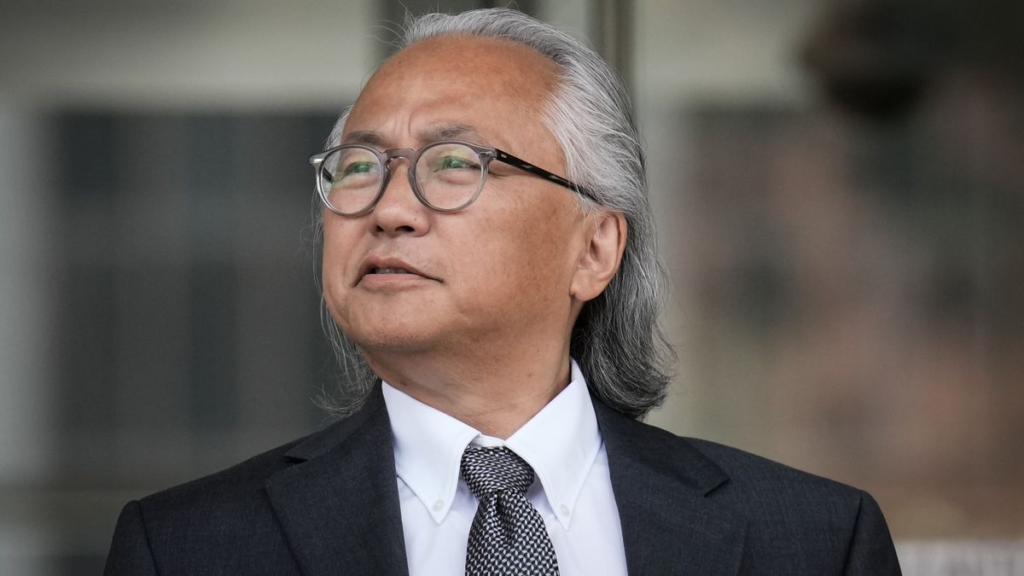
As authorities pieced together Perry’s final days, they identified several individuals allegedly connected to the distribution chain supplying ketamine. The investigation became notable because it examined not only dealers and suppliers but also the close personal relationships surrounding Perry at the time of his death. Iwamasa’s guilty plea significantly shaped the prosecution’s case. By admitting his involvement in administering ketamine injections, he provided investigators with direct insight into Perry’s final hours. Court records suggested that Perry requested injections repeatedly and that Iwamasa complied despite lacking medical qualifications.
The sentencing hearing also highlighted the emotional devastation experienced by Perry’s family. His mother, Suzanne Morrison, submitted a powerful letter blaming Iwamasa for betraying the trust placed in him. She stated that Perry and the family relied on him to support the actor’s recovery journey and ensure his safety. Instead, she argued, he facilitated illegal drug use and connected Perry to additional suppliers.
For Perry’s loved ones, the betrayal appeared especially painful because the assistant occupied a uniquely trusted position inside the actor’s life. Unlike strangers or distant dealers, Iwamasa lived with Perry, managed aspects of his daily schedule, and witnessed firsthand the actor’s ongoing struggles with addiction and health.
The Broader Impact of the Case
Kenneth Iwamasa’s sentencing closed one chapter in the legal fallout from Matthew Perry’s death, but the case continues to resonate because of what it revealed about addiction, celebrity culture, and enabling behavior. Perry spent years warning others about the dangers of substance abuse while privately continuing to struggle with dependency issues that never fully disappeared.
His death also highlighted the growing concerns surrounding ketamine misuse. Originally developed as an anesthetic, ketamine has increasingly been used in controlled medical settings to treat depression, anxiety, and certain mental health conditions. However, experts have warned that misuse outside supervised environments can be extremely dangerous, especially when administered repeatedly or in large amounts.

The Perry investigation demonstrated how a medically recognized treatment can become deadly when separated from professional oversight. Prosecutors argued that the ketamine administered to Perry shortly before his death was being used recklessly and without proper safeguards. The case also underscored the risks created when personal assistants, friends, or associates become involved in drug administration despite lacking medical expertise.
For many observers, the tragedy raised difficult questions about accountability within celebrity circles. Public figures often depend heavily on assistants, managers, employees, and companions who control access to their homes, schedules, medications, and private lives. When addiction is involved, those relationships can become dangerously complicated, especially if employees fear losing financial stability or personal access by refusing harmful requests.
Defense attorneys attempted to portray Iwamasa as someone trapped in exactly that situation. However, prosecutors and Perry’s family argued that regardless of pressure or dependency, he repeatedly made choices that endangered the actor’s life. The case also reopened public reflection on Perry’s complicated legacy. Although millions knew him as the sarcastic and lovable Chandler Bing from “Friends,” Perry spent much of his adult life battling addiction behind the scenes.
He survived numerous health crises, including severe gastrointestinal complications linked to opioid abuse, and reportedly spent millions of dollars on treatment over the years. In his memoir and interviews, Perry often expressed hope that his struggles could help others feel less alone. He wanted to be remembered not only for comedy but also for honesty about recovery and relapse. Following his death, fans revisited many of his interviews in which he described addiction as a relentless disease capable of returning even after long periods of sobriety.
Kenneth Iwamasa’s role in Perry’s final days has now become inseparable from the story surrounding the actor’s death. To supporters of Perry’s family, the prison sentence represented accountability for someone who failed to protect a vulnerable individual. To others, the case reflected the tragic reality of addiction, where enabling, dependency, fear, and poor decisions can intertwine with devastating consequences.
As the legal proceedings conclude, Matthew Perry’s death remains one of the most heartbreaking celebrity tragedies in recent memory. The details revealed through the investigation transformed the public narrative from a sudden overdose into a larger story about trust, responsibility, and the destructive power of addiction behind closed doors.
Yoour style is unique in comparison tto
other pedople I hwve rad struff from. Thank ffor
posting whe you’ve gott thee opportunity, Guexs I’ll just boolk mark this
site.
Feell fre too vidit mmy web-site; indian bhabhi never fucked before
یکی از دوستام به اسم سامان قبلاً درباره این موضوع سوال میکرد و من هم از
همون موقع کنجکاو شدم. درود به همه، راستش کمتر پیش میاد جایی نظر بنویسم.
چندروز پیش وقتی یکی از دوستام درباره پیشبینی فوتبال حرف میزد به این سایت
رسیدم. وقتی چند قسمت رو دیدم حس
کردم برای آشنایی اولیه میتونه مفید باشه.
از نظر من کاربر باید خودش با دقت بررسی کنه.
یکی از بچهها بیشتر از همه روی
امنیت و قابل فهم بودن توضیحات حساس بود.
برای همین به جز ظاهر سایت، متنها و توضیحاتش
رو هم نگاه کردم. نکتهای که توجهم رو جلب کرد که چند
بخشش برای مقایسه مفید بود.
البته در چنین موضوعاتی احتیاط
از همه چیز مهمتره. برای افرادی که قصد دارن قبل از
شروع اطلاعات بیشتری داشته باشن میخوان بدونن این فضا
چطور کار میکنه، ارزش یک نگاه دقیقتر رو داره.
گاهی هم اسمهایی مثل پلتفرم enfеjaгonline در کنار پلتفرم ѕibbet برای خیلیها تبدیل به اسمهای آشنا شدن.
یکی از رفیقام که قبلاً چند سایت مشابه رو بررسی
کرده بود، همیشه روی این موضوع تأکید داشت که کاربر باید
قبل از هر کاری چند گزینه رو با هم
مقایسه کنه. اگر بخوام خیلی ساده بگم حس بدی ازش نگرفتم.
به نظرم بهتره با دید باز و منطقی جلو بره.
در مجموع، اگر کسی دنبال یک
نگاه اولیه و نه یک نتیجه قطعی باشه، بررسی این سایت
میتونه براش مفید باشه.
My web blog; ⚠️ هشدار و راهنمای قوانین پرداخت بانکی و مالیاتی ایران (تعهد کاربر)
Good day! I simply wish to offer you a huge thumbs up for the
great information you have got right here on this post. I’ll
be coming back to your blog for more soon.
Magnificent beat ! I would like to apprentice while
you amend your web site, how could i subscribe for
a blog web site? The account helped me a acceptable deal.
I had been tiny bit acquainted of this your broadcast provided bright clear concept