
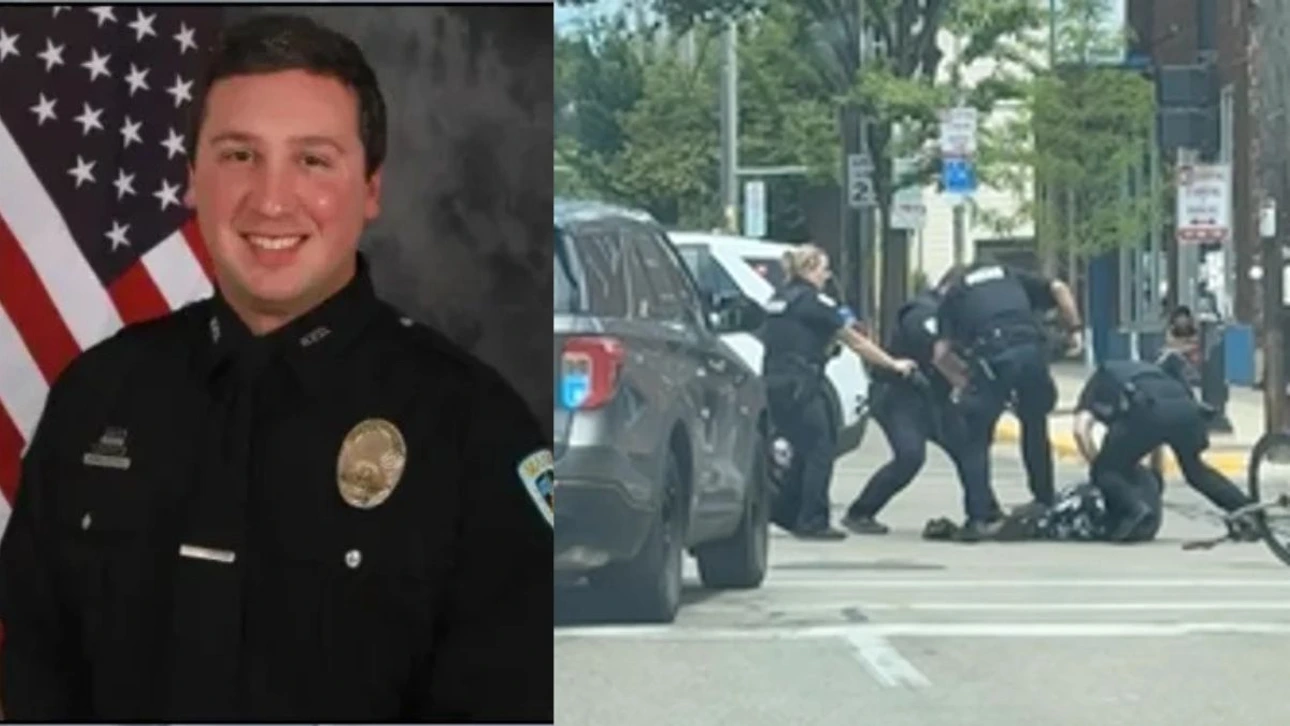
Kiel Baitinger-Peterson, a Madison police officer with nearly 11 years of law-enforcement experience, has been identified as the officer who fatally shot 38-year-old Corey Ruiz during a confrontation in Madison, Wisconsin, on July 22. The Wisconsin Department of Justice’s Division of Criminal Investigation identified Baitinger-Peterson as the officer who fired the shots that killed Ruiz, a Black man who was riding a bicycle when police confronted him following calls about a person allegedly checking parked cars and an attempted burglary. The shooting was captured by bystanders on video and quickly became the focus of public anger, protests and renewed demands for greater accountability in the way police interact with people of color.
The identification of Baitinger-Peterson comes as the state continues to investigate the circumstances surrounding Ruiz’s death. Four officers were involved in the confrontation, and all four have been placed on paid administrative leave while investigators examine what happened. According to the Wisconsin Department of Justice, two officers initially attempted to use Tasers on Ruiz, but the attempts were unsuccessful. Investigators said Ruiz then brandished a knife and injured Baitinger-Peterson, who subsequently fired the shots that killed him. Authorities have not publicly disclosed the extent of Baitinger-Peterson’s injuries, while a fixed-blade knife reportedly recovered at the scene has been released as part of the investigation.
The shooting has become a significant issue in Madison, where days of protests followed Ruiz’s death. His family and civil rights attorney Ben Crump have demanded accountability, while the police union representing Madison officers has urged the public not to prejudge the officers while the investigation remains underway. With no body-camera footage available because Madison police officers do not wear body cameras, investigators are examining bystander video, witness accounts and other evidence to determine exactly how the confrontation unfolded.
Kiel Baitinger-Peterson’s Background and Role in the Madison Police Department
Publicly available information released by investigators provides limited personal detail about Kiel Baitinger-Peterson, but officials have confirmed that he is a white police officer with nearly 11 years of experience in law enforcement. His professional background has now come under intense public attention because he was the officer who fired the fatal shots during the confrontation with Corey Ruiz. However, authorities have not released a detailed biography covering his entire law-enforcement career, previous assignments or other personal information, meaning much of the focus surrounding him currently relates directly to the July 22 shooting rather than his broader history as an officer.
Baitinger-Peterson was among four Madison officers who responded after police received reports concerning a person allegedly checking parked vehicles and an attempted burglary. Ruiz was on a bicycle when officers encountered him. The confrontation eventually escalated, according to the state Justice Department’s account, after officers attempted to use Tasers. Investigators said two officers tried to deploy their Tasers against Ruiz, but neither attempt was successful. The circumstances that led to the Taser attempts, as well as the precise sequence of events immediately afterward, remain central to the ongoing investigation.
According to the Wisconsin Department of Justice, Ruiz brandished a knife and injured Baitinger-Peterson during the confrontation. The agency has not publicly described the nature or severity of the officer’s injuries. Authorities did, however, release an image of a fixed-blade knife that investigators said was recovered at the scene. The evidence is expected to form part of the state’s review as investigators reconstruct the encounter and determine whether the officers’ actions were legally justified under Wisconsin law.
Baitinger-Peterson has not publicly provided his own detailed account of what happened. An email seeking comment from him did not receive a response. Jim Palmer, executive director of the Wisconsin Professional Police Association, which represents Madison police officers, issued comments on Baitinger-Peterson’s behalf. Palmer emphasized concerns about the safety and privacy of Baitinger-Peterson, his family and the other officers involved in the incident. He urged the public to allow the investigation to continue and cautioned against prejudging the officers before the state completes its work.
#NEW: The Wisconsin DOJ has identified the officer who shot and killed Corey Ruiz in Madison last month. Officer Kiel Baitinger-Peterson and three other officers remain on leave @WISN12News pic.twitter.com/xXvklZQwx8
— Gerron Jordan (@GerronJordan) August 10, 2026
The officer’s current status is also tied directly to the investigation. Baitinger-Peterson and the three other officers who interacted with Ruiz have been placed on paid administrative leave. Such leave allows investigators to examine the incident without the involved officers continuing their regular duties during the review. It does not itself establish wrongdoing or determine whether criminal charges will eventually be filed. The state Justice Department has not provided a timeline for completion of its investigation, leaving questions about Baitinger-Peterson’s future with the department unresolved.
What Happened During the Confrontation With Corey Ruiz?
The July 22 confrontation began with police responding to calls concerning suspicious activity involving parked vehicles and an alleged burglary attempt. Ruiz, 38, was riding a bicycle when officers encountered him. Four officers became involved in the confrontation, which was later recorded by people at the scene. The existence of bystander video has become particularly important because Madison police officers do not wear body cameras, meaning there is no police body-camera recording providing an official visual account of the encounter from the officers’ perspectives.
The state Justice Department has released some details about the confrontation but has not provided a complete reconstruction of every moment leading to the shooting. Investigators said two officers attempted to use Tasers on Ruiz, but the attempts were unsuccessful. The confrontation then escalated when, according to authorities, Ruiz brandished a knife and injured Baitinger-Peterson. The officer responded by firing his weapon, fatally shooting Ruiz. The precise positioning of the officers, the distance between Ruiz and Baitinger-Peterson, the timing of the Taser attempts and the moments immediately before the gunfire remain issues for investigators to examine.
Bystander video of the confrontation circulated after the shooting and contributed to the public reaction. The footage became a central part of the public discussion because it provided an independent recording of at least portions of the encounter. However, video captured from outside the police response may not show every angle or every detail of what occurred. Investigators therefore have to consider the footage alongside physical evidence, witness statements, police reports and other information gathered during the state investigation.
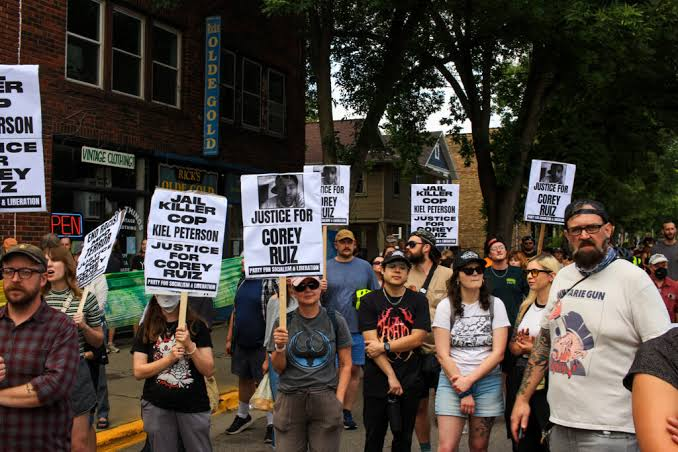
The death of Ruiz immediately generated anger within Madison’s Black community and among people demanding greater scrutiny of police use of force. Protests continued for several days, with demonstrators calling for racial justice and accountability. The incident also intensified broader conversations about how law-enforcement agencies respond to Black residents and whether officers should be required to wear body cameras. The absence of police-recorded footage has remained an especially important issue because a body-camera recording could potentially have provided additional information about what officers saw, heard and said during the encounter.
Authorities have maintained that the investigation must be allowed to proceed before conclusions are reached about whether Baitinger-Peterson or the other officers acted unlawfully. The state Justice Department is conducting the investigation, after which Dane County District Attorney Ismael Ozanne is expected to review the findings. The district attorney will then determine whether criminal charges should be filed against Baitinger-Peterson. At this stage, no decision on charges has been announced, and there is no stated timetable for when the investigation will be completed.
For Ruiz’s family, however, the central issue is accountability for his death. Civil rights attorney Ben Crump, who represents the family, has called for Baitinger-Peterson to be charged. The family’s response has helped keep public attention focused on the shooting and on questions about whether the use of deadly force was justified. Their position contrasts with the police union’s call for restraint while the investigation is underway, creating a sharply divided public debate over how the incident should be understood before prosecutors make a decision.
Investigation, Protests and What Happens to the Officer Next
The Wisconsin Department of Justice investigation will ultimately play a critical role in determining what happens next for Kiel Baitinger-Peterson. Because the shooting involved a Madison police officer and resulted in the death of Ruiz, investigators are examining the incident independently at the state level. Their findings will then be forwarded for review by Dane County District Attorney Ismael Ozanne, who will decide whether the available evidence supports criminal charges. Until that process is completed, Baitinger-Peterson remains on paid administrative leave along with the other three officers involved in the encounter.
Read : Bosnian Fan Group Supporters Charged After Throwing Objects at Officers During World Cup Opener
The investigation is likely to focus heavily on the circumstances surrounding the alleged knife attack and the use of deadly force. Investigators will need to establish exactly what Baitinger-Peterson knew and perceived at the moment he fired his weapon, what actions Ruiz took immediately before the shooting, and whether the officer’s response complied with applicable law and department policies. The recovered knife, witness statements and bystander recordings could all become important pieces of evidence. Investigators will also have to examine the actions of the other officers, including the unsuccessful Taser attempts that preceded the fatal shooting.
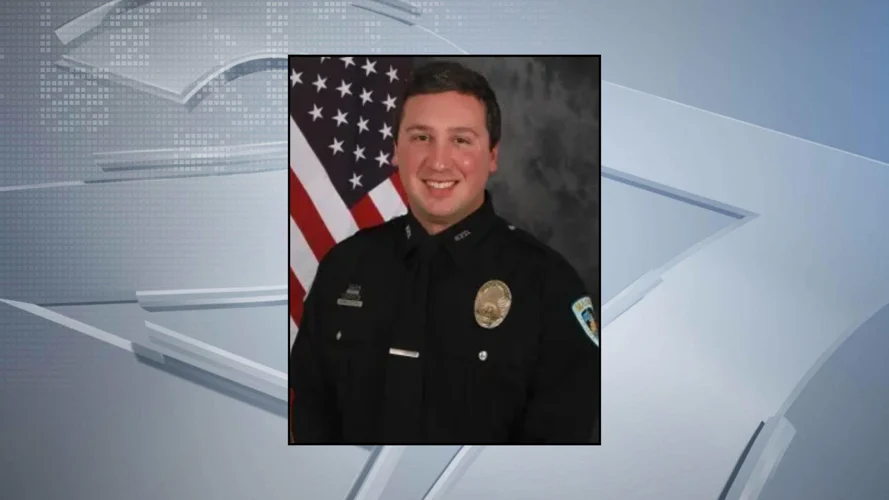
The absence of body-camera footage adds another layer of complexity to the investigation. Madison police officers do not wear body cameras, so there is no official body-camera recording from the officers involved. Instead, investigators must rely on footage recorded by members of the public and other available evidence to establish the sequence of events. The lack of police video has also become part of the wider public debate following Ruiz’s death, with questions about transparency and whether officers should be equipped with cameras becoming more prominent after the shooting.
The protests that followed Ruiz’s death demonstrated how deeply the incident affected Madison. Demonstrators gathered to demand justice and raise broader concerns about racial disparities and police treatment of Black residents. The protests continued for several days and contributed to heightened tensions across Wisconsin’s capital city. Several nearby community events were canceled or postponed because of the unrest surrounding the shooting, illustrating how the incident extended beyond the immediate confrontation and became a larger civic issue.
At the same time, Baitinger-Peterson’s supporters and the police union have emphasized the need to protect the officer and his family while the investigation continues. Jim Palmer, speaking for the Wisconsin Professional Police Association, said concerns about the safety and privacy of Baitinger-Peterson, his family and the other officers are being taken seriously. He called for appropriate precautions and urged people not to prejudge the officers or expose them and their families to additional risks while investigators determine what happened.
The eventual decision by the Dane County district attorney will represent the next major step in the case. If prosecutors determine that the evidence supports charges, Baitinger-Peterson could face criminal proceedings over Ruiz’s death. If prosecutors conclude that the evidence does not establish a criminal offense, charges may not be filed. Either outcome is likely to receive significant public attention because the shooting has already become a major flashpoint in Madison’s debate over policing, race and accountability.
For now, Kiel Baitinger-Peterson remains at the center of an investigation into a fatal police shooting that has divided public opinion in Madison. Officials have confirmed his identity, his law-enforcement experience and his role in the shooting, while investigators continue to examine the circumstances that led to Ruiz’s death. The evidence collected during the state investigation and the district attorney’s eventual decision will determine whether the case moves toward criminal charges, while Ruiz’s family and community members continue to seek answers about the events that ended his life.
Thank you for any other great article. The place else could anybody get that type of info in such an ideal means of writing? I’ve a presentation subsequent week, and I am on the search for such information.
Absolutely loving the vibe and the winning streaks I’ve had here. Definitely my new favorite spot. Visit pkxxxx555 for some action!
I’ve tried a few platforms recently, but this one is definitely my favorite. The games load fast and the payouts are fair. Highly recommend phokjili for anyone looking for some real excitement!