
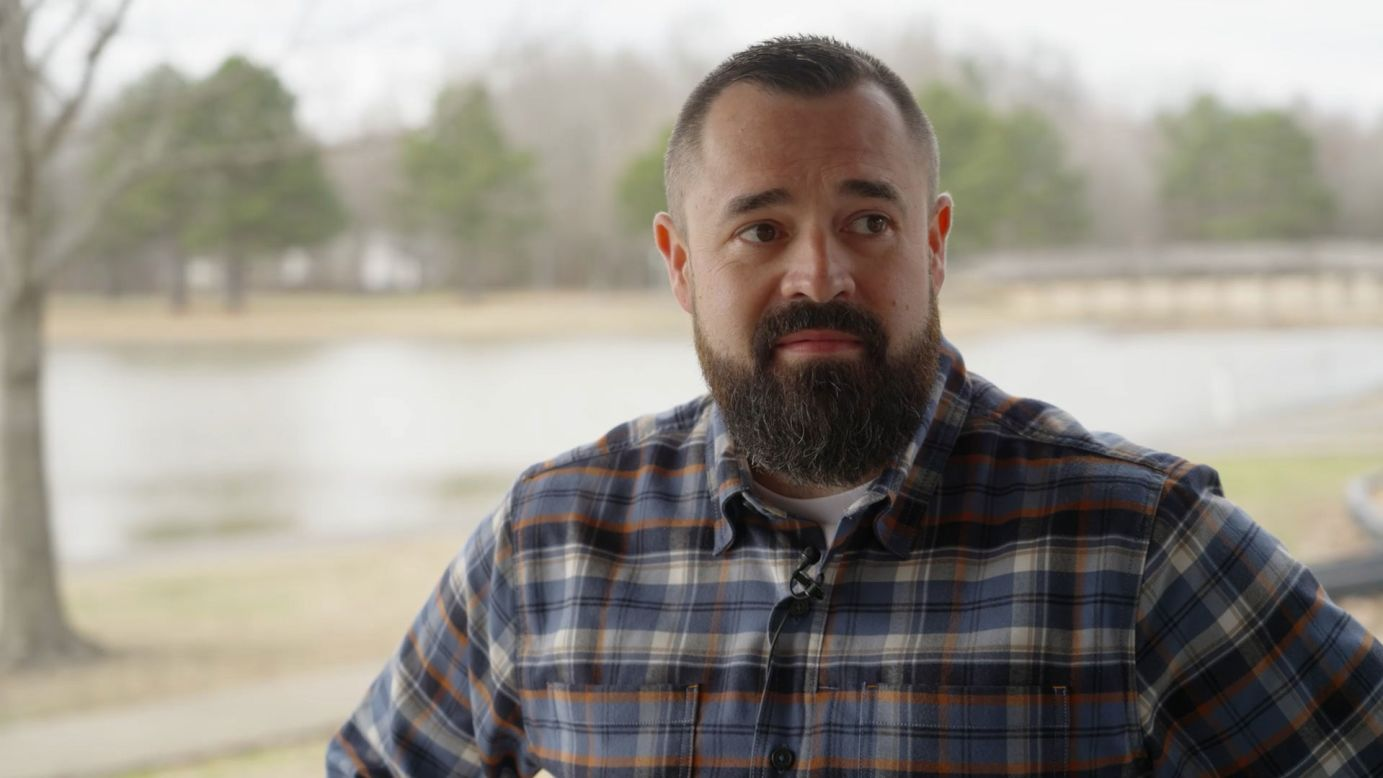
The dismissal of a second-degree murder charge against Aaron Spencer has brought a dramatic legal case in Arkansas to an unexpected conclusion. Spencer, who admitted to fatally shooting 67-year-old Michael Fosler in October 2024, had been preparing to stand trial later this month. Instead, a judge dismissed the case entirely, citing serious misconduct by law enforcement and the disappearance of critical evidence. The decision has reignited debate about parental protection, the responsibilities of law enforcement agencies, and the limits of taking action outside the legal system.
The case attracted widespread national attention because of the circumstances surrounding the shooting. Fosler had been facing numerous criminal charges involving Spencer’s teenage daughter, including allegations of sexual assault and internet stalking of a child. At the time of the shooting, Fosler was free on bond and awaiting trial. Spencer and his family argued that authorities had failed to adequately protect their daughter, leaving them fearful for her safety. Supporters viewed Spencer as a father acting to save his child, while critics warned about the dangers of vigilantism and bypassing the judicial process.
The dismissal now removes the most immediate legal obstacle facing Spencer, who is also the Republican nominee for sheriff in Lonoke County. The ruling has prompted strong reactions from both supporters and opponents, while raising questions about how evidence was handled and whether the criminal justice system failed multiple parties involved in the case.
The Events That Led to the Fatal Shooting
The events at the center of the case unfolded during the early morning hours of October 8, 2024. According to Spencer’s account, his teenage daughter disappeared from her bedroom during the night. Concerned for her safety, he began searching roads near his home in an effort to locate her. Spencer later stated that he found his daughter inside a vehicle being driven by Michael Fosler, a man who had already been accused of sexually assaulting her and who was subject to a no-contact order.
Fosler had become the focus of a major criminal investigation months earlier. Prosecutors had filed dozens of charges against him, including internet stalking of a child and sexual assault. The allegations involved Spencer’s daughter, who was only 13 years old at the time. Despite the seriousness of those accusations, Fosler had been released on bond while awaiting trial.
Spencer said that after locating the vehicle, he rammed Fosler’s truck off the road. A confrontation followed, during which Spencer shot and killed him. He never denied being responsible for the shooting. Instead, he openly acknowledged his actions and maintained that he acted out of a desperate need to protect his daughter from what he believed was an immediate threat. The case quickly became emotionally charged because of the underlying allegations against Fosler.
Many members of the public focused on the fact that the deceased man had been accused of crimes involving a minor and was awaiting trial on those charges. Others emphasized that regardless of the allegations, the legal system requires criminal accusations to be resolved in court rather than through private acts of violence. Spencer repeatedly defended his actions in public statements, arguing that any parent faced with the same situation would have reacted similarly. His legal team reinforced that position by claiming the family genuinely believed their daughter was in danger.
Read : Palitana: The World’s First Vegetarian City
Defense attorney Erin Cassinelli argued that Spencer and his wife feared the worst after discovering their daughter was missing and believed immediate action was necessary when they found her with Fosler. The circumstances made the case unlike a typical homicide prosecution. It became intertwined with questions about parental responsibility, self-defense, emotional distress, and the perceived failures of a criminal justice system that had allowed Fosler to remain free while awaiting trial.
Missing Evidence and Judicial Criticism of Law Enforcement
Although the facts surrounding the shooting were widely known, the legal battle increasingly focused on a separate issue involving evidence handling by law enforcement. The most significant controversy centered on an SD memory card that had been removed from a dashboard camera located inside Fosler’s vehicle. Spencer’s defense team argued that the memory card potentially contained crucial evidence about what occurred during the confrontation.
According to the defense, the footage could have provided valuable insight into the moments leading up to the shooting and helped establish the circumstances surrounding the encounter. However, the memory card eventually disappeared. Questions about its handling became a major point of contention as the case moved toward trial. Defense attorneys argued that the loss of the evidence severely compromised Spencer’s ability to receive a fair trial and sought dismissal of the charges.
Special Circuit Court Judge Ralph Wilson Jr. ultimately agreed that the situation was serious enough to warrant extraordinary action. In his ruling dismissing the case, Wilson stated that misconduct by law enforcement officials had been so severe that dismissal was justified. He acknowledged that throwing out a criminal case is an extreme remedy but concluded that the circumstances demanded such a response.
The judge’s criticism focused on failures by investigators to properly preserve and manage evidence. His ruling described conduct that he viewed as particularly troubling and inconsistent with the standards required in a criminal investigation. The disappearance of evidence that might have been relevant to determining the facts of the case became a central factor in his decision.

The issue also placed local law enforcement under scrutiny. Lonoke County Sheriff John Staley previously acknowledged that the memory card had disappeared while in the custody of a forensic unit associated with the Arkansas Attorney General’s Office. He stated that a detective reviewed the contents of the card and determined that it did not appear to contain evidentiary material before placing it back in the camera. At some point afterward, the card could no longer be located.
Following the dismissal, Staley publicly accepted responsibility for the detective’s failures. He stated that the investigator involved had been terminated and emphasized that leadership ultimately bears responsibility for the actions of subordinates. While Staley did not directly comment on the judge’s conclusions, he acknowledged that proper procedures had not been followed.
The ruling serves as a reminder of the importance of evidence preservation in criminal cases. Courts depend on law enforcement agencies to carefully collect, secure, and document evidence. When those obligations are not met, the integrity of a prosecution can be undermined. In Spencer’s case, the judge determined that the damage caused by the missing evidence was significant enough to prevent the case from moving forward.
Political Impact and Continuing Public Debate
Beyond its legal implications, the case has had a major impact on local politics and public opinion throughout Arkansas. One of the most surprising developments occurred when Aaron Spencer announced his candidacy for Lonoke County sheriff while still facing a murder charge. Despite having no prior law enforcement experience, the Army veteran positioned himself as a candidate determined to reform a system that he believed had failed his family.
Read : Derrick Green Charged with Murder of Wife and Her 11-Year-Old Daughter
His campaign resonated with many voters. In February, Spencer defeated incumbent Sheriff John Staley in the Republican primary election. The victory demonstrated the considerable support he had built within the community despite the pending criminal case. Many residents viewed him as a father who had been placed in an impossible situation rather than as a criminal defendant.

Public support extended far beyond Lonoke County. Social media campaigns attracted widespread attention, and online petitions calling for the dismissal of charges gathered hundreds of thousands of signatures. Supporters argued that Spencer had been forced to act because authorities failed to adequately protect his daughter from an accused predator. They viewed the prosecution itself as unjust and believed the criminal justice system had targeted the wrong individual.
At the same time, critics expressed concern about the broader implications of the case. They warned that sympathy for Spencer’s situation should not obscure the principle that criminal accusations must be resolved through legal channels. Some legal observers argued that allowing emotional circumstances to justify acts of violence could create dangerous precedents and weaken public confidence in the rule of law.
The dismissal does not necessarily settle those debates. Instead, it shifts attention toward the conduct of investigators and the procedural failures identified by the court. While supporters see the ruling as vindication, others may view it primarily as a consequence of evidentiary problems rather than a judgment on the underlying facts of the shooting.
For Spencer personally, the ruling represents the end of a lengthy legal ordeal. In public remarks following the dismissal, he thanked his family, supporters, and members of the community who stood by him throughout the case. He stated that his primary focus now is returning to normal life and protecting his family’s privacy after months of intense public attention.
Politically, the decision also strengthens his position as he prepares for the upcoming election. As the Republican nominee in a county that strongly favored Donald Trump in the 2024 presidential election, Spencer enters the general election in a favorable position. With the murder charge no longer pending, he is likely to continue presenting himself as a candidate shaped by personal experience and determined to improve the local justice system.
The case of Aaron Spencer will likely remain a subject of discussion long after the courtroom proceedings have ended. It combined allegations of child sexual abuse, questions about parental protection, concerns over law enforcement accountability, and a high-profile political campaign. The judge’s decision to dismiss the charge closes one chapter, but the broader debates about justice, accountability, and the limits of personal intervention are likely to continue for years to come.