
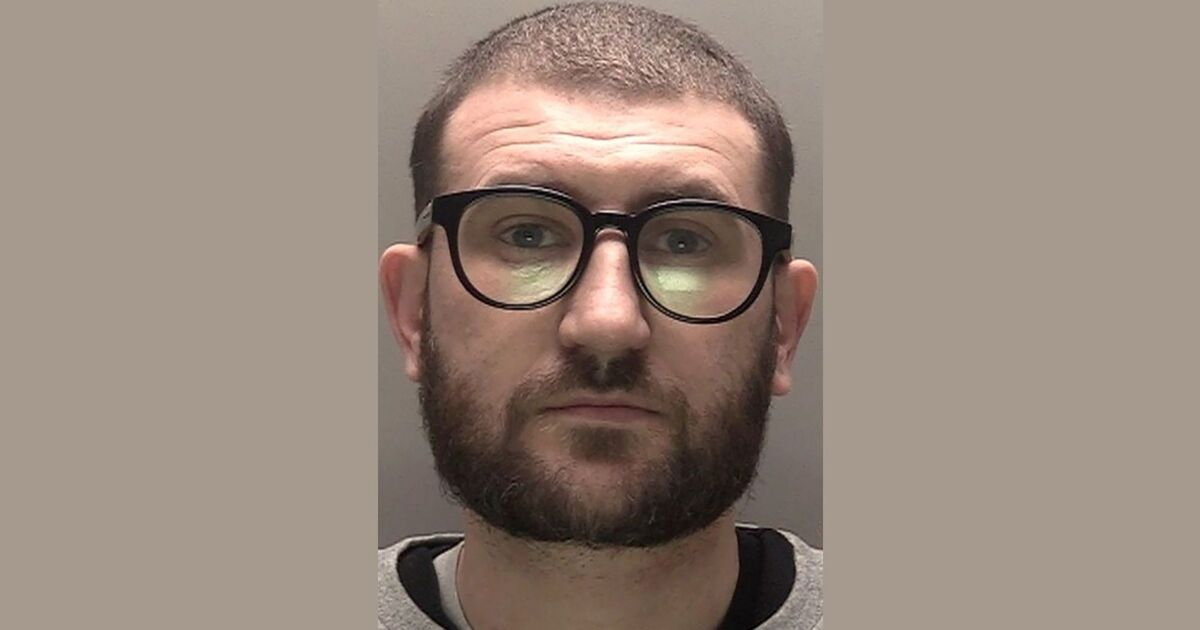
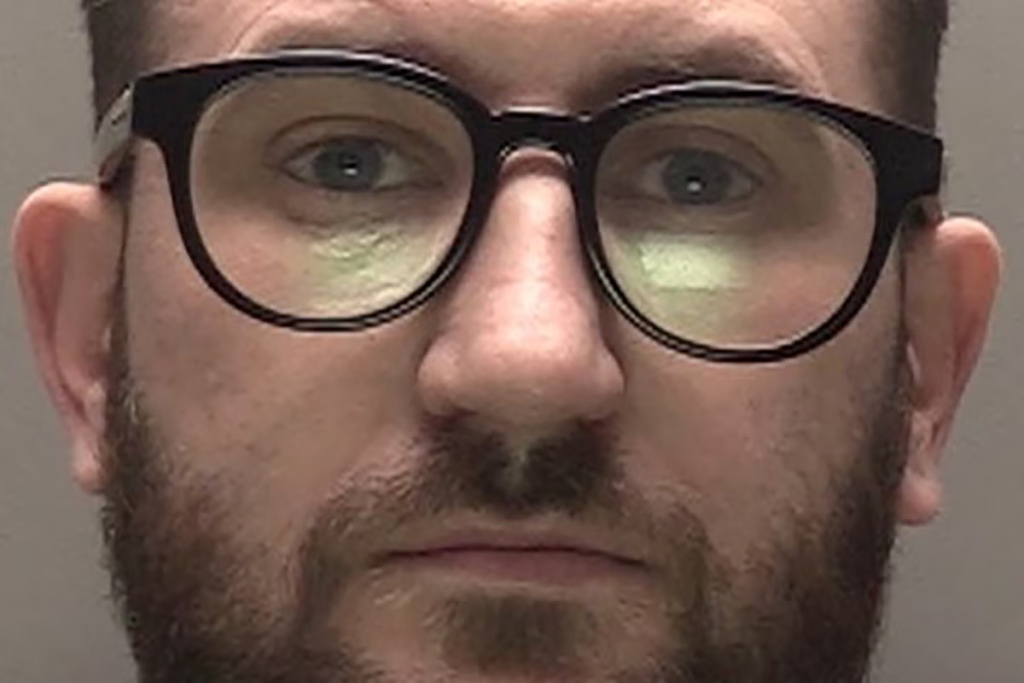
Nathan Owen, a 33-year-old man from Prestatyn, has been sentenced to four years and three months in prison after carrying out what a judge described as a calculated deception involving his electric Jaguar I-Pace. What initially appeared to be a terrifying mechanical failure on a busy motorway turned out to be a fabricated emergency designed to avoid financial obligations. Owen falsely claimed that his vehicle had accelerated uncontrollably and that he could not apply the brakes, triggering a major police response across Merseyside.
The dramatic incident unfolded over approximately 35 minutes as police officers risked their own safety believing they were responding to a genuine emergency. Investigators later established that the Jaguar had been functioning normally throughout the pursuit and that Owen had never attempted to brake. The case attracted widespread public attention, generated significant media coverage, and ultimately led to convictions for dangerous driving and fraud, raising broader questions about public trust, emergency services, and the consequences of deliberately misleading authorities.
The High-Speed Motorway Chase That Turned Out to Be a Hoax
The incident took place on 6 March 2024, when Nathan Owen contacted emergency services claiming that his electric Jaguar I-Pace had suffered a catastrophic malfunction. During the 999 call, Owen told the operator that his vehicle was accelerating uncontrollably and that he had lost the ability to slow down or stop. He insisted there was nothing he could do to regain control of the car, creating the impression that he was trapped inside a dangerous vehicle speeding across busy motorways. The situation immediately prompted a large-scale emergency response, with police believing they were dealing with a life-threatening technical failure involving an electric vehicle.
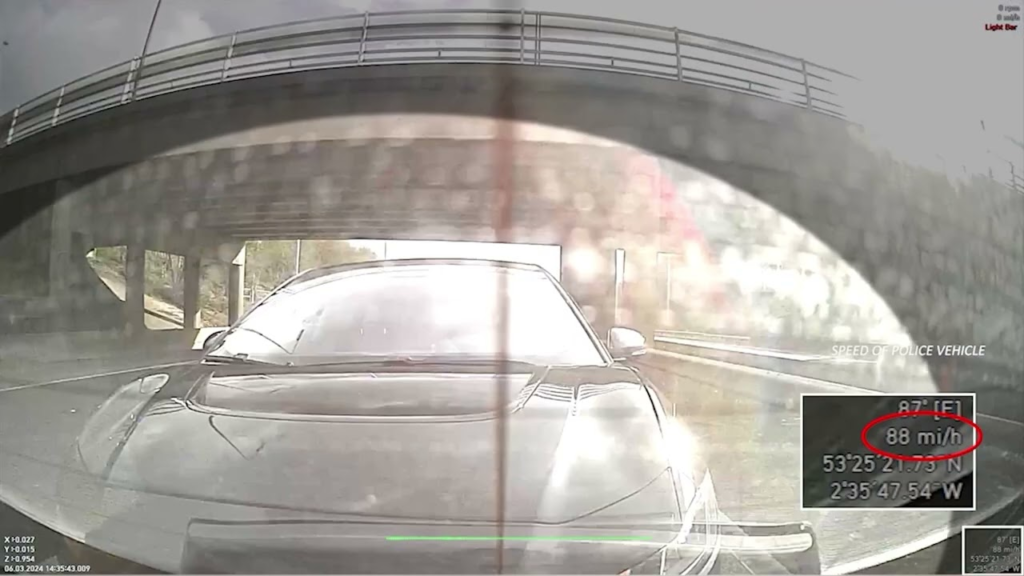
According to the evidence presented in court, Owen drove on the M58, M57, and M62 motorways in Merseyside at speeds reaching up to 86 miles per hour. The pursuit covered around 38 miles and lasted for approximately 35 minutes. Throughout the incident, officers worked to manage traffic, protect other motorists, and safely bring the vehicle to a stop. Believing Owen’s repeated claims that he could not brake, officers treated the situation as a genuine emergency requiring immediate intervention.
As police attempted to stop the Jaguar, Owen repeatedly collided with police vehicles. Court proceedings revealed that he struck a police car 31 separate times during the pursuit. These collisions significantly increased the danger facing officers who had positioned themselves in harm’s way under the belief that they were attempting to rescue a driver experiencing a serious mechanical failure. Every impact heightened the risks for both emergency responders and innocent motorists travelling on the surrounding roads.
The chase only came to an end when the Jaguar’s battery became depleted near Junction 12 of the M62 motorway. Rather than stopping because of any successful emergency manoeuvre or braking effort, the electric vehicle simply ran out of power. Once stationary, investigators observed evidence that immediately contradicted Owen’s earlier claims. Footage presented in court showed the brake lights illuminating after the vehicle had stopped, suggesting that the braking system was fully operational.
Perhaps even more significant was the detailed technical investigation that followed. Jaguar Land Rover worked alongside police investigators to analyse the vehicle’s electronic data systems. Modern electric vehicles record a wide range of operational information, including driver inputs. The examination established that the Jaguar had been functioning correctly throughout the incident. Investigators also discovered that Owen had not pressed the brake pedal at any point during the chase, directly contradicting his repeated assertions that the brakes had failed.
Read : Who Was Peter Mullis, Kaiser Permanente Employee Killed by Driver Fleeing Police?
Court evidence further undermined Owen’s version of events. Prosecutor Eric Lamb told the court that, despite Owen claiming his vehicle had already become uncontrollable when he contacted emergency services, the car was actually stationary at the time of the 999 call. This revelation demonstrated that the alleged emergency had been fabricated before the pursuit had even begun, reinforcing the prosecution’s argument that the entire incident had been deliberately staged.
Read : 161-Million-Year-Old World’s Largest Stegosaurus Skeleton Put on Auction in New York
Audio recordings from the emergency call were played before the court. Owen could be heard telling the operator that he was shaking with fear and that the vehicle had “gone crazy.” At the time, his emotional description persuaded emergency responders that they were dealing with an unfolding crisis requiring immediate assistance. The investigation later established that these statements formed part of a carefully constructed false narrative rather than a genuine plea for help.
Financial Problems, Fraud Charges, and the Court’s Findings
As investigators examined Nathan Owen’s circumstances, they uncovered what prosecutors argued was the true motive behind the elaborate deception. Evidence presented during the trial showed that Owen was experiencing considerable financial difficulties. Police discovered he had accumulated significant personal debt and had repeatedly missed payments relating to the finance agreement on his Jaguar I-Pace.
Court proceedings revealed that Owen still owed approximately £5,000 on the vehicle finance. On the day of the motorway incident, he had reportedly attempted to secure additional funds by applying for a loan. However, his application was unsuccessful. Prosecutors told the court that only minutes after being refused the loan, Owen made the emergency call claiming his vehicle’s braking system had catastrophically failed.
The prosecution argued that this sequence of events demonstrated clear planning rather than panic. According to the evidence, Owen manufactured the emergency in an attempt to create circumstances that could potentially free him from his financial responsibilities connected to the vehicle. The fabricated malfunction was not merely a false report but formed part of a broader scheme aimed at obtaining financial advantage through deception.
Investigators also discovered that Owen contacted the finance company just 40 minutes after the motorway incident had concluded. This timing further supported the prosecution’s argument that the financial implications of the vehicle had been central to his actions throughout the day. The case extended beyond the motorway pursuit itself. The court heard that Owen later received payments from two newspapers for telling his version of the story. He was paid £300 by The Sun and a further £500 by the Daily Mail after presenting himself as the victim of a terrifying vehicle malfunction.
These payments became additional evidence supporting the fraud allegations because the story he sold was ultimately found to be false. Throughout the investigation, Owen denied inventing the emergency for financial gain. However, the extensive technical examination carried out by Jaguar Land Rover, combined with financial records and digital vehicle data, painted a very different picture.
The electronic evidence became particularly significant because it objectively demonstrated that no brake application had ever been attempted during the pursuit despite Owen repeatedly insisting that the braking system had failed. In June, Owen pleaded guilty to dangerous driving and two counts of fraud. His guilty pleas brought an end to the criminal proceedings and acknowledged responsibility for both the dangerous manner in which he drove and the dishonest conduct surrounding the fabricated emergency.
During sentencing at Liverpool Crown Court, Judge Ian Unsworth KC strongly criticised Owen’s actions. The judge told him that his conduct had triggered a substantial police traffic operation, caused widespread public alarm, and resulted in significant disruption and financial costs. He emphasised that numerous police officers had willingly placed themselves in dangerous situations because they genuinely believed they were responding to a life-threatening emergency.
Addressing Owen directly, the judge stated that while officers had risked their own safety to protect him and the public, Owen had instead been attempting to profit from a lie. The sentencing remarks reflected the court’s view that the deception had gone far beyond a simple false statement and had deliberately exploited the professionalism and commitment of emergency responders.
The Wider Impact of the False Claims and Nathan Owen’s Sentence
The consequences of Nathan Owen’s deception extended far beyond his own criminal convictions. The false allegations concerning the Jaguar I-Pace generated extensive publicity, particularly because they involved claims about the safety of an electric vehicle apparently accelerating uncontrollably. Such allegations naturally attracted widespread public attention and raised concerns among existing owners and prospective buyers.
Jaguar Land Rover informed the court that the company experienced considerable reputational damage as a result of the false claims. According to a company statement, the allegations generated approximately 180 pieces of adverse media coverage. In response to the negative publicity, the manufacturer reportedly spent an additional £50 million on marketing efforts designed to counter the misleading impression created by the fabricated story and reassure consumers about the safety and reliability of its vehicles.
Read : Viral Chaos! Woman Asks Delivery Driver to Wait ‘Three Minutes’ While She Empties Her Old Fridge
The case also highlighted the growing importance of digital vehicle data in modern criminal investigations. Unlike older vehicles, many contemporary electric cars continuously record operational information that can later be examined by engineers and investigators. In Owen’s case, those electronic records became some of the strongest evidence presented during the investigation, objectively demonstrating that the vehicle’s braking system had functioned normally and that the driver had never attempted to use it.
Police also emphasised the substantial resources consumed by the incident. Officers from multiple units became involved in managing the pursuit, controlling motorway traffic, coordinating emergency responses, and attempting to bring the vehicle safely to a halt. Those resources were deployed because authorities believed they were dealing with an unpredictable mechanical emergency rather than a deliberately staged deception.
The risks created by Owen’s actions were equally significant. Police officers repeatedly placed themselves directly in the vehicle’s path while attempting controlled interventions designed to stop the Jaguar safely. The fact that Owen collided with police vehicles 31 times illustrated just how dangerous the pursuit became. Fortunately, despite the repeated impacts and the prolonged chase across busy motorways, the incident did not result in fatalities.
During mitigation, defence barrister Daniel Travers accepted that Owen’s behaviour had been “frighteningly stupid.” He informed the court that Owen had no previous criminal convictions and came from what he described as a successful and stable family. The defence also referred to comments made by Owen’s father, who described his son as a “Walter Mitty” character living in a fantasy world with grand ideas that often went wrong. While these observations were presented to provide personal context, they did not alter the seriousness with which the court viewed the offences.
Judge Ian Unsworth KC ultimately imposed a prison sentence of four years and three months. In addition to the custodial term, Owen was disqualified from driving for five years after his eventual release from prison. The driving ban reflected the court’s assessment that his conduct had demonstrated an exceptional disregard for public safety and the responsibilities associated with operating a motor vehicle. Nathan Owen’s case has since become one of the most unusual examples of a fabricated motoring emergency leading to serious criminal consequences.
What began as claims of an uncontrollable electric vehicle ultimately unravelled through detailed forensic analysis, financial investigation, and electronic vehicle data. Instead of proving a catastrophic mechanical defect, investigators established that the emergency had been deliberately manufactured, resulting in convictions for dangerous driving and fraud, a lengthy prison sentence, and a substantial driving disqualification after a motorway pursuit that unnecessarily placed police officers and members of the public in significant danger.
For an owner’s own SUV, the owner-authorized SUV kit keeps air-wedge and long-reach equipment in the same bag.
Your pets deserve the advantageously instinctive concern also. shop our https://www.cornbreadhemp.com/collections/thc-drinks survival of the fittest craft specifically for dogs and regorge postulate CBD for deary anxiousness or articulate endorse. word with pet-safe component, our CBD ducky vegetable oil and CBD frankfurter handle help oneself quieten neural ducky during storms or traveling. break your creature organic fertiliser CBD moderation as they old age. select lab-tested CBD for frankfurter, steal positron emission tomography CBD on-line, and relish ataraxis of mind sleep with your furry friends start high-quality, good CBD!
My brother recommended I might like this web site. He was once entirely right. This put up actually made my day. You cann’t believe just how so much time I had spent for this info! Thanks!
Best experience I’ve had in a while. Everything is set up perfectly and the customer support team is very helpful and polite. 33jilicom