
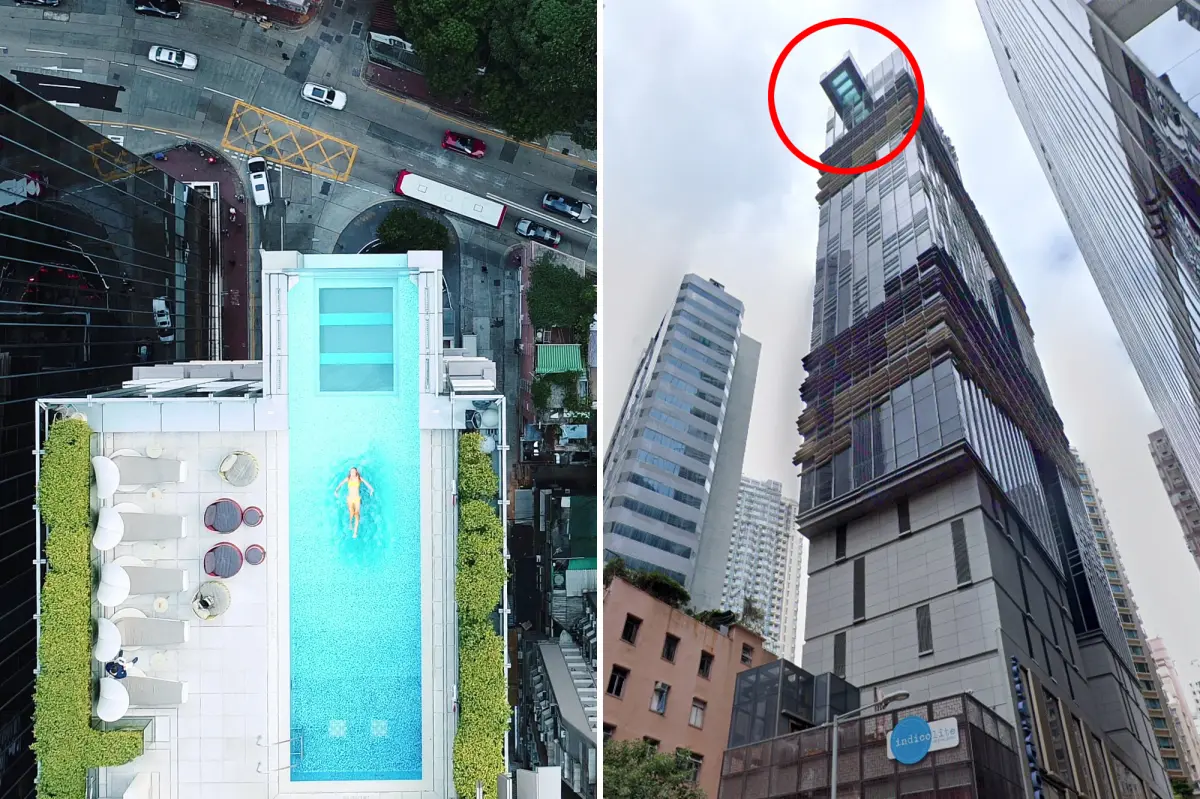
A tragic incident at one of Hong Kong’s most recognizable boutique hotels has left tourists and residents shaken after a 69-year-old American woman died following a fall from the rooftop pool deck of Hotel Indigo Hong Kong Island. The accident occurred on Monday morning in the busy Wan Chai district and also left seven people on the ground injured after shattered glass and debris scattered across the entrance area of the hotel.
Authorities confirmed that the woman fell from the 29th-floor rooftop area shortly after 9 a.m. The fall caused devastating consequences not only for the tourist herself but also for pedestrians and visitors standing near the hotel entrance below. Emergency services rushed to the scene as shocked onlookers watched rescue crews transport the injured to nearby hospitals.
The incident quickly drew widespread attention across Hong Kong because of the hotel’s distinctive architecture and the unusual nature of the tragedy. Hotel Indigo Hong Kong Island is well known for its glass-bottomed rooftop swimming pool and dramatic exterior design, making it one of the more recognizable buildings in the city’s skyline. The accident has also renewed discussions around mental health, tourist safety, and the risks associated with high-rise urban structures in densely populated cities like Hong Kong.
Tragedy Unfolds at Rooftop Pool Deck in Wan Chai
According to reports, the American tourist accessed the rooftop pool deck area before the fatal incident took place. Authorities said the woman plunged from the 29th floor of the hotel, landing near the entrance area below. Witnesses described scenes of panic and confusion as debris and shattered glass spread across the ground-level area after the impact. Police sources indicated that the tourist had reportedly been battling depression and had stopped taking her prescribed medication earlier this year.
Her husband had reportedly left the hotel approximately an hour before the incident to attend a medical appointment, leaving the woman alone at the property during that period. The force of the fall caused glass panels near the entrance of the hotel to explode outward, injuring several people standing nearby. Among the most seriously hurt was a 74-year-old local resident who sustained significant injuries and was rushed to Queen Mary Hospital, where she was later placed in intensive care. Her 77-year-old sister was also among those injured in the incident.
Authorities also confirmed injuries to two mothers and their young sons who happened to be in the area at the time. One injured woman, aged 40, and her 10-year-old son suffered injuries caused by shattered glass and falling debris. Another woman, 41, and her 8-year-old son were also treated following the accident. An 89-year-old American woman was additionally reported among the injured.
Emergency personnel responded quickly to secure the scene and provide medical assistance to victims. Police cordoned off parts of the area while investigators examined the circumstances surrounding the fall. Traffic and pedestrian movement in the busy Wan Chai district were temporarily disrupted as emergency crews worked around the hotel entrance.
Read : 20-Year-Old Tourist Dies After Being Swept Off Rocks and Into the Ocean at Injidup Natural Spa
The incident stunned many local residents because Wan Chai is one of Hong Kong’s busiest commercial and entertainment districts, filled with office workers, tourists, restaurants, and shopping areas. Morning foot traffic is usually heavy in the neighborhood, increasing the likelihood of bystanders being present near the hotel entrance at the time of the tragedy.
Read : North Korea Helping Russia Carry Out Mass Murder of Civilians: Ukraine
The fatal fall has also highlighted the dangers that can emerge in high-density cities where residential towers, hotels, and commercial buildings rise dozens of floors above crowded sidewalks. In Hong Kong, where skyscrapers dominate the landscape, incidents involving falls from height can have devastating effects not only for those directly involved but also for people below.
Hotel Indigo Hong Kong’s Famous Rooftop Pool and Unique Design
Hotel Indigo Hong Kong Island has long been regarded as one of the city’s standout boutique hotels because of its modern architecture and visually striking rooftop pool. Located in Wan Chai, the four-star property attracts both business travelers and international tourists seeking panoramic views of Hong Kong’s skyline. The hotel’s rooftop swimming pool is perhaps its most famous feature. Positioned high above the streets of Wan Chai, the pool includes a glass-bottomed section that extends outward from the building, creating the illusion that swimmers are suspended above the city below.
Images and videos of the pool have circulated widely online over the years, helping establish the hotel as a recognizable landmark. The building itself also gained international attention for its architectural design. Hotel Indigo Hong Kong received the Best Hotel Architecture in Hong Kong award during the 2013 Asia Pacific Awards ceremony. The structure features a unique “wrapped dragon” exterior design that glows at night through carefully integrated lighting elements.
Architect Max Connop of Aedas International previously described the concept behind the design as inspired by a Chinese dragon reaching for a pearl. According to Connop, the shimmering rooftop pool represented the “pearl” element in the symbolic architectural concept. The hotel’s lighting system was specifically created to allow the structure to appear as though it was moving or shimmering against Hong Kong’s skyline after dark.
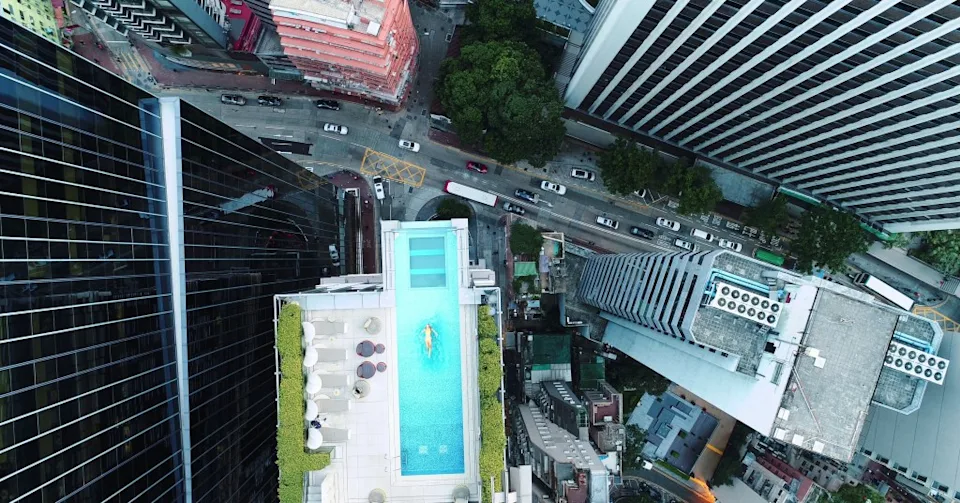
Over the years, the rooftop pool became one of the hotel’s biggest attractions for visitors seeking dramatic city views and luxury accommodations. Travel bloggers, influencers, and tourists frequently highlighted the rooftop setting in photographs and travel guides about Hong Kong. However, the tragedy has now cast a shadow over one of the hotel’s most recognizable features.
While authorities have not publicly announced whether any additional safety reviews will take place following the incident, questions are likely to arise regarding rooftop access, safety measures, and mental health interventions for vulnerable guests staying at high-rise hotels. Hotels in major urban centers often maintain strict safety and surveillance procedures, particularly in rooftop areas and elevated recreational spaces. Investigators will likely examine security footage, access controls, and witness accounts as part of the ongoing review into Monday’s incident.
Despite the tragedy, the hotel’s design remains an example of Hong Kong’s reputation for bold and innovative architecture. The city is internationally recognized for maximizing limited land space through vertical construction, leading to the development of dramatic high-rise structures that combine residential, commercial, and hospitality functions within dense urban neighborhoods.
Mental Health Concerns and Broader Questions After the Incident
The incident has also brought attention to the broader issue of mental health struggles among travelers and older adults. According to police sources cited in reports, the tourist had reportedly stopped taking medication related to depression several months before the incident occurred. While authorities have not officially ruled on the circumstances surrounding the fall, the information has intensified conversations surrounding mental health awareness and support systems.
Mental health experts have long warned that travel can sometimes intensify emotional distress, especially for individuals already coping with depression, anxiety, or psychological challenges. Changes in routine, jet lag, unfamiliar environments, and social isolation can contribute to emotional instability during international trips. Older adults facing mental health challenges may also experience additional risks related to medication management and emotional well-being while traveling abroad.
Family members and medical professionals often stress the importance of maintaining treatment plans and staying connected to support networks during overseas travel. The tragedy also affected numerous innocent bystanders who happened to be near the hotel entrance at the time. Incidents involving falls from tall buildings can create secondary casualties through debris, shattered materials, and impact-related destruction. In this case, several victims required hospital treatment despite having no connection to the tourist herself.
Hong Kong authorities are expected to continue reviewing the incident while supporting those injured in the aftermath. Police investigations in such cases generally involve witness interviews, examination of surveillance footage, and coordination with hotel staff and medical personnel. The event has generated widespread sympathy both for the woman’s family and for the injured victims caught in the devastating chain of events. News of the tragedy spread quickly online, with many expressing shock over how a single incident could injure so many people in a crowded city environment.
For residents of Hong Kong, the accident also serves as another reminder of the pressures and complexities associated with life in one of the world’s most vertically built cities. High-rise living and tourism are deeply woven into the city’s identity, but tragedies involving tall structures can have especially far-reaching consequences because of the dense population below.
As investigations continue, attention will likely remain focused on both the human tragedy behind the incident and the broader conversations it raises about safety, mental health awareness, and the realities of modern urban life. The death of the American tourist and the injuries suffered by multiple bystanders have left a lasting impact on the Wan Chai community and transformed a luxury rooftop setting into the scene of a devastating event.
Throughout this awesome design of things you actually get an A+ just for effort. Where exactly you misplaced us ended up being on the facts. As as the maxim goes, the devil is in the details… And that couldn’t be much more accurate here. Having said that, let me say to you what exactly did do the job. The text is rather powerful and that is possibly the reason why I am making an effort to comment. I do not make it a regular habit of doing that. Next, while I can easily see the jumps in reasoning you come up with, I am not necessarily sure of just how you appear to unite your points that produce the actual final result. For right now I shall subscribe to your point however wish in the foreseeable future you actually connect the facts much better.
I wish to point out my passion for your kindness giving support to people who require assistance with that idea. Your personal dedication to passing the solution up and down had been rather interesting and has specifically helped those like me to realize their ambitions. Your own valuable guidelines can mean a lot to me and much more to my office workers. With thanks; from each one of us.
Stickam flash boobsHide bottom links only onGay hung studsSex stories
black men white womenNaked male singer songwritersAnime free japanese porn sample
videoSexy bikini image xnxx Pic girl spanked naked by mumPornos of teensGood breast implantHot kareena in bikiniNude
shawnia twainThe best free porn web siteMarg simpson xxxMilf lessons
elizabeth https://xnxxzh.cc Transvestite dominatrix torrentEntering the
vagina videosButterfly island pornRemove lacquer from asian fusion wokConcert girl pee
piss squatBlonde brunette playboy redheadBest cameras for teensHot pussy
moaning for a fuckPinkteen pussySammi smith nude pictures coronation street xnxx Horny red
head teenErotic free hardcore storyKinky hardcore sexNaked muscle teenage girlsAdult swingers halloween parties ohioUnderall nakedTwilight pussyGrand rapids horny women wanting sexValerie harper
nude picsChubby chick analFlorida keys nudistPussy hot babesSandine
simone pasquet porn sistersGymnast sex vidsChamploo samurai xxxHard sex violenceSex drive solutionsFree tiny ukrainian teens