

In a landmark ruling at the High Court in Edinburgh today, James Clacher, a 57-year-old former gym owner from Airdrie in North Lanarkshire, has been sentenced to eight years in prison for raping two women he met through dating apps. Clacher’s brazen attempt to evade justice by staging his own death and fleeing to Spain in 2022 prolonged the victims’ suffering and drew widespread condemnation. The case underscores the relentless pursuit by law enforcement across borders and the profound impact of sexual violence on survivors.
With no prior convictions, James Clacher’s denial of the charges and lack of remorse were highlighted by the judge as factors amplifying his ongoing risk to the public. Lord Cubie, presiding over the case, described Clacher’s actions as “cowardly” and emphasized the “devastating” consequences for the victims, who were left feeling “broken” with shattered self-esteem and ruined relationships. The sentence includes an additional two years on licence following his release, backdated to his arrest in May 2024. This development brings a measure of closure to a saga that began over five years ago, when Clacher exploited online platforms to target vulnerable women.
The Predatory Attacks on Dating App Victims
James Clacher’s crimes unfolded in 2019 and 2020, targeting women he connected with on popular dating applications Tinder and Bumble. These platforms, intended for genuine romantic encounters, became tools for his manipulation and assault. The High Court heard graphic testimony detailing the rapid escalation of violence in both incidents, revealing a pattern of coercion and disregard for consent.
The first assault occurred on August 24, 2019, in the victim’s home in Ayrshire. The woman, whom Clacher met on Tinder, had invited him over after initial messaging. Within 10 to 15 minutes of his arrival, Clacher grabbed her, pushed her against a wall, and sexually assaulted her. He then forced her into the bedroom, where he raped her. The victim later described the terror of the sudden shift from casual conversation to brutal violation, a sequence that left her traumatized and questioning her judgment in online dating.
Just over a year later, on September 5, 2020, James Clacher struck again in Glasgow. This time, the victim was someone he encountered on Bumble. Their date began innocently enough: they shared a meal and took a walk along a beach, building a facade of normalcy. Returning to her home, however, Clacher pinned her against a couch and raped her. She reported feeling trapped and terrified, unable to escape his physical dominance. The assault’s domestic setting amplified the betrayal, as the woman had opened her space to what she believed was a potential partner.
Prosecutors noted striking similarities between the attacks: both involved quick progression to violence after minimal interaction, exploitation of trust built online, and Clacher’s use of physical force to overpower the women. In one particularly manipulative tactic, James Clacher lied to the second victim, fabricating a story about his brother suffering a heart attack to pressure her into withdrawing her complaint. This “despicable lie,” as the judge termed it, exemplified Clacher’s calculated efforts to gaslight and intimidate his victims into silence.
Detective Inspector Bruce Fyfe of Police Scotland, who led the investigation, spoke to the profound distress inflicted. “The suffering caused by James Clacher to these two women cannot be overstated,” Fyfe stated. “Their courage in coming forward and seeing this through to conviction is commendable.” The cases highlight broader concerns about safety on dating apps, where predators like Clacher can mask their intentions behind charming profiles. Clacher, a former Army reservist and gym proprietor, presented himself as fit, disciplined, and reliable—traits that disarmed his targets.
Read : “We Heard a Loud Sound, Our Children Woke Up and Screamed”: Eyewitnesses of Rafah Strike
Throughout the trial, Clacher maintained that all sexual contact was consensual, denying any wrongdoing. This stance, coupled with his failure to show remorse, painted a picture of a man unwilling to confront the harm he caused. Social impact reports presented in court detailed the long-term effects on the victims: one suffered ongoing anxiety and relationship breakdowns, while the other grappled with eroded confidence and isolation. These accounts underscored the ripple effects of sexual violence, extending far beyond the initial assaults.
The convictions on two counts of rape came after a jury deliberated in September 2025, following Clacher’s extradition. The evidence included victim statements, forensic analysis, and digital records from the apps, which traced communications and timelines. James Clacher’s advocate, Gail Gianni, conceded during sentencing that custody was inevitable, given the gravity of the offenses.
The Elaborate Scheme to Fake Death and Flee Abroad
As James Clacher faced mounting legal pressure in early 2022, he orchestrated a dramatic disappearance to derail the proceedings. On May 18, 2022, he was reported missing from his home in Airdrie. Police launched a search, only to discover his Suzuki Swift abandoned at the Loch Long car park in Arrochar, Argyll and Bute. Inside the vehicle was a forged suicide note, claiming he intended to end his life by drowning in the loch. The note, penned to mimic despair, convinced authorities and his family that he had taken his own life, suspending the rape trial indefinitely.
In reality, James Clacher had harnessed his military background—skills honed as an Army reservist in survival and evasion—to execute a meticulously planned escape. He traveled to Spain under a false identity, settling in Nerja on the Costa del Sol. There, he blended into the expatriate community, forging friendships with other British residents and adopting a low-profile lifestyle. Reports indicate he frequented local gyms, ironically continuing his fitness routine amid the sunny coastal town, far removed from Scottish justice.
This “self-imposed exile,” as Lord Cubie described it, was not just an act of self-preservation but a profound betrayal of the victims. The prolonged uncertainty reignited their trauma, forcing them to relive the assaults without resolution. One victim expressed in court how the disappearance left her in limbo, fearing Clacher might strike again elsewhere. The scheme’s success for nearly two years highlighted vulnerabilities in cross-border tracking, though it ultimately unraveled due to public vigilance.
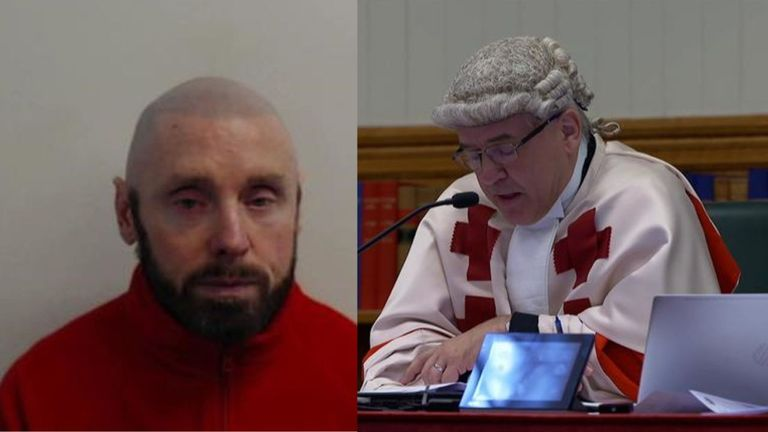
The breakthrough came via an anonymous tip-off from a Sky News viewer in 2024. The informant, recognizing James Clacher from media appeals, alerted authorities to his whereabouts in Nerja. This citizen journalism moment shifted the investigation into high gear, prompting coordination between Police Scotland and the Spanish Civil Guard.
James Clacher’s evasion tactics were ingenious but flawed. He avoided digital footprints, shunning social media and using cash for transactions. Yet, his routine—exercising outdoors—proved his undoing. On May 9, 2024, exactly two years after his vanishing, officers swooped in during a beach workout session. Bodycam footage captured the tense arrest: Clacher, mid-rep on improvised gym equipment, was surrounded and subdued without resistance. The dramatic video, later released, showed his shock as the ruse collapsed.
Extradition followed swiftly under European arrest warrants. James Clacher was returned to Scotland, where he was remanded in custody pending trial. The judge lambasted this chapter of the case, noting how Clacher’s flight “exacerbated the ordeal” for everyone involved. It delayed accountability and drained resources, but also galvanized international law enforcement cooperation.
Justice Delivered: Sentencing and Broader Implications
Today’s sentencing at the High Court in Edinburgh marked the culmination of a grueling pursuit. Lord Cubie imposed the eight-year term, underscoring Clacher’s “considerable risk of serious harm” to women. The extended licence period ensures supervision post-release, with potential recall to prison for breaches. Backdating to his Spanish arrest accounts for time served, making the effective term slightly shorter.
In delivering the verdict, the judge dissected Clacher’s character: a man who viewed victims as “self-serving” outlets, showed “limited insight” into his actions, and prioritized evasion over empathy. “You have demonstrated no remorse,” Lord Cubie stated, “and continue to deny the reality of what you did.” This assessment, informed by psychological evaluations, justified the custodial sentence’s length, balancing punishment with public protection.
The ruling resonates beyond this courtroom. It affirms the resilience of survivors who persisted despite Clacher’s sabotage. Detective Inspector Fyfe praised their fortitude: “These women have shown extraordinary strength, and today’s outcome reflects their determination.” Advocacy groups have cited the case as a call for enhanced safeguards on dating platforms, such as mandatory identity verification and rapid reporting tools.
Clacher’s story also spotlights the efficacy of global policing networks. The tip-off’s role demonstrates how media and public awareness can bridge gaps in fugitive hunts. Spanish authorities’ prompt action further illustrates post-Brexit collaboration in criminal matters.
As Clacher begins his sentence, the focus shifts to healing and prevention. Victims’ support services in Scotland report increased demand for counseling in similar cases, emphasizing the need for sustained funding. This verdict serves as a deterrent: predators cannot outrun justice indefinitely. For the women Clacher assaulted, it offers a hard-won affirmation that their voices were heard, their pain acknowledged, and accountability enforced.