

The unusual arrest of Sean Charles Dunn, a former employee of the U.S. Justice Department, has captured widespread attention and sparked discussions about accountability, federal law enforcement, and citizen conduct. Dunn, 37, faces felony charges after allegedly throwing a Subway sandwich at a U.S. Customs and Border Protection agent during heightened federal operations in Washington, D.C.
The incident, which occurred amid President Donald Trump’s aggressive crackdown on crime in the capital, has drawn national media coverage and public commentary. While the charge may seem minor at first glance, it reflects larger tensions surrounding federal intervention, personal conduct, and legal accountability in one of the nation’s most politically charged cities.
Sean Dunn had served in the Justice Department’s Criminal Division, assisting lawyers on international cases. Attorney General Pam Bondi confirmed that Dunn was immediately terminated from his role following the incident and has been charged with a felony, which carries a potential penalty of up to one year in prison. “I just learned that this defendant worked at the Department of Justice — NO LONGER,” Bondi wrote on X. “Not only is he FIRED, he has been charged with a felony.” Dunn’s attorney has yet to issue a comment, and Dunn himself has not entered a plea as of now.
The act of throwing a sandwich may seem trivial, but federal law treats any physical assault against an officer very seriously. According to a criminal complaint, Dunn called the officers “fascists” and shouted, “I don’t want you in my city!” before forcefully hurling the sandwich at the agent.
The agent was not visibly injured in the incident, and social media videos from the scene show no apparent harm. Nonetheless, the law considers this act an assault, resisting, and impeding officers, emphasizing that verbal or minor physical acts against federal personnel are legally significant. Dunn was taken into custody immediately at the scene and later again after the federal charge was filed.
The Federal Law Enforcement Context in Washington, D.C.
The arrest of Sean Charles Dunn comes at a time of increased federal law enforcement presence in Washington, D.C. Under President Trump, federal agents were deployed to neighborhoods across the city to tackle crime, with temporary control over local police operations.
While the administration framed this as a necessary measure to combat a crime emergency, crime statistics indicate that violent crime had actually declined sharply since 2023. Despite this, the federal presence has sparked a mix of reactions from residents, highlighting tensions between government authority and local autonomy.
The episode involving Dunn occurred in the Navy Yard neighborhood, where federal officers were on patrol. Several agents were reportedly heckled by residents, with one onlooker sarcastically warning, “hide your kids, hide your wives,” criticizing the officers’ bulletproof vests and perceived militarized presence. Residents’ reactions illustrate the broader public sentiment in Washington, which is largely Democratic and sometimes skeptical of federal law enforcement interventions.
HE’S BEEN FIRED!!!
— Graham Allen (@GrahamAllen_1) August 14, 2025
Sean Charles Dunn (the idiot who threw a subway sandwich) worked as a TRIAL ATTORNEY at DOJ… he has been FIRED!
HOPE HE’S ENJOYING JAIL!!!
pic.twitter.com/rktGEq9jyT
Sean Charles Dunn’s arrest was not an isolated law enforcement action on that night. According to a Justice Department official, the FBI was involved in nine arrests in various neighborhoods in Washington, covering offenses from low-level drug violations to illegal gun possession.
In Brightwood, a man was taken into custody for driving without a license after being pulled over for overly tinted windows. Such operations underscore the intensity of federal involvement and the multiple dimensions of law enforcement in a city already under scrutiny for political and social tensions.
Legal Implications of Dunn’s Actions
The criminal complaint against Dunn charges him with assaulting, resisting, and impeding officers. These charges are taken seriously, as federal law prioritizes the safety and authority of officers performing their duties. Even though the object thrown was a Subway sandwich and the agent was unharmed, the law interprets the intent and act of physical confrontation as an offense. Dunn admitted to throwing the sandwich, which further substantiates the charge and eliminates ambiguity about his actions.
The felony charge carries significant consequences, including potential jail time of up to one year. Beyond legal penalties, Dunn’s arrest raises questions about accountability for government employees and the standard of conduct expected of those working within the Justice Department. In high-profile cases involving government personnel, public perception often emphasizes the importance of ethical behavior and professionalism.
Read : NYPD Cop Travis DeSouza Cluelessly Sexts an Undercover Agent Posing as 14-Year-Old Girl
Dunn’s role in assisting lawyers on international cases adds an additional layer of concern, as the behavior of staffers can reflect on the credibility and integrity of the department itself. Moreover, the incident raises discussions about civil disobedience and the boundaries of protest.
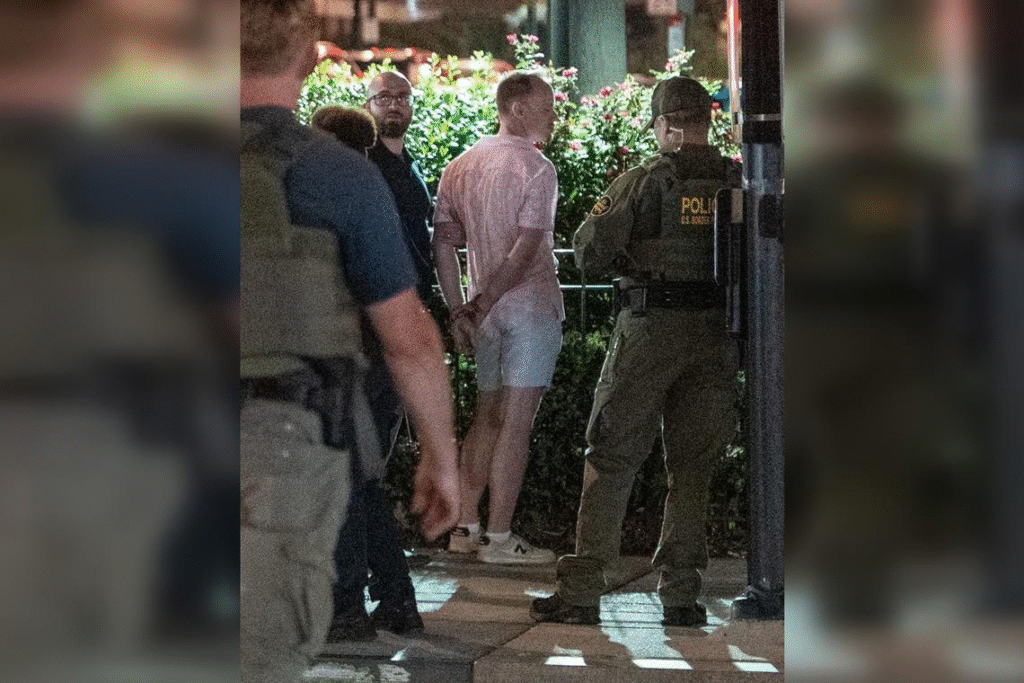
Dunn’s verbal expressions of resistance—calling officers “fascists” and expressing opposition to their presence—illustrate a citizen’s frustration with government enforcement actions. However, the physical act of throwing an object, regardless of size or harm, crosses the legal threshold from speech to assault. This distinction is crucial in understanding how law enforcement and courts interpret actions that may seem minor but carry significant legal consequences.
Public Reactions and Broader Implications
The public reaction to Sean Charles Dunn’s arrest has been varied. Some residents appreciate the increased law enforcement presence, believing that any action aimed at improving safety is welcome. A local resident, identifying herself as Miss Anne, commented that while the level of force deployed may appear excessive, the goal of maintaining public safety could justify federal involvement.
Others, however, view the deployment of federal agents with skepticism, emphasizing civil liberties and local governance. The contrast of opinions underscores the delicate balance between security and personal freedoms in urban centers like Washington, D.C. Media coverage of the “sandwich assault” incident has leaned into the unusual nature of the crime, sparking both humor and serious legal discussion online.
Social media videos circulated widely, showing the minor but symbolic act of defiance against federal authority. Such cases often become viral due to the juxtaposition of a mundane object—like a sandwich—and serious legal implications. While some commentators may trivialize the incident, legal experts stress that intent, context, and the status of the person targeted (in this case, a federal agent) determine the severity of charges.
The case also serves as a cautionary tale for employees of government institutions. Working within the Justice Department entails adherence to strict codes of conduct, both inside and outside the workplace. Sean Charles Dunn’s immediate termination reflects the department’s zero-tolerance approach to behavior that could undermine public trust or compromise the professional image of its staff.
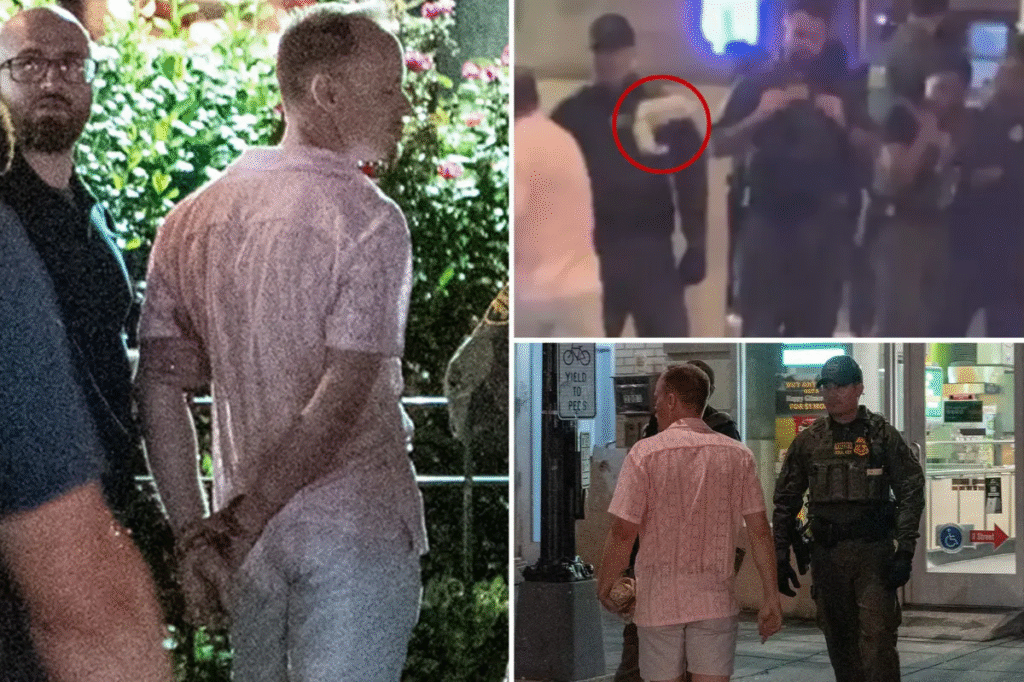
In an era of heightened scrutiny over government actions, the personal conduct of employees is increasingly under the public eye, with consequences for lapses in judgment extending beyond legal penalties to professional reputation and career prospects. The arrest of Sean Charles Dunn, while unique in its circumstances, is emblematic of broader societal issues.
It highlights the challenges of maintaining law and order while balancing civil liberties, the scrutiny faced by federal employees, and the unpredictable ways in which citizen protest can manifest. The incident also points to the importance of clear communication and public awareness during federal interventions, ensuring residents understand the objectives of law enforcement while minimizing confrontations.
Furthermore, the case demonstrates that legal systems treat all acts of aggression toward officers seriously, regardless of the weapon or object involved. Dunn’s choice of a Subway sandwich as a projectile may have drawn media attention for its novelty, but the underlying principle remains consistent: physical acts of resistance against law enforcement are prosecutable offenses. This reinforces the broader message that citizens must navigate the line between expressing dissent and engaging in unlawful behavior.
As Washington, D.C., continues to experience heightened federal presence, cases like Dunn’s will remain instructive. They remind both residents and officials that legal accountability applies to everyone, from private citizens to government employees.
The incident may also prompt discussions within government institutions about employee behavior, ethics training, and appropriate responses to public frustration. Ultimately, the story of Sean Charles Dunn serves as a microcosm of larger societal dynamics, illustrating the intersection of law enforcement, civil engagement, and personal responsibility.
While the outcome of Sean Charles Dunn’s case will unfold in the coming months, the incident itself has already left an indelible mark on public discourse. It stands as a reminder that even seemingly minor actions can carry significant consequences and that public and legal scrutiny applies universally. The blend of humor, controversy, and legal seriousness in this case ensures that it will remain a topic of discussion for legal analysts, media outlets, and citizens interested in the balance between law, protest, and accountability in the nation’s capital.
Sean Charles Dunn’s arrest for throwing a Subway sandwich at a federal agent highlights the complexities of law enforcement, citizen behavior, and professional accountability. As a former Justice Department employee, Dunn’s actions underscore the high standards expected of government personnel and the legal repercussions of even minor acts of aggression.
The broader context of federal operations in Washington, D.C., adds layers of social, political, and legal considerations, demonstrating how individual actions can intersect with national discussions on crime, authority, and civic responsibility. This unusual incident will continue to generate discussion and reflection on the boundaries of protest, the role of federal agents, and the consequences of impulsive behavior in high-stakes environments.