
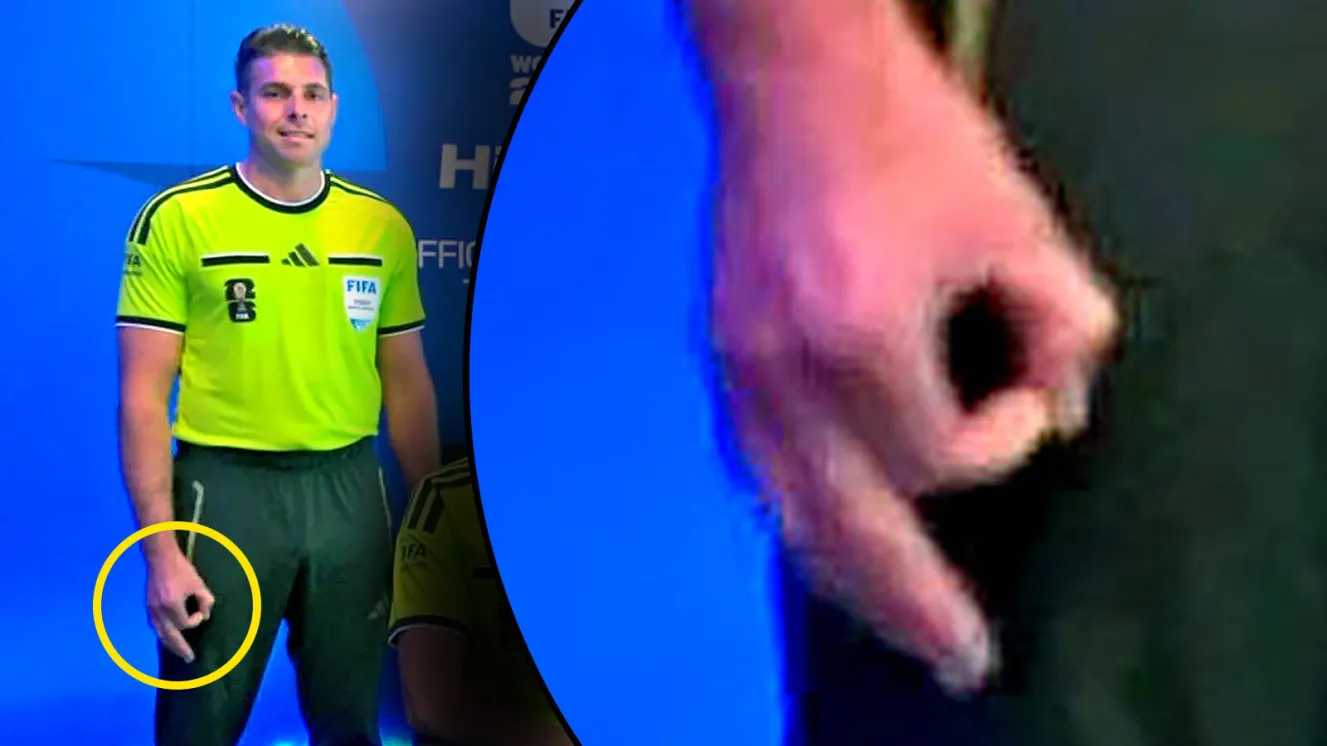
The 2026 FIFA World Cup has already generated headlines both on and off the field, but one of the tournament’s most unexpected controversies emerged from the video review room rather than the pitch itself. Australian referee Shaun Evans, serving as a Video Assistant Referee (VAR) official during Germany’s opening match against Curaçao, became the focus of international attention after appearing to make a hand gesture that anti-racism observers claimed resembled a symbol associated with white supremacy.
The incident quickly sparked debate among football fans, anti-discrimination organizations, and governing bodies. While some observers viewed the gesture as a potentially serious display of extremist symbolism, others argued that context is essential and suggested the action could have been unrelated to politics altogether. The controversy has raised broader questions about symbolism, intent, and the responsibilities of officials at major global sporting events.
Shaun Evans’ Career in Australian and International Football
Before becoming the subject of worldwide headlines, Shaun Evans was primarily known within football circles as an experienced referee who had spent years working at high levels of the sport. Born in Australia, Evans built his reputation through domestic competitions before progressing to international appointments recognized by FIFA.
Throughout his officiating career, Evans became a familiar figure in Australia’s professional football system, particularly in the A-League. Referees operating at that level undergo extensive training and evaluation, with FIFA and national football organizations placing significant emphasis on consistency, fitness, decision-making, and knowledge of the laws of the game. Over time, Evans earned opportunities to officiate important domestic fixtures and international matches, gradually establishing himself as one of Australia’s recognized refereeing officials.
His experience eventually extended beyond traditional on-field refereeing duties. Modern football increasingly relies on Video Assistant Referee technology, which allows officials to review incidents involving goals, penalties, red cards, and mistaken identity. Working as a VAR official requires a different skill set from on-field refereeing. Officials must analyze multiple camera angles rapidly, communicate effectively with referees on the pitch, and make judgments under intense pressure while being monitored by broadcasters, governing bodies, teams, and millions of viewers.
Evans’ selection among the group of VAR officials for the 2026 FIFA World Cup represented a significant professional achievement. FIFA carefully selects referees and VAR specialists from around the world, evaluating them over years of performances in domestic leagues and international tournaments. Being appointed to a World Cup typically reflects confidence in an official’s competence and experience.
At the time of the controversy, Evans was among 30 VAR officials chosen to participate in the tournament. His assignment involved working from FIFA’s centralized World Cup broadcast center in Dallas, Texas, where video review teams monitor matches being played across different host cities in the United States, Canada, and Mexico. Rather than being physically present at the stadium where Germany faced Curaçao, Evans was performing his duties remotely as part of the technological infrastructure that now supports modern football officiating.
This is a FIFA World Cup Australian Var Supervisor/Referee Shaun Evans and he’s accused of making the White Power Gesture! People are calling for him to be removed immediately. pic.twitter.com/B3jF4Akjey
— Suzie rizzio (@Suzierizzo1) June 15, 2026
Until the recent incident, Evans’ public profile remained relatively low compared with star players, managers, or even high-profile referees. That changed dramatically when a brief television broadcast image placed him at the center of a controversy extending far beyond football itself.
The Gesture That Sparked a World Cup Controversy
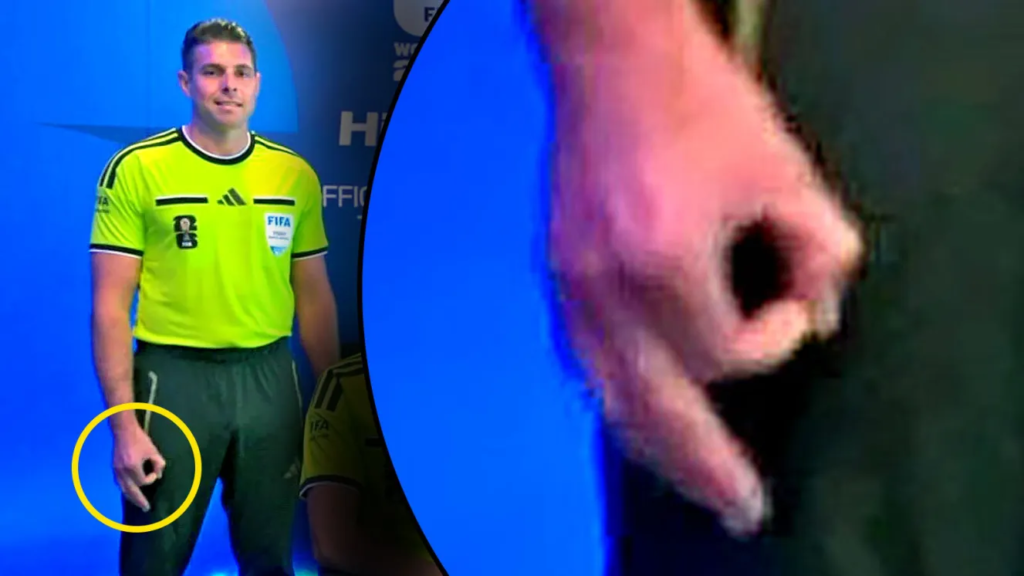
The controversy originated during the pre-match television coverage of Germany’s World Cup opener against Curaçao. As part of the broadcast presentation, viewers were shown the team of VAR officials responsible for monitoring the match from the review center. During that moment, Shaun Evans appeared on screen making what looked like an upside-down “OK” hand sign with his right hand positioned in front of his leg.
The gesture immediately attracted attention because of its controversial history. Traditionally, the “OK” sign has been a widely recognized hand gesture used around the world to signify agreement, approval, or that everything is fine. However, in recent years, the symbol has also become associated in some contexts with extremist groups and white supremacist movements.
Read : Who is Michael Dome-Bemwin, the Footballer Accused of Dine-and-Dash Restaurant Thefts?
The origins of that association are unusual. The gesture became linked to white supremacist symbolism after an online campaign that began as a hoax on the internet message board 4chan. The campaign initially aimed to convince people that the common hand sign represented “white power.” While it began as a trolling effort, extremist groups later adopted the symbol in certain contexts, leading anti-hate organizations to monitor its use more closely.
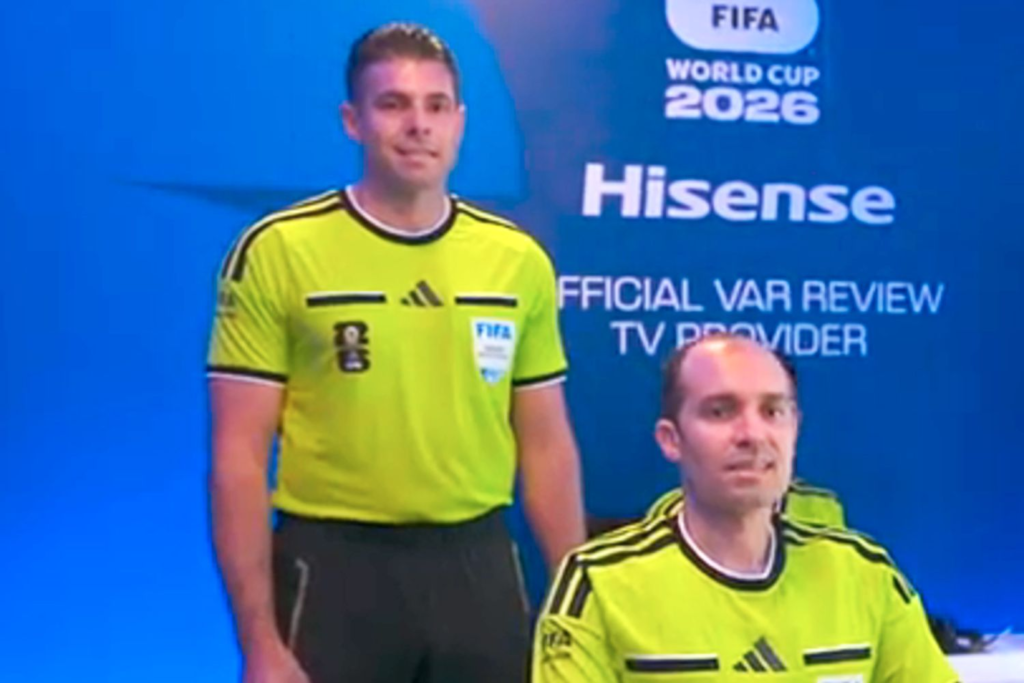
In 2019, the New York-based Anti-Defamation League added the symbol to its database of hate symbols. However, the organization also emphasized that context is critical when interpreting the gesture because it remains widely used for completely innocent purposes. The ADL specifically noted that many instances of the hand sign have no connection whatsoever to extremist ideology.
Following Evans’ appearance on the broadcast, the Fare network, an organization that works with football authorities to monitor racism and discrimination, issued a strong statement. Fare argued that the gesture closely resembled the upside-down “OK” symbol used by some far-right groups and suggested that Evans should no longer have a role in the World Cup. The organization went further by describing the symbol as one associated with neo-Nazi and white power circles. According to Fare, the fact that the gesture appeared while Evans was aware cameras were focused on the VAR officials made the incident particularly concerning.
Yet the controversy was far from straightforward. Critics of the accusations pointed out that the same hand sign has multiple meanings depending on circumstance, culture, and intent. Some observers suggested Evans may have been participating in the so-called “circle game,” a prank popular among children and young adults. In that game, a participant forms a circle with their fingers below waist level and attempts to trick someone into looking at it. If another person looks, they are considered to have lost the game.
Because the gesture can simultaneously function as a common sign of approval, a childish prank, or a symbol appropriated by extremists, determining intent became a central challenge. At the time reports emerged, there was no publicly available evidence demonstrating why Evans made the gesture or what message, if any, he intended to communicate.
The incident quickly generated widespread discussion on social media, where interpretations varied dramatically. Some users viewed the gesture as unmistakably problematic, while others argued that assuming extremist intent based solely on a brief television image was unfair and premature.
FIFA, Anti-Racism Efforts, and the Debate Over Context
The controversy surrounding Shaun Evans highlights a broader issue confronting international sport: how governing bodies should respond when potentially offensive symbols appear in highly visible settings. Football has spent decades attempting to combat racism and discrimination. FIFA, continental federations, national associations, clubs, and anti-racism organizations have implemented numerous initiatives aimed at reducing discriminatory behavior among players, officials, and supporters.
Read : Footballer Jack Sparkes Raises Thousands For Charity After Daughter Lily’s Heart Diagnosis
Campaigns promoting inclusion and diversity have become a regular feature of major tournaments, while disciplinary measures for racist conduct have generally become more severe. Against that backdrop, allegations involving any symbol associated with extremist ideologies are likely to receive serious attention. Organizations such as Fare have built their reputations on monitoring discriminatory incidents and identifying behavior they believe may undermine efforts to make football more inclusive.
Their concerns reflect a wider determination within the sport to prevent racism from gaining visibility or legitimacy. At the same time, incidents involving symbols can be particularly complicated because meaning often depends on context. The Anti-Defamation League itself has repeatedly emphasized that the “OK” sign cannot automatically be interpreted as a hate symbol. Millions of people continue to use the gesture every day without any political or ideological intent.
This complexity has created a debate extending beyond football. Some commentators argue that public figures and officials should avoid gestures that carry controversial associations, regardless of intent, because such actions can create confusion or send unintended messages. Others contend that assuming malicious intent without clear evidence risks unfairly damaging reputations and encouraging conclusions based on incomplete information.
For FIFA, cases like this present difficult challenges. The organization must balance its commitment to combating discrimination with the need to ensure fairness toward individuals accused of misconduct. Investigations into such incidents often involve examining context, intent, previous behavior, and any available explanations from those involved.
As attention focused on Evans, football authorities in Australia also came under scrutiny. Observers sought responses from Football Australia and the Professional Football Referees Association regarding the allegations and the broader implications for Australian officiating. The incident transformed what might otherwise have been a fleeting television moment into an international discussion involving sports governance, anti-racism policy, and public accountability.
Whether the gesture was an innocent action, a misunderstood prank, or something more significant remains at the heart of the controversy. What is clear is that a few seconds of broadcast footage dramatically altered public awareness of Shaun Evans, turning a largely behind-the-scenes World Cup official into a globally discussed figure.
The incident serves as a reminder of the intense scrutiny that accompanies major sporting events in the modern media age. Every action by players, coaches, referees, and officials can be captured, replayed, analyzed, and debated by audiences around the world within minutes. For Shaun Evans, a career built over years of football officiating suddenly became overshadowed by a single gesture whose meaning continues to be contested. As FIFA and relevant authorities assess the situation, the discussion surrounding symbolism, intent, and responsibility in global sport is likely to continue well beyond the World Cup itself.
Wow! Thank you! I permanently needed to write on my blog something like that. Can I take a portion of your post to my blog?
I truly enjoy examining on this site, it holds excellent content. “A short saying oft contains much wisdom.” by Sophocles.