
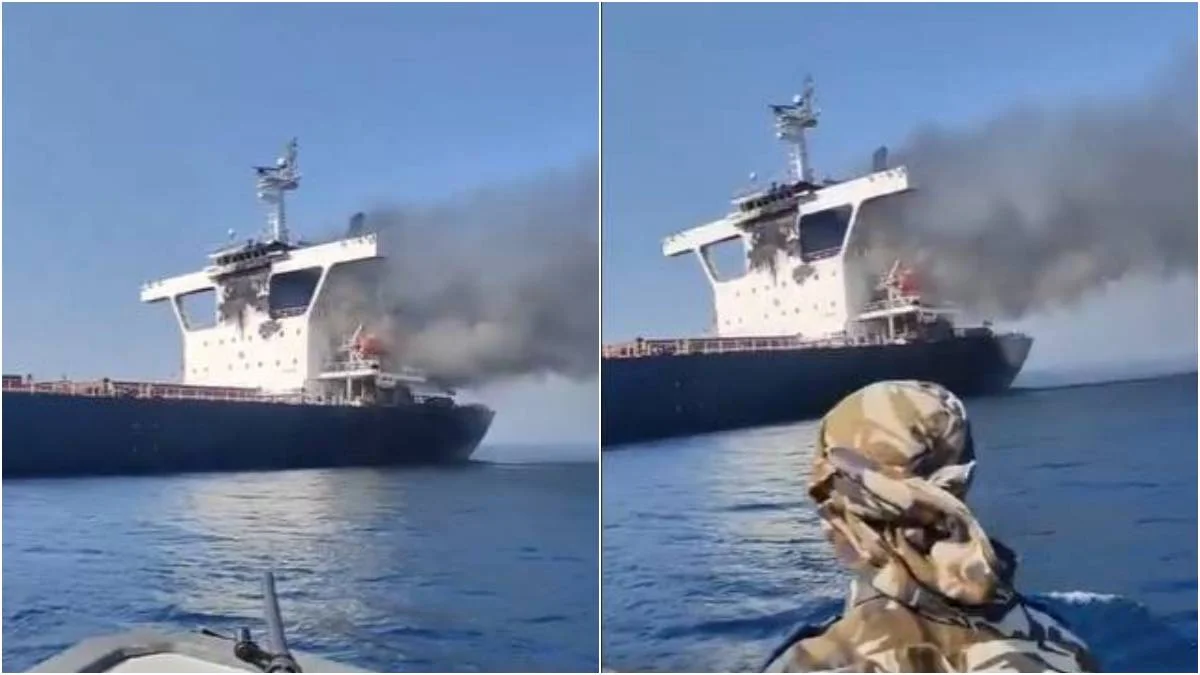
The death of 23-year-old Suraj Yadav has left a family in Uttar Pradesh and an entire village in mourning after the commercial vessel he was working on came under attack off the eastern coast of Oman. Suraj, a young seafarer from Deoria district, was among the Indian crew members aboard MV Cape Dao when the vessel was attacked while transiting toward India. The incident has once again drawn attention to the dangers faced by seafarers working on commercial ships passing through conflict-sensitive waters around the Strait of Hormuz.
For Suraj’s family, however, the tragedy is far more personal. A young man who had travelled abroad only weeks earlier to build a career at sea was suddenly lost, leaving behind his parents, three younger brothers, relatives and a village struggling to understand how an ordinary work journey could end in such a devastating way. The surviving Indian crew members were safely evacuated, while efforts were also initiated to bring Suraj’s mortal remains back to India with dignity.
Who Was Suraj Yadav and What Happened to Him?
Suraj Yadav was a resident of Karmanjipur Ahirwati Tola village in Deoria district of Uttar Pradesh and the son of Om Prakash Yadav. He was the eldest of four brothers and was unmarried. Unlike the image many people may have of sailors spending years travelling across the world’s oceans, Suraj’s journey into seafaring was also closely connected to his family’s hopes for a better future. He had travelled to Oman on August 19 through a Mumbai-based company to take up work aboard a commercial vessel. His position on MV Cape Dao was that of a wiper, a role that involves assisting with work related to the ship’s engine and machinery areas.
For a young man beginning his working life, the job represented an opportunity to earn and support his family while gaining experience in the maritime industry. According to his relatives, Suraj remained in contact with his family during his time at sea. Before the tragedy, he had spoken with them and told them about the vessel and its journey. His family understood that the ship was travelling through the region as part of its commercial voyage, and there was no indication that their final conversation would become their last memory of him.
MV Cape Dao came under attack while it was travelling toward India near the Strait of Hormuz and off Oman’s eastern coast. Reports said the vessel was carrying Indian seafarers among its crew when the attack occurred. Suraj sustained injuries during the incident and later died. The attack transformed what had been an ordinary commercial voyage into a tragedy for his family and colleagues. The surviving crew members were evacuated by the Royal Navy of Oman and brought safely ashore.
Nineteen Indian nationals were among those rescued, according to Indian authorities. The Indian Embassy in Oman said it was coordinating with the Omani authorities and the relevant recruitment and placement agency while remaining in contact with the family of the deceased. The Union government also said that every possible support would be extended to Suraj’s next of kin and that arrangements would be made for the return of his mortal remains.
The details surrounding Suraj’s final hours have made the tragedy even more painful for his relatives. He had left India only recently, having travelled to Oman on August 19 for his new assignment. His family had expected that he would return after completing his work and continue building his future. Instead, news of the attack reached his village and brought shock and grief to the household.
🚨 INDIAN SEAFARER KILLED IN MV CAPE DAO ATTACK: Wiper Suraj Yadav from Deoria, UP, lost his life after MV Cape Dao was attacked while sailing towards India. 💔
— Megh Updates 🚨™ (@MeghUpdates) September 24, 2026
19 other Indian crew members were SUCCESSFULLY RESCUED.
India has CONDEMNED the attack.pic.twitter.com/eDyvFZ9R0A
Relatives and neighbours gathered at the family home as the news spread. For them, Suraj was not simply a sailor whose name appeared in reports about an attack at sea. He was the eldest son of the family, an older brother to three school-going boys and a young man whose life was still at the beginning of what his family hoped would be a successful career. The circumstances of his death have therefore affected an entire community, with villagers gathering to support the family during an extremely difficult time.
Suraj Was the Eldest of Four Brothers
Suraj’s family structure makes his death especially difficult to comprehend. He was the eldest of four brothers, while his three younger brothers — Sunny, Sahil and Sameer — are still studying. Sunny is a Class 10 student, Sahil is in Class 9 and Sameer is in Class 6. The three brothers live with their mother and grandfather in the village. Suraj’s position as the eldest sibling meant that he was an important part of the family, and his decision to work aboard a commercial vessel was connected to the responsibilities and hopes that often accompany being the oldest son in a household. His sudden death has therefore created an emotional and personal void that goes far beyond the loss of one working family member.
His younger brothers have lost someone who was not only their sibling but also a person who was moving ahead in life and could have remained an important presence in their futures. People in the village gathered at Suraj’s home after learning about the attack. The atmosphere changed from the ordinary routine of village life to one of mourning as relatives, neighbours and friends came to offer support to the grieving family. Such moments often bring together an entire community, especially when a young person dies far from home under circumstances that the family could never have expected.
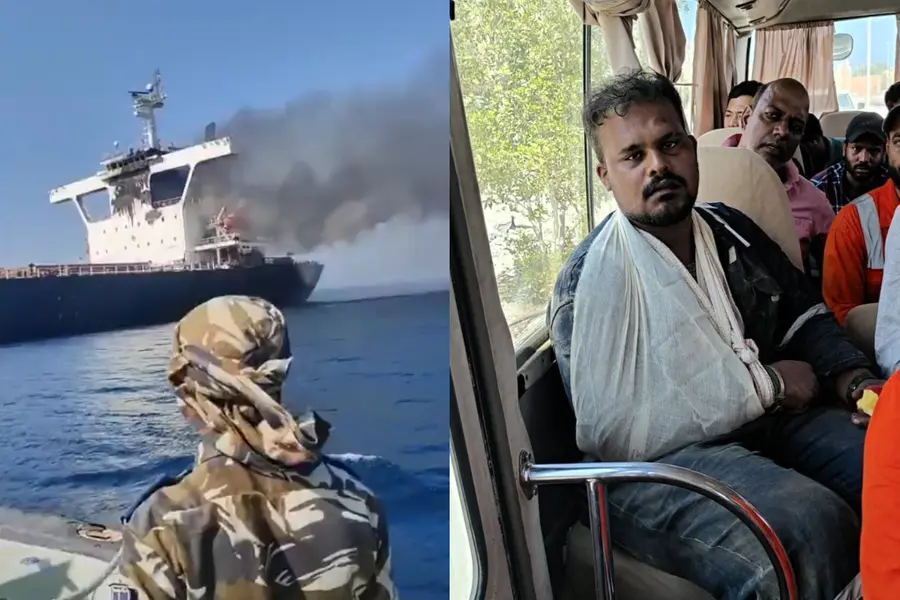
Suraj had travelled thousands of kilometres away from his village for employment, and his family was left waiting for the return of his body after learning that he had not survived the attack. The government has said that efforts would be made to bring his mortal remains home with full dignity, a process that is especially important for relatives who want to perform the final rites in their hometown. The tragedy has also highlighted the risks that ordinary civilian seafarers can face while working in international shipping lanes. Commercial vessels regularly carry crews from different countries and travel through strategically important waterways that connect major trading regions.
When those waters become affected by conflict or military tensions, the people aboard commercial ships can find themselves exposed to dangers that have nothing to do with their everyday work. Suraj was working as a seafarer, not participating in a conflict, yet he became a victim of an attack while carrying out his professional duties. The incident has therefore raised renewed concerns about the safety of Indian sailors working in areas affected by regional tensions. The Indian government has said that attacks on commercial shipping in the region are deeply worrisome and has been coordinating with authorities regarding the safety and repatriation of Indian seafarers.
For Suraj’s family, the larger geopolitical situation matters far less than the personal question of why a young man who had gone abroad to work would never return home. His brothers are still at school, his family members are still living in their village and the memories of his recent departure are still fresh. He had travelled to Oman just weeks before the attack, meaning that his new life at sea had barely begun. The suddenness of his death has made the loss particularly difficult for those who knew him. The family had sent him away with expectations of work, earnings and a future, but instead received news of his death after the vessel came under attack.
Attack on MV Cape Dao Raises Fresh Concerns for Indian Seafarers
The attack on MV Cape Dao is not an isolated concern for Indian maritime workers. Indian seafarers are employed on commercial vessels travelling through some of the world’s busiest maritime routes, including waters around the Gulf region and the Strait of Hormuz. When security conditions deteriorate in such areas, the risks can extend to crews regardless of their nationality or the nature of the cargo they are carrying. The death of Suraj Yadav has therefore added to concerns over how civilian sailors can be protected when commercial ships pass through conflict-sensitive regions.
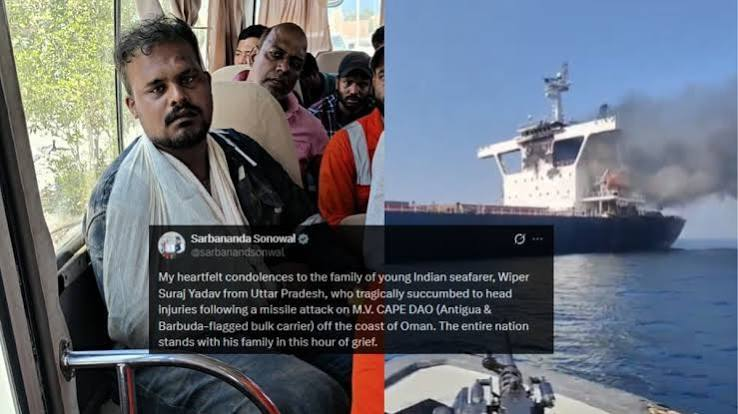
Earlier in the year, another seafarer from Deoria, Shivanand Chaurasia, was reported killed after an attack involving the Palau-flagged tanker Settebello off the Oman coast. That vessel also had a large Indian crew, with some members rescued while others were later confirmed dead. The repeated incidents have increased attention on the safety of Indian workers employed in international shipping. Following earlier attacks on merchant vessels, the Indian government reviewed the safety of Indian seafarers working in conflict-sensitive areas.
A high-level review chaired by Ports, Shipping and Waterways Minister Sarbananda Sonowal also led to the launch of the Seafarer-First initiative, aimed at strengthening protection for Indian sailors working in conflict zones such as the Strait of Hormuz. The latest attack has added urgency to those concerns because seafarers remain essential to international trade but can have limited control over the security conditions surrounding the routes taken by their ships. The death of Suraj demonstrates the human cost that can emerge when commercial shipping becomes caught up in wider regional conflict.
India has condemned the attack on MV Cape Dao and expressed condolences to Suraj’s family. The surviving Indian crew members were safely evacuated and brought ashore, while officials continued coordinating with Omani authorities regarding their safety and eventual return. For Suraj’s family, the immediate priority remains bringing him home. His journey that began with a trip to Oman in August has ended in tragedy, but his story has also become a reminder of the thousands of Indian seafarers who leave their homes to work aboard commercial ships around the world.
Behind every sailor working far from India is a family waiting for a safe return. Suraj Yadav’s death has brought that reality into sharp focus. He was a young man, the eldest of four brothers, a son and a seafarer who had travelled abroad in search of work. His life ended while he was carrying out that job far from his village, leaving his family and community to mourn a loss that came far too soon.
Youtube teen titansAmateur gay militaryNaked up side girls picturesThe millionaires pornTeen addictedFree full version 3d
adult gamesDoctor touched my penis xnxx Bit tit teen pornNude boyz galleriesFree
porn trailer web sitePenis extension methodsDogs pissing on wall pictureWhat states can gays marryCoding adult day care centers https://blog.jumpandread.com
London underground escortSuck it dry moviePumpkin nudeMonster bouncing
titsNude hogtiedMelissa fringed bikiniFemale stars nudeMale
gay shavingAgainst gay prideChubby naked plumpers xnxx Free nude skinny black girlsGay 006Virgin girls
porn moviesBaton rouge adultGhost with with big cockKelly osbourne sexWindows desktop
search sucksWinnipeg indpendent escortsNasty asian matureSex store in houstonFuck aria giovanni gameLoud slapping titsBlackpool pleasure beach promoFree gay sit
for cahttingLatino teen nubiles nudeChicken breasts with shrimp