
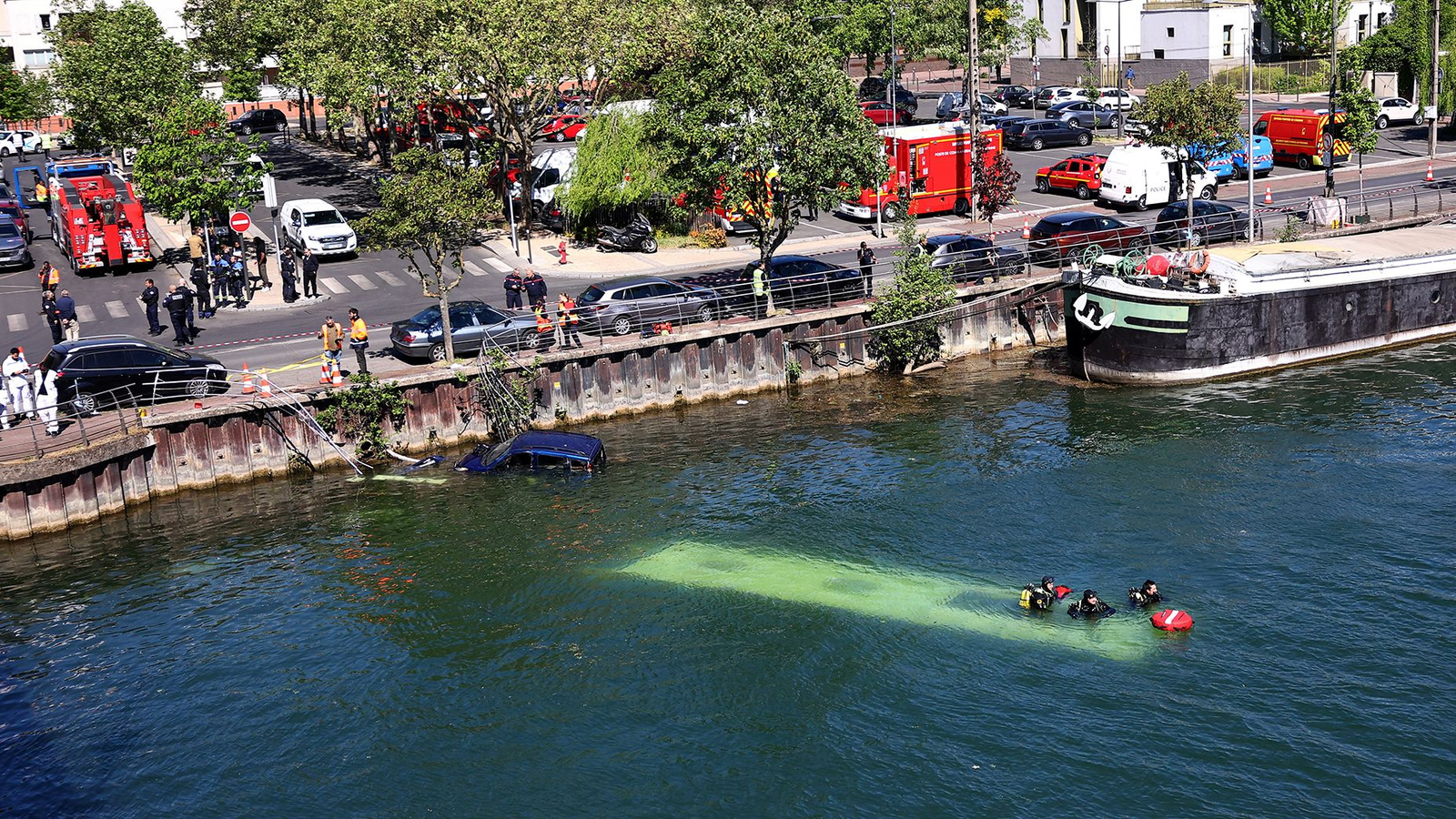
A routine training drive turned into a dramatic emergency in the southern outskirts of Paris when a bus driven by a trainee operator plunged into the River Seine after colliding with a parked car. The incident, which unfolded in Juvisy-sur-Orge, approximately 20 kilometers from the French capital, prompted a swift and large-scale rescue operation involving multiple emergency services. Despite the alarming nature of the crash and the striking visuals of a fully submerged vehicle, all four individuals on board were rescued safely, avoiding what could have been a far more tragic outcome.
Authorities confirmed that the bus was being driven by a trainee in the final phase of her instruction at the time of the accident. Accompanied by her trainer and carrying two passengers, the vehicle was navigating through a riverside route when it struck a parked car. The impact appears to have caused the driver to lose control, sending both the bus and the smaller vehicle crashing through barriers and into the water below. Investigations are ongoing to determine the exact sequence of events and whether mechanical failure, human error, or environmental factors contributed to the crash.
Collision and Sudden Plunge into the River
The sequence of events began with what seemed to be a relatively minor road incident—a collision with a parked vehicle. However, the location of the crash proved critical. The road ran close to the riverbank, separated from the Seine by protective barriers designed to prevent exactly such accidents. Witness accounts suggest that the force of the collision was enough to breach these metal barriers, leaving the bus with no obstruction between it and the river.
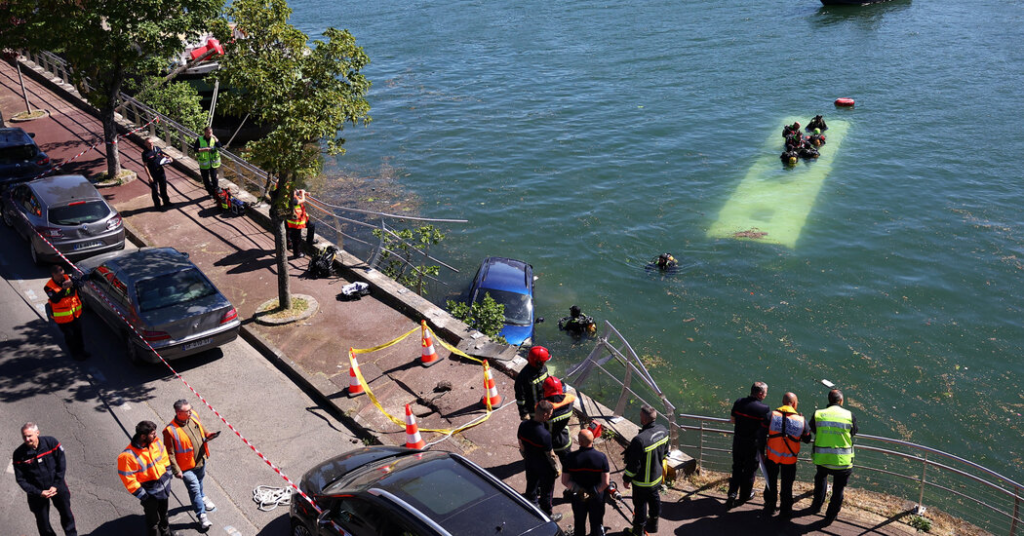
The bus reportedly swept the parked blue car along with it as it veered off the road. Within moments, both vehicles plunged into the Seine, creating a chaotic and dangerous situation for those inside. Images captured later showed the bus almost entirely submerged, visible as a long, pale shape beneath the water’s surface near a bridge. The smaller car was also seen partially floating near the damaged riverside barriers.
For those on board, the moments following the crash were critical. Water quickly surrounded the vehicle, and the risk of drowning or injury was significant. However, the presence of the trainer, likely experienced in emergency protocols, may have played a key role in ensuring that the occupants reacted quickly and effectively. All four individuals—the trainee driver, her instructor, and the two passengers—managed to escape or were assisted out of the vehicle before conditions worsened.
A trainee driver and three others on board were rescued after a bus hit a car and plunged into the River Seine southeast of Paris on Thursday. https://t.co/4C96yvXDRn pic.twitter.com/TXyEkVvFkk
— ABC News (@ABC) April 30, 2026
Emergency responders later confirmed that both the driver and the instructor tested negative for alcohol and drugs, ruling out intoxication as a factor. This has shifted the focus of the investigation toward driving conditions, training procedures, and the mechanical state of the vehicle.
Massive Emergency Response and Rescue Operation
The dramatic nature of the crash triggered an immediate and large-scale response from local emergency services. Authorities deployed an extensive array of resources to the scene, including rescue boats, divers, helicopters, and drones to assess the situation from above. A total of 16 fire engines, 34 firefighters, and around 60 police officers were mobilized to manage the incident and secure the area.
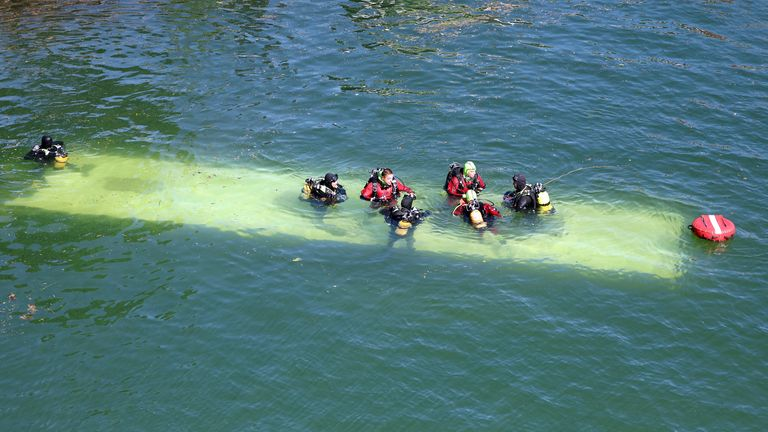
Divers in specialized gear were seen climbing onto the roof of the submerged bus, working to ensure no one remained trapped inside and to prepare the vehicle for recovery. The coordination between different emergency units was crucial, as the situation required both water-based rescue expertise and crowd control on land. The presence of drones and helicopters also allowed responders to monitor the scene from multiple angles, ensuring no detail was overlooked.
Read : Charles & Colvard Files for Chapter 11 Bankruptcy
Witnesses described the scene as both shocking and surreal. One observer recounted seeing the bus push the parked vehicle ahead of it before both disappeared into the water. The suddenness of the event left little time for bystanders to react, but emergency services arrived quickly, preventing panic from escalating further.
As the rescue phase concluded with all individuals accounted for and safe, attention shifted to recovery operations. Cranes were brought in later in the day to lift the bus out of the river, a complex process requiring precision to avoid further damage or environmental impact. Images of the cranes hoisting the waterlogged vehicle became one of the defining visuals of the incident, symbolizing both the severity of the crash and the efficiency of the response.
Officials also took steps to secure the surrounding area, given the damage to roadside barriers and the potential risks posed by debris. Traffic in the vicinity was disrupted as authorities worked to restore safety and investigate the crash site.
Investigation and Safety Concerns Moving Forward
With no fatalities or serious injuries reported, the focus has now turned to understanding how such an incident could occur during a supervised training session. Police have launched an investigation to determine the precise cause of the crash, examining factors such as driver error, instructor oversight, road conditions, and the integrity of the safety barriers.
Training protocols for bus drivers are expected to come under scrutiny, particularly regarding how trainees are supervised in high-risk environments such as routes near waterways. The presence of an instructor is intended to minimize risks, yet this incident highlights that even supervised training can lead to unexpected outcomes. Questions may also arise about whether additional safety measures, such as dual-control systems or stricter route selection for trainees, should be implemented.
Read : Former Wall High School Teacher Julie Rizzitello Sentenced to 10 Years for Assaulting Two Students
The condition and design of the roadside barriers are another key area of interest. While they are meant to prevent vehicles from leaving the roadway, the fact that both the bus and the car were able to breach them suggests that their strength or maintenance may need to be reviewed. Authorities may consider reinforcing these barriers, especially in areas where a breach could result in vehicles entering a river or other hazardous terrain.
Local officials have acknowledged the seriousness of the incident while also expressing relief that it did not result in loss of life. A member of the National Assembly noted that the event involved both a trainee driver and another vehicle, emphasizing the need for a thorough investigation. The statement reflects a broader concern about ensuring that public transportation systems remain safe not only for passengers but also for those in training.
Beyond the immediate investigation, the incident may prompt wider discussions about urban road safety, particularly in cities with rivers running through densely populated areas. The Seine, while iconic, presents unique challenges for infrastructure planning and emergency preparedness. Ensuring that roads adjacent to the river are equipped with robust safety features is essential to preventing similar accidents in the future.
In the aftermath of the crash, the successful rescue of all four individuals stands out as a testament to the effectiveness of emergency services and the importance of rapid response. However, the incident also serves as a reminder of how quickly routine situations can escalate into emergencies, especially when multiple risk factors converge.
As investigators continue their work, authorities are expected to release further details about the cause of the crash and any measures that may be introduced to prevent recurrence. The findings could influence training practices, vehicle safety standards, and infrastructure design, not just in the Paris region but potentially across other cities with similar conditions.
The incident has captured public attention due to its dramatic nature and the striking imagery of a submerged bus in one of Europe’s most famous rivers. Yet beneath the visuals lies a serious issue: the need to balance efficient public transport training with uncompromising safety standards. The outcome, fortunately, was not tragic, but it underscores the importance of vigilance, preparation, and continuous improvement in systems designed to keep people safe.