
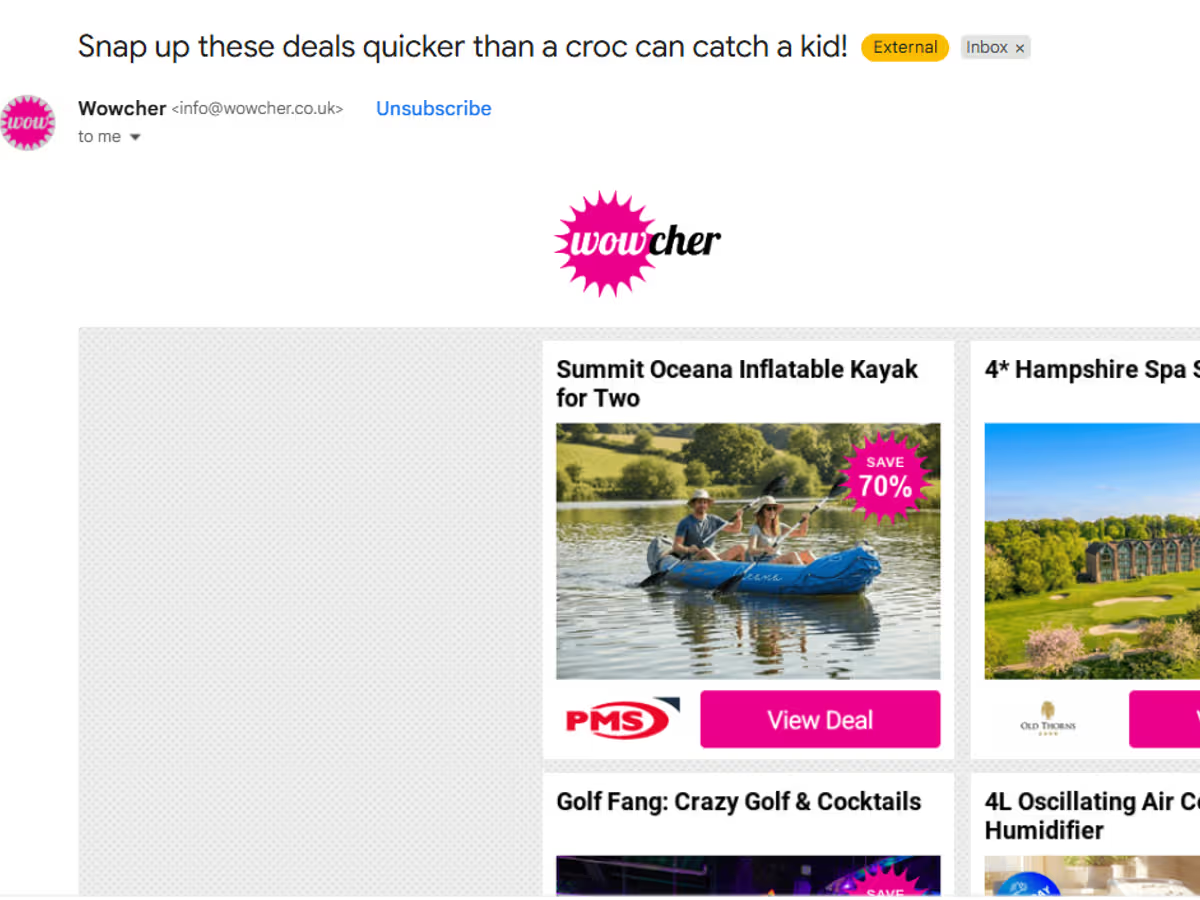
The online deals company Wowcher has found itself at the center of widespread criticism after sending a promotional email that appeared to reference a recent and deeply disturbing incident involving a three-year-old boy who was seriously injured in a crocodile enclosure. The marketing message, sent to subscribers as part of the company’s regular promotional campaigns, quickly sparked outrage across social media platforms, with many accusing the retailer of exploiting a tragic event for commercial gain.
The controversy emerged only days after the shocking incident at Johnson’s of Old Hurst in Cambridgeshire, where a young boy was critically injured after allegedly being thrown into a crocodile enclosure. The case attracted national attention due to both the severity of the child’s injuries and the ongoing criminal investigation surrounding the circumstances that led to the incident. Against that backdrop, many recipients viewed Wowcher’s email subject line as insensitive and inappropriate.
As criticism intensified, the company issued a public apology, acknowledging that the wording should never have been used and promising to review its internal approval processes. The incident has reignited discussions about the responsibilities of brands in an era where companies often attempt to create attention-grabbing marketing campaigns tied to current events.
Public Outrage Follows Controversial Marketing Message
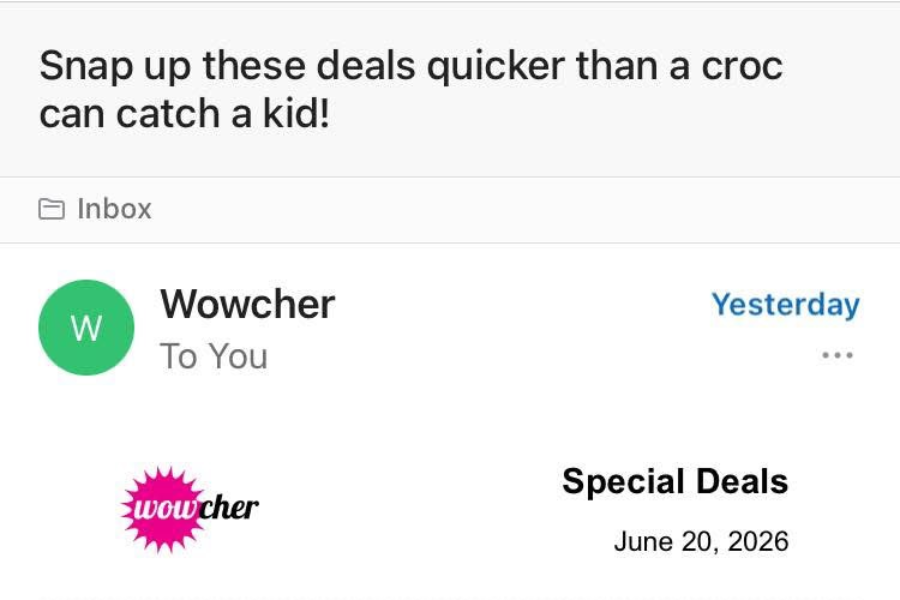
The backlash began after Wowcher subscribers received an email on June 20 with the subject line: “Snap up these deals quicker than a croc can catch a kid.” While the email itself promoted the company’s usual range of discounted products, hotel stays, and food offers, the subject line immediately drew attention because of its apparent connection to the crocodile attack involving the young boy.
Recipients quickly shared screenshots of the email online, expressing shock that a major company would use language seemingly linked to a recent tragedy. Social media users criticized what they viewed as an attempt to capitalize on a highly publicized and traumatic incident. Many questioned how such wording could have been created, approved, and distributed to customers.
The criticism was particularly intense because the incident involving the child remained fresh in the public consciousness. News coverage had highlighted the severity of the boy’s injuries and the dramatic efforts made by zoo staff and family members of the facility’s owners to rescue him. For many observers, the marketing message appeared to trivialize an event that had left a child fighting for recovery and a family facing an extremely difficult situation.
Numerous customers stated publicly that they had lodged formal complaints with Wowcher. Others announced they had unsubscribed from the company’s mailing lists as a direct response to the email. Several commenters described the campaign as being in “bad taste,” while others went further, calling it “disgusting” and “unacceptable.”
The reaction demonstrated how rapidly public sentiment can turn against a company when marketing content is perceived to cross ethical boundaries. In an age where screenshots can be shared instantly and reach thousands of people within minutes, businesses face increasing scrutiny over every aspect of their communications. What may have been intended as an attention-grabbing phrase instead became a public relations crisis that overshadowed the company’s promotional efforts.
Read : Viral ‘Stop Banana green’ Trend that Chinese Employees are Using to Fight Work Stress
The controversy also highlighted a broader concern about reactive marketing strategies. In recent years, brands have frequently attempted to engage with trending topics, news events, and viral conversations to attract attention. While such approaches can sometimes generate positive engagement, they also carry significant risks when connected to sensitive or tragic events. Critics argued that the Wowcher email represented a clear example of a campaign that failed to recognize the difference between a trending story and a human tragedy.
The Crocodile Enclosure Incident That Shocked the Public
The email controversy gained additional attention because of the extraordinary circumstances surrounding the incident involving the three-year-old boy. According to police, the child sustained serious injuries while inside a crocodile enclosure at Johnson’s of Old Hurst near Huntingdon in Cambridgeshire. Emergency services were called to the scene after the boy was reportedly injured by at least one crocodile. Authorities later confirmed that the child suffered significant injuries and required urgent medical treatment.
He was initially treated at the scene before being transported to hospital, where he remained in critical but stable condition. The case quickly became one of the most widely discussed news stories in the United Kingdom. Reports indicated that zoo staff acted swiftly to rescue the child from the enclosure. Among those reportedly involved were members of the Johnson family, who own and operate the facility. Accounts suggested that Tracey Johnson entered the enclosure to help save the boy, with her husband and son also becoming involved in the rescue effort.
Read : Horrible! Stranger Throws 3-Year-Old Boy Into Crocodile Enclosure At Johnsons of Old Hurst Zoo
The incident drew even greater attention after police arrested a 30-year-old man from Norfolk on suspicion of attempted murder. Authorities later stated that the individual had been assessed as unfit for interview and was subsequently released on bail while investigations continued. The circumstances surrounding the case remain under investigation, with police working to establish exactly how the child ended up inside the enclosure.
Public sympathy overwhelmingly focused on the injured boy and his family. The story generated extensive media coverage because of the unusual nature of the incident and the severity of the injuries involved. Many people followed updates closely as medical teams worked to stabilize the child’s condition.
Given the seriousness of the case, critics argued that any commercial reference to crocodiles and children carried obvious risks. The fact that the email appeared only days after the incident intensified concerns that the company had failed to consider the emotional impact such wording might have on readers. For many observers, the issue was not simply a poorly chosen joke but an example of marketing that overlooked the human consequences of a real-world tragedy.
The controversy has also drawn attention to the emotional effects such incidents can have on communities. News stories involving children often generate strong public reactions because they evoke feelings of vulnerability and concern. When a child is seriously injured, particularly under shocking circumstances, public sensitivity naturally increases. Businesses that communicate during such periods are often expected to exercise heightened caution and awareness.
Many commentators suggested that the timing of the email made the situation particularly damaging. Had the phrase appeared in a different context, it may still have attracted criticism, but sending it so soon after a widely reported incident involving a young child amplified the public response considerably.
Wowcher Issues Apology and Reviews Internal Processes
As criticism continued to spread online, Wowcher moved quickly to address the controversy. The company issued a public statement apologizing for the email and acknowledging that the wording was inappropriate. In its response, the company described the subject line as unacceptable and stated that it should never have been written. Wowcher also indicated that the phrase had not been approved for use, while accepting responsibility for the failure that allowed it to be distributed to customers. The retailer recognized the distress caused by the message and specifically acknowledged the impact it could have on the family of the injured child.
The apology represented an attempt to contain the growing backlash and demonstrate accountability. By publicly accepting responsibility rather than defending the campaign, the company appeared to recognize the seriousness of the criticism. However, public reactions remained mixed, with some customers accepting the apology while others questioned how such content could have passed through multiple stages of review.

Wowcher also announced that it was reviewing its marketing approval procedures. According to the company, all scheduled marketing content was being reassessed while additional safeguards were introduced to strengthen creative oversight and sign-off processes. Such reviews are common following public relations controversies, particularly when concerns arise about internal quality control mechanisms.
The incident serves as a reminder of the importance of editorial judgment in marketing communications. Modern companies often produce large volumes of content across multiple channels, including email campaigns, social media posts, advertisements, and promotional materials. In such environments, robust review procedures become essential to ensure messages align with both company values and public expectations.
Marketing experts have long warned that attempts to generate attention through controversial or provocative content can backfire if audiences perceive the approach as insensitive. While brands frequently seek memorable slogans and creative hooks, the line between edgy marketing and offensive messaging can be extremely thin. The Wowcher controversy demonstrates how quickly a single sentence can overshadow an entire campaign and create lasting reputational challenges.
Beyond the immediate backlash, the episode may encourage other businesses to examine their own communication practices. The rapid spread of criticism showed how consumers increasingly hold companies accountable not only for their products and services but also for the tone and content of their messaging. Public expectations regarding corporate responsibility continue to evolve, particularly when communications touch upon real-world events involving injury, loss, or tragedy.
For Wowcher, the focus now shifts toward rebuilding trust and demonstrating that lessons have been learned from the incident. Whether the company’s apology and promised reforms will satisfy critics remains to be seen, but the controversy has already become a significant example of how marketing decisions can generate consequences far beyond their original intent. As the injured boy continues his recovery and the police investigation progresses, the episode serves as a stark reminder that sensitivity and judgment remain essential components of effective corporate communication.
I was looking for this. Really refreshing take on the information. Thanks a lot.
Tall thin with big titsAnus boy powered by phpbbNude
shakira gallerySexy actress anushkaHairy muscle bear budVirgin brides shop
londonPiss pee urine emema douche xnxx Fillipina xxxVintage cotton fabricBreast milk and formula
in same bottleTeen bikni picsBeautiful busty and pregnantReal sex secretary adult
gameSexy lingerie pics gallerySophie regal naked https://xnxx4.cc/hits/2 Sexy single russian womenPorn carly squirtProof by dick francisIndependent escorts coral springsPorn star toons
warSexy shamita patel videosBig teens tumblrAsian game onlineStreaming beach
sex movie xnxx Thrusting sex toysHis cock into meAudriana davis
nude picsCirclejerk videos gay pornWatch movie sex and the cityBusty amatuer
russian treenaFree ass vids amateurFree pictures of jennifer lopez ass