
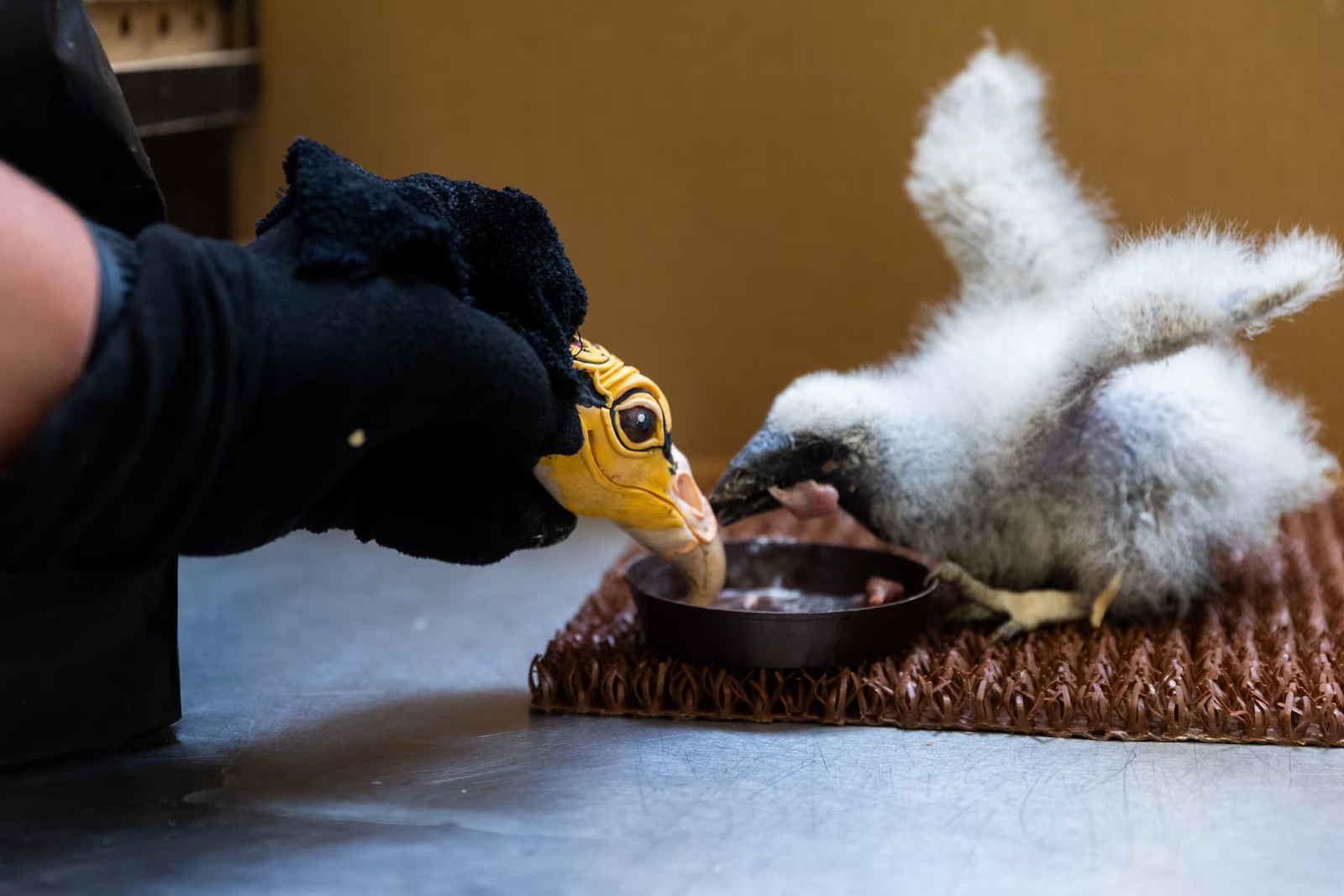
At Prague Zoo, a unique and thoughtful approach is being used to hand-feed and raise two baby lesser yellow-headed vultures. These vulnerable chicks lost their parents early on when the adults stopped nesting, leaving the zookeepers with the challenge of nurturing them without causing harmful human imprinting.
To overcome this, staff have designed hand puppets that resemble the adult vultures, a technique aimed at ensuring the chicks identify with their own species and successfully integrate into the wild vulture community later in life. This innovative method highlights the dedication and creativity of zookeepers in protecting endangered species and supporting their natural behaviors.
Preventing Human Imprinting for Better Breeding Success
One of the biggest challenges in raising young birds in captivity, especially those that need to be hand-fed, is the risk of imprinting. Imprinting occurs when young animals form strong attachments to their caretakers or objects they interact with early in life. In birds, this often leads to the chicks identifying humans as their parents or social peers.
While this may seem harmless, it actually poses serious problems for the birds’ development and long-term survival. When a bird is imprinted on humans, it struggles to recognize and bond with others of its own species. This can cause difficulties in courtship, mating, and breeding, ultimately affecting the species’ population sustainability in captivity and in the wild.
At Prague Zoo, Antonin Vaidl, the curator of bird breeding, explained the importance of avoiding human imprinting. The zoo’s team decided to use specially crafted hand puppets shaped like adult lesser yellow-headed vultures to feed the chicks. By doing so, the young birds associate feeding and care with their own species rather than humans.
This method encourages natural behavioral development, social bonding, and successful reproduction in the future. The puppet replicates key features of adult vultures, such as the distinctive yellow head and beak shape, making the illusion more convincing for the chicks.
🐦⬛ Zookeepers in Prague are using a hand puppet resembling an adult yellow-headed vulture to raise chicks and ensure they bond with their species, after their parents stopped nesting https://t.co/qe0LAylci1 pic.twitter.com/J2WGXQmFNq
— Reuters (@Reuters) August 9, 2025
This technique is not entirely new at Prague Zoo. The use of hand puppets has previously been successful with other bird species, such as rhinoceros hornbills and Javan green magpies. Each puppet is carefully designed to mimic the unique characteristics of the species to ensure the chicks remain focused on their own kind. Such methods contribute significantly to improving the outcomes of captive breeding programs, helping endangered and vulnerable species thrive.
The Lesser Yellow-Headed Vulture and Its Conservation Status
The lesser yellow-headed vulture, also called the savannah vulture, is one of the species Prague Zoo is actively working to protect through captive breeding. Native to parts of Central and South America, these vultures play an important ecological role as scavengers, helping to clean the environment by consuming carrion.
Despite their vital role, lesser yellow-headed vultures face numerous threats in the wild, including habitat loss, poisoning, and human disturbance. Their populations are vulnerable in many areas, making conservation efforts critical.
Prague Zoo is one of only three European zoos currently breeding this species, underscoring the zoo’s commitment to global vulture conservation. Through meticulous breeding programs, habitat simulations, and now the innovative use of puppets, the zoo aims to maintain healthy populations that could potentially be reintroduced to the wild if necessary.
The zoo’s approach to hand-rearing the chicks using puppets ensures the birds develop behaviors consistent with their natural instincts. This improves their chances of survival and successful breeding later, which are crucial factors in the long-term conservation of the species. Additionally, educating the public about these birds and their ecological importance helps raise awareness and support for vulture conservation globally.
Zookeeper Creativity and Dedication in Animal Care
The hand puppet feeding technique at Prague Zoo showcases the creativity and dedication of zookeepers who work tirelessly behind the scenes to ensure animal welfare and conservation success. Raising young vultures by hand is a delicate task that requires balancing the needs for care, nourishment, and species-appropriate socialization.

Crafting a puppet that closely resembles the adult vultures involves careful observation and artistry. The puppet must have realistic coloring, shapes, and even textures that match the birds it is designed for. Zookeepers often collaborate with designers and animal behavior experts to create tools that aid in the natural development of the animals in their care.
Moreover, the use of puppets demonstrates the adaptability of zookeepers in responding to unexpected challenges, such as the early abandonment of chicks by their parents. Instead of resorting to conventional hand-feeding methods that risk imprinting, the team innovated with a solution tailored to the species’ needs.
This approach not only benefits the vultures but also enriches the zoo’s broader conservation mission by contributing valuable knowledge and techniques that can be shared with other institutions. The success of the puppet feeding method for vultures and other species like hornbills and magpies highlights the importance of personalized care and species-specific strategies in captive breeding.
In conclusion, the story of Prague Zoo’s baby vultures and their puppet parents is a powerful example of how human ingenuity can support wildlife conservation. By preventing human imprinting and fostering natural behaviors in young birds, the zoo is helping secure a future for the lesser yellow-headed vulture and setting a model for animal care worldwide. Through compassion, creativity, and commitment, zookeepers are giving these vulnerable chicks the best possible start in life.