
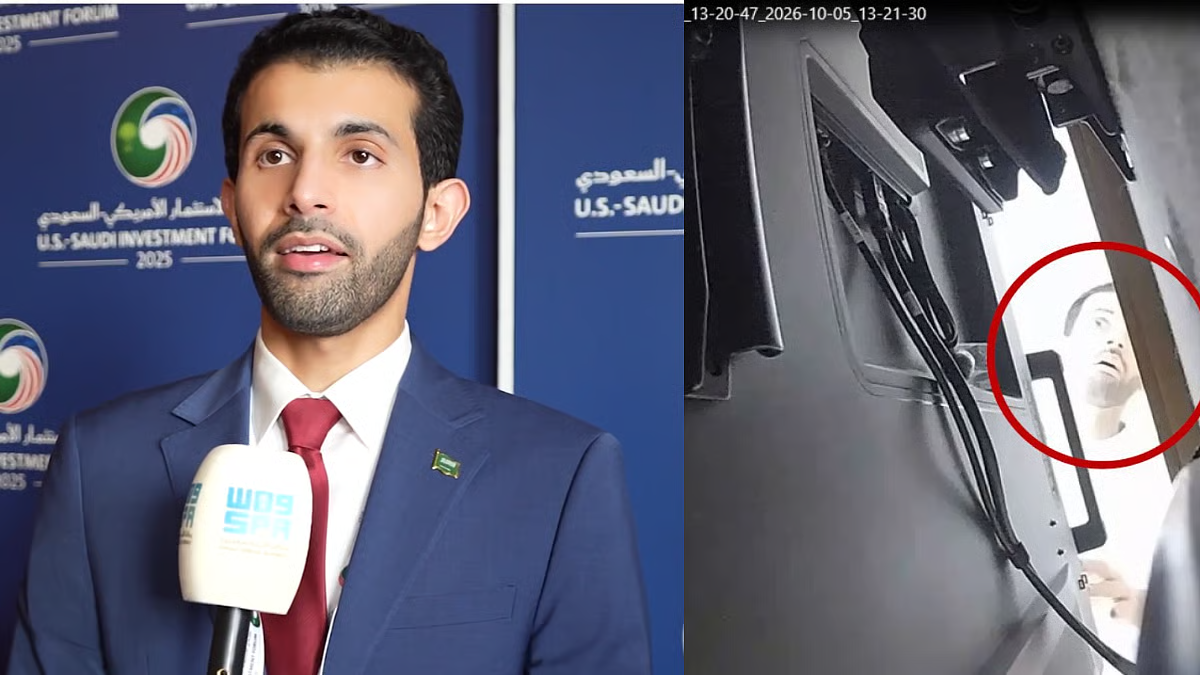
A shocking security incident at OpenAI has drawn attention to the risks facing one of the world’s most influential artificial intelligence companies after a Saudi national employed as an engineer was arrested over allegations that he planted a hidden recording device inside a restricted conference room at the company’s San Francisco office. The case has raised serious questions about workplace security, the protection of confidential corporate discussions, and the challenges technology companies face when safeguarding sensitive information during an increasingly competitive global race in artificial intelligence.
The employee, identified as 35-year-old Abdulrahman Alfozan, had reportedly worked at OpenAI since July 2025 before investigators began examining his alleged activities. According to the US Department of Justice, the device was discovered by OpenAI’s security team late in September, and Alfozan was arrested on October 9. The allegations include the use of an electronic device to intercept oral communications, an offense that could carry significant legal consequences if he is convicted.
However, authorities have not established that the device successfully captured confidential conversations, and OpenAI has stated that it has found no indication that the employee improperly accessed or extracted the company’s model weights, source code, or customer data. The case has attracted additional attention because of Alfozan’s reported professional background, which includes experience at major technology organizations and an artificial intelligence startup. Despite the seriousness of the allegations, important questions remain unanswered, including what information the device might have collected, whether anyone else was involved, and what ultimately motivated the alleged conduct.
Who Is Abdulrahman Alfozan and What Is Known About His Background?
Abdulrahman Alfozan is a 35-year-old Saudi national who worked as an engineer at OpenAI, the artificial intelligence company behind ChatGPT and several other advanced AI systems. According to information released by the US Department of Justice, he joined OpenAI in July 2025, placing him inside an organization that operates at the center of the rapidly expanding artificial intelligence industry. His arrest has generated interest not only because of the alleged recording device but also because of his reported educational and professional history, which appears to connect him with several prominent institutions and technology-related businesses.
A LinkedIn account matching his name and professional résumé reportedly indicates that he previously worked at Meta, the company that owns Facebook, as well as an AI startup and a venture capital firm. The account also lists educational experience at the University of California, Berkeley, and the Massachusetts Institute of Technology, two institutions widely recognized for their work in technology, engineering, and scientific research.
These details have contributed to public interest in the case because professionals with experience in major technology organizations may work with sensitive systems, internal business information, research processes, and confidential company discussions. Nevertheless, a person’s education or previous employment does not establish involvement in wrongdoing, and the available information should not be interpreted as evidence of a broader scheme.
Alfozan’s position at OpenAI is particularly relevant to understanding why the alleged incident received such serious attention. Companies developing advanced artificial intelligence systems must protect more than their publicly released products. Their internal operations may involve confidential research discussions, product development plans, business strategies, security procedures, and information about future projects.
Restricted conference rooms can therefore be subject to additional safeguards because executives and employees may use them to discuss matters that are not intended for public disclosure. According to prosecutors, the conference room involved in this case was designated for executive meetings, and Alfozan allegedly had no authorization to participate in meetings held there. Investigators also reportedly examined security footage showing him near the room on multiple occasions. These allegations form part of the government’s account of the incident, but they do not independently establish what he intended to record or whether any confidential conversation was captured.
Abdulrahman Alfozan was the only Saudi employee at OpenAI If the allegations end up being true, would love to know what his motivation was and if he was being propelled to do this by a third party He just made himself completely un-hirable for the rest of his life https://t.co/9hIaEcZSTs
— Boring_Business (@BoringBiz_) October 13, 2026
His professional history has also prompted questions about how companies evaluate employee access and monitor activity inside restricted areas. In technology organizations, employees may receive different levels of access depending on their responsibilities, and security systems are designed to ensure that access remains limited to legitimate business needs. The investigation will need to establish the relevant facts, including the circumstances surrounding the device, the employee’s access to the conference room, and any evidence that could clarify his alleged intentions.
The reported background of Alfozan also illustrates how international the modern AI industry has become. Major technology companies employ engineers and researchers from different countries, with professionals moving between universities, startups, investment firms, and established technology businesses. OpenAI’s workforce operates within this global environment, where technical expertise and specialized experience are valuable. However, the international background of an employee should not be confused with evidence of national involvement in an alleged offense.
The Department of Justice’s statement did not accuse Saudi Arabia of directing the alleged activity, nor did it establish that Alfozan was acting on behalf of a foreign government. His nationality has nevertheless become part of the public discussion because the case emerged during a period of heightened attention to competition between countries in artificial intelligence. For now, the central legal question concerns the alleged interception of oral communications and the evidence investigators have gathered about the recording devices. Any broader claims about espionage, foreign intelligence operations, or the theft of AI technology would require additional evidence beyond the allegations described in the government’s announcement.
How the Hidden Recording Device Was Allegedly Planted Inside OpenAI’s Office
The details released by federal prosecutors describe an incident that allegedly involved a concealed recording device, activity near a restricted executive conference room, and a second device discovered during a subsequent security search. According to the Department of Justice, OpenAI’s security team found the first device late last month after it had allegedly been hidden inside a television in the conference room. Prosecutors stated that Alfozan had allegedly wrapped a USB device in toilet paper before inserting it into the television.
The unusual method described in the government’s account has attracted attention because the device was reportedly positioned inside a piece of equipment already present in the room, rather than being left openly on a table or another obvious surface. If the allegations are established, the incident would represent a serious breach of the company’s workplace security rules and could raise concerns about the protection of private business conversations. However, the available information does not establish whether the device was functional, whether it was activated during any meeting, or whether it successfully recorded audio.
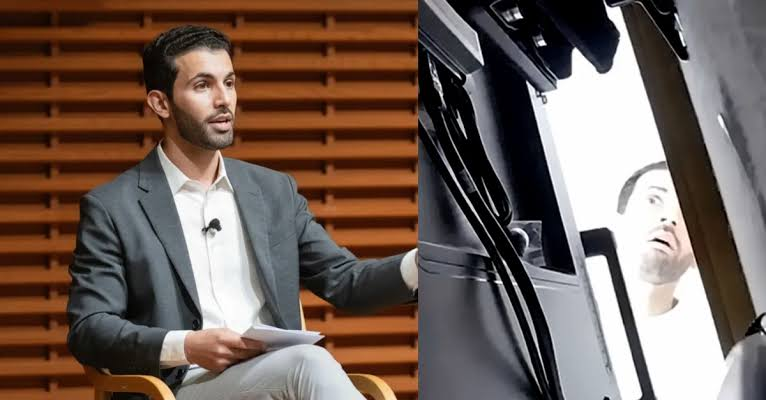
Investigators reportedly reviewed security footage showing Alfozan near the executive conference room on multiple occasions. The Department of Justice also stated that footage captured him inside the restricted room, apparently looking behind the television where the recording device had allegedly been placed. Prosecutors said he was not authorized to participate in meetings conducted there.
Read : Bizarre! Thief Steals Entire Metal Roof from Vacant Home in Reynolds
These details have become central to the government’s account because surveillance footage may help investigators establish the sequence of events, identify when the device was placed, and determine who had access to the room. Even so, the existence of footage showing someone near or inside a restricted room does not, by itself, answer every question about the purpose of the activity. Investigators must assess the recordings alongside physical evidence, device examinations, access records, and other relevant information before drawing conclusions about what occurred.
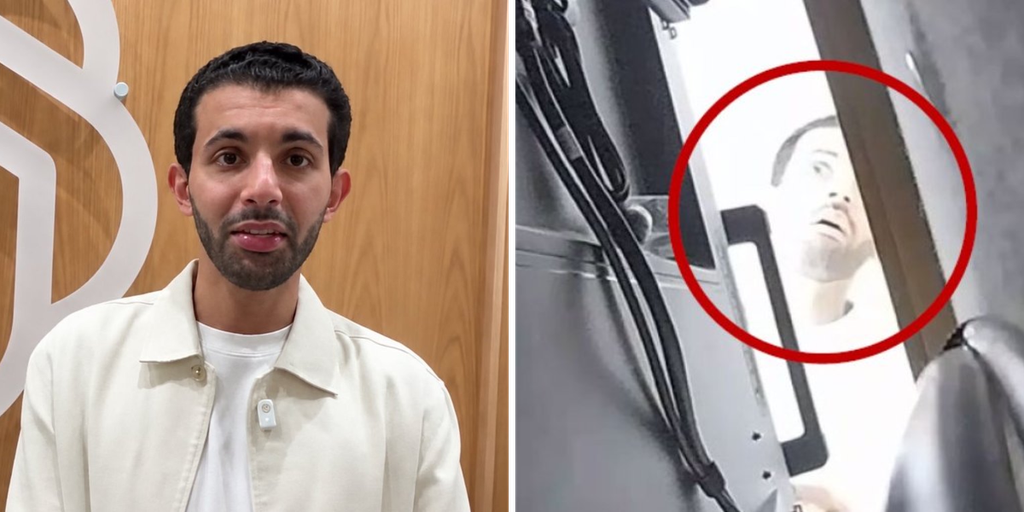
The investigation reportedly uncovered another device when OpenAI’s security team searched an unattended bag belonging to Alfozan. According to prosecutors, the second device was found during that search, adding another element to the case. The government’s statement also referred to information searches allegedly conducted using a productivity tool. These searches reportedly concerned OpenAI’s office buildings, meeting rooms, calendars, schedules, and the locations of individuals. Investigators may consider such activity relevant because information about meeting arrangements and room access could help explain the circumstances surrounding the alleged placement of a recording device.
Nevertheless, the available account does not establish precisely how the searches were connected to the device or whether every search had an improper purpose. Authorities also reportedly examined a chatbot account associated with Alfozan’s spouse that contained queries about remote audio recording and encrypting memory cards. This detail has drawn attention because it may be relevant to investigators’ examination of the alleged recording equipment and its possible capabilities.
However, the existence of queries in an account connected to another person does not, by itself, establish that the spouse participated in wrongdoing or knew about the alleged incident. The reported information also does not establish who entered each query, why the queries were made, or whether the material was directly connected to the device found in OpenAI’s office. Those questions would require evidence beyond the mere presence of search history.
Following the discovery, OpenAI referred the matter to the Federal Bureau of Investigation, according to a company statement provided to AFP. The company’s response emphasized that the security team had discovered what it described as a sophisticated recording device concealed inside one of its offices. OpenAI also offered an important qualification about the possible consequences of the incident. The company stated that it had no indication that Alfozan had improperly accessed or extracted model weights, source code, or customer data.
Model weights are an important component of trained AI systems, while source code and customer data can contain valuable technical and confidential information. The absence of indications that these materials were improperly accessed is significant because it distinguishes the reported recording-device allegations from claims that the company’s AI systems or customer information were stolen. At the same time, it does not resolve whether any conversations were recorded or whether other confidential information may have been exposed. According to the information released so far, the amount and nature of any information collected by the device remained unclear.
What Charges Does Abdulrahman Alfozan Face and Why the Case Matters for AI Security
The US Department of Justice announced that Alfozan had been charged with using or attempting to use an electronic, mechanical, or other device to intercept oral communications. According to the department, the charge carries a potential maximum penalty of five years in prison and a fine of $250,000. These are the maximum penalties described in the announcement, not a prediction of the sentence he would receive if convicted. The outcome would depend on the legal proceedings, the evidence presented, the applicable law, and the circumstances established by the court.
A criminal charge is an allegation rather than a finding of guilt, and Alfozan is entitled to the legal protections available to a person accused of an offense. The reported arrest took place on October 9, and the Department of Justice said he was expected to appear at a federal court hearing on October 19. The available announcement does not establish the final outcome of that hearing or whether additional charges will follow. The case has emerged during an intense international competition to develop increasingly capable artificial intelligence systems.
OpenAI and other technology companies invest substantial resources in research, computing infrastructure, engineering talent, and new AI products. Their competitive position depends partly on their ability to protect confidential information while allowing employees to collaborate effectively. Research strategies, internal discussions, product plans, security practices, and other nonpublic business information can be valuable to competitors or other parties if disclosed without authorization. A concealed recording device in an executive conference room would therefore raise serious security concerns even if investigators ultimately found no evidence that AI model weights or customer data had been taken.
The allegations also highlight the importance of physical security alongside cybersecurity. Public discussions about protecting AI companies often focus on computer networks, stolen passwords, malicious software, unauthorized database access, and the possibility of confidential files being copied or transferred. Yet sensitive information can also be discussed in meetings, offices, conference rooms, and other physical spaces.
Organizations must therefore consider who can enter restricted areas, whether recording equipment is permitted, how suspicious devices are reported, and how security footage and access records are reviewed. A company may have sophisticated digital defenses and still face risks if physical access controls fail. At the same time, effective security requires evidence-based investigations and careful treatment of employees, since unusual behavior or an ambiguous piece of equipment should not automatically be treated as proof of criminal intent.
The broader geopolitical context has added another layer of attention to the incident. The Department of Justice’s statement included comments from Director of National Intelligence Jay Clayton, who described the protection of America’s advanced intellectual property from foreign threats as an important national security concern. His remarks connected the case to the wider challenge of maintaining the security of strategically important technologies. However, the statement did not accuse the Saudi government of involvement or establish that the alleged conduct was part of a foreign intelligence operation. The distinction matters because the development of AI has become a subject of international economic and strategic competition, and allegations involving employees from other countries can attract speculation before the evidence has been fully examined.
Saudi Arabia has also been investing heavily in artificial intelligence and related infrastructure. The information provided about the case noted that Humain, a Saudi state-backed AI company, invested $3 billion in Elon Musk’s xAI shortly before SpaceX acquired the AI division in February. The division, subsequently known as SpaceXAI, had also announced a partnership with Humain to develop a 500-megawatt data center in Saudi Arabia. These business developments illustrate the scale of international investment in AI and computing infrastructure. They do not, however, demonstrate a connection between those investments and the allegations against Alfozan. The available information provides no established link between the reported commercial agreements and the recording-device incident at OpenAI.
There is also a historical precedent for security investigations involving technology workers and allegations connected to Saudi Arabia. In 2022, former Twitter employee Ahmad Abouammo was found guilty of spying for Saudi officials who were interested in identifying critics of the government on the platform. That case involved different allegations and evidence, and it should not be treated as proof that the OpenAI incident is part of the same activity or has the same underlying motives. Each case must be evaluated on its own facts. In Alfozan’s case, the government announcement described an alleged attempt to intercept oral communications, but it did not establish that he was acting for Saudi officials or that the device was part of a state-directed operation.
Several important questions remain unresolved. Investigators will need to determine whether the recording devices were operational, whether any conversations were captured, and whether any information was transmitted or accessed by another person. They may also examine the relationship between the reported searches for office and scheduling information and the alleged placement of the device. The answers could help clarify the scope of the incident and whether the evidence supports any further legal action. Until those details become available through reliable disclosures or court proceedings, claims about the amount of information collected, the existence of a foreign intelligence connection, or the theft of AI technology should be treated cautiously.
The arrest of Abdulrahman Alfozan has placed a spotlight on a security concern that extends beyond one employee or one company. As artificial intelligence becomes more influential in business, research, and national strategy, the organizations developing these systems must protect confidential information across both digital and physical environments. The allegations involving OpenAI’s executive conference room demonstrate why suspicious recording equipment, restricted-room access, and unexplained searches for internal information can trigger serious investigations.
Yet the case also underscores the importance of distinguishing allegations from established facts. OpenAI has reported no indication that model weights, source code, or customer data were improperly extracted, and the available information does not establish that any conversation was successfully recorded. The legal proceedings and the evidence gathered by investigators will ultimately determine what happened, whether the allegations can be proved, and what consequences may follow.