
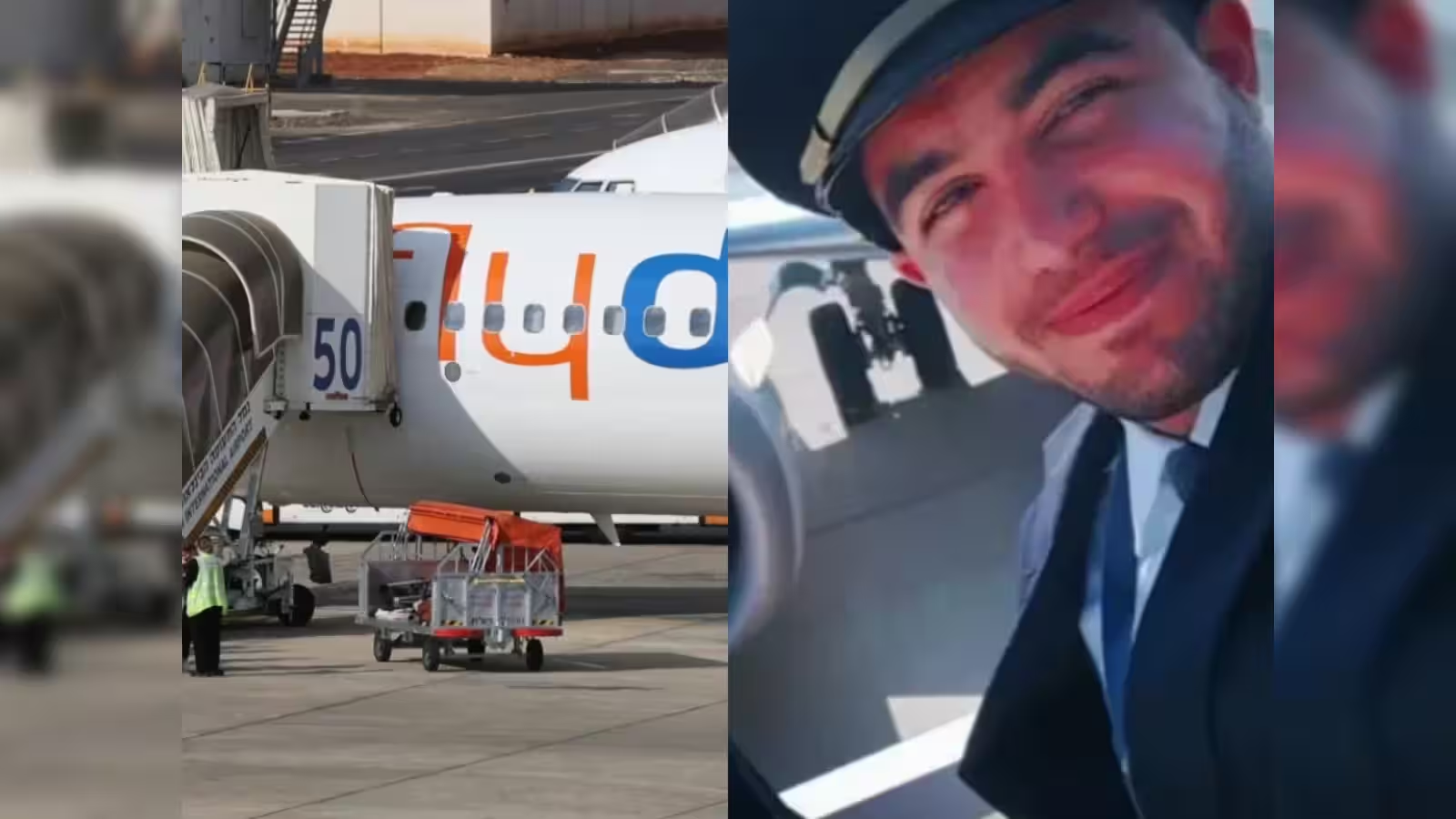
The Flydubai flight from the United Arab Emirates to Israel turned into a frightening aviation incident when a co-pilot allegedly attacked the captain inside the cockpit, forcing the aircraft to divert to Saudi Arabia. The incident has since raised questions not only about what happened during the flight but also about the background of the man accused of carrying out the attack. The pilot has been identified as Hamam al-Hammami, an Omani citizen who had worked for several airlines before joining Flydubai. According to sources familiar with the matter, concerns had previously been raised about his views while he was working for Oman’s national airline, Oman Air.
Al-Hammami’s identity was reported by multiple sources, including an Israeli official and Saudi state media. He was born in the United Arab Emirates to an Omani father and a Syrian mother and spent several years living in the UAE. His professional history shows that he had experience in the aviation industry before becoming a Flydubai pilot. However, details that have emerged about his previous employment, deleted social-media accounts and alleged extremist views have brought renewed attention to the procedures used to screen aviation personnel.
The incident itself is still under investigation, and several claims about al-Hammami’s motives and activities remain allegations rather than established facts. UAE authorities have described the incident as an attempted terrorist act, while investigators in several countries have been examining what happened inside the aircraft and what may have motivated the alleged attack.
Hamam al-Hammami’s Aviation Career and Earlier Concerns
Hamam al-Hammami had spent years building a career in aviation before joining Flydubai. A LinkedIn profile carrying his name stated that he had worked for Oman Air for approximately seven years, leaving the airline in February 2025. He subsequently joined Royal Air Maroc in June 2025 and reportedly left that airline in January 2026. He later joined Flydubai, where he had worked for around eight months before the incident, according to an Israeli official familiar with the matter. The LinkedIn profile has since been deleted, and the information about his employment has been confirmed by one of the sources familiar with the case.
One of the most significant revelations concerns his time at Oman Air. A regional diplomat familiar with the matter told CNN that al-Hammami was removed from flight training because of concerns about what were described as radical views. According to the source, rather than leaving the airline altogether, he was transferred to another position within Oman Air. This detail is particularly significant because it raises questions about how concerns identified during his earlier aviation career were handled and whether information about those concerns was available to later employers.
The allegations about his previous employment have not been presented as proof that he planned an attack when he was working for Oman Air. They instead form part of the background investigators are examining following the Flydubai incident. The circumstances surrounding his transfer, the nature of the concerns raised at the time and whether those concerns were communicated to subsequent employers remain important questions for investigators.
Al-Hammami also had formal aviation-related education. His LinkedIn profile said that he studied at Buckinghamshire New University in England. A university source confirmed that a man with the same name completed a three-year distance-learning course and graduated with a degree in aviation management in 2023. His educational background, combined with his professional experience, shows that he had spent a substantial period preparing for and working in the aviation industry before the alleged attack.
His career subsequently took him through several airlines and countries. After Oman Air, he joined Royal Air Maroc and later Flydubai. The movement between airlines is now receiving greater scrutiny because of the earlier concerns reportedly raised during his employment with Oman Air. CNN contacted Oman Air, Royal Air Maroc and the Dubai government’s media office for comment regarding the revelations. Flydubai said it could not comment while the investigation remained ongoing.
The incident has also raised questions about the background-checking procedures used when pilots move between airlines. Aviation companies routinely depend on professional records, licensing information, training histories and other screening procedures when hiring flight crew. However, the case has brought attention to what happens when concerns about an employee’s views or conduct arise at one airline and that person later seeks employment elsewhere.
BREAKING: The FlyDubai co-pilot accused of stabbing the captain of a passenger jet mid-flight and nearly causing a catastrophic crash has been identified as 29-year-old Omani national Hamam al-Hammami.
— Fox News (@FoxNews) October 3, 2026
He was reportedly grounded by Oman Air in 2024 over concerns he had adopted… pic.twitter.com/wlqlDNbZCI
The question is particularly sensitive because pilots have access to aircraft, passengers and highly controlled areas of airports. Any concern involving the suitability of a pilot can therefore become a matter of aviation security rather than simply an employment issue. Investigators will likely examine whether information about al-Hammami’s earlier removal from flight training was recorded, how it was handled and whether any relevant information was available during his later employment.
Deleted Social-Media Posts and Alleged Radical Views
The investigation has also focused heavily on al-Hammami’s online activity. After the Flydubai incident, accounts and profiles associated with his name came under scrutiny. His LinkedIn page contained only two posts, both published relatively soon after the incident on Wednesday. It remains unclear who published those posts or whether they had been scheduled beforehand, an important uncertainty when assessing their significance.
One of the posts contained several cockpit videos recorded aboard Boeing 737 Max aircraft. The aircraft involved in the Flydubai incident was a Boeing 737 Max 8. CNN reported that one of the clips could be geolocated to Dubai International Airport. The footage showed an aircraft belonging to El Al, Israel’s national airline, while other clips showed additional El Al aircraft and a plane belonging to Arkia, another Israeli airline.
The video also contained images associated with figures linked to al Qaeda. It ended with photographs of Ayman al-Zawahiri, who became the leader of al Qaeda following the death of Osama bin Laden, and Humam Khalil Abu-Mulal al-Balawi, who carried out a deadly suicide bombing in Afghanistan in 2009 that killed nine people, including seven American CIA officers and contractors. The appearance of those images has become part of the investigation into the suspect’s online activity and possible motivations.
A second post contained an AI-generated image depicting Islam’s three holiest sites in Mecca, Medina and Jerusalem, connected by a glowing trail. A poem playing in the background spoke about rejecting humiliation, not fearing death and defending dignity. The combination of the imagery and the timing of the post has drawn investigators’ attention, although the precise circumstances surrounding the publication remain unclear. The same two videos were reportedly uploaded around the same time to an Instagram account carrying the same name and photographs. That account was subsequently deleted. CNN contacted Meta for comment regarding the account.
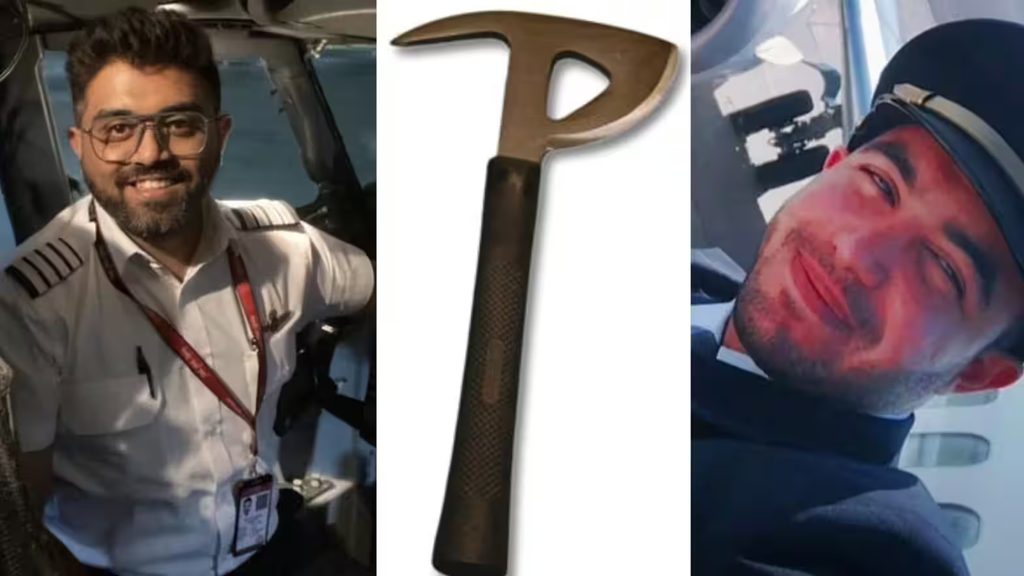
Investigators also examined a deleted Twitter account associated with al-Hammami. According to CNN’s analysis, the account contained thousands of posts published between 2021 and 2022. The posts reportedly included strongly religious views as well as statements about women, marriage and mixed-gender workplaces. The nearly 3,000 deleted tweets were analyzed and organized using an AI-powered semantic search model.
Some of the posts discussed his mother’s efforts to find him a wife who would agree to conditions including wearing a niqab and stopping work after marriage. Other posts criticized mixed-gender workplaces and claimed that women could be negatively influenced by such environments. These posts have been cited as evidence of deeply conservative and misogynistic views, although online statements alone do not establish what someone intended to do years later.
The social-media material has become particularly relevant because of the claims surrounding al-Hammami’s earlier employment at Oman Air. If the same views were known to the airline when he was removed from flight training, investigators may examine whether those concerns were properly documented and whether later employers had access to relevant information. They will also need to distinguish between personal religious or political expression and conduct that creates a demonstrable security risk.
That distinction is important because the investigation involves allegations of a serious act aboard a commercial aircraft. The existence of controversial or extreme statements online does not by itself prove that those statements caused or predicted the alleged attack. Investigators must establish the connection between the suspect’s online activity, his professional history and what occurred inside the aircraft.
What Happened Aboard the Flydubai Flight and What Investigators Are Examining
The incident occurred aboard a Flydubai flight traveling toward Tel Aviv. According to authorities, al-Hammami allegedly attacked Captain Smit Machchhar inside the cockpit using a crash axe and attempted to take control of the aircraft. The confrontation reportedly became serious enough that the aircraft rapidly lost altitude before passengers and crew intervened. The plane was eventually diverted to Saudi Arabia, where the suspect was detained and questioned.
The UAE attorney general, Hamad Saif Al Shamsi, later described the incident as an attempted “terrorist act,” according to the UAE’s state news agency WAM. Because the aircraft is registered in the UAE, UAE authorities have jurisdiction to investigate crimes committed aboard the aircraft even when the plane is outside UAE territory. Saudi Arabia also became involved because the aircraft was diverted there following the incident.
Read : Who Was Connor Helsel, the 18-Year-Old Killed Alongside Pilot Cabot Pitts in Alaska Plane Crash?
The investigation has involved authorities from several countries. An Israeli official said that Israeli agencies including Shin Bet, Mossad, the military and the Transportation Ministry were examining how an Omani citizen came to be part of the crew on a flight bound for Israel. The issue has attracted additional attention because Oman does not recognize Israel, although the presence of an Omani pilot on an international flight does not by itself establish wrongdoing.
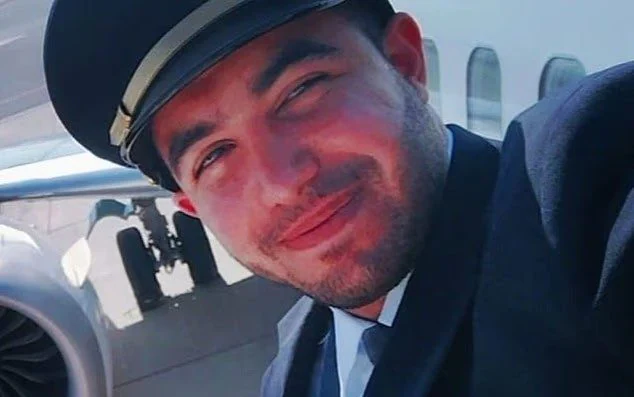
Israeli Prime Minister Benjamin Netanyahu said the suspect was believed to have undergone what he described as “Islamist radical indoctrination.” Netanyahu also told CNN that the suspect had been interrogated in Saudi Arabia and that Israel was involved in the investigation. According to Netanyahu, he spoke with UAE President Sheikh Mohammed bin Zayed and received agreement for Israel to participate in the interrogations.
The authorities now face several questions. Investigators will need to establish exactly what happened inside the cockpit, how the alleged confrontation began, what actions were taken by the pilots and passengers, and how the aircraft was brought under control. They will also examine the suspect’s employment history, training records, communications, online activity and possible motivations.
Another major question concerns aviation security procedures. If concerns about al-Hammami’s views were previously serious enough for him to be removed from flight training at Oman Air, investigators may want to determine what records were created and whether those records followed him when he moved between airlines. They may also examine the screening conducted when he joined Royal Air Maroc and later Flydubai.
At the same time, the investigation must separate confirmed evidence from allegations and interpretations. The fact that social-media accounts existed, that particular images appeared in videos, or that concerns were reportedly raised during earlier employment does not automatically establish every conclusion being drawn about the suspect. Authorities will have to establish the facts through evidence gathered from the aircraft, employment records, interviews, digital material and other investigative sources.
The case has nevertheless raised broader questions about how international airlines assess pilots who move between companies and countries. Commercial aviation depends heavily on trust, professional qualifications and security screening. When a pilot is accused of attacking another crew member inside a cockpit, the consequences extend far beyond the individuals involved because passengers and everyone on the ground can potentially be placed at risk.
For now, Hamam al-Hammami remains at the center of an international investigation into the Flydubai incident. His aviation career, earlier employment at Oman Air and Royal Air Maroc, deleted social-media accounts and alleged ideological views are all being examined alongside the events that unfolded aboard the aircraft. As authorities continue investigating, the central questions will be whether the earlier concerns were adequately handled, what led to the alleged cockpit attack and whether any warning signs were missed before he became part of the Flydubai flight crew.
I have had blog tag prompts bookmarked for a while now, and your post reminded me how useful it really is.
Solving morning numbers with free nytsudoku NYT Sudoku (nyt-sudoku.net) has become my favorite hobby lately. Enjoying NYT Sudoku (nyt-sudoku.net) helps me wake up before diving into emails.
I’ve been playing here for a few weeks now and the payouts are surprisingly fast. Definitely one of the smoothest experiences I’ve had. Check out 777abet
What I cared about was page tags and an export, not a feature grid. I used study guide maker compared with Quizlet, and it is the writeup I used, then I tried a guide from my own PDF.
I really appreciate the transparency and the quick payouts. It is hard to find a site that is this honest with its players these days. Great experience overall with 32reds