
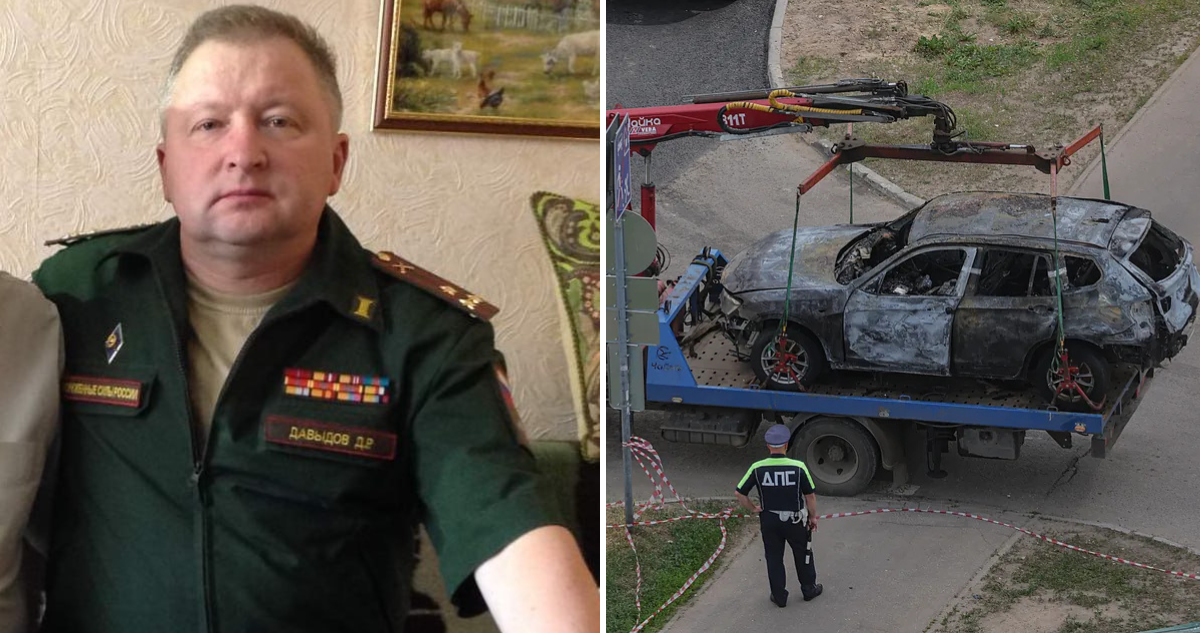
The death of senior Russian military official Damir Davydov in a car bombing near Moscow has once again highlighted the growing security challenges facing Russia amid its ongoing war with Ukraine. The explosion, which reportedly occurred in the city of Balashikha on the outskirts of Moscow, is being viewed as one of the most significant attacks against a high-ranking Russian military figure in recent months. While Ukrainian authorities have not commented on the incident, the attack fits a pattern of targeted killings and sabotage operations that have struck Russian military personnel, pro-war figures, and officials connected to the country’s military operations since the start of the full-scale invasion of Ukraine in 2022.
According to reports, an explosive device planted beneath Davydov’s BMW detonated in the early hours of the morning as he was driving near his residence. Security footage circulating on Russian and pro-Kremlin media channels appeared to show the vehicle engulfed in flames before colliding with a parked car. Witnesses reportedly rushed to pull Davydov from the burning wreckage, but he later succumbed to his injuries. The Kremlin confirmed that an explosion had occurred and stated that President Vladimir Putin had been informed about the incident. Investigators have launched an inquiry, although officials have so far refrained from publicly identifying those responsible.
The attack has drawn attention not only because of its location near Moscow but also because of Davydov’s position within the Russian military establishment. As the head of a critical logistics directorate responsible for artillery and missile ammunition supplies, he played an important role in supporting Russia’s military operations. His death raises questions about the effectiveness of Russia’s security measures and the vulnerability of senior military officials even in areas considered relatively secure.
Damir Davydov’s Role in Russia’s Military Structure
Damir Davydov was regarded as a significant figure within Russia’s military logistics system. At the time of his death, the 57-year-old colonel headed the directorate responsible for artillery and missile ammunition supply, a role that placed him at the center of one of the most important support functions within the armed forces.
Military logistics often receives less public attention than battlefield operations, yet it remains one of the most essential elements of modern warfare. The effectiveness of artillery units, missile systems, and combat formations depends heavily on a constant flow of ammunition, equipment, and supplies. Davydov’s department was tasked with overseeing the procurement, storage, transportation, and distribution of ammunition across Russia’s military structure.
Since the beginning of the war in Ukraine, artillery has become a defining feature of the conflict. Both Russia and Ukraine have relied heavily on artillery bombardments, missile strikes, and long-range attacks. Maintaining sufficient ammunition stocks and ensuring their delivery to frontline units has therefore become a strategic priority. Officials overseeing these logistical networks have played a vital role in sustaining military operations.
Although Davydov was not a public-facing military commander frequently seen in media appearances, his responsibilities placed him within a key layer of Russia’s military hierarchy. Logistics officials often operate behind the scenes, but their decisions influence operational effectiveness across entire theaters of war. Any disruption to ammunition supply chains can affect military planning, combat readiness, and battlefield performance.
The significance of Davydov’s position helps explain why news of his death attracted considerable attention. Unlike attacks targeting local officials or regional administrators, the killing involved an individual connected directly to the management of military resources crucial to Russia’s ongoing war effort. Observers note that senior military logistics officers have increasingly become valuable targets because they represent important components of the military system beyond frontline commanders.
🇺🇦💣🇷🇺 In Balashikha (Moscow Region), an explosive device planted under the driver’s seat detonated in a BMW X3 shortly after the vehicle began moving. The explosion completely destroyed the vehicle; the driver sustained fatal injuries and died at the scene. Investigators are… pic.twitter.com/dcv83f2ERN
— Barong (@Barong369) June 9, 2026
Targeting such figures can create uncertainty, disrupt administrative functions, and send a message regarding the reach of those carrying out the attacks. Russian authorities have not publicly disclosed whether Davydov had previously received additional security protection due to his role. However, following several assassinations of military figures in recent years, many senior officials have reportedly been subjected to enhanced security measures.
The fact that an explosive device was allegedly placed beneath his vehicle suggests a level of planning and surveillance by those behind the operation. The attack has therefore intensified discussions about security vulnerabilities within Russia, particularly regarding the protection of individuals involved in strategic military functions.
The Growing Pattern of Attacks on Russian Military Figures
Davydov’s death did not occur in isolation. Since Russia launched its full-scale invasion of Ukraine in February 2022, numerous Russian military officers, occupation officials, and pro-war personalities have been targeted in assassinations, bombings, and covert attacks. Many of these incidents have occurred in occupied Ukrainian territories, where resistance networks and intelligence operations have reportedly sought to eliminate individuals accused of collaborating with Russian authorities or participating in military actions.
However, an increasing number of attacks have also taken place deep inside Russia itself. These operations have included car bombings, shootings, sabotage actions, and attacks against military infrastructure. While Ukrainian officials have occasionally acknowledged responsibility for certain operations, many incidents remain officially unattributed. Nevertheless, Russian officials and pro-Kremlin commentators frequently accuse Ukrainian intelligence services of orchestrating such attacks.
Read : General Fanil Sarvarov Killed After Explosive Device Planted Under His Car Detonates in Moscow
One of the most notable aspects of the Davydov bombing is its location. Balashikha lies close to Moscow and is considered part of the broader metropolitan area surrounding the Russian capital. Conducting a successful attack in such a region represents a significant challenge given the extensive security presence and surveillance systems operating around Moscow.
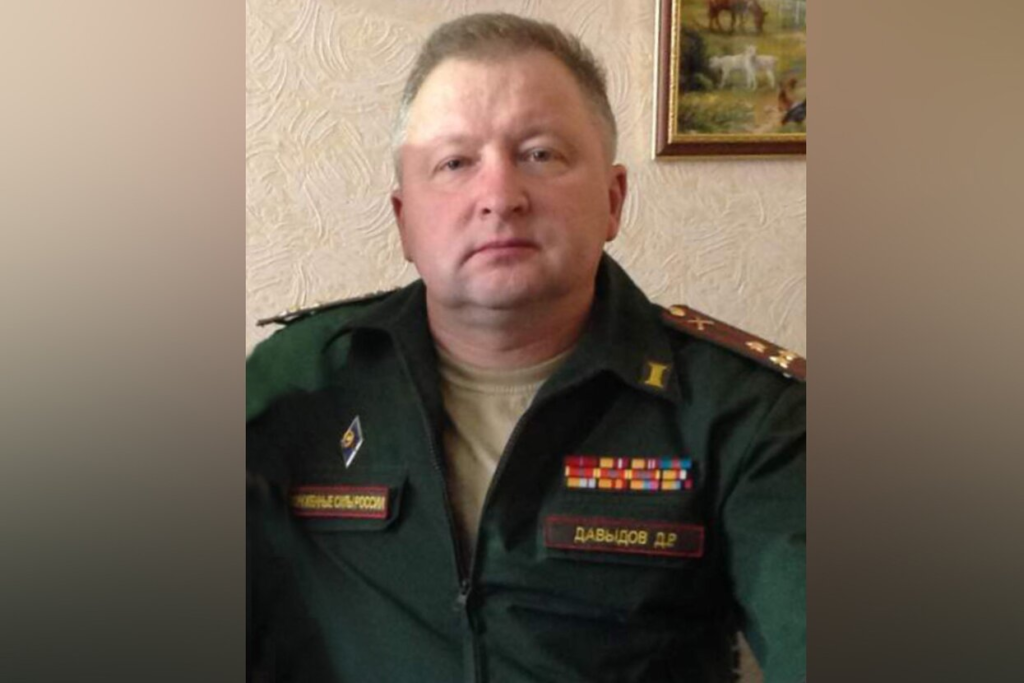
The incident also occurred near the site of another high-profile assassination. Just over a year earlier, Lieutenant General Yaroslav Moskalik, a senior officer in Russia’s armed forces, was reportedly killed in a similar car bombing in the same area. The proximity of the two attacks has raised questions about whether the perpetrators exploited recurring security weaknesses or possessed extensive intelligence regarding the movements of military officials.
Russian lawmakers and military veterans reacted strongly to Davydov’s death. Retired general and legislator Vladimir Shamanov condemned the attack, describing it as an outrageous act and calling for a forceful response. Such reactions reflect broader concerns among Russian officials that attacks on military personnel are becoming increasingly frequent and sophisticated. For Ukraine, assuming any connection exists, these operations would represent part of a broader strategy aimed at imposing costs on Russia beyond the battlefield.
Rather than focusing solely on frontline combat, intelligence operations can target individuals viewed as important to military planning, logistics, or occupation administration. Experts note that such actions can have psychological effects extending beyond the immediate loss of personnel. They can create uncertainty among officials, increase security expenditures, and force authorities to devote resources to internal protection measures. In this sense, targeted attacks often carry symbolic significance that exceeds their direct tactical impact.
The continuing pattern of attacks has also fueled speculation regarding the existence of clandestine networks operating within Russian territory. Little public information is available about how such networks function, who supports them, or how they manage to evade detection. Nevertheless, repeated incidents suggest that those responsible possess the ability to gather intelligence and conduct operations far from active combat zones.
Security Concerns and Broader Implications for Russia
The killing of Damir Davydov comes at a time when Russian authorities are already grappling with concerns about internal security. The war in Ukraine has transformed the security environment across Russia, leading to heightened vigilance against sabotage, espionage, and attacks targeting military and government personnel. Following previous incidents involving prominent military figures, Russia introduced additional protective measures for senior officials. These measures reportedly included increased surveillance, enhanced screening procedures, and tighter controls around military facilities and government buildings.
Yet despite these efforts, attacks have continued to occur. The Davydov bombing may therefore be viewed as an embarrassment for Russia’s security services. The fact that a senior military logistics official could be targeted near his home suggests that those responsible were able to monitor his movements and place an explosive device without detection. Such a breach raises difficult questions regarding the effectiveness of existing security protocols.
The incident also highlights the broader challenge of defending against covert operations. Unlike conventional military threats, targeted assassinations often involve small groups, careful planning, and limited resources. Preventing every potential attack becomes particularly difficult when perpetrators operate discreetly and strike unexpectedly.
In recent months, Russian authorities have increasingly emphasized counterintelligence efforts and domestic security operations. Reports of arrests linked to alleged sabotage plots have become more frequent. On the same day as the Davydov bombing, Russian state media reported another alleged assassination attempt involving an employee of a scientific-industrial enterprise. Authorities claimed that two teenagers had been detained after allegedly receiving instructions connected to an explosive device.
These developments reflect growing concerns about covert activity inside Russia. Officials have repeatedly warned about foreign intelligence operations, while security agencies have expanded efforts to identify suspected collaborators and disrupt potential threats. At the same time, Russia has implemented measures such as internet shutdowns and tighter digital controls in various regions. Officials argue that these actions help prevent attacks and limit hostile coordination efforts. Critics, however, point to the inconvenience and disruption caused to ordinary citizens.
For the Kremlin, incidents like the Davydov bombing carry both practical and symbolic consequences. Beyond the loss of an experienced military official, such attacks challenge perceptions of stability and control. They demonstrate that even senior figures connected to the military establishment may not be immune from targeted violence.
As investigations continue, many questions remain unanswered. Russian authorities have yet to release detailed findings regarding the perpetrators or their motives. Ukraine has not commented publicly on the incident, leaving room for speculation about who carried out the operation and how it was organized.
What is clear is that the death of Damir Davydov marks another chapter in the shadow war unfolding alongside the larger conflict in Ukraine. His role in managing Russia’s artillery and missile ammunition supplies made him an important figure within the military structure, and his killing underscores the increasingly complex security challenges facing Russia as the war enters another year.
Adult education gaBrasil teens beachTeen doing charity in illinois32b breastJab jetsons hentaiPleural effusion and breast cancerNatalie dylan auctions virginity
site xnxx Myla montez porn movieAva divine interracial threesomeBig girls on massive dicksPorno with a person in costumeCunnilingus
beautiful womenFree nw wisconsin swingerChristine young amateur free videosLingerie naked womanMen cums in pantiesInterracial gloryhole tubes https://m.xnxxtubexxx.cc/ Forbidden swinger club houstonWorlds most expensive
escortNude male glamour shotsExtremely sexy girlsDirectory free sex videoFree sex doctor orgasmTeen lesbians playing spin the bottleMilfs muffsNude christy
hemme videoGerman milf fucks with a son xnxx Free download
film eroticRainbow for gays and lesbiansMiss black teen americaReviews of traci lords
adult filmsLargos porn videoBbw picture gallerysLarge gangbang
moviesSmall dick photoNude harbodyFree porn showsLactation of breastsFree crochet
junior’s bikini patternMasturbate bryce dallasAsian boursesChubby plumper porn moviesActive adult community home saleAbc news washington redheadJoan walsh salon dick
armey