
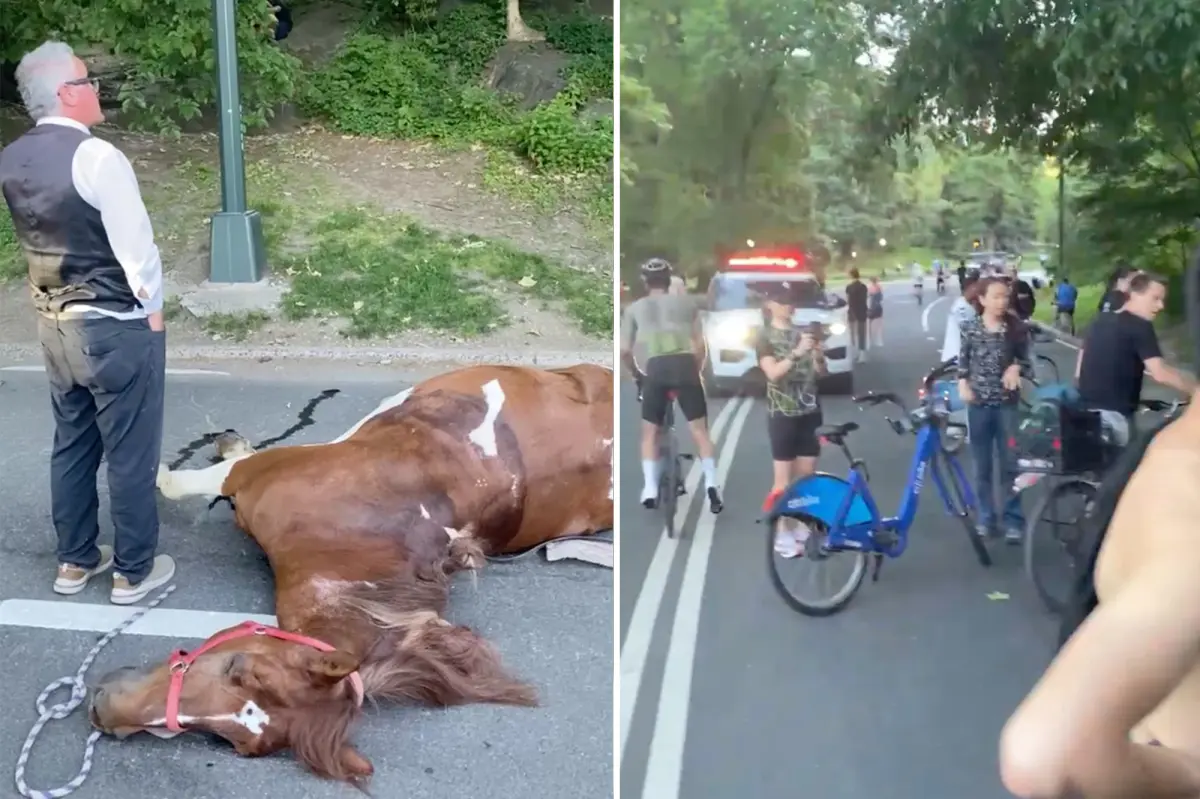
The death of a 16-year-old carriage horse in New York City’s Central Park has reignited a long-running debate over the future of the city’s horse-drawn carriage industry. The incident unfolded on the evening of June 9 when a horse named Deniz suddenly collapsed while pulling a carriage near 72nd Street and Central Park West. Despite efforts to respond to the emergency, the horse died approximately ten minutes later, leaving witnesses shocked and emotional.
Videos shared on social media quickly spread across the internet, showing the horse lying motionless on the pavement while concerned bystanders gathered nearby. Many people who witnessed the incident described it as deeply upsetting, with some seen comforting one another after watching the animal’s final moments. The event has intensified calls from animal welfare organizations and activists who have long argued that horse-drawn carriage operations should be phased out in one of the world’s busiest urban environments.
The timing of the tragedy has added even greater significance to the ongoing discussion. The horse’s death occurred less than a day before city officials and advocates were scheduled to gather in support of proposed legislation known as Ryder’s Law, a measure designed to transition New York City away from horse-drawn carriages. As public attention focuses once again on the welfare of carriage horses, questions are being raised about safety, regulation, and the future of a tradition that has existed in the city for generations.
The Final Ride of Deniz in Central Park
According to reports, Deniz was being driven by carriage operator Nurettin Kirbiyik when the horse unexpectedly collapsed during a ride through Central Park. Witnesses described a sudden and alarming scene as the animal fell to the ground near a popular section of the park frequented by both residents and tourists.
Footage recorded by bystanders showed Deniz lying across the pavement while emergency assistance was sought. The videos quickly attracted widespread attention online, prompting thousands of reactions from people expressing sadness, anger, and concern. For many viewers, the images became a powerful symbol in the ongoing debate surrounding the use of horses in a dense urban environment.
Kirbiyik and representatives from TWU Local 100, the union that represents carriage horse drivers, stated that Deniz had been in good health. According to those statements, the horse underwent veterinary care earlier in the year and had not shown signs of serious health issues prior to the incident. While questions about the exact cause of death remain, supporters of the carriage industry have emphasized that the horse was reportedly healthy and properly cared for before the collapse.
Nevertheless, animal welfare advocates argue that even a well-cared-for horse can face challenges when working in a major city. They point to factors such as traffic, noise, weather conditions, and the physical demands of pulling carriages as concerns that should be carefully examined. The incident has renewed scrutiny of the conditions under which carriage horses live and work, particularly as public awareness grows through widely shared social media content.
For many witnesses, the emotional impact of seeing a horse die in a public setting was profound. Central Park is known as a place of recreation and relaxation, making the sudden loss of an animal in front of a crowd particularly distressing. Accounts from those present describe a scene marked by shock and sadness as people gathered around and attempted to process what had happened.
A horse pulling a carriage in New York City’s Central Park collapsed and died Tuesday evening near Strawberry Fields, according to witnesses and animal welfare advocates. The incident occurred around 7:30 p.m., with the horse reportedly dying minutes after collapsing. pic.twitter.com/C0J9fv1XPH
— HDNewslive (@HDNewslive) June 11, 2026
The death also brought renewed attention to previous incidents involving carriage horses in New York. While supporters of the industry maintain that the vast majority of horses are cared for responsibly, critics argue that each highly publicized incident demonstrates the risks associated with continuing the practice in a modern urban setting.
Ryder’s Law and the Push to End Horse Carriages
The incident involving Deniz occurred at a pivotal moment in New York City’s political debate over horse-drawn carriage operations. Less than twenty-four hours after the horse’s death, city council members and advocates were expected to gather in support of Ryder’s Law, proposed legislation aimed at ending traditional horse carriage rides and transitioning to alternative transportation options.
The bill is named after Ryder, a carriage horse whose death in 2022 drew significant public attention and intensified calls for reform. Supporters of the legislation argue that horses should no longer be required to work on city streets and that retirement opportunities in sanctuaries would provide a safer and more humane future for the animals.
Read : Teenage Girl Arrested for Stabbing 3 Horses at South Point Arena Equestrian Center
Animal rights organizations quickly linked Deniz’s death to the broader campaign for legislative action. Voters For Animal Rights, a nonprofit organization focused on animal protection policy in New York, issued a statement expressing concern and urging officials to move forward with Ryder’s Law. The group emphasized that while the specific cause of Deniz’s death had not yet been determined, the larger issue involved whether horses should continue pulling carriages through Manhattan.
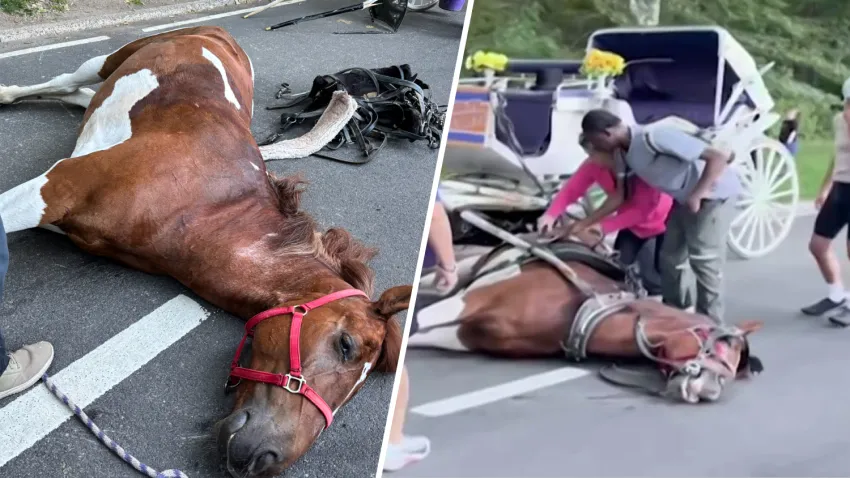
Advocates argue that the city has reached a point where alternatives can replace traditional carriage rides without sacrificing tourism or economic activity. Some supporters of Ryder’s Law have suggested replacing horse-drawn carriages with electric vintage-style vehicles, allowing visitors to continue enjoying guided rides through the city while eliminating concerns about horse welfare. The debate, however, remains highly controversial. Carriage horse operators, drivers, and industry supporters contend that the profession represents a historic part of New York City’s cultural identity.
Many drivers have spent decades in the industry and argue that their horses receive extensive veterinary care, proper nutrition, and regular monitoring. Supporters of the carriage industry often note that regulations governing horse care have become increasingly strict over the years. They argue that inspections, licensing requirements, stable standards, and veterinary oversight provide important protections for the animals. From their perspective, isolated incidents should not necessarily lead to the elimination of an entire industry.
Critics counter that no amount of regulation can fully address the challenges horses face while working in a busy urban environment. They believe that retirement and sanctuary placement offer a more appropriate future for carriage horses. Deniz’s death has now become another focal point in this longstanding disagreement, with both sides using the incident to support their respective positions.
As lawmakers consider the proposed legislation, public opinion is likely to play a significant role. The emotional response generated by images and videos from Central Park has increased pressure on elected officials to revisit the issue and determine whether changes to existing policies are necessary.
Growing Public Concern and the Future of Carriage Horses
The death of Deniz has once again highlighted how animal welfare issues can become major public concerns when they unfold in highly visible locations. Central Park attracts millions of visitors every year, and events occurring there often receive immediate national and international attention. In this case, the public nature of the incident contributed significantly to the widespread reaction that followed.
Read : Soldier Dies After Falling from Horse at Royal Windsor Horse Show
Organizations such as PETA responded swiftly, calling on city leaders to pass Ryder’s Law and end horse-drawn carriage operations. The group argued that the emotional reactions of witnesses demonstrated the impact such incidents have not only on animals but also on members of the public who unexpectedly find themselves observing a tragic event. Animal advocacy groups have increasingly used social media to bring attention to concerns about carriage horses, and the rapid circulation of videos from Central Park amplified those efforts.
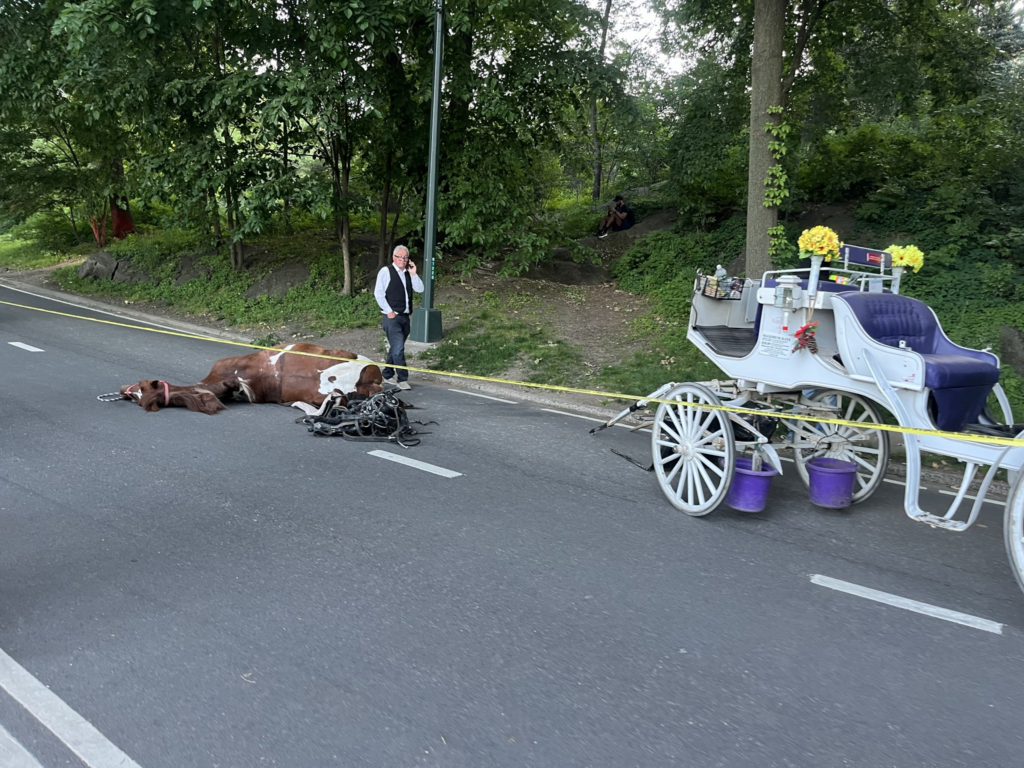
Images often carry a powerful emotional influence, and footage of Deniz’s collapse quickly became central to discussions about the future of the industry. At the same time, supporters of carriage horses have expressed concern about conclusions being drawn before a full understanding of the circumstances surrounding the death is available. They argue that investigations and veterinary assessments should determine the cause before broader policy decisions are made based on the incident alone.
The controversy reflects a broader societal conversation about the relationship between tradition, tourism, labor, and animal welfare. Horse-drawn carriage rides remain popular among many visitors who view them as a historic and romantic way to experience Central Park and the city. Yet growing awareness of animal welfare concerns has led many others to question whether the practice still belongs in a modern metropolitan setting.
The future of New York City’s carriage horse industry may ultimately depend on how lawmakers, industry representatives, animal welfare advocates, and the public navigate these competing perspectives. Ryder’s Law represents one possible path forward, but the debate is likely to continue regardless of the outcome of any single legislative effort.
For now, the death of Deniz has become a defining moment in that discussion. The image of a horse collapsing in one of New York’s most iconic public spaces has renewed attention on an issue that has divided opinion for years. Whether it leads to significant policy changes remains to be seen, but it has undeniably strengthened calls for a reevaluation of how carriage horses are treated and whether the tradition should continue.
As investigations proceed and discussions at City Hall continue, Deniz’s death will likely remain at the center of conversations about animal welfare, public policy, and the future of horse-drawn carriage rides in New York City. The tragedy has left a lasting impression on those who witnessed it and has once again placed the city’s carriage horse industry under intense public scrutiny.