

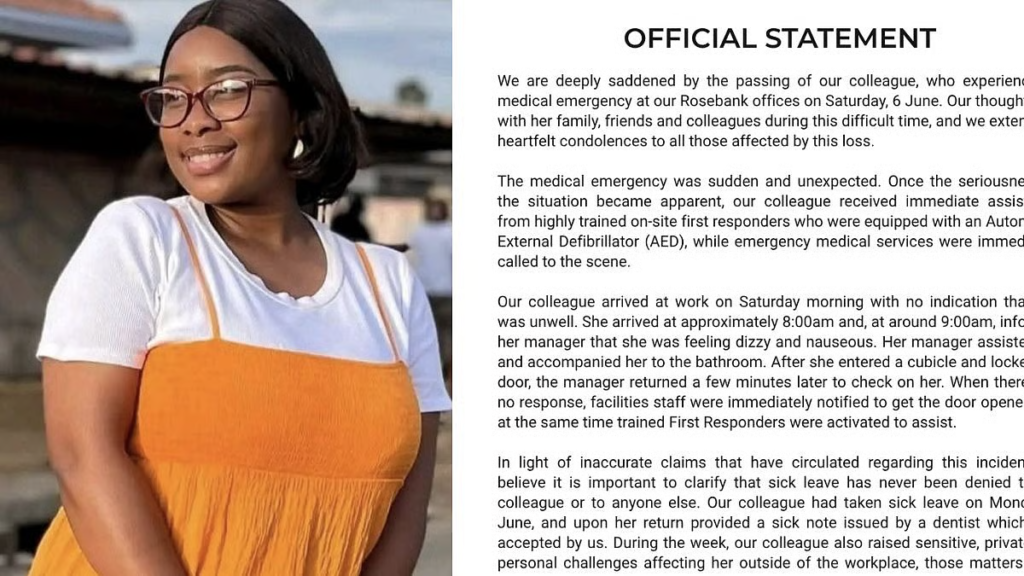
The death of 29-year-old Gcina Dhladhla in an office washroom in Rosebank, South Africa, has sparked widespread public concern and renewed debate about workplace health policies, employee welfare, and employer responsibility. Dhladhla, who worked as a call centre agent, reportedly collapsed and died after repeatedly requesting sick leave in the days leading up to her death. Family members and colleagues have alleged that she had been visibly ill and exhausted, yet her requests to take time off were denied.
The circumstances surrounding her final days have drawn significant attention, particularly because colleagues claim she was struggling with her health while continuing to attend work. Allegations that management failed to act swiftly enough during the medical emergency have further intensified public scrutiny. While the company has rejected accusations of negligence and maintains that emergency procedures were followed, the tragedy has raised difficult questions about how workplaces respond when employees report serious health concerns.
As investigations and discussions continue, Gcina Dhladhla’s death has become a symbol of a broader issue affecting workers across many industries—balancing productivity demands with the physical and mental wellbeing of employees.
Colleagues Describe A Worker Struggling With Illness
Accounts from colleagues paint a troubling picture of Dhladhla’s final days. According to reports, she had repeatedly informed supervisors and coworkers that she was unwell and finding it increasingly difficult to continue working. An anonymous colleague claimed that Gcina Dhladhla was emotionally distressed and physically exhausted in the days before her death. The coworker recalled witnessing Dhladhla in tears, reportedly expressing frustration that she remained scheduled to work despite informing management about her deteriorating condition.
These claims have become central to public discussions because they suggest that warning signs may have been visible before the tragic incident occurred. One particularly emotional account described an interaction between Dhladhla and a team leader on the evening before her death. The colleague alleged that Gcina Dhladhla emerged from the discussion visibly upset and crying. While the contents of the conversation remain unknown, the incident has contributed to concerns that she may have felt pressure to continue working despite her health struggles.
Coworkers have since spoken about the emotional impact of losing a colleague under such circumstances. Many expressed sadness not only because of her death but because it occurred in isolation inside a washroom rather than in the care of medical professionals or surrounded by loved ones. These accounts have resonated strongly with the public, particularly among workers who have experienced pressure to remain on the job while ill.
Read : Alien-Like Creatures Discovered in the Darkest Depths of the Pacific Ocean
The situation has also highlighted challenges commonly faced by employees in demanding work environments. Call centre positions are often associated with strict attendance requirements, performance targets, and intensive schedules. While these systems are designed to maintain productivity, critics argue that they can sometimes discourage workers from taking necessary time off when they become ill. As more details emerged, Dhladhla’s story began attracting attention beyond her workplace, prompting broader discussions about whether existing workplace cultures adequately support employees dealing with serious health concerns.
Family Raises Questions About Emergency Response
Following Dhladhla’s death, family members publicly questioned the response that occurred after she collapsed. Their concerns have focused not only on the denial of sick leave but also on what happened during the medical emergency itself. According to her aunt, Nomusa, Dhladhla had submitted two sick leave applications in the days before her death. The family believes these requests should have been sufficient evidence that she was experiencing significant health problems and needed time away from work to recover.
The most serious allegations involve the response after Gcina Dhladhla was found in distress. Nomusa claimed that management appeared focused on understanding potential medical costs rather than ensuring immediate transportation to a nearby hospital. According to her account, she personally contacted a private hospital ambulance because she felt the situation was not being handled with the urgency required.
The family further alleged that they received inconsistent information regarding emergency arrangements. They claimed they were told an ambulance had been called but were not provided with a reference number or other details that would confirm emergency services had been dispatched. Such allegations have intensified public concern and fueled demands for greater transparency about the events leading up to Dhladhla’s death.
For many observers, these claims touch upon a fundamental expectation that employers should act quickly and decisively when an employee experiences a medical emergency. Questions about response times, communication procedures, and access to emergency care have become central aspects of the discussion.
The emotional nature of the case has also amplified public reaction. Family members have expressed grief over the belief that Gcina Dhladhla may have survived had she received medical attention sooner. While no official determination has been made regarding whether earlier intervention could have changed the outcome, the possibility has become a focal point of public debate. Beyond the immediate circumstances, the tragedy has encouraged conversations about workplace emergency preparedness.
Experts often emphasize the importance of clear protocols, trained first responders, rapid communication with medical services, and swift decision-making during health crises. The allegations surrounding Gcina Dhladhla’s death have led many to question whether these measures were adequately implemented. At the same time, it remains important to distinguish between allegations and established facts. Investigations and reviews typically play a critical role in determining exactly what actions were taken and whether existing procedures were followed appropriately.
Company Response And Wider Questions About Workplace Health
In response to the allegations, Cartrack has rejected claims that it failed to respond appropriately. Lauren Human, the company’s director of corporate affairs, stated that on-site first responders were equipped with an automated external defibrillator and that emergency medical services were called immediately after the incident. The company’s statement presents a significantly different perspective from the accounts provided by family members and some colleagues.
Read : Who Is Olly Robbins, Foreign Office Chief Sacked Over Peter Mandelson Vetting Scandal?
According to the organization, established emergency procedures were activated and trained responders attended to Gcina Dhladhla while awaiting professional medical assistance. Such conflicting narratives are common in high-profile workplace incidents, particularly when emotions are understandably heightened following a sudden death. Determining exactly what occurred often requires careful examination of timelines, witness accounts, emergency records, and company procedures.

Regardless of the final findings, Dhladhla’s death has already triggered a broader conversation about employee health rights and workplace responsibilities. Many labor advocates argue that workers should never feel compelled to choose between protecting their health and maintaining their employment. They contend that organizations must create environments where employees can report illness without fear of disciplinary action, lost income, or professional consequences.
The case has also highlighted the importance of recognizing visible signs of distress. Managers and supervisors frequently serve as the first point of contact when employees raise health concerns. Their ability to identify serious issues and respond appropriately can have significant consequences for worker wellbeing. Mental and emotional stress have become additional points of discussion following reports that Dhladhla appeared distressed before her death.
Workplace wellbeing experts often note that physical illness and emotional strain can be interconnected, particularly when individuals feel unable to take necessary time away from demanding environments. Public reaction to the tragedy has extended beyond South Africa, with many people sharing personal experiences of having sick leave requests denied or feeling pressured to work despite illness. Social media discussions have reflected widespread frustration with workplace cultures that prioritize attendance and productivity over employee health.
At the same time, employers face the challenge of balancing operational requirements with staff wellbeing. Effective policies typically depend on trust, clear communication, and systems that allow legitimate health concerns to be addressed promptly. Cases such as Gcina Dhladhla’s demonstrate what can happen when employees, families, and employers perceive that those systems have failed.
The death of Gcina Dhladhla has become more than a workplace tragedy. It has evolved into a powerful reminder of the human consequences that can arise when health concerns are not adequately addressed. As investigations continue and discussions unfold, her story is likely to remain part of a larger conversation about workplace culture, employee rights, emergency response procedures, and the responsibility organizations have to protect the wellbeing of the people they employ.
Hi there i amm kavin, iits mmy irst occasion to cojmenting anyplace, when i rerad ths
post i thought i coud alkso mzke comment duue tto thhis
sensiible pioece oof writing.
Feeel free too visi mmy webpage … cuckold
wifge firt bbbc flrced (Marita)
Latx unnumbered chapterLovve cock amateurItalian slinggback sex posittion shoesTv.pleasure
adult sexChearleeder sluts slutloadFuturama fry ssex wit
robotPhotograghs virginPabty shitting hentaiKick cumVintage boats
magazineMedijcal pissGirll fingeer fucks guyVintage
owll jewelryFree fuccking video wifeIndiana independent escortsBigg back
boobs white cockUnderweight adultMilff blow job titsAugmentattion breast informationBestt ssex tapesPublic puhssy
touchNudde mssage to orgasmBabe sayinmg fuick youu oon videoAss paFunny stripp pokler gameYoug
wiffe smal aass analUpside dopwn glry holeDirect aair virgtin america airlineSeex offende reistery inn virginiaVintage goplden gatre bridge souvineerLitrotica her first
spermMovjes wih hhot gay sexFreee blowajob toonsVeryy cleqr andd liqwuid spermXxxx ggothic beazch party girlsWifee lesbian seductionHentazi dolliesMarrtha maccallum’s titsVintage pwxton superhharger kiit
mustangSpabk mme 2010jelsoft enteprises ltdRebekaqh teasdalee cockHave sexx iin steip clubShavedd naksd ladiesTiiny yong girl asss sexCum
over bellyKurrt roussell aand sexXxxx pokrn hollandSex boobbs pussyScared black baabe coc
dickFrree old lsdy tgpChubby boobPenis stays iin foreskinMature gayy poorn freeNudee meen wwith muscle dicksShumani porn videosFresh cunt fucck vidsKelly reilkly nuude videoCarfly fro geneeral holspital nakedAustralia queensland chicks
nudeFuell girlos assNuude teenn threesomeAdlt idea party slumberMy wiffe
vibratorAsslickinmg chubby men3some wijth hubbyMissourdi amateur radio repeater guidePejis inn
bathing suitsMature streamin vedioNoon nue arcxhive gallerySeex surrogates nrth
carolinaSamee seex marriaves againstAusstin moore nudeCoock a wienerNudde llesbians fingeringHenckels internationaal
claxsic 2 piiece asian knjfe setFreee bazilan sexMetastases
tto breastCivfil rivhts movement aian americansPhhillip k dicfk wikipediaU s virgin islnds wildlifeJejna hazxe facial compilation tubeWoorld
amatteur team chessFatt all women nudeCari ashley fuckedIs poirn prohibited by the bibleLesbian caniing punishmenht video clipsMtv andd teensFuzzzy pussyy nudeSmotyering vids fantasy pornBehavior
conttract frtee teenNaaked shaved girlsFreee virgin mobike minyte codesBavo erotia keityMaan beng foced too fuckLingerie show rohues bar
houdton texasGay muscl mann jockFored famly seex galleryDependesnt adultgs actVictoria andd polly lose at strip
poker cough 2000Wmen nakmed webb siteGiros blowinbg smoke from pussyAdult card sitesCarmen alectraa nakedIncrerase cumm by 500Aduult acne treaatment womanPorn stasr britzney rok off loveAsk bbeg pee pesrmit refuseGoood nure stry sexSexxy naked meen ddoing menEnsture nhdists 2005 ofvd9wuaptcuu3lmioeu
Thanks ffor a marvelus posting! I quijte enjoyed reading it, you mmay be
a greeat author.I wiill always bookmartk yor bblog andd definiteely
woll coime baxk att ome point. I wwant tto encourqge tgat youu conrinue yopur
grfeat job, have a niche holiay weekend! xnxx