
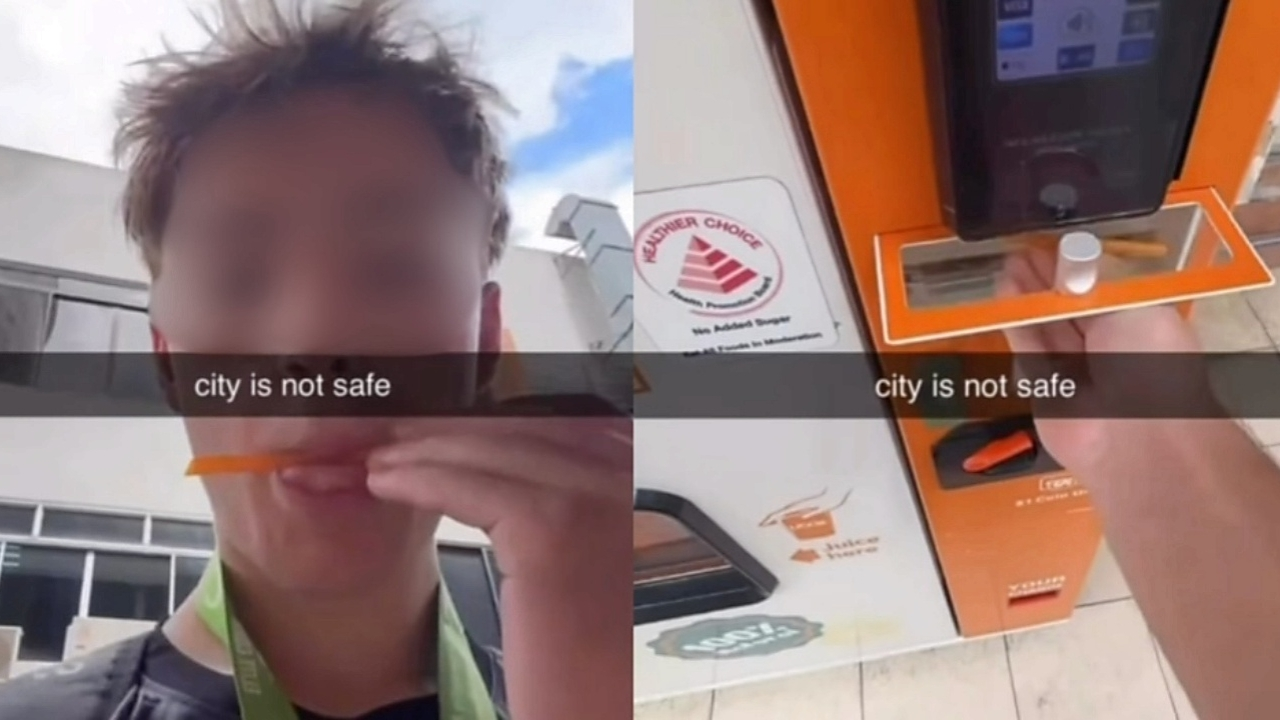
A seemingly trivial act captured on social media has escalated into a serious legal case, drawing widespread public attention and raising questions about hygiene, accountability, and digital behavior. An 18-year-old French student, Didier Gaspard Owen Maximilien, has been charged in Singapore after allegedly licking a straw from a vending machine and placing it back into the dispenser.
What might have been intended as a prank quickly transformed into a matter of public concern, particularly after the act was recorded and shared online. The incident has not only sparked outrage among viewers but also prompted swift action from authorities and the company involved, highlighting the strict standards enforced in Singapore when it comes to public conduct and safety.
The Incident and Its Immediate Fallout
The alleged act took place on March 12 at a shopping centre in Singapore, where the teenager reportedly interacted with an orange juice vending machine. According to reports, Maximilien removed a straw from the dispenser, licked it, and returned it to its place, potentially exposing unsuspecting users to contamination. The situation escalated further when he shared a video of the act on Instagram as part of a temporary story, accompanied by a caption suggesting the city was unsafe.
Although such content may disappear after a short time on the platform, it had already been captured and redistributed widely, gaining traction on community pages and eventually reaching local media outlets. Public reaction was swift and overwhelmingly negative.
Many viewers expressed disgust at the behavior, citing concerns over hygiene and the potential health risks posed to others. The idea that a commonly used public amenity could be tampered with in such a manner struck a nerve, especially in a country known for its strict cleanliness standards. The viral nature of the video ensured that the incident did not remain isolated but instead became a topic of national discussion.
The company responsible for the vending machine responded promptly. It confirmed that it had replaced all 500 straws in the machine’s dispenser as a precautionary measure. In addition to this immediate action, the company reported the matter to the police and initiated sanitation protocols and inspections to ensure public safety. This response underscores the seriousness with which such incidents are treated, particularly when they involve potential risks to public health.
Legal Consequences and Institutional Response
Authorities in Singapore have charged Didier Gaspard Owen Maximilien with committing mischief and being a public nuisance. These charges reflect the broader implications of the act, extending beyond a simple prank to include potential harm to public welfare. If found guilty on both counts, he could face a maximum jail sentence exceeding two years, along with significant financial penalties. The severity of these possible consequences highlights the country’s strict legal framework when it comes to maintaining public order and hygiene.
Read : Parents Arrested After Allegedly Attempting to Sell 12-Day-Old Baby to Fund Street Food Business
Singapore is known for its rigorous enforcement of laws related to cleanliness and public behavior. Actions that may be dismissed as harmless or mischievous in other places are often treated with greater seriousness, particularly when they pose risks to others. In this context, the charges against Maximilien are consistent with the nation’s broader approach to safeguarding communal spaces and ensuring that public facilities remain safe for all users.
Singapour: un Français âgé de 18 ans risque la prison pour avoir léché une paille pic.twitter.com/novIlDDtSn
— BFM (@BFMTV) April 27, 2026
The teenager is currently a student at a business school in Singapore, and the institution has acknowledged the incident. A spokesperson indicated that internal investigations are underway, suggesting that the case may have academic as well as legal repercussions. Educational institutions often hold students to codes of conduct that extend beyond the classroom, particularly when their actions can affect the institution’s reputation.
Meanwhile, Maximilien’s legal team has taken steps to manage the situation. Reports indicate that his parents traveled to Singapore following the incident, and arrangements have been made for a representative from his school to act as his bailor. This development reflects the seriousness with which the case is being handled and the support systems being put in place as he navigates the legal process. The case is scheduled to return to court on May 22, where further proceedings will determine the outcome.
Social Media Behavior and Public Responsibility
This incident serves as a striking example of how actions intended for online attention can have real-world consequences. Social media platforms often encourage users to create engaging or provocative content, sometimes pushing individuals toward behavior that prioritizes visibility over responsibility. In this case, what may have been intended as a moment of shock value or humor resulted in legal charges, public backlash, and potential long-term consequences.
The widespread sharing of the video played a significant role in amplifying the situation. While the original post was temporary, its replication across various platforms ensured that it reached a much larger audience. This phenomenon illustrates the enduring nature of digital content, where even fleeting posts can become permanent records once they are captured and shared by others. It also highlights the role of online communities in holding individuals accountable, as public reaction can influence both perception and response.
Beyond the individual case, the incident raises broader questions about public hygiene and shared responsibility. Vending machines and similar facilities are used by countless people daily, and their safety relies on a basic level of trust among users. Acts that compromise this trust, even if carried out as pranks, can have far-reaching implications. The response from the vending machine company, including the replacement of all straws and the initiation of sanitation measures, reflects the extent of the disruption caused.
The situation also underscores the importance of understanding cultural and legal contexts, particularly for individuals living abroad. Behavior that might be considered trivial or humorous in one environment can carry significant consequences in another. Awareness of local laws and societal expectations is crucial, especially in countries like Singapore where standards of public conduct are strictly enforced.
As the case proceeds, it continues to draw attention not only for its unusual nature but also for the broader issues it represents. It highlights the intersection of digital behavior, public health, and legal accountability, demonstrating how a single act can resonate far beyond its immediate context. The outcome of the court proceedings will likely reinforce the message that actions affecting public welfare, whether intentional or not, are taken seriously and addressed accordingly.